
Class 7 : Science – ( English ) : Lesson 4. The World of Metals and Non-metals

STUDYZONE PRO • Science
Metals and Non-Metals
Understanding the two great families of elements
Everything around us is made of elements. Scientists divide most elements into two main groups based on how they look and behave: metals and non-metals. Learning the difference helps us understand why a coin feels cold and shiny, while a piece of coal is dull and crumbly.
1. Metals — Example: Gold
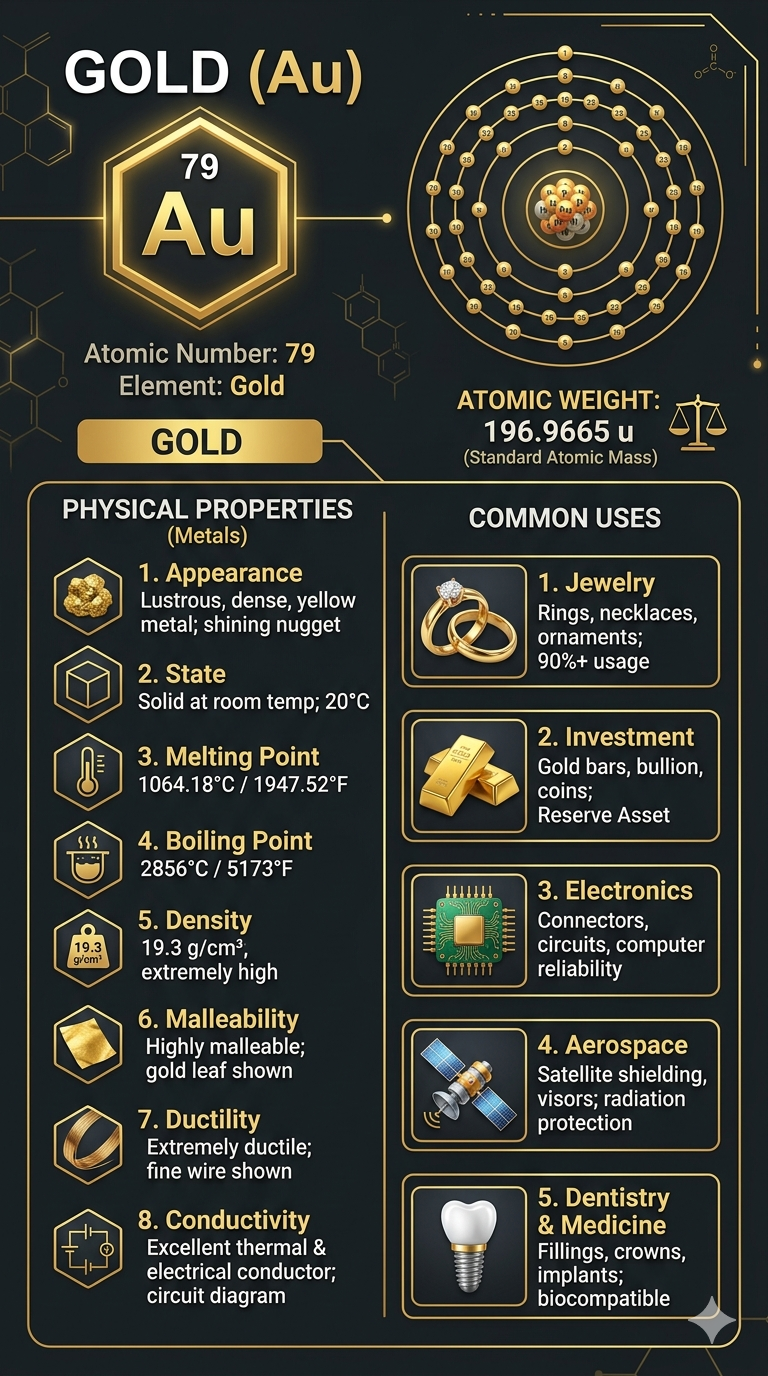
Gold is a classic example of a metal. Metals share a set of common properties that make them easy to recognise:
- Lustrous (shiny): Metals like gold have a bright, polished shine.
- Malleable: They can be hammered into thin sheets without breaking.
- Ductile: They can be drawn into thin wires.
- Good conductors: Metals conduct heat and electricity well.
- Hard & strong: Most metals are solid at room temperature (mercury is the exception).
- Sonorous: They make a ringing sound when struck.
2. Non-Metals — Example: Carbon
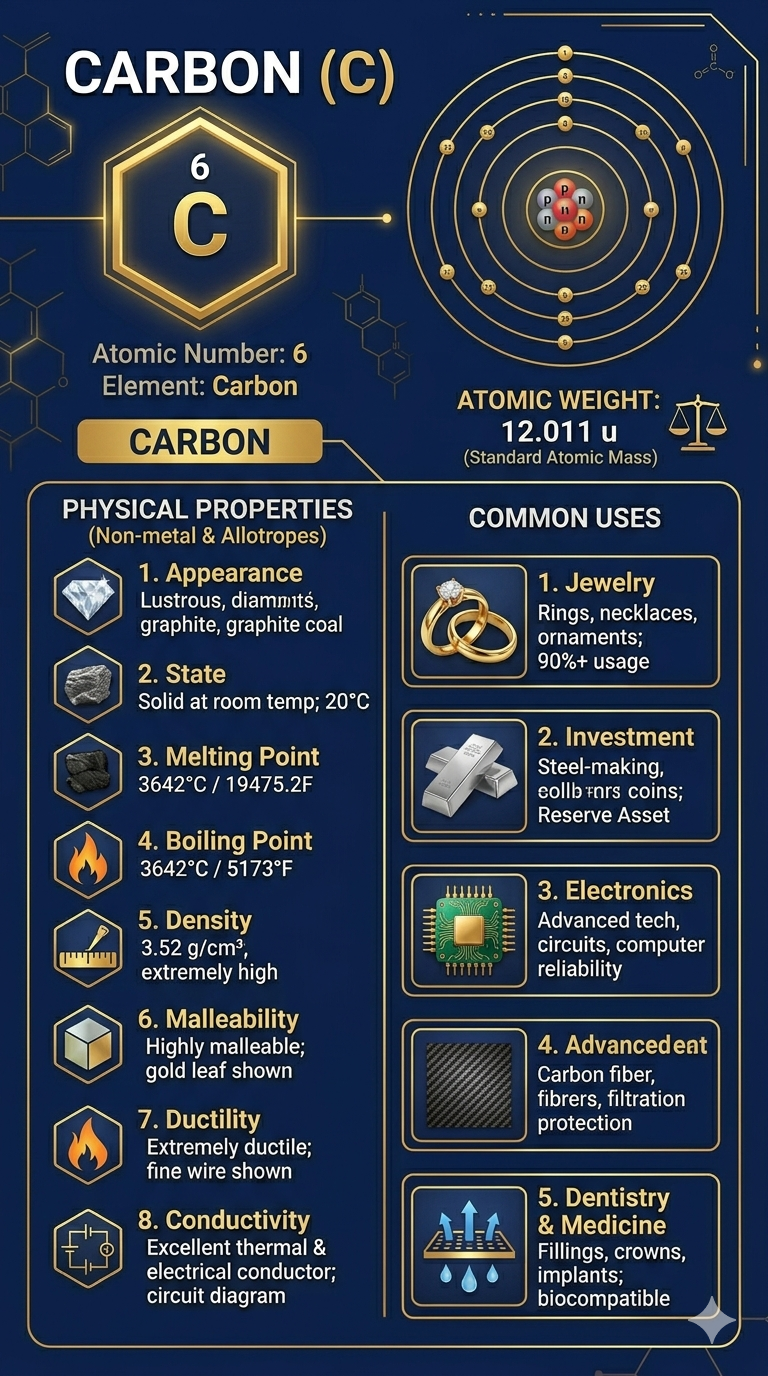
Carbon is a common example of a non-metal. Non-metals behave very differently from metals:
- Dull appearance: Most non-metals have no shine (graphite is an exception).
- Brittle: Solid non-metals break or crumble when hammered.
- Not ductile: They cannot be drawn into wires.
- Poor conductors: Non-metals are generally bad conductors of heat and electricity (graphite is an exception).
- Varied states: They may be solid, liquid, or gas at room temperature.
- Not sonorous: They do not produce a ringing sound.
Quick Comparison
| Property | Metals (e.g. Gold) | Non-Metals (e.g. Carbon) |
|---|---|---|
| Lustre | Shiny | Dull |
| Malleability | Malleable | Brittle |
| Ductility | Ductile | Non-ductile |
| Conductivity | Good conductor | Poor conductor |
| Sound | Sonorous | Not sonorous |
| State at room temp. | Mostly solid | Solid, liquid or gas |
Remember
A few elements show mixed behaviour and are called metalloids (for example, silicon and boron). Also, some exceptions exist — graphite (a form of carbon) conducts electricity, and mercury (a metal) is a liquid.
© STUDYZONE PRO • www.studyzonepro.com • Study material for Class 6–12