
Class 12 : Biology (English) – Lesson 11: Organisms and Populations

EXPLANATION & SUMMARY
🌱 Introduction
🔵 Ecology is the study of interactions among organisms and their environment.
🟢 The chapter Organisms and Populations is the foundation of ecology in NCERT Class 12.
🟠 It deals with levels of organization: organism → population → community → ecosystem.
🔴 The focus is on adaptations, population dynamics, and interactions among organisms.
🌍 Major Abiotic Factors Affecting Organisms
☀️ Temperature
Most important ecological factor.
Influences metabolism, growth, reproduction, distribution of organisms.
Ranges:
🔵 Psychrophiles (cold-loving) → thrive at <20°C. 🟢 Mesophiles (moderate) → thrive at 20–45°C. 🟠 Thermophiles → thrive at >45°C.
Examples: Mango trees cannot grow in temperate countries.
💧 Water
Essential for life processes.
Availability affects productivity and distribution of plants and animals.
Freshwater vs. marine organisms differ in osmoregulation.
Examples: Desert animals (camel 🐪) conserve water.
☀️ Light
Determines photosynthesis in plants 🌿.
Affects photoperiodism, reproduction, and migration in animals (e.g., birds 🕊️).
Plants: Heliophytes (sun-loving) vs. Sciophytes (shade-loving).
⛰️ Soil
Determines vegetation type → affects animal life indirectly.
Properties: texture, pH, water-holding capacity, nutrients.
Example: Mangroves in saline soils.
🧬 Responses of Organisms to Environment
Regulation
Some organisms maintain homeostasis.
Example: Humans maintain 37°C by sweating or shivering.
Conformation
Majority conform → internal environment changes with external.
Example: Ectotherms like reptiles 🦎.
Migration
Temporary escape from stressful conditions.
Example: Birds migrate during winter.
Suspension
Dormancy or hibernation.
Examples:
🔵 Bears hibernate 🐻.
🟢 Seeds enter dormancy.
🟠 Some microbes form spores.
🐾 Adaptations
Morphological, physiological, behavioural traits that help survival.
Examples:
🔵 Polar bears → thick fur, fat insulation.

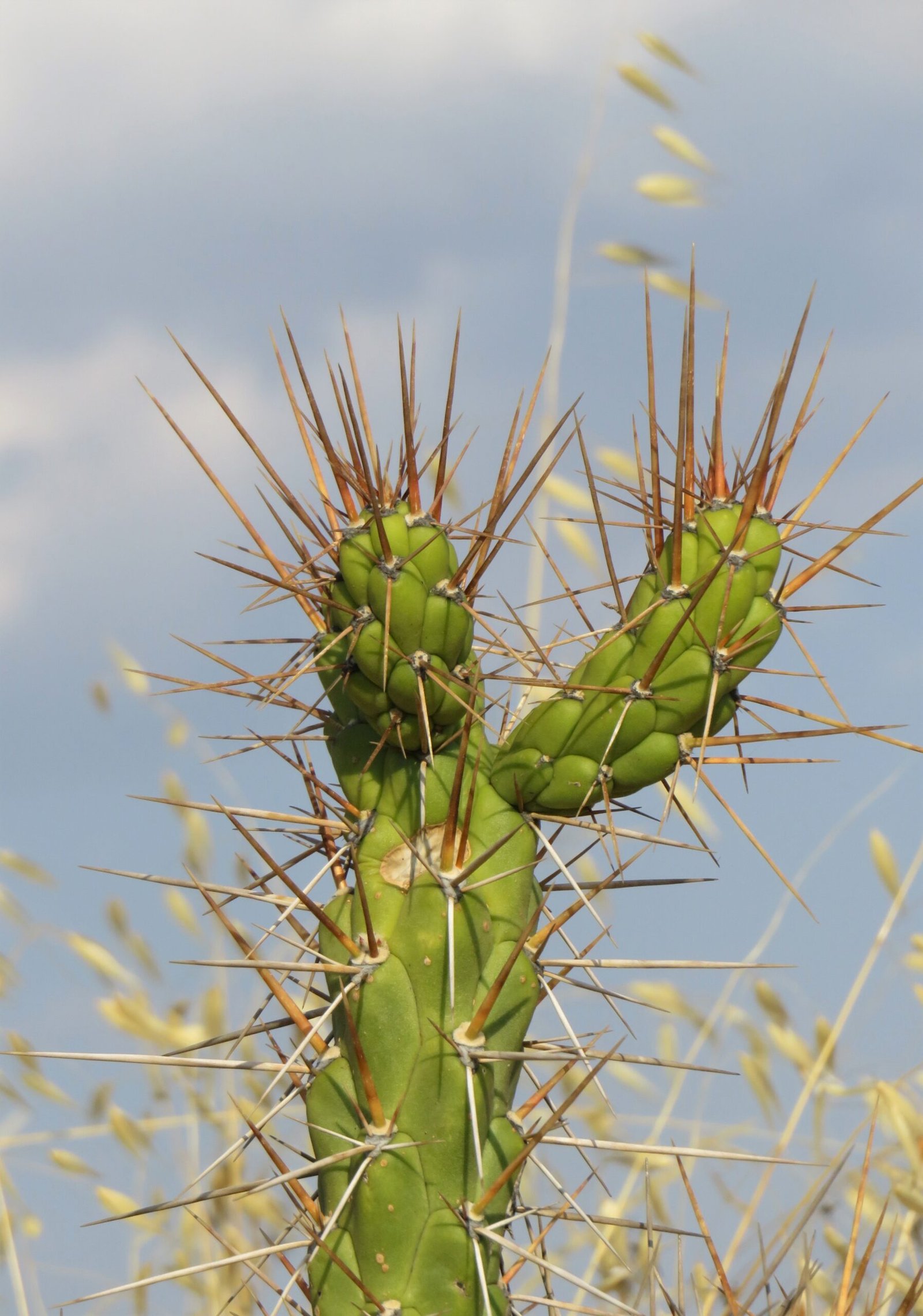
🟢 Desert plants → CAM photosynthesis, reduced leaves (spines 🌵).
🟠 Kangaroo rat → water from metabolic fat oxidation.

🔴 Altitude adaptation → humans produce more RBCs at high altitude.
👥 Populations
Population = group of interbreeding individuals in a defined area.
Attributes beyond individual:
Population density (no. per unit area).
Birth rate (no. of births per capita per unit time).
Death rate (no. of deaths per capita per unit time).
Age distribution (pre-reproductive, reproductive, post-reproductive).
Sex ratio.
📈 Population Growth
Exponential Growth
When resources are unlimited.
Equation:
dN/dt = rN
where r = intrinsic growth rate, N = population size.
Graph: J-shaped curve.
Logistic Growth
When resources become limiting.
Equation:
dN/dt = rN (K–N)/K
where K = carrying capacity.
Graph: S-shaped curve.
🔗 Population Interactions
Positive (+) and Negative (–) Interactions
🔵 Predation (+/–)
Predator benefits, prey harmed.
Examples: Tiger–deer 🐅🦌.
Biological control of pests.
🟢 Parasitism (+/–)
Parasite benefits, host harmed.
Examples: Plasmodium → malaria, lice on humans.
🟠 Commensalism (+/0)
One benefits, other unaffected.
Example: Barnacles on whales 🐋.
🔴 Mutualism (+/+)
Both benefit.
Examples: Lichens (algae + fungi), pollination.
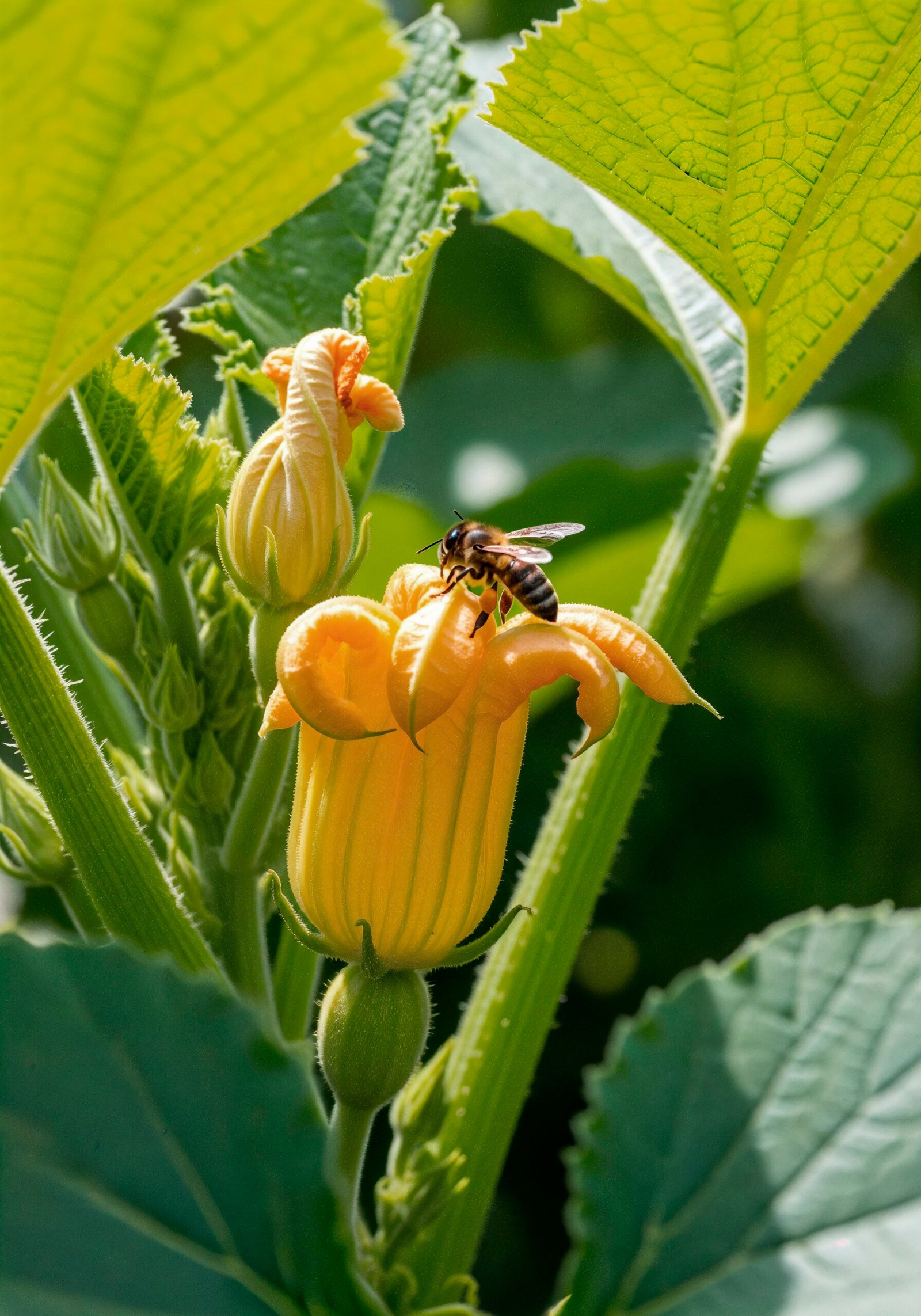
Fig.-Pollination.
🟡 Competition (–/–)
Both species harmed due to shared resources.
Example: Flamingoes vs. fishes compete for zooplankton.

📝 Summary (~300 words)
The chapter Organisms and Populations explores how organisms interact with their environment and with each other. Abiotic factors like temperature, water, light, and soil determine the distribution and survival of species. Organisms respond by regulation, conformation, migration, or suspension. Adaptations such as CAM photosynthesis in desert plants, hibernation in bears, and high-altitude RBC production in humans illustrate survival strategies.
Populations are studied in terms of attributes such as density, growth rate, age distribution, and sex ratio. Population growth follows two models: exponential (J-curve) when resources are unlimited, and logistic (S-curve) under resource-limited conditions with carrying capacity (K).
Interactions among species include predation, parasitism, competition, commensalism, and mutualism. These interactions maintain ecological balance, regulate populations, and drive evolution. The chapter lays the groundwork for advanced ecological concepts, preparing students for understanding ecosystems and biodiversity in later lessons.
————————————————————————————————————————————————————————————————————————————
QUESTIONS FROM TEXTBOOK
❓ Q1. List the attributes that populations possess but not individuals.
✅ Answer:
Populations show features that an individual organism cannot:
🔵 Natality (birth rate): Number of births per individual per unit time.
🟢 Mortality (death rate): Number of deaths per individual per unit time.
🟠 Population density: Number of individuals per unit area/volume.
🔴 Age distribution: Ratio of individuals in pre-reproductive, reproductive, and post-reproductive stages.
🟡 Sex ratio: Proportion of males and females in a population.
❓ Q2. If a population growing exponentially double in size in 3 years, what is the intrinsic rate of increase (r) of the population?
✅ Answer (Step by step):
Formula for exponential growth:
N(t) = N₀ eʳᵗ
Step 1: Here, N(t) = 2N₀ (since the population doubles).
Step 2: Substitute → 2N₀ = N₀ eʳ³
Step 3: Cancel N₀ → 2 = e³ʳ
Step 4: Take natural log → ln(2) = 3r
Step 5: r = ln(2)/3
Step 6: Value → r = 0.693 / 3 = 0.231 per year
💡 Final Answer: r = 0.231 per year
❓ Q3. Name important defence mechanisms in plants against herbivory.
✅ Answer:
Plants have evolved structural, chemical, and ecological defences:
🌵 Morphological defences: Thorns in cactus, spines in Acacia.
🧪 Chemical defences:
Alkaloids (morphine, nicotine, quinine).
Tannins (make plant tissues indigestible).
Latex (milky sap in Calotropis).
🐜 Indirect defence: Acacia provides shelter to ants → ants protect it from herbivores.
❓ Q4. An orchid plant is growing on the branch of mango tree. How do you describe this interaction between the orchid and the mango tree?
✅ Answer:
🌱 Orchid = epiphyte, grows on mango branches.
🌳 Mango = host, provides only support, not nutrients.
🟢 Orchid benefits (gains space, light).
🔵 Mango neither benefits nor harmed.
💡 This is an example of Commensalism (one benefits, other unaffected).
❓ Q5. What is the ecological principle behind the biological control method of managing with pest insects?
✅ Answer:
Biological control is based on Predator–prey interaction.
🐞 Ladybird beetle feeds on aphids.
🦋 Dragonfly feeds on mosquito larvae.
By releasing predators/parasitoids, pest population is controlled naturally.
💡 Principle: Using natural enemies (predators/parasitoids) of pests to control them.
❓ Q6. Define population and community.
✅ Answer:
👥 Population: A group of individuals of the same species, living in a defined geographical area, interbreeding and sharing a common gene pool.
➡️ Example: All tigers in Sundarbans.
🌍 Community: A group of populations of different species living together in a particular area and interacting with each other.
➡️ Example: Grass + deer + tiger + microbes in a forest ecosystem.
❓ Q7. Define the following terms and give one example for each:
🔵 Commensalism (+/0): One benefits, other unaffected.
➡️ Example: Orchid on mango tree 🌳.
🟢 Parasitism (+/–): Parasite benefits, host harmed.
➡️ Example: Plasmodium in humans (malaria).
🟠 Camouflage: Organisms blend with surroundings to escape predators.
➡️ Example: Green leaf insect 🪲.
🔴 Mutualism (+/+): Both partners benefit.
➡️ Example: Lichens (algae + fungi).
🟡 Interspecific competition (–/–): Both species harmed due to limited resources.
➡️ Example: Flamingos and fish competing for zooplankton.
❓ Q8. With the help of suitable diagram describe the logistic population growth curve.
✅ Answer:
Logistic growth occurs when resources are limited.
Equation:
dN/dt = rN (K–N)/K
where:
🔵 N = population size
🟢 r = intrinsic growth rate
🟠 K = carrying capacity
Shape: S-shaped (sigmoid) curve
Lag phase → slow growth.
Exponential phase → rapid growth.
Deceleration → growth slows.
Steady state → population stabilises at K.
❓ Q9. Select the statement which explains best parasitism.
🔵 (A) One organism is benefited.
🟢 (B) Both organisms are benefited.
🟠 (C) One organism is benefited, other is not affected.
🔴 (D) One organism is benefited, other is affected.
✅ Answer: (D) One organism is benefited, other is affected.
❓ Q10. List any three important characteristics of a population and explain.
✅ Answer:
👥 Population density:
Number of individuals per unit area/volume.
Example: Number of deer per km² in a forest.
👶 Birth rate (Natality):
Number of births per individual per unit time.
Determines growth capacity of population.
⚰️ Death rate (Mortality):
Number of deaths per individual per unit time.
Indicates population decline or pressure.
💡 Other important attributes: Age distribution, Sex ratio, Growth models.
————————————————————————————————————————————————————————————————————————————
OTHER IMPORTANT QUESTIONS FOR EXAMS
(CBSE MODEL QUESTION PAPER)
ESPECIALLY MADE FROM THIS CHAPTER ONLY
Section A — Objective (Q1–Q10)
Q1. The single most important abiotic factor deciding species distribution is 🌡️
🔵 (A) Light
🟢 (B) Temperature
🟠 (C) Soil pH
🔴 (D) Wind
Answer: (B) Temperature
Q2. A true population attribute (not shown by an individual) is 👥
🔵 (A) Height
🟢 (B) Age pyramid
🟠 (C) Body mass
🔴 (D) Blood group
Answer: (B) Age pyramid
Q3. Choose the correct regulator–conformer pair ♨️🦎
🔵 (A) Human–Regulator, Lizard–Conformer
🟢 (B) Human–Conformer, Lizard–Regulator
🟠 (C) Both regulators
🔴 (D) Both conformers
Answer: (A) Human–Regulator, Lizard–Conformer
Q4. A typical desert plant adaptation is 🌵
🔵 (A) Broad leaves
🟢 (B) CAM metabolism with stomata open at night
🟠 (C) Thin cuticle
🔴 (D) Shallow roots only
Answer: (B) CAM metabolism with stomata open at night
Q5. A J-shaped curve represents 📈
🔵 (A) Logistic growth
🟢 (B) Exponential growth
🟠 (C) Zero growth
🔴 (D) Declining growth
Answer: (B) Exponential growth
Q6. In logistic growth, population stabilises at ⚖️
🔵 (A) r
🟢 (B) K (carrying capacity)
🟠 (C) N₀
🔴 (D) 2K
Answer: (B) K (carrying capacity)
Q7. A population doubles in 3 years. Intrinsic rate of increase r is (per year) 🧮
(Use N = N₀e^{rt})
🔵 (A) 0.115
🟢 (B) 0.231
🟠 (C) 0.462
🔴 (D) 0.693
Answer: (B) 0.231
Q8. Orchid growing on mango branch shows 🌱🌳
🔵 (A) Mutualism
🟢 (B) Parasitism
🟠 (C) Commensalism
🔴 (D) Amensalism
Answer: (C) Commensalism
Q9. Biological control of pests is based mainly on 🐞🦟
🔵 (A) Competition
🟢 (B) Predation/Parasitism
🟠 (C) Mutualism
🔴 (D) Commensalism
Answer: (B) Predation/Parasitism
Q10. An expanding (growing) population has an age pyramid that is 🔺
🔵 (A) Urn-shaped
🟢 (B) Bell-shaped
🟠 (C) Triangular
🔴 (D) Inverted
Answer: (C) Triangular
Q12. Differentiate: Regulators, Conformers, Partial regulators (with one example each).
Answer:
♨️ Regulators: maintain homeostasis (humans—thermoregulation).
🦎 Conformers: internal conditions follow environment (fishes, reptiles).
🌿 Partial/behavioural regulators: regulate within limits via behaviour (desert lizard basking/shuttling shade).
Q13. High-altitude adaptation in humans (acute to chronic).
Answer:
⬆️ Short term: hyperventilation, ↑ heart rate.
🩸 Long term: ↑ RBC count & haemoglobin, ↑ 2,3-BPG, increased capillary density.
Q14. r-selected vs K-selected species (any three points).
Answer:
r: small size, early maturity, many offspring, little parental care (weeds, rodents).
K: large size, late maturity, few offspring, high parental care (elephants, humans).
Q15. State Allen’s rule and one ecological example.
Answer:
🐰 Allen’s rule: endotherms in cold climates have shorter extremities to reduce heat loss.
Example: Arctic fox has shorter ears/limbs than desert fox.
Section C — Short Answer II (Q16–Q17)
Q16. Write the equations for exponential and logistic growth and label terms.
Answer:
📈 Exponential: dN/dt = rN (N = population size, r = intrinsic rate).
⚖️ Logistic: dN/dt = rN( K−N )/K (K = carrying capacity).
Q17. Processes changing population density other than birth & death; explain in one line each.
Answer:
🔼 Immigration (I): individuals enter a population → D increases.
🔽 Emigration (E): individuals leave a population → D decreases.
Section D — Long Answer Questions (Q18–Q25)
Q18. Explain logistic growth curve with diagram.
Answer:
⚖️ Logistic growth: when resources are limited, growth slows & stabilises.
📊 Equation: dN/dt = rN( K−N )/K.
🌀 Phases: lag → exponential → deceleration → stationary (at K).
🔴 Shape: S-shaped (sigmoid curve).
Q19. Write a note on predator–prey interactions with two examples.
Answer:
🐅 Tiger–deer: predator controls prey population.
🐞 Ladybird beetle–aphids: used in pest control.
✅ Maintains ecological balance & drives evolution (coevolution).
Q20. Describe three defence mechanisms in plants against herbivory.
Answer:
🌵 Morphological: thorns in cactus, spines in Acacia.
🧪 Chemical: alkaloids (nicotine, quinine), tannins.
🐜 Indirect: Acacia shelters ants → ants defend plant.
Q21. Differentiate parasitism, mutualism, commensalism (with one example each).
Answer:
🦠 Parasitism (+/–): Plasmodium in humans.
🌸🐝 Mutualism (+/+): Pollination (bee & flower).
🌱🌳 Commensalism (+/0): Orchid on mango tree.
Q22. Explain competitive exclusion principle. Give one example.
Answer:
🟠 Principle: No two species can coexist for long if they compete for same resources.
Example: Paramecium aurelia outcompetes Paramecium caudatum.
Q23. Write a note on adaptations of desert animals.
Answer:
🐪 Camels conserve water, tolerate dehydration.
🐭 Kangaroo rat: water via fat oxidation.
🌙 Many are nocturnal to avoid heat.
Q24. Explain population age pyramids with diagrams.
Answer:
🔺 Expanding: broad base (India).
🔔 Stable: uniform width (France).
🏺 Declining: narrow base, broad top (Japan).
Q25. Write three differences between commensalism and mutualism.
Answer:
Commensalism: one benefits, other unaffected.
Mutualism: both benefit.
Example: Orchid–mango vs. Pollination.
Section E — Case Study / Application-based MCQs (Q26–Q33)
Q26. In a grassland, rabbits (herbivores) increase in population. Which of the following happens first?
🔵 (A) Grass decreases
🟢 (B) Tiger population decreases
🟠 (C) Deer population increases
🔴 (D) Eagle population decreases
Answer: (A) Grass decreases
Q27. If a fish species survives only in narrow temperature range, it is called
🔵 (A) Eurythermal
🟢 (B) Stenothermal
🟠 (C) Euryhaline
🔴 (D) Stenohaline
Answer: (B) Stenothermal
Q28. A population of 100 becomes 200 in 10 years. Birth = 80, Death = 20. Net Immigration = 40. What is population size after 10 years?
🔵 (A) 200
🟢 (B) 240
🟠 (C) 220
🔴 (D) 260
Answer: (B) 240
Q29. Which of the following is NOT a density-dependent factor?
🔵 (A) Competition
🟢 (B) Predation
🟠 (C) Flood
🔴 (D) Parasitism
Answer: (C) Flood
Q30. A predator controlling the population of prey is an example of
🔵 (A) Negative feedback
🟢 (B) Positive feedback
🟠 (C) Mutualism
🔴 (D) Amensalism
Answer: (A) Negative feedback
Q31. Barnacles growing on the back of whales show
🔵 (A) Parasitism
🟢 (B) Mutualism
🟠 (C) Commensalism
🔴 (D) Predation
Answer: (C) Commensalism
Q32. Which statement best describes competition?
🔵 (A) Both species benefit
🟢 (B) One benefits, other unaffected
🟠 (C) Both harmed
🔴 (D) One harmed, one benefits
Answer: (C) Both harmed
Q33. Logistic growth curve is sigmoidal because
🔵 (A) Growth unlimited
🟢 (B) Carrying capacity limits growth
🟠 (C) Mortality absent
🔴 (D) Natality always increases
Answer: (B) Carrying capacity limits growth
————————————————————————————————————————————————————————————————————————————