
Class 11 : Biology (In English) – Lesson 3. Plant Kingdom

EXPLANATION & SUMMARY
🌿 Introduction to Plant Kingdom
Plants are fundamental to life on Earth. They produce oxygen, form the base of food chains, and regulate ecological balance. In this chapter, we study the classification of plants based on structural and reproductive features.
🔵 Why Classification?
Biologists classify plants to make their study systematic and meaningful. Early classifications were artificial (based on few characters), but modern classifications are more natural and phylogenetic.
💡 Concept: Classification helps understand plant evolution, diversity, and relationships.
🧠 Basis of Classification in Plant Kingdom
Plants are classified into major groups based on: ➡️ Presence/absence of vascular tissue
➡️ Reproductive structure (seed/flower)
➡️ Plant body (differentiated/undifferentiated)
🟢 Major groups include:
Algae
Bryophytes
Pteridophytes
Gymnosperms
Angiosperms
🌊 I. Algae
🔵 Characteristics
➡️ Simple, thalloid, autotrophic, aquatic plants
➡️ Mostly chlorophyll-containing and photosynthetic
➡️ Can be unicellular (Chlamydomonas) or multicellular (Ulva, Sargassum)
🔴 Reproduction
✔️ Vegetative: Fragmentation
✔️ Asexual: Zoospores (motile)
✔️ Sexual: Varies from isogamy to oogamy
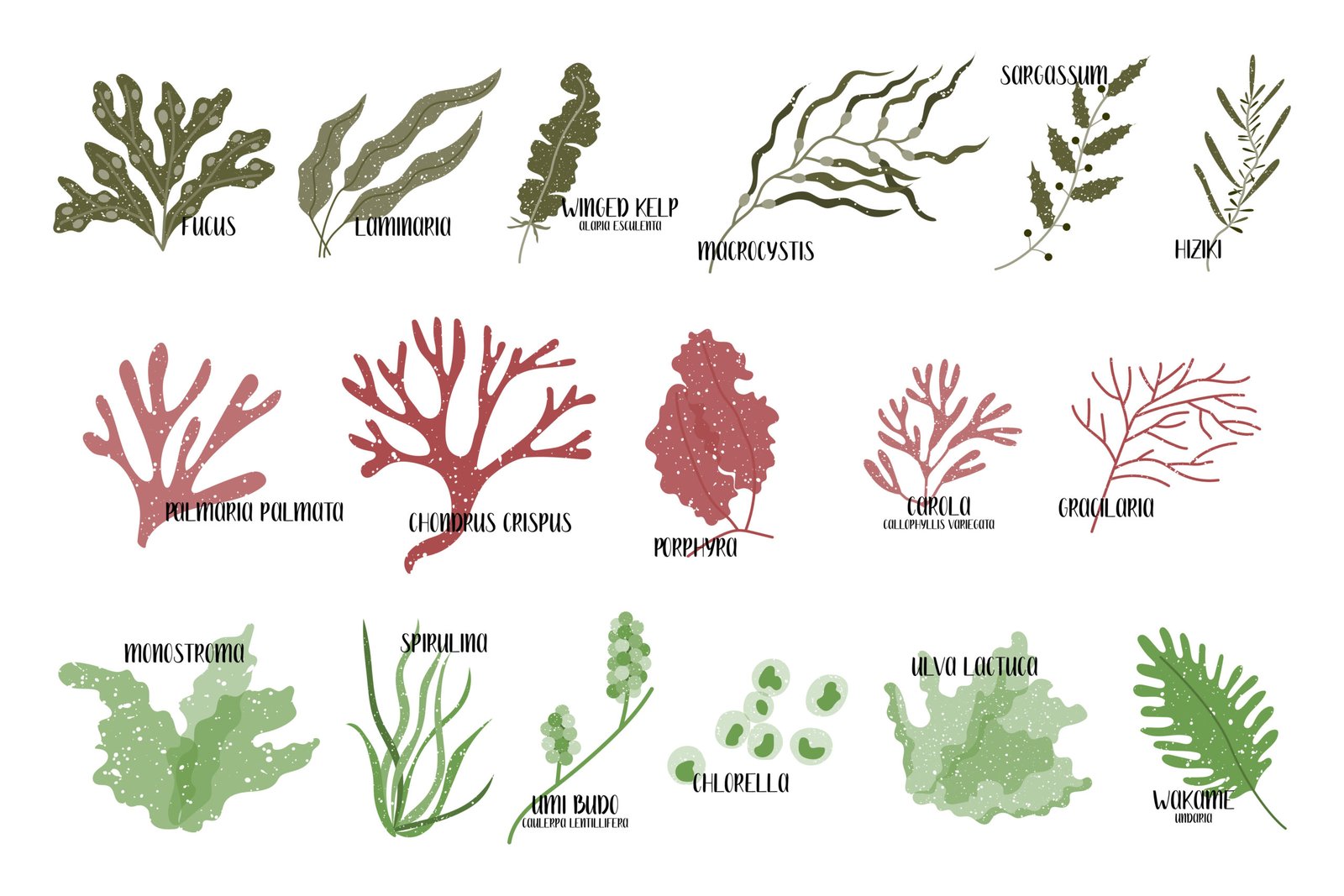
🟡 Types of Algae
Chlorophyceae (Green Algae) – e.g., Volvox
Phaeophyceae (Brown Algae) – e.g., Fucus
Rhodophyceae (Red Algae) – e.g., Polysiphonia
✏️ Note: Algae are used in food, biofertilizers, and commercially valuable compounds like agar and algin.
🍀 II. Bryophytes – Amphibians of Plant Kingdom
Bryophytes
🧠 Definition: Non-vascular embryophytes requiring water for reproduction.
🔵 Key Features
➡️ Plant body: Thalloid or leafy
➡️ No true roots, stems, leaves
➡️ Rhizoids (root-like) for anchorage
➡️ Reproduction: Alternation of generations
➡️ Dominant phase: Gametophyte
🟢 Two Main Groups
Liverworts (e.g., Riccia, Marchantia)
Mosses (e.g., Funaria)
💡 Concept: Bryophytes show embryonic development—absent in algae.
🌿 III. Pteridophytes – First Vascular Land Plants
Pteridophytes
🧠 Definition: Seedless vascular plants
🔵 Key Features
➡️ True roots, stems, leaves present
➡️ Vascular tissues (xylem and phloem)
➡️ Dominant sporophyte phase
➡️ Reproduction by spores
➡️ Require water for fertilization
🟡 Examples: Ferns (Dryopteris), Horsetails (Equisetum), Club mosses (Selaginella)
🔴 Sporophylls: Special leaves bearing sporangia
✔️ Homosporous vs Heterosporous
➡️ Homosporous: Single type of spore
➡️ Heterosporous: Microspores and megaspores (e.g., Selaginella)
✏️ Note: Some pteridophytes show seed habit in embryo development.
🌲 IV. Gymnosperms – Naked Seed Plants
Gymnosperm
🧠 Definition: Seed-producing plants without fruits
🔵 Key Features
➡️ Woody, perennial, evergreen
➡️ Cones present (no true flowers)
➡️ Vascular tissue: Xylem lacks vessels
➡️ Sporophyte dominant
➡️ Reproductive structures: Male and female cones
➡️ No fruit; ovules exposed on megasporophylls
🟡 Examples: Cycas, Pinus, Ginkgo
✔️ Fertilization by pollen tube (no water required)
💡 Real-life Application: Conifers are used in timber and paper industries.
🌺 V. Angiosperms – Flowering Plants
🔵 Key Features
➡️ Most advanced, diverse plant group
➡️ Ovules enclosed in ovary
➡️ Seeds enclosed in fruits
➡️ Flowers for reproduction
➡️ Double fertilization unique to angiosperms
Angiosperms
🟢 Types of Angiosperms
Monocotyledons – One cotyledon (e.g., rice)
Dicotyledons – Two cotyledons (e.g., mango)
💡 Concept: Angiosperms dominate terrestrial flora due to adaptive reproductive strategies.
🔁 Alternation of Generations
🧠 Definition: Lifecycle with alternating haploid (gametophyte) and diploid (sporophyte) phases.
✔️ Trends:
➡️ Gametophyte dominant in bryophytes
➡️ Sporophyte dominant in higher groups (pteridophytes, gymnosperms, angiosperms)
💡 Concept: Evolution favors sporophyte dominance and independence.
🌱 Reproductive Adaptations Across Groups
🔵 From simple to complex:
➡️ Algae: Water-dependent, isogamous
➡️ Bryophytes: Embryo development begins
➡️ Pteridophytes: True vascular system, spores
➡️ Gymnosperms: Seed formation, pollen tube
➡️ Angiosperms: Fruit formation, double fertilization
🧠 This reflects the evolutionary advancement in plant reproduction.
🌍 Why This Lesson Matters 🌿
✔️ Foundation for Botany: Understanding the evolution of plant life from aquatic to terrestrial environments.
✔️ Ecological Impact: Each group contributes uniquely—oxygen production, soil formation, habitat, etc.
✔️ Human Use: Many groups provide food, fuel, wood, medicine, and raw materials.
✔️ Biodiversity Awareness: Helps appreciate plant diversity and need for conservation.
📝 Quick Recap (with Emojis):
🌊 Algae – Simple, aquatic, photosynthetic
🍀 Bryophytes – Amphibians of plant kingdom, no vascular tissue
🌿 Pteridophytes – First vascular plants, spore-producing
🌲 Gymnosperms – Naked seeds, cones, pollen tube
🌺 Angiosperms – Flowers, fruits, seeds enclosed in ovary
🔁 Alternation of Generations – Gametophyte vs. Sporophyte
🌱 Evolution – Water-dependent ➡️ Seed habit ➡️ Flowering plants
🔍 300-Word Summary: Plant Kingdom
✔️ Classification Basis:
Plants are classified by body organization, vascular tissue, and reproduction. Major groups include algae, bryophytes, pteridophytes, gymnosperms, and angiosperms.
✔️ Algae:
Aquatic, simple thalloid plants that photosynthesize. Divided into Chlorophyceae (green), Phaeophyceae (brown), and Rhodophyceae (red). Reproduce via fragmentation, spores, and sexual means.
✔️ Bryophytes:
Non-vascular, land plants needing water for reproduction. Dominant gametophyte phase. Include liverworts (e.g., Marchantia) and mosses (e.g., Funaria). Show beginnings of embryo development.
✔️ Pteridophytes:
First vascular plants with true roots, stems, and leaves. Include ferns, horsetails, club mosses. Sporophyte is dominant. Reproduce through spores; some are heterosporous.
✔️ Gymnosperms:
Seed-producing but without fruits. Reproduce via cones. Examples: Cycas, Pinus. Pollination via pollen tubes; ovules exposed.
✔️ Angiosperms:
Most advanced group. Produce flowers and fruits. Ovules enclosed in ovaries. Exhibit double fertilization. Classified as monocots or dicots.
✔️ Lifecycle Pattern:
All plants show alternation of generations. Gametophyte is dominant in lower plants; sporophyte dominates in higher ones.
✔️ Evolutionary Trend:
From algae to angiosperms, plants show increasing complexity, independence from water, and specialization in reproduction.
✔️ Ecological & Human Relevance:
All plant groups play vital roles in the biosphere and are essential to life through oxygen production, food, shelter, and industrial uses.
————————————————————————————————————————————————————————————————————————————
QUESTIONS FROM TEXTBOOK
🟩 Q1. What is the basis of classification of algae?
✅ Answer:
Algae are classified based on:
🔹 Type of pigments (e.g., chlorophyll a, b, c, carotenoids, etc.)
🔹 Nature of stored food (e.g., starch, mannitol, laminarin)
🔹 Cell wall composition
🔹 Type of flagella (if present)
🔹 Habitat and form (unicellular/colonial/filamentous)
🟩 Q2. When and where does reduction division take place in the life cycle of a liverwort, a moss, a fern, a gymnosperm and an angiosperm?
✅ Answer:
Reduction division (meiosis) occurs during spore formation in all these groups:
🔸 Liverwort – In the sporangium (sporophyte phase)
🔸 Moss – In capsule of sporophyte
🔸 Fern – In sporangia on the underside of sporophylls
🔸 Gymnosperm – In microsporangia (pollen sacs) and megasporangia
🔸 Angiosperm – In pollen sacs (anthers) and ovules (ovary)
🟩 Q3. Name three groups of plants that bear archegonia. Briefly describe the life cycle of any one of them.
✅ Answer:
Groups with archegonia:
🔹 Bryophytes
🔹 Pteridophytes
🔹 Gymnosperms
✅ Life Cycle of a Fern (Pteridophyte):
1️⃣ Dominant sporophyte produces spores via meiosis
2️⃣ Spores germinate to form prothallus (gametophyte)
3️⃣ Prothallus bears antheridia and archegonia
4️⃣ Fertilization occurs in archegonium → zygote
5️⃣ Zygote develops into a new sporophyte
🟩 Q4. Mention the ploidy of the following:
Cell/Structure Ploidy
Protonemal cell of moss Haploid (n)
Primary endosperm nucleus (dicot) Triploid (3n)
Leaf cell of moss Haploid (n)
Prothallus cell of fern Haploid (n)
Gemma cell in Marchantia Haploid (n)
Meristem cell of monocot Diploid (2n)
Ovum of liverwort Haploid (n)
Zygote of fern Diploid (2n)
🟩 Q5. Write a note on economic importance of algae and gymnosperms.
✅ Answer:
🌿 Algae:
🔹 Source of food (e.g., Chlorella)
🔹 Agar from red algae (used in labs, ice creams)
🔹 Carrageenan (emulsifier) from red algae
🔹 Biofertilizers (e.g., Anabaena, Nostoc)
🔹 CO₂ fixers, oxygen producers
🌲 Gymnosperms:
🔹 Timber (e.g., pine, cedar)
🔹 Resins (e.g., turpentine)
🔹 Ephedrine from Ephedra used in medicine
🔹 Ornamental use
🟩 Q6. Both gymnosperms and angiosperms bear seeds, then why are they classified separately?
✅ Answer:
🔹 Gymnosperms:
– Seeds are naked, not enclosed in ovary
– No fruit formation
– Mostly have needle-like leaves
– e.g., Cycas, Pinus
🔹 Angiosperms:
– Seeds enclosed in fruit
– Have flowers
– Show double fertilization
– e.g., mango, wheat
📌 Hence, due to these structural & reproductive differences, they are classified separately.
🟩 Q7. What is heterospory? Briefly comment on its significance. Give two examples.
✅ Answer:
🔸 Heterospory: Formation of two types of spores –
✔ Microspores (male) and
✔ Megaspores (female)
✅ Significance:
🔹 Leads to formation of male and female gametophytes
🔹 Important step toward seed habit evolution
✅ Examples:
✔ Selaginella
✔ Salvinia
🟩 Q8. Explain briefly the following terms with suitable examples:
✅ (i) Protonema:
Early gametophyte stage in mosses (e.g., Funaria) – green, thread-like.
✅ (ii) Antheridium:
Male sex organ found in bryophytes and pteridophytes.
✅ (iii) Archegonium:
Female sex organ producing egg – flask-shaped.
✅ (iv) Diplontic:
Life cycle where diploid sporophyte is dominant (e.g., angiosperms).
✅ (v) Sporophyll:
Leaf bearing sporangia – e.g., ferns, Cycas.
✅ (vi) Isogamy:
Fusion of gametes that are morphologically similar – e.g., Spirogyra.
🟩 Q9. Differentiate between the following:
(i) Red algae and Brown algae
Feature Red Algae (Rhodophyceae) Brown Algae (Phaeophyceae)
Pigments Phycoerythrin Fucoxanthin
Storage food Floridean starch Laminarin, mannitol
Habitat Deep water Mostly marine, shallow water
(ii) Liverworts and Moss
Feature Liverworts Moss
Gametophyte Thalloid, simple Leafy, upright
Rhizoids Unicellular Multicellular
Example Marchantia Funaria
(iii) Homosporous and Heterosporous Pteridophyte
Feature Homosporous Heterosporous
Spores One type Two types: micro & mega
Gametophyte Bisexual Unisexual
Example Pteris Selaginella, Salvinia
🟩 Q10. Match the following:
Column I Column II
(a) Chlamydomonas (iii) Algae
(b) Cycas (iv) Gymnosperm
(c) Selaginella (ii) Pteridophyte
(d) Sphagnum (i) Moss
🟩 Q11. Describe the important characteristics of gymnosperms.
✅ Answer:
🌲 Key Features of Gymnosperms:
🔹 Naked seeds (not enclosed in fruit)
🔹 Perennial, woody, and evergreen
🔹 Tap roots with fungal associations
🔹 Needle-like or scale leaves
🔹 Male and female cones present
🔹 Mostly wind pollinated
🔹 e.g., Cycas, Pinus, Ginkgo, Ephedra
————————————————————————————————————————————————————————————————————————————
OTHER IMPORTANT QUESTIONS FOR EXAMS
(CBSE MODEL QUESTIONS PAPER)
ESPECIALLY MADE FROM THIS LESSON ONLY
🔹 Q1. The division Bryophyta is known as: (A) Vascular cryptogams
(B) Amphibians of the plant kingdom
(C) Seed-producing cryptogams
(D) Non-thalloid algae
Answer: (B) Amphibians of the plant kingdom
🧬 Because they need water for sexual reproduction.
🔹 Q2. Which of the following is a common feature of all algae? (A) Presence of flowers
(B) Presence of vascular tissue
(C) Autotrophic nutrition
(D) Absence of chlorophyll
Answer: (C) Autotrophic nutrition
🌿 Algae contain chlorophyll and perform photosynthesis.
🔹 Q3. The dominant phase in the life cycle of mosses is: (A) Sporophyte
(B) Gametophyte
(C) Zygote
(D) Embryo
Answer: (B) Gametophyte
🧠 In mosses, gametophyte is photosynthetic and longer-lived.
🔹 Q4. Which of the following is homosporous? (A) Selaginella
(B) Marsilea
(C) Pteris
(D) Pinus
Answer: (C) Pteris
🌱 Produces only one type of spores.
🔹 Q5. Which plant group is characterized by the presence of archegonia? (A) Angiosperms
(B) Algae
(C) Pteridophytes
(D) Fungi
Answer: (C) Pteridophytes
✔️ They have multicellular jacketed sex organs.
🔹 Q6. Which division of algae includes kelps? (A) Rhodophyceae
(B) Chlorophyceae
(C) Phaeophyceae
(D) Charophyceae
Answer: (C) Phaeophyceae
🟤 Brown algae like Laminaria and Sargassum are kelps.
🔹 Q7. Marchantia belongs to: (A) Algae
(B) Pteridophyta
(C) Bryophyta
(D) Gymnosperm
Answer: (C) Bryophyta
🔹 It is a liverwort, a type of bryophyte.
🔹 Q8. Gymnosperms differ from angiosperms in: (A) Presence of ovary
(B) Presence of pollen tube
(C) Presence of xylem
(D) Double fertilisation
Answer: (A) Presence of ovary
📌 Gymnosperms lack ovary; seeds are naked.
🔹 Q9. Which of the following plants has a haplo-diplontic life cycle? (A) Fucus
(B) Funaria
(C) Chlamydomonas
(D) Spirogyra
Answer: (B) Funaria
🟢 Moss with alternating gametophyte and sporophyte generations.
🔹 Q10. In Pinus, the pollination is: (A) Entomophilous
(B) Hydrophilous
(C) Anemophilous
(D) Zoophilous
Answer: (C) Anemophilous
🌬️ Wind pollination due to absence of flowers.
🔹 Q11. Which of these is not a vascular plant? (A) Fern
(B) Cycas
(C) Marchantia
(D) Pinus
Answer: (C) Marchantia
🌿 It is a bryophyte, lacks vascular tissues.
🔹 Q12. Red algae appear red due to: (A) Chlorophyll a
(B) Phycoerythrin
(C) Xanthophyll
(D) Fucoxanthin
Answer: (B) Phycoerythrin
🔴 This pigment masks the green chlorophyll.
🔹 Q13. Selaginella is heterosporous because: (A) It produces only one type of spore
(B) It does not produce spores
(C) It produces micro and megaspores
(D) It reproduces only vegetatively
Answer: (C) It produces micro and megaspores
⚡ Leads toward seed habit evolution.
🔹 Q14. Gymnosperms are: (A) Flowering plants
(B) Non-vascular plants
(C) Naked seeded plants
(D) Spore-producing plants
Answer: (C) Naked seeded plants
📘 Ovaries absent; seeds are exposed.
🔹 Q15. Which of the following is NOT a characteristic of algae? (A) Simple body
(B) Chlorophyll presence
(C) Seed formation
(D) Aquatic habitat
Answer: (C) Seed formation
🧬 Algae reproduce by spores or fragmentation, not seeds.
🔹 Q16. Assertion (A): Pteridophytes are the first terrestrial plants to possess vascular tissues.
Reason (R): They still require water for fertilisation.
(A) Both A and R are true; R explains A
(B) Both A and R are true; R does not explain A
(C) A is true, R is false
(D) A is false, R is true
Answer: (A) Both A and R are true; R explains A
🧠 Vascular plants evolved but still depended on water.
🔹 Q17. Assertion (A): Red algae mostly occur in deep sea water.
Reason (R): They have fucoxanthin pigment.
(A) Both A and R are true; R explains A
(B) Both A and R are true; R does not explain A
(C) A is true, R is false
(D) A is false, R is true
Answer: (C) A is true, R is false
❌ They have phycoerythrin, not fucoxanthin.
🔹 Q18. Assertion (A): Angiosperms produce seeds inside fruits.
Reason (R): Their ovules are enclosed within the ovary.
(A) Both A and R are true; R explains A
(B) Both A and R are true; R does not explain A
(C) A is true, R is false
(D) A is false, R is true
Answer: (A) Both A and R are true; R explains A
🧾 Seeds inside fruits due to enclosed ovules.
🔹 Q19. Why are bryophytes regarded as amphibians of the plant kingdom?
🧬 Answer:
🔸 Bryophytes require water for fertilisation as their flagellated male gametes swim to reach the archegonia.
🔸 Although they are land plants, their dependence on water for reproduction resembles amphibians.
🌿 Hence, they are termed as amphibians of the plant kingdom.
🔹 Q20. Name the two main stages in the life cycle of a pteridophyte. Which one is dominant?
🧪 Answer:
🔹 Two stages:
👉 Gametophyte (haploid)
👉 Sporophyte (diploid)
✅ Sporophyte is the dominant, photosynthetic and independent stage in the pteridophyte life cycle.
🔹 Q21. Why are algae considered ecologically important?
🌊 Answer:
🔹 Algae perform more than 50% of global photosynthesis, releasing oxygen into the atmosphere.
🔹 They serve as primary producers in aquatic ecosystems, forming the base of food chains.
🔹 Section C – Q22 to Q28: Short Answer Questions (3 Marks Each)
🧾 Answer each of the following in about 60–80 words.
🔹 Q22. Describe any three characteristics of Chlorophyceae.
💚 Answer:
🔸 Chlorophyceae (green algae) contain chlorophyll a and b, giving them a bright green color.
🔸 Their cell walls are made of cellulose.
🔸 Food is stored as starch inside pyrenoids located in chloroplasts.
✅ Examples: Chlamydomonas, Volvox.
🔹 Q23. How do gymnosperms differ from pteridophytes in terms of reproduction and vascular tissues?
🌲 Answer:
🔸 Gymnosperms produce seeds; pteridophytes reproduce via spores.
🔸 Gymnosperms have well-developed vascular tissues including xylem with tracheids; pteridophytes also have vascular tissue but less advanced.
🔸 In gymnosperms, male and female cones are separate, whereas pteridophytes have independent gametophytes.
🔹 Q24. What is heterospory? Name two pteridophytes showing this condition.
🧬 Answer:
🔸 Heterospory is the production of two different types of spores:
✅ Microspores (male) and megaspores (female).
🔹 It leads to seed habit evolution.
🧪 Examples: Selaginella, Marsilea.
🔹 Q25. List three economic uses of algae.
💰 Answer:
🔸 Algae such as Laminaria and Sargassum are used to extract alginates for thickening agents.
🔸 Gelidium and Gracilaria yield agar used in microbiology.
🔸 Red algae like Porphyra are edible and rich in nutrients.
🔹 Q26. Explain the structure of a typical bryophyte gametophyte.
🌿 Answer:
🔸 The bryophyte gametophyte is thalloid or leafy and is haploid.
🔸 It is the dominant stage, performing photosynthesis.
🔸 It bears sex organs: antheridia (male) and archegonia (female) on its surface.
✅ Fertilisation needs external water.
🔹 Q27. Define alternation of generations with reference to plants.
🔄 Answer:
🔸 Alternation of generations is the regular alternation between a haploid gametophyte and diploid sporophyte phase.
🔹 Gametophyte produces gametes via mitosis.
🔹 Sporophyte develops after fertilisation and produces spores via meiosis.
🔹 Q28. Describe any three differences between red algae and brown algae.
🔁 Answer:
Feature Red Algae (Rhodophyceae) Brown Algae (Phaeophyceae)
Pigments Phycoerythrin Fucoxanthin
Storage Product Floridean starch Laminarin and mannitol
Habitat Mostly marine (deeper zones) Mostly marine (intertidal/upper sea)
🔹 Q29. Case-Based Question
Read the following passage and answer the questions:
A student observed a plant growing near a moist wall. It had small leaf-like structures and lacked true roots, stems, or vascular tissues. The reproductive organs were visible under a magnifying lens, and water droplets were necessary for reproduction.
🟢 (i) Identify the group of plants described.
🟢 (ii) What is the dominant phase in their life cycle?
🟢 (iii) Why is water necessary for their reproduction?
🟢 (iv) Give two examples from this group.
📘 Answer:
(i) Bryophytes
(ii) Gametophyte is the dominant phase.
(iii) Water is needed for the movement of flagellated male gametes to reach the female gametes (archegonia).
(iv) Funaria, Marchantia
🔹 Q30. Case-Based Question
Read the following scenario and answer the questions:
In a botanical garden, a group of students were shown tall trees with needle-like leaves that did not shed during winter. The trees bore cones instead of flowers. The male and female cones were seen on different branches.
🟢 (i) Which plant group do these trees belong to?
🟢 (ii) What type of leaves do they have and why?
🟢 (iii) Name the reproductive structures observed.
🟢 (iv) Give two examples of this group.
📘 Answer:
(i) Gymnosperms
(ii) Needle-like leaves reduce water loss and withstand cold and drought.
(iii) Male cones (microsporangiate) and female cones (megasporangiate).
(iv) Pinus, Cycas
🔷 Section E – Q31 to Q33: Long Answer Questions (5 Marks Each)
🧾 Answer in about 120–150 words with diagrams where necessary.
🔹 Q31. Describe the characteristic features of pteridophytes.
🌿 Answer:
🔸 Pteridophytes are the first true land plants with vascular tissues (xylem and phloem).
🔸 They are seedless and reproduce via spores.
🔸 The main plant body is the diploid sporophyte, which is dominant and independent.
🔸 Leaves are often large and divided (fronds).
🔸 They exhibit heterospory or homospory depending on the species.
🔸 Gametophyte (prothallus) is small, free-living and requires moist conditions.
🔸 Water is essential for fertilisation.
🔸 They show alternation of generations.
🧪 Examples: Marsilea, Pteris, Selaginella
🔹 Q32. Discuss the classification of algae based on pigmentation and reserve food material.
🧬 Answer:
Algae are classified into three main classes:
🔹 Chlorophyceae (Green Algae):
✅ Pigments: Chlorophyll a and b
✅ Reserve food: Starch
✅ Cell wall: Cellulose
✅ Example: Chlamydomonas, Volvox
🔹 Phaeophyceae (Brown Algae):
✅ Pigments: Fucoxanthin, chlorophyll a and c
✅ Reserve food: Mannitol and laminarin
✅ Cell wall: Cellulose and algin
✅ Example: Laminaria, Sargassum
🔹 Rhodophyceae (Red Algae):
✅ Pigments: Phycoerythrin, chlorophyll a
✅ Reserve food: Floridean starch
✅ Cell wall: Cellulose, pectin
✅ Example: Gelidium, Gracilaria
➡️ The classification helps in understanding their ecological roles and commercial uses.
🔹 Q33. Compare the gametophyte and sporophyte stages of bryophytes and pteridophytes.
📘 Answer:
Feature Bryophytes Pteridophytes
Dominant phase Gametophyte (haploid) Sporophyte (diploid)
Nature of gametophyte Green, photosynthetic, independent Small, often dependent or less dominant
Nature of sporophyte Attached to gametophyte, partially dependent Independent, well-developed
Vascular tissue Absent Present (xylem and phloem)
Reproduction Via gametes, needs water Via spores, needs water
Examples Riccia, Funaria Pteris, Selaginella
✏️ Conclusion: This comparison highlights the evolutionary progression in land plants toward independence and complexity of the sporophyte phase.
————————————————————————————————————————————————————————————————————————————