
Class 11 : Biology (In English) – Lesson 13: Plant Growth and Development

EXPLANATION & SUMMARY
🌱✨ Introduction
🧠 Growth is a permanent, irreversible increase in size, weight, or volume of an organism.
🌿 In plants, growth is localized, continuous, and influenced by internal and external factors.
📘 Development refers to the progressive changes in an organism from germination to senescence, including differentiation and maturation.
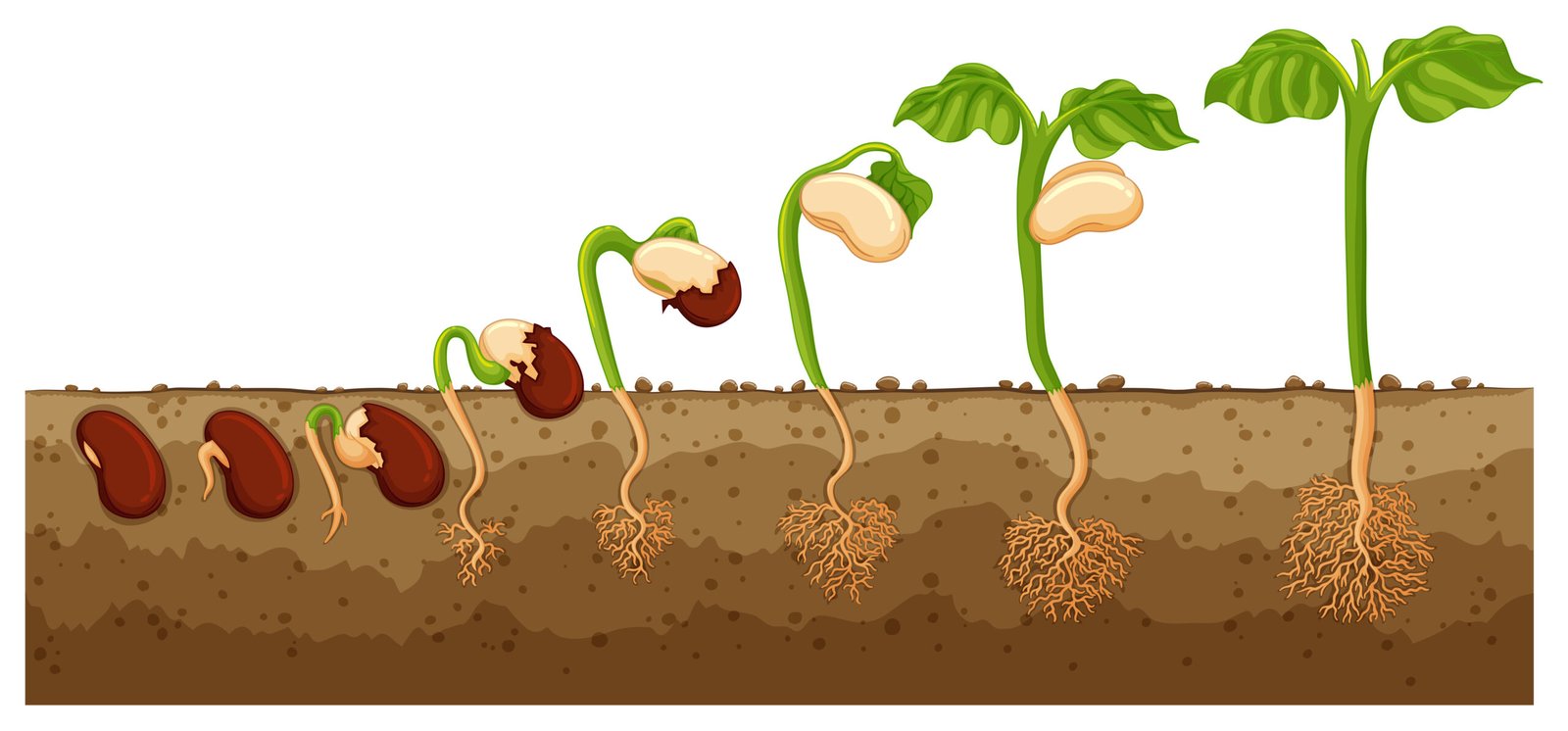
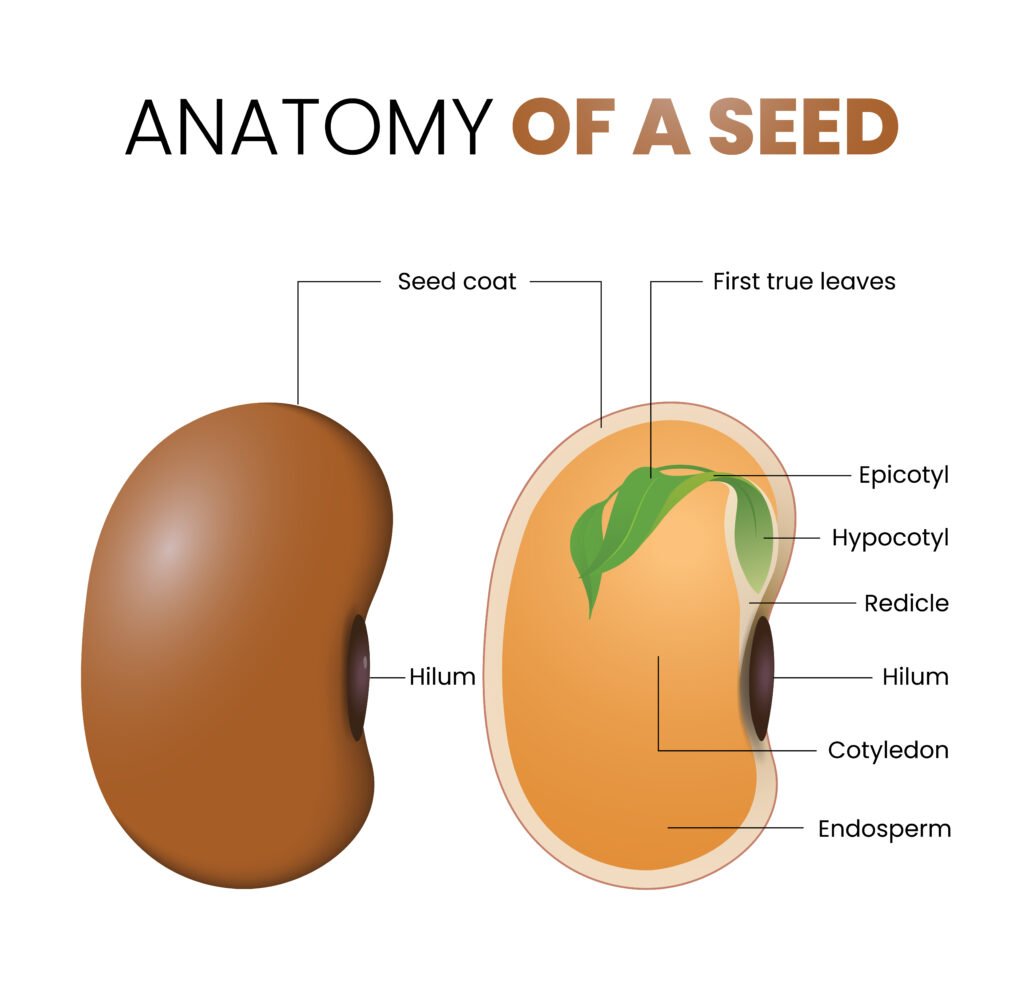
💡 Concept:
Growth = Quantitative increase
Development = Qualitative improvement
Both are interlinked and regulated by hormones and environment.
🌾 Characteristics of Plant Growth
1️⃣ Irreversible ➤ Once grown, cannot return to original size
2️⃣ Permanent ➤ Long-lasting increase
3️⃣ Localized ➤ Occurs in meristematic tissues
4️⃣ Indeterminate ➤ Continues throughout life
5️⃣ Cellular basis ➤ Involves cell division, enlargement, and differentiation
✏️ Note: In animals, growth is determinate; in plants, it is indeterminate.
🌿 Phases of Growth
🧬 Plant growth occurs in three sequential phases:
1️⃣ Meristematic Phase (Zone of Cell Division)
📍 Found in root and shoot tips
🧠 Cells: small, dense cytoplasm, active mitosis
2️⃣ Elongation Phase
📍 Just behind meristem
🧬 Cells enlarge due to vacuole formation, cell wall loosening
3️⃣ Maturation Phase
📍 Cells differentiate to form specific tissues
🌾 Becomes permanent tissue
💡 Concept: Growth = cumulative effect of cell division + elongation + differentiation.
🌸 Growth Curves
🌀 Sigmoid (S-shaped) curve — represents typical growth pattern.
Phases:
1️⃣ Lag Phase – slow start
2️⃣ Log Phase – rapid exponential growth
3️⃣ Stationary Phase – growth slows due to limitations
⚡ Mathematical expression:
W₁ = W₀ e^(rt)
where W₀ = initial size, W₁ = final size, r = growth rate, t = time
✏️ Note: Exponential growth observed in young tissues.
🌾 Conditions for Growth
🧠 Growth requires:
Nutrients (C, N, P, K)
Water (for turgidity, enzymatic reactions)
Oxygen (respiration for ATP)
Temperature (optimum range 25–35°C)
Light (for photosynthesis and hormones)
💡 Concept: External conditions affect internal physiology and hormone action.
🌿 Differentiation, Dedifferentiation, Redifferentiation
🧩 Differentiation
➡️ Process by which meristematic cells become specialized (e.g., xylem, phloem).
🔄 Dedifferentiation
➡️ Permanent cells regain meristematic ability (e.g., interfascicular cambium).
🔁 Redifferentiation
➡️ Dedifferentiated cells become specialized again (e.g., secondary xylem).
💡 Concept: These processes ensure plant’s regenerative ability.
🌱 Development
🧬 Development = Growth + Differentiation + Maturation
🎯 Involves cell expansion, specialization, organ formation, senescence.
📘 Controlled by genetic and environmental factors through hormonal regulation.
🌸 Plant Growth Regulators (Phytohormones)
🧠 Organic substances produced in trace amounts that regulate physiological processes.
1️⃣ Auxins (Discovered by F.W. Went)
🌿 Synthesized in shoot tips and young leaves
📘 Functions:
Cell elongation
Apical dominance
Root initiation
Delays abscission
Used in weed control, parthenocarpy
💡 Examples: IAA, IBA, NAA, 2,4-D
2️⃣ Gibberellins (GAs)
🌾 Found in young leaves, seeds
📘 Functions:
Stem elongation
Breaking seed dormancy
Bolting in rosette plants
Promotes flowering
Mobilizes nutrients during germination
✏️ Example: GA₃ (from Gibberella fujikuroi)
3️⃣ Cytokinins
🌿 Produced in root apices
📘 Functions:
Promotes cell division
Delays senescence
Promotes shoot formation in tissue culture
Antagonistic to auxin in apical dominance
💡 Examples: Kinetin, Zeatin
4️⃣ Abscisic Acid (ABA)
🌾 Stress hormone
📘 Functions:
Induces dormancy
Abscission of leaves & fruits
Stomatal closure
Inhibits growth
💡 Works opposite to gibberellins.
5️⃣ Ethylene
💨 Gaseous hormone
📘 Functions:
Fruit ripening
Senescence
Epinasty and abscission
Triple response (inhibition of elongation, swelling, horizontal growth)
💡 Used in artificial ripening of fruits.
🌿 Photoperiodism
🧠 The response of plants to the relative lengths of day and night.
💡 Controls flowering time and reproductive growth.
🌸 Types:
1️⃣ Short Day Plants – Flower when day < critical length (e.g., rice)
2️⃣ Long Day Plants – Flower when day > critical length (e.g., wheat)
3️⃣ Day Neutral Plants – Unaffected by day length (e.g., tomato)
📘 Pigment involved: Phytochrome (two forms — Pr & Pfr)
✏️ Note: Light quality and duration regulate hormone production.
🌾 Vernalization
🌱 Process of inducing flowering by exposure to low temperature.
🧠 Common in temperate plants (e.g., wheat, cabbage).
⚙️ Ensures flowering in favorable season.
💡 Devernalization: Reverse effect by high temperature.
🌸 Seed Dormancy
🧬 Period during which seed fails to germinate despite favorable conditions.
📘 Causes:
Hard seed coat
Immature embryo
Growth inhibitors (ABA)
🪴 Breaking dormancy:
Scarification, stratification, gibberellin treatment.
✏️ Note: Dormancy ensures survival during adverse conditions.
🌿 Senescence
🧠 Aging process in plants involving metabolic decline.
⚙️ Leads to leaf fall, fruit ripening, death of parts.
💡 Controlled by hormones (ABA ↑, cytokinin ↓).
🌾 Abscission
🌸 Detachment of organs (leaves, fruits, flowers).
📘 Occurs in abscission zone at base.
💡 Hormones: Auxin ↓, Ethylene ↑
🌿 Helps plant shed unwanted or old parts.
🌍 Factors Affecting Growth and Development
1️⃣ Internal: Hormones, genes, metabolism
2️⃣ External: Light, temperature, water, nutrients
💡 Growth is a result of coordination between these factors.
🌸 Differentiation of Growth
🧠 Primary Growth: By apical meristem → length
🌿 Secondary Growth: By lateral meristems → girth
✏️ Seen in dicots; monocots lack secondary growth.
🌾 Growth Measurements
📘 Methods:
Absolute growth rate (increase per unit time)
Relative growth rate (increase relative to initial size)
🧪 Auxanometer used for measuring growth.
🌍 Why This Lesson Matters
🌿 Explains how plants grow, mature, and adapt
🧠 Basis for crop improvement and horticulture
⚡ Links physiology with agriculture
🌱 Helps in hormone-based regulation of flowering, fruiting, and yield
📝 Quick Recap
🧠 Growth = irreversible increase; Development = qualitative change
🌱 Phases: meristematic → elongation → maturation
🌀 Sigmoid curve: lag, log, stationary
⚙️ Differentiation, dedifferentiation, redifferentiation
💡 Hormones: Auxin, GA, Cytokinin, ABA, Ethylene
🌸 Photoperiodism & Vernalization regulate flowering
🌾 Dormancy, Senescence, Abscission = aging processes
🌍 Growth affected by internal & external factors
📘 Summary
Plant growth and development involve quantitative and qualitative changes, regulated by hormones and environment. Growth shows sigmoid curve with distinct phases. Processes like differentiation and redifferentiation produce diverse tissues. Phytohormones coordinate activities — auxins promote elongation, gibberellins induce bolting, cytokinins trigger division, ABA causes dormancy, ethylene ripens fruits. Photoperiodism and vernalization ensure flowering under suitable conditions. Growth measurement and regulation underpin agricultural practices, ensuring productivity and adaptation.
————————————————————————————————————————————————————————————————————————————
QUESTIONS FROM TEXTBOOK
🔵 Question 1. Define growth, differentiation, development, dedifferentiation, redifferentiation, determinate growth, meristem and growth rate.
🟢 Answer:
🌿 Growth:
Irreversible permanent increase in size, volume, or number of cells.
🌱 Differentiation:
Process by which cells become structurally and functionally specialized.
🌸 Development:
Sum total of growth, differentiation, and maturation forming the final structure.
🌿 Dedifferentiation:
Process by which mature cells regain capacity to divide (e.g., formation of interfascicular cambium).
🌸 Redifferentiation:
Process by which dedifferentiated cells again become specialized (e.g., formation of secondary xylem).
🌿 Determinate growth:
Growth which stops after reaching a certain size or maturity (e.g., leaves, flowers).
🌱 Meristem:
Region of actively dividing cells (apical, intercalary, lateral).
🌸 Growth rate:
Increase in growth per unit time; can be arithmetic or geometric.
🔵 Question 2. Why is not any one parameter good enough to demonstrate growth throughout the life of a flowering plant?
🟢 Answer:
🌿 Growth in plants is multidimensional — involves increase in length, area, volume, number of cells, and fresh/dry weight.
➡️ A single parameter cannot represent all aspects.
✔️ Hence, multiple parameters are used to measure total growth.
🔵 Question 3. Describe briefly:
🟢 Answer:
(a) 🌱 Arithmetic growth:
Growth rate constant.
One cell divides into two, one continues division.
📈 Linear increase: Lt = L₀ + rt
(b) 🌿 Geometric growth:
Rate proportional to current size.
📈 Exponential growth: Wt = W₀e^rt
(c) 🌸 Sigmoid growth curve:
Common in plants.
Three phases: Lag, log (exponential), stationary.
(d) 🌿 Absolute and relative growth rates:
Absolute growth: Total growth per unit time.
Relative growth: Growth per unit initial parameter per unit time.
🔵 Question 4. List five main groups of natural plant growth regulators. Write a note on discovery, physiological functions and agricultural/horticultural applications of any one of them.
🟢 Answer:
🌿 Groups:
Auxins
Gibberellins
Cytokinins
Ethylene
Abscisic acid
💡 Example — Auxin:
Discovery: F.W. Went (from Avena coleoptile tip).
Functions:
➡️ Cell elongation
➡️ Apical dominance
➡️ Root initiation
➡️ Inhibition of abscission
Applications:
🌾 Rooting powders, prevent fruit drop, promote parthenocarpy.
🔵 Question 5. Why is abscisic acid also known as stress hormone?
🟢 Answer:
🌸 Abscisic acid (ABA) induces stomatal closure during water stress,
inhibits growth, promotes dormancy, and enables tolerance under stress conditions (drought, cold).
✔️ Hence, called stress hormone.
🔵 Question 6. ‘Both growth and differentiation in higher plants are open’. Comment.
🟢 Answer:
🌿 In plants, meristems retain capacity for continuous division.
➡️ Growth and differentiation continue throughout life.
💡 Called open growth as new organs form repeatedly.
✔️ Example: Formation of leaves, flowers at different times.
🔵 Question 7. ‘Both a short day plant and a long day plant can produce can flower simultaneously in a given place’. Explain.
🟢 Answer:
🌸 Photoperiodism depends on duration of light and dark.
➡️ By controlling light period in artificial conditions (greenhouse), both can flower together.
✔️ Temperature and photoperiod management induce flowering simultaneously.
🔵 Question 8. Which one of the plant growth regulators would you use if you are asked to:
🟢 Answer:
(a) 🌿 Induce rooting in a twig: Auxin (IBA, NAA)
(b) 🌸 Quickly ripen a fruit: Ethylene
(c) 🌱 Delay leaf senescence: Cytokinin
(d) 🌿 Induce growth in axillary buds: Cytokinin
(e) 🌸 Bolt a rosette plant: Gibberellin
(f) 🌿 Induce immediate stomatal closure in leaves: Abscisic acid
🔵 Question 9. Would a defoliated plant respond to photoperiodic cycle? Why?
🟢 Answer:
🌿 No, defoliated plant will not respond.
💡 Reason: Leaves perceive photoperiodic stimulus; in absence, signal not transmitted to flowering regions.
✔️ Thus, flowering fails.
🔵 Question 10. What would be expected to happen if:
🟢 Answer:
(a) 🌸 GA₃ is applied to rice seedlings:
➡️ Causes excessive internode elongation (foolish seedling disease).
(b) 🌿 Dividing cells stop differentiating:
➡️ Plant growth and organ formation cease.
(c) 🌱 A rotten fruit gets mixed with unripe fruits:
➡️ Ethylene from rotten fruit induces ripening in others.
(d) 🌸 You forget to add cytokinin to culture medium:
➡️ Only roots form; no shoot initiation (cytokinin required for shoot formation).
————————————————————————————————————————————————————————————————————————————
OTHER IMPORTANT QUESTIONS FOR EXAMS
(CBSE MODEL QUESTIONS PAPER)
ESPECIALLY MADE FROM THIS LESSON ONLY
🔴 Question 1:
Growth in plants is —
🔴1️⃣ Limited
🟢2️⃣ Indeterminate
🟡3️⃣ Seasonal
🔵4️⃣ Temporary
🟢 Answer: 2️⃣ Indeterminate
🔴 Question 2:
The study of growth and development in plants is called —
🔴1️⃣ Morphology
🟢2️⃣ Physiology
🟡3️⃣ Developmental biology
🔵4️⃣ Growth kinetics
🟢 Answer: 3️⃣ Developmental biology
🔴 Question 3:
Which phase of growth shows maximum rate?
🔴1️⃣ Lag phase
🟢2️⃣ Log phase
🟡3️⃣ Stationary phase
🔵4️⃣ Senescence
🟢 Answer: 2️⃣ Log phase
🔴 Question 4:
Which part of plant shows primary growth?
🔴1️⃣ Cambium
🟢2️⃣ Apical meristem
🟡3️⃣ Pericycle
🔵4️⃣ Cork cambium
🟢 Answer: 2️⃣ Apical meristem
🔴 Question 5:
Which of the following is a natural auxin?
🔴1️⃣ IAA
🟢2️⃣ NAA
🟡3️⃣ 2,4-D
🔵4️⃣ IBA
🟢 Answer: 1️⃣ IAA (Indole-3-Acetic Acid)
🔴 Question 6:
Which plant hormone promotes cell division?
🔴1️⃣ Auxin
🟢2️⃣ Cytokinin
🟡3️⃣ Gibberellin
🔵4️⃣ Ethylene
🟢 Answer: 2️⃣ Cytokinin
🔴 Question 7:
Which plant hormone helps in seed dormancy?
🔴1️⃣ Auxin
🟢2️⃣ ABA
🟡3️⃣ Gibberellin
🔵4️⃣ Cytokinin
🟢 Answer: 2️⃣ ABA (Abscisic Acid)
🔴 Question 8:
Which hormone is known as the ripening hormone?
🔴1️⃣ Auxin
🟢2️⃣ Ethylene
🟡3️⃣ Cytokinin
🔵4️⃣ ABA
🟢 Answer: 2️⃣ Ethylene
🔴 Question 9:
Which plant hormone breaks seed dormancy?
🔴1️⃣ ABA
🟢2️⃣ GA₃
🟡3️⃣ Ethylene
🔵4️⃣ Cytokinin
🟢 Answer: 2️⃣ GA₃ (Gibberellic Acid)
🔴 Question 10:
Which factor is essential for photoperiodism?
🔴1️⃣ Temperature
🟢2️⃣ Light duration
🟡3️⃣ CO₂
🔵4️⃣ Water
🟢 Answer: 2️⃣ Light duration ☀️
🔴 Question 11:
Define growth in plants.
🟢 Answer:
Irreversible permanent increase in size, volume, or number of cells in plants under favorable conditions 🌱.
🔴 Question 12:
Name three phases of growth.
🟢 Answer:
1️⃣ Lag phase (slow growth)
2️⃣ Log phase (rapid growth)
3️⃣ Stationary phase (growth slows down) 📈
✅ End of Response 1 (Q1–Q12)
Proceed to Response 2 for Q13–Q22 (3-mark questions).
all questions and answers belongs to this lesson……..only and all answers are rechecked and found correct.
📘 Lesson: Plant Growth and Development — Code 3 — Response 2
(Class 11 Biology · NCERT 2025–26 Edition · Board-Style Paper Q13–Q22 · 3 Marks Each)
🔴 Question 13:
Describe the characteristics of plant growth.
🟢 Answer:
1️⃣ Irreversible: Growth cannot be reversed.
2️⃣ Permanent: Increase in size or mass is lasting.
3️⃣ Quantitative: Measured in terms of length, area, volume, or cell number.
4️⃣ Occurs by cell division: Meristematic tissues actively divide.
5️⃣ Unlimited (indeterminate): Continues throughout life in certain organs. 🌱
🔴 Question 14:
What are the three phases of growth?
🟢 Answer:
1️⃣ Lag Phase: Initial slow growth due to adjustment.
2️⃣ Log Phase: Rapid exponential increase in size and cell number 📈.
3️⃣ Stationary Phase: Growth slows; metabolic equilibrium reached.
💡 Growth curve is typically sigmoid-shaped (S-shaped).
🔴 Question 15:
What is sigmoid growth curve? Explain its phases.
🟢 Answer:
Definition: S-shaped curve representing growth over time.
Phases:
1️⃣ Lag phase: Slow start.
2️⃣ Log phase: Rapid growth.
3️⃣ Stationary phase: Rate slows due to limitations.
Example: Elongation of plant organ. 🌿
🔴 Question 16:
Define differentiation, dedifferentiation, and redifferentiation.
🟢 Answer:
Differentiation: Cells become specialized (e.g., xylem vessels).
Dedifferentiation: Mature cells regain division ability (e.g., cork cambium).
Redifferentiation: Dedifferentiated cells specialize again for new functions. 🔄
🔴 Question 17:
What are plant growth regulators? Classify them.
🟢 Answer:
Definition: Chemical substances regulating plant growth and development.
Types:
1️⃣ Promoters: Auxins, Gibberellins, Cytokinins.
2️⃣ Inhibitors: Abscisic Acid (ABA).
3️⃣ Ethylene: Shows both promoting and inhibiting effects. 🌿💧
🔴 Question 18:
Explain the functions of auxins.
🟢 Answer:
1️⃣ Stimulate cell elongation in shoots.
2️⃣ Promote root initiation.
3️⃣ Apical dominance (inhibits lateral buds).
4️⃣ Delay abscission of leaves and fruits.
5️⃣ Used in parthenocarpy (seedless fruits). 🍌
🔴 Question 19:
Write functions of gibberellins.
🟢 Answer:
1️⃣ Stimulate stem elongation and leaf growth.
2️⃣ Break seed dormancy 🌾.
3️⃣ Promote flowering in long-day plants.
4️⃣ Help in fruit development and bolting.
5️⃣ Used in malting industry.
🔴 Question 20:
State the functions of cytokinins.
🟢 Answer:
1️⃣ Promote cell division.
2️⃣ Delay senescence of leaves 🍃.
3️⃣ Promote nutrient mobilization.
4️⃣ Overcome apical dominance.
5️⃣ Used in tissue culture to induce shoot formation.
🔴 Question 21:
Write the functions of abscisic acid (ABA).
🟢 Answer:
1️⃣ Induces seed dormancy 🌰.
2️⃣ Promotes abscission of leaves and fruits.
3️⃣ Closes stomata during water stress 💧.
4️⃣ Acts as growth inhibitor, opposing gibberellins.
🔴 Question 22:
Explain the role of ethylene in plants.
🟢 Answer:
1️⃣ Promotes fruit ripening 🍎.
2️⃣ Enhances senescence and abscission.
3️⃣ Promotes flowering in pineapple.
4️⃣ Breaks seed and bud dormancy.
5️⃣ Triple response: Inhibits elongation, increases thickness, horizontal growth.
🔴 Question 23:
Explain the conditions necessary for growth in plants.
🟢 Answer:
1️⃣ Water: Maintains turgor for cell expansion and acts as medium for biochemical reactions 💧.
2️⃣ Nutrients: Provide essential minerals like N, P, K for synthesis of biomolecules.
3️⃣ Temperature: Optimum range 25–35°C 🌡️; affects enzyme activity.
4️⃣ Light: Required for photosynthesis and influences photoperiodism ☀️.
5️⃣ Hormones: Regulate cell division, elongation, and differentiation (auxins, GAs, cytokinins).
✅ All factors together ensure proper plant growth and development.
🔴 Question 24:
Describe the role of plant hormones in seed dormancy and germination.
🟢 Answer:
Abscisic Acid (ABA):
– Induces and maintains seed dormancy 🌰.
– Prevents premature germination.
Gibberellins (GA₃):
– Break dormancy by stimulating enzyme synthesis.
– Mobilize food reserves from endosperm.
Ethylene:
– Helps in breaking dormancy in some seeds.
💡 Balance between ABA and GA controls dormancy and germination.
🔴 Question 25:
Explain photoperiodism and its significance.
🟢 Answer:
Definition: Response of plants to duration of light and dark for flowering.
Types:
1️⃣ Short-day plants (e.g., rice) – need light period < critical length. 2️⃣ Long-day plants (e.g., wheat) – need light period > critical length.
3️⃣ Day-neutral plants (e.g., cucumber) – unaffected by light duration.
Significance:
✔️ Regulates flowering time 🌸
✔️ Ensures reproduction at favorable season
✔️ Basis for crop scheduling.
🔴 Question 26:
Describe vernalization and its importance.
🟢 Answer:
Definition: Induction of flowering by exposure to low temperature ❄️.
Example: Wheat, barley, cabbage.
Site: Act on meristematic tissue of shoot apex.
Importance:
1️⃣ Enables early flowering.
2️⃣ Prevents premature bolting.
3️⃣ Helps in crop improvement and hybrid seed production.
💡 Vernalin hormone hypothesized to be involved.
🔴 Question 27:
Differentiate between growth, development, and differentiation.
🟢 Answer:
Feature Growth Development Differentiation
Meaning Irreversible increase in size Sum of all changes toward maturity Specialization of cells
Nature Quantitative Qualitative Qualitative
Example Increase in height 🌿 Formation of flower Xylem formation
Control Hormones, environment Hormones Gene expression
✅ All three are interrelated processes of plant life.
🔴 Question 28:
Explain the concept of growth rate and its measurement.
🟢 Answer:
Growth rate: Increase in growth per unit time.
Types:
1️⃣ Absolute Growth Rate (AGR):
AGR = (W₂ – W₁) / (t₂ – t₁)
2️⃣ Relative Growth Rate (RGR):
RGR = (ln W₂ – ln W₁) / (t₂ – t₁)
Graphical Representation: Sigmoid growth curve 📈 with lag, log, and stationary phases.
💡 Growth measured by length, area, weight, or cell number.
🔴 Question 29:
Describe apical dominance and its hormonal control.
🟢 Answer:
Definition: Inhibition of lateral buds by apical bud.
Hormonal control:
– Auxin from apical bud suppresses lateral bud growth.
– Removal of apex → lateral buds grow (de-topping).
– Application of cytokinin promotes lateral growth.
💡 Explains pruning practices in horticulture 🌳.
🔴 Question 30:
Write short notes on senescence and abscission.
🟢 Answer:
Senescence:
– Natural ageing process in plants.
– Involves breakdown of chlorophyll, proteins.
– Controlled by ABA and ethylene.
– Ensures nutrient remobilization to seeds 🍂.
Abscission:
– Shedding of leaves, flowers, fruits.
– Occurs at abscission zone with enzymatic action.
– Controlled by auxin (prevents) and ethylene (promotes).
✅ Both are essential for plant life cycle and survival.
————————————————————————————————————————————————————————————————————————————