
Class 6 : Science – ( English ) : Lesson 9. Methods of Separation in Everyday Life

EXPLANATION AND ANALYSIS
🌍 Introduction: Why Separation Is Needed in Daily Life
🔵🟣🟢 In our everyday life, we rarely use substances in a pure form. The materials around us are usually mixtures of two or more substances mixed together. 🌾🧂 For example, stones mixed with rice, sand mixed with water, or salt dissolved in water. To use these materials properly, we must separate useful components from unwanted ones.
🧠🧪 The process of separating components of a mixture is called separation. Different methods of separation are used depending on the nature of the mixture and the properties of its components. Understanding these methods helps us in cooking, cleaning, farming, industry, and science.
🧺 What Is a Mixture?
🔴🟢 A mixture is a combination of two or more substances mixed together physically, not chemically. Each component retains its own properties.
📌 Examples:
🟡 Rice + stones
🔵 Sand + water
🟣 Salt + water
🟢 Pulses + husk
🧠 Since components of a mixture are not chemically combined, they can be separated by simple physical methods.
🖐️ Handpicking
🔵🖐️ Handpicking is the simplest method of separation. It is used when unwanted substances are present in small quantities and are visibly different.
📌 Suitable when:
🟢 Size difference is large
🟣 Impurities are few
🔵 Impurities are solid
🌾 Example:
🟡 Removing stones from rice
🟤 Removing rotten fruits from fresh ones
🧠 This method requires human effort and is practical only for small quantities.
🌬️ Winnowing
🟢🌬️ Winnowing is used to separate lighter components from heavier ones using wind or air.
📌 Principle:
🟣 Lighter particles are carried away by air
🔵 Heavier particles fall straight down
🌾 Example:
🟡 Separating husk from grains
🟤 Separating chaff from wheat
🧠 Farmers commonly use this method in open fields where natural wind is available.

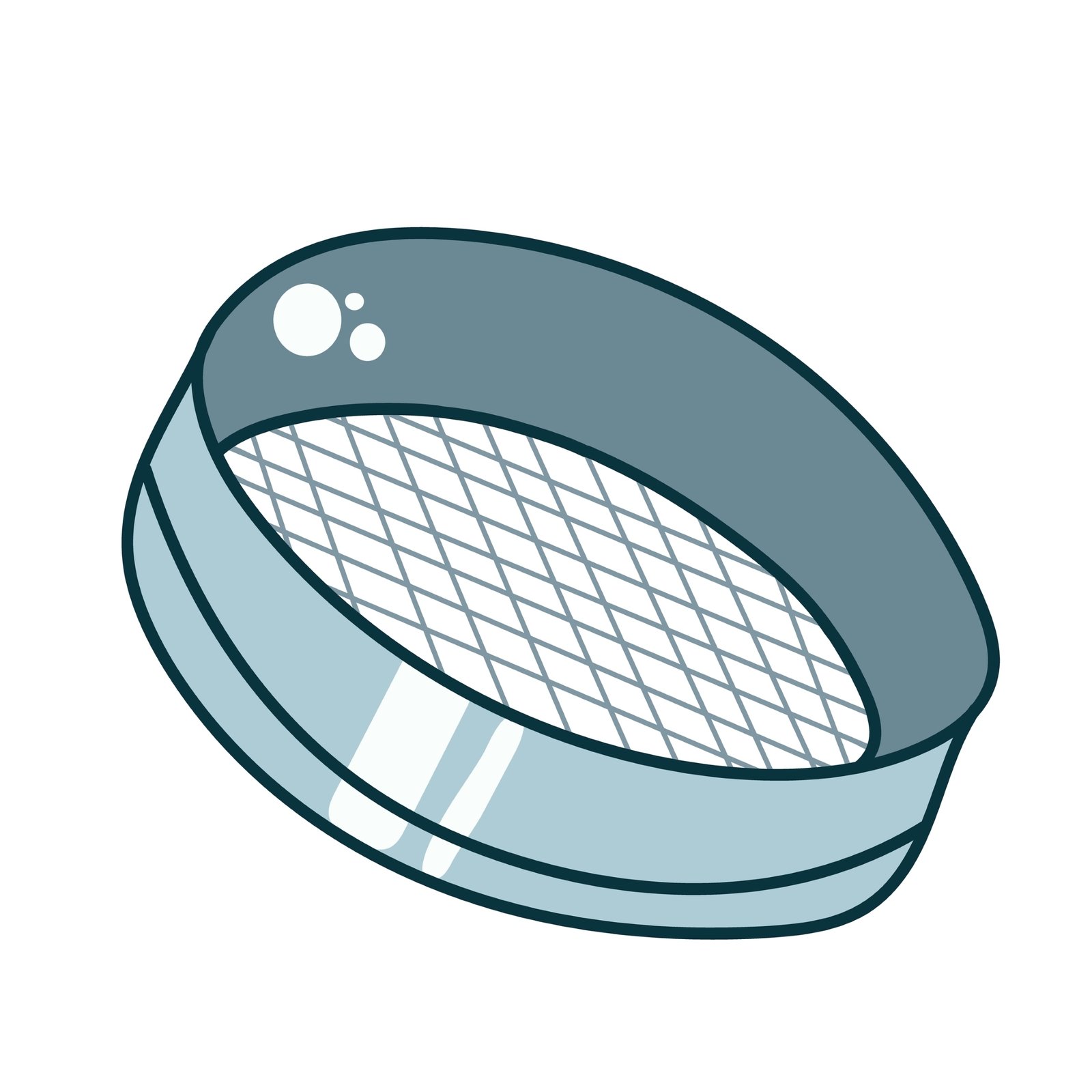
🧹 Sieving
🔵🧹 Sieving is used when components of a mixture have different sizes.
📌 Principle:
🟣 Smaller particles pass through holes
🟢 Larger particles remain on the sieve
🏗️ Examples:
🟡 Sieving flour to remove bran
🟤 Separating sand from gravel at construction sites
🧠 Sieves have meshes of different sizes depending on the requirement.
💧 Sedimentation and Decantation
🟣💧 When a solid does not dissolve in a liquid, we can use sedimentation and decantation.
🔹 Sedimentation
🔵 Heavier solid particles settle at the bottom when the mixture is left undisturbed.
🔹 Decantation
🟢 The clear liquid above is gently poured into another container without disturbing the sediment.
📌 Examples:
🟡 Muddy water
🟤 Sand mixed with water
🧠 This method is simple but does not remove very fine particles.
🧪 Filtration
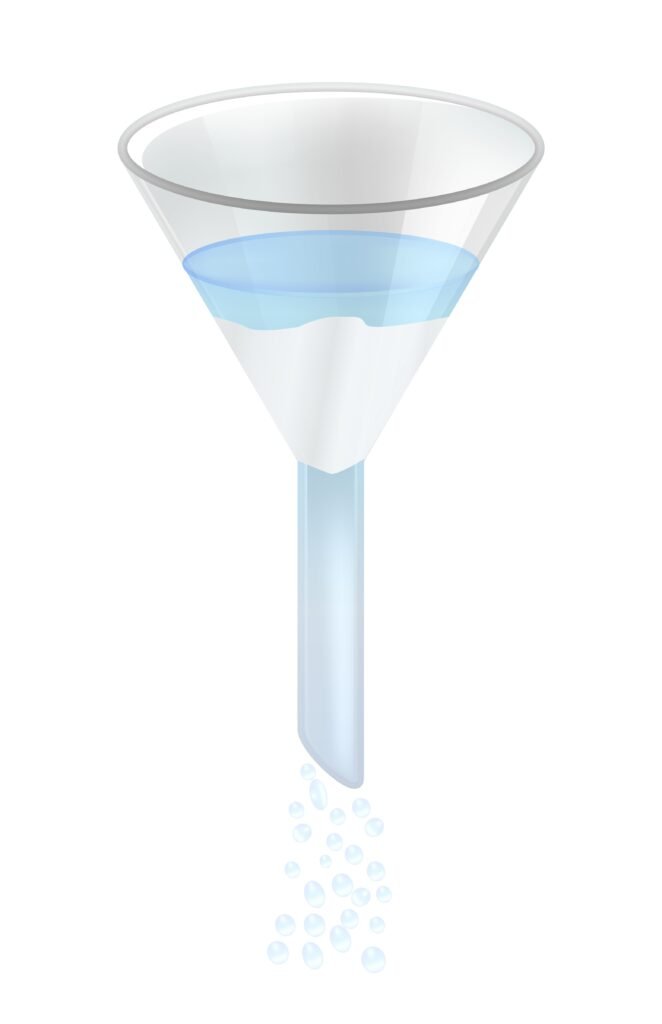
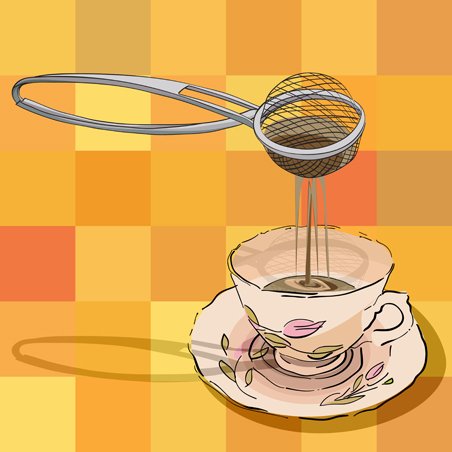
🔵🧪 Filtration is used to separate insoluble solids from liquids using a filter.
📌 Materials used:
🟢 Filter paper
🟣 Cloth
🔵 Fine mesh
☕ Examples:
🟡 Separating tea leaves from tea
🟤 Filtering muddy water
🧠 The solid left on the filter is called residue, and the liquid that passes through is called filtrate.
☀️ Evaporation
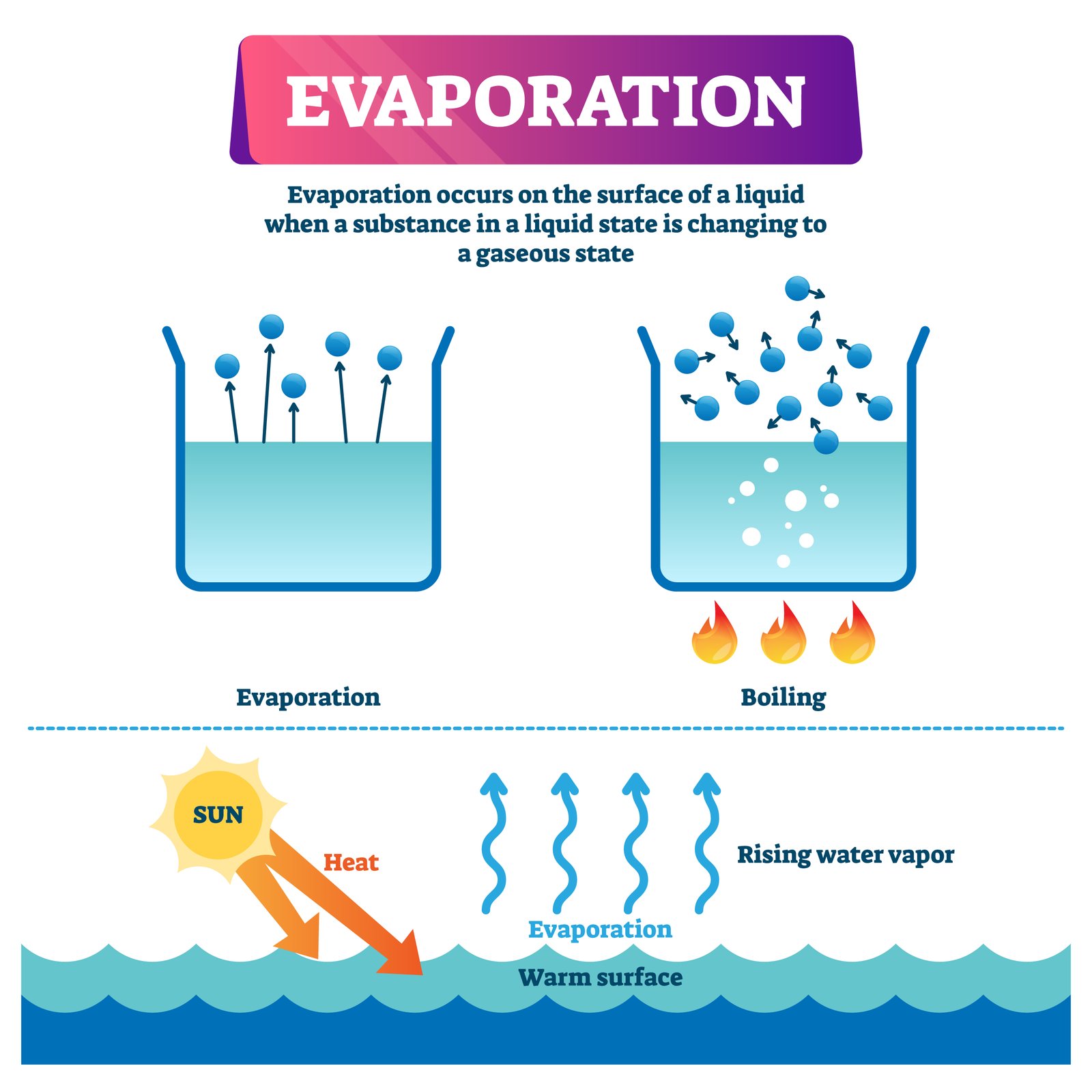
🟢☀️ Evaporation is used to separate a dissolved solid from a liquid.
📌 Principle:
🟣 Liquid changes into vapour on heating
🔵 Solid remains behind
🌊 Example:
🟡 Obtaining salt from seawater
🧠 This method is widely used in salt pans near coastal areas.

🔄 Condensation
🟣🔄 Condensation is the reverse of evaporation. Vapour cools down and changes back into liquid.
📌 Used when:
🟢 We want to collect the liquid part
🌧️ Example:
🟡 Formation of water droplets on a cold surface
🧠 Evaporation and condensation together help in separating pure water from saltwater.
🧲 Magnetic Separation
🔵🧲 Magnetic separation is used when one component of a mixture is magnetic.
📌 Principle:
🟣 Magnetic materials are attracted by magnets
⚙️ Examples:
🟡 Iron filings mixed with sand
🟤 Iron pieces from scrap
🧠 This method is fast and efficient where applicable.
🧠 Importance of Separation
🔵🧠 Separation helps us to:
🟢 Remove harmful impurities
🟣 Obtain useful substances
🟡 Improve quality of materials
🟤 Make materials suitable for use
🍚 Example:
🟢 Cleaning grains before cooking
🧪 Preparing pure substances for experiments
📘 Summary (≈200 words)
🟣🔵 Separation of substances is an essential part of our daily life. Most materials around us are mixtures, and we need to separate their components to make them useful. Various methods of separation are used based on differences in size, weight, solubility, and magnetic properties.
🟢🖐️ Handpicking is used when impurities are visible and present in small quantities. 🌬️ Winnowing helps farmers separate lighter husk from heavier grains. 🧹 Sieving is effective when particle sizes differ significantly.
💧 Sedimentation and decantation allow heavier solids to settle before pouring out the clear liquid. 🧪 Filtration removes insoluble solids from liquids using filters. ☀️ Evaporation helps obtain dissolved solids like salt from water, while 🔄 condensation helps recover the liquid. 🧲 Magnetic separation is used when one component is magnetic.
🧠 Each method has its own importance and is chosen carefully depending on the type of mixture. Understanding these methods helps us in everyday tasks such as cooking, cleaning, farming, and industrial work.
📝 Quick Recap (≈100 words)
🔵 Mixtures contain two or more substances mixed physically
🟢 Separation helps remove impurities and obtain useful materials
🟣 Handpicking, winnowing, and sieving depend on size and weight
💧 Sedimentation and decantation separate solids from liquids
🧪 Filtration removes insoluble solids
☀️ Evaporation separates dissolved solids
🧲 Magnetic separation works for magnetic materials
——————————————————————————————————————————————————————————————————————————–
TEXTBOOK QUESTIONS
🔒 ❓ Question 1.
What purpose does handpicking serve in the process of separation?
🟢 1️⃣ Filtration
🔵 2️⃣ Sorting
🟡 3️⃣ Evaporation
🟣 4️⃣ Decantation
📌 Answer: 🔵 2️⃣ Sorting
Handpicking is used to manually separate unwanted solid components from a mixture by sorting them based on size, shape or colour.
🔒 ❓ Question 2.
Which of the following substances are commonly separated using the churning method?
🟢 1️⃣ Oil from water
🔵 2️⃣ Sand from water
🟡 3️⃣ Cream from milk
🟣 4️⃣ Oxygen from air
📌 Answer: 🟡 3️⃣ Cream from milk
Churning helps separate lighter cream from milk due to difference in density.
🔒 ❓ Question 3.
Which factor is usually essential for filtration?
🟢 1️⃣ Apparatus size
🔵 2️⃣ Presence of air
🟡 3️⃣ Pore size
🟣 4️⃣ Temperature of the mixture
📌 Answer: 🟡 3️⃣ Pore size
Filtration depends on pore size of the filter, which allows liquid to pass while retaining solid particles.
🔒 ❓ Question 4.
State with reason(s) whether the following statements are True [T] or False [F]. Also correct the false statements.
(i) Salt can be separated from salt solution by keeping it under the Sun.
(ii) Handpicking should be used only when the quantity of one component is less.
(iii) A mixture of puffed rice and rice grains can be separated by threshing.
(iv) A mixture of mustard oil and lemon water can be separated by decantation.
(v) Sieving is used to separate a mixture of rice flour and water.
📌 Answer:
(i) True – Water evaporates, leaving salt behind.
(ii) True – Handpicking is effective when unwanted material is in small quantity.
(iii) False – It can be separated by winnowing, not threshing.
(iv) True – Oil floats on water and can be decanted.
(v) False – It should be separated by filtration, not sieving.
🔒 ❓ Question 5.
Match the mixtures in Column I with their method of separation in Column II.
Column I
(i) Gram flour mixed with black gram
(ii) Chalk powder mixed with water
(iii) Corn mixed with potatoes
(iv) Iron powder mixed with sawdust
(v) Oil mixed with water
Column II
(a) Handpicking
(b) Magnetic separation
(c) Decantation
(d) Sieving
(e) Filtration
📌 Answer:
(i) – (d) Sieving
(ii) – (e) Filtration
(iii) – (a) Handpicking
(iv) – (b) Magnetic separation
(v) – (c) Decantation
🔒 ❓ Question 6.
In what situations would you use decantation instead of filtration to separate solids from liquids?
📌 Answer:
Decantation is used when solid particles are heavy and settle at the bottom of the liquid, such as mud in water. It is preferred when filtration is slow or not required.
🔒 ❓ Question 7.
Can you relate the presence of nasal hair to any separation process?
📌 Answer:
Yes. Nasal hair works like filtration. It traps dust and impurities from air before they enter our lungs.
🔒 ❓ Question 8.
During the COVID-19 pandemic, all of us wore masks. What material are they generally made of? What is their role?
📌 Answer:
Masks are generally made of cotton or synthetic fabric. They act as filters, preventing dust particles, germs and droplets from entering our respiratory system.
🔒 ❓ Question 9.
A mixture containing potatoes, salt and sawdust is given to you. Outline a stepwise procedure for separating each component.
📌 Answer:
First, remove potatoes by handpicking.
Add water to the remaining mixture; sawdust will float and can be removed by decantation.
Salt dissolves in water and can be recovered by evaporation.
🔒 ❓ Question 10.
Read the story “Intelligent Leela” and tick the correct options. Also suggest a suitable title.
Correct choices:
water
fit
filtered
paper/muslin cloth
boiled
cooling
filtered
fit
📌 Answer:
Leela collected water, found it unfit, filtered it using paper/muslin cloth, then boiled it. After cooling, she filtered it again and made it fit for drinking.
Suggested Title: “Clean Water through Proper Separation”.
——————————————————————————————————————————————————————————————————————————–
OTHER IMPORTANT QUESTIONS
SECTION 1 — MCQs (5 Questions)
🔒 ❓ Q1. Which method is used to separate stones from rice by hand?
🟢 1️⃣ Sieving
🔵 2️⃣ Handpicking
🟡 3️⃣ Winnowing
🟣 4️⃣ Sedimentation
✔️ Answer: 🔵 2️⃣ Handpicking
🔒 ❓ Q2. Which method is used to separate husk from grains?
🟢 1️⃣ Handpicking
🔵 2️⃣ Sedimentation
🟡 3️⃣ Winnowing
🟣 4️⃣ Filtration
✔️ Answer: 🟡 3️⃣ Winnowing
🔒 ❓ Q3. What happens during sedimentation?
🟢 1️⃣ Light particles settle down
🔵 2️⃣ Heavy particles settle at the bottom
🟡 3️⃣ Liquid evaporates
🟣 4️⃣ Solids dissolve in water
✔️ Answer: 🔵 2️⃣ Heavy particles settle at the bottom
🔒 ❓ Q4. Which method is best to separate sand from water?
🟢 1️⃣ Winnowing
🔵 2️⃣ Filtration
🟡 3️⃣ Handpicking
🟣 4️⃣ Evaporation
✔️ Answer: 🔵 2️⃣ Filtration
🔒 ❓ Q5. Which method is used to obtain salt from sea water?
🟢 1️⃣ Filtration
🔵 2️⃣ Sedimentation
🟡 3️⃣ Evaporation
🟣 4️⃣ Sieving
✔️ Answer: 🟡 3️⃣ Evaporation
SECTION 2 — Very Short Answer (5 Questions)
(One or two words only)
🔒 ❓ Q6. Name the method used to separate tea leaves from tea.
📌 ✅ Answer: Filtration
🔒 ❓ Q7. Which method uses wind to separate substances?
📌 ✅ Answer: Winnowing
🔒 ❓ Q8. Name the method of separating insoluble solids from liquids.
📌 ✅ Answer: Filtration
🔒 ❓ Q9. What is the process of settling of heavy particles called?
📌 ✅ Answer: Sedimentation
🔒 ❓ Q10. Name one soluble substance in water.
📌 ✅ Answer: Salt
SECTION 3 — Short Answer (3 Questions)
(About 40–50 words)
🔒 ❓ Q11. Why is handpicking used to separate impurities from grains?
📌 ✅ Answer:
🔹 Handpicking is used when impurities are larger and easily visible.
🔸 The unwanted particles can be removed by hand.
🔹 This method is simple and useful when the quantity of impurities is small.
🔒 ❓ Q12. Explain the process of filtration with an example.
📌 ✅ Answer:
🔹 Filtration is used to separate insoluble solids from liquids.
🔸 A filter allows liquid to pass through but stops solid particles.
🔹 For example, tea leaves are separated from tea using a strainer.
🔒 ❓ Q13. How does evaporation help in separation of substances?
📌 ✅ Answer:
🔹 Evaporation removes the liquid by heating.
🔸 The dissolved solid is left behind after water evaporates.
🔹 This method is used to obtain salt from sea water.
SECTION 4 — Long Answer (1 Question)
(About 70–80 words)
🔒 ❓ Q14. Describe different methods used to separate mixtures in daily life.
📌 ✅ Answer:
🔹 Different methods are used to separate mixtures based on their properties.
🔸 Handpicking removes visible impurities from grains.
🔹 Winnowing separates lighter husk from heavier grains using wind.
🔸 Filtration separates insoluble solids from liquids.
🔹 Evaporation helps obtain dissolved solids like salt from water.
——————————————————————————————————————————————————————————————————————————–
ADVANCE KNOWLEDGE
🌍 Separation: The Hidden Science Behind Daily Survival
Every day, without realizing it, humans perform scientific separation processes. Washing rice, filtering tea, separating waste—all are examples of humans using matter’s hidden properties to make life easier.
🧠 Deep idea:
Separation is not just about removing dirt. It is about understanding differences—in size, weight, solubility, magnetism, and density.
🧠 Why Separation Is Necessary Beyond Cleanliness
Separation helps us to:
🌾 Obtain pure food grains
🧪 Prepare medicines
🌍 Protect the environment
🚀 Process materials for technology
⭐ Without separation methods:
Salt could not be obtained from seawater
Metals could not be extracted from ores
Drinking water would be unsafe
🧪 The Core Principle Behind All Separation Methods
🧠 Every separation technique depends on one key idea:
👉 Different substances have different physical properties
These properties include:
Size
Weight
Solubility
Magnetism
Boiling point
⚠️ Misconception vs Reality
⚠️ Misconception: One method works for all mixtures
✅ Reality: Each mixture needs a specific method
⚠️ Misconception: Separation changes substances
✅ Reality: Separation is a physical process, not chemical
🌾 Handpicking, Winnowing, and Sieving — Ancient Intelligence
⏳ Thousands of years ago, humans learned separation by observation.
🌾 Handpicking
Used when impurities are visible
Depends on size and shape
🌬️ Winnowing
Uses wind or airflow
Heavier grains fall, lighter husk flies
🧠 Farmers were early scientists, using physics without formulas.
🧺 Sieving
Based on particle size
Fine particles pass through, coarse ones remain
🧪 Sedimentation and Decantation — Gravity at Work
🧠 Gravity is a powerful natural separator.
🧪 Sedimentation
Heavier particles settle down
Takes time and patience
🫗 Decantation
Clear liquid poured out carefully
⭐ Used in:
Water purification
Construction work
Cleaning muddy water
💧 Filtration — Controlled Blocking
🧪 Filtration uses a barrier that:
Allows liquid to pass
Stops solid particles
🌍 Natural filtration occurs when:
Water passes through soil layers
🚀 Modern filtration includes:
Water filters
Air purifiers
Kidney dialysis machines
🌡️ Evaporation and Condensation — Matter in Motion
🧠 These methods use change of state.
🌞 Evaporation
Liquid turns into gas
Used to obtain salt from seawater
❄️ Condensation
Gas turns into liquid
⭐ Together, they form the basis of:
Distillation
Water purification systems
🚀 Distillation — Separation at a Higher Level
🧠 Distillation separates substances based on boiling points.
🧪 Used to:
Make pure water
Refine fuels
Prepare laboratory chemicals
🚀 Space stations use distillation to recycle water.
🧲 Magnetic Separation — Invisible Force at Work
🧲 Some substances respond to magnets.
🧠 Used in:
Scrap metal industries
Recycling plants
Mining operations
⭐ Even tiny iron particles can be separated efficiently.
🌍 Separation and Environment
Separation is crucial for:
Waste management
Recycling plastic, glass, metals
Reducing pollution
🧠 Proper separation saves:
Energy
Natural resources
Earth’s health
🚀 Modern Separation Technologies
🚀 Scientists use advanced methods like:
Centrifugation
Chromatography
Reverse osmosis
🧠 These are used in:
Medicine
Space research
Forensic science
⭐ Amazing Facts About Separation
⭐ Blood components are separated to save lives
⭐ Milk cream separation led to butter and cheese
⭐ Gold is separated using density differences
⭐ Air itself is separated into oxygen and nitrogen
🧠 Why Curious Minds Must Go Beyond the Book
Separation teaches:
Observation skills
Logical thinking
Problem-solving
🧠 Every mixture is a puzzle, and every separation method is a solution.
🌟 Final Thought
Nature never mixes things randomly.
It leaves clues, and science teaches us how to read them.
🧠 Separation is the art of understanding differences—quietly powering civilization.
——————————————————————————————————————————————————————————————————————————–