
Class 6 : Science – ( English ) : Lesson 5. Measurement of Length and Motion

EXPLANATION AND ANALYSIS
📐 Why Measurement Is Important in Daily Life
Measurement is a basic and essential activity in our everyday life. Whenever we compare, buy, build, travel, or play, we unknowingly use measurement. Measuring length helps us know how long, how tall, or how far something is. Without proper measurement, it would be impossible to plan roads 🛣️, build houses 🏠, stitch clothes 🧵, or even arrange desks in a classroom.
🧠 Early humans also measured length, but they used body parts like handspan, footstep, cubit, or arm length. These methods were simple but not accurate because body sizes differ from person to person. This created confusion and disagreement. Therefore, the need for standard units of measurement became very important.
📏 Non-Standard Units of Length and Their Limitations
Before standard units were developed, people used non-standard units such as:
✋ Handspan
👣 Footstep
🦶 Foot
🤲 Cubit
These units were convenient but unreliable. For example, if two students measure the same table using their handspans, they may get different results because their hand sizes are different. Such variation makes comparison difficult and leads to errors.
⚠️ Because of these problems, non-standard units cannot be used in science or construction work where accuracy is essential.
📐 Standard Units of Length
To avoid confusion, scientists introduced standard units that are the same everywhere in the world. The most commonly used system is the International System of Units (SI units).
🔵 The SI unit of length is the metre (m).
🟢 Smaller lengths are measured in centimetre (cm) and millimetre (mm).
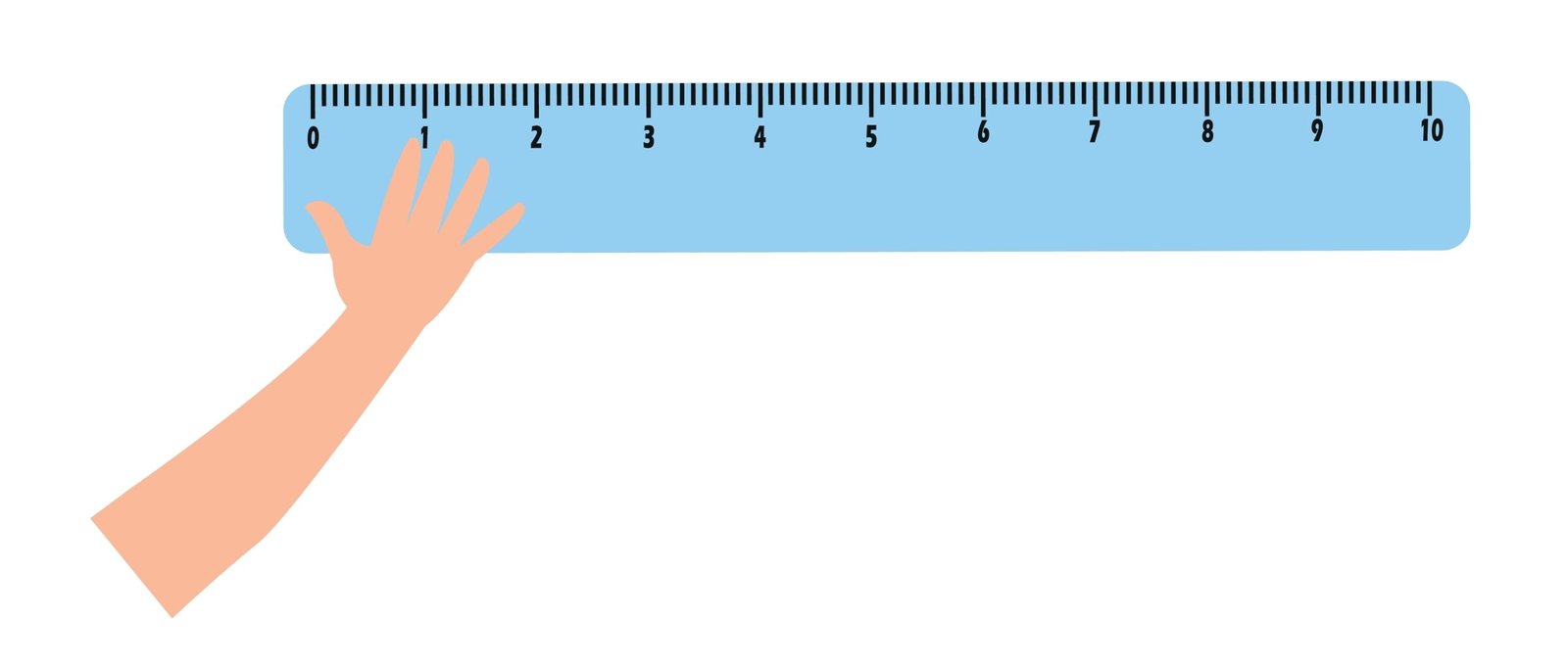
🟣 Longer distances are measured in kilometre (km).
📌 Relationships between units:
1 metre = 100 centimetres
1 centimetre = 10 millimetres
1 kilometre = 1000 metres
Using standard units ensures uniformity, accuracy, and clear communication.
📏 Measuring Length Using a Scale
A scale or ruler is commonly used to measure small lengths. While using a scale, certain precautions must be followed to avoid errors.
🧠 Correct method:
Place the object along the scale
Start measurement from the zero mark
Keep the scale straight and close to the object
⚠️ Sometimes, the zero mark of a scale is broken. In such cases:
Start measurement from another clear mark (like 1 cm)
Subtract the starting reading from the final reading
This careful approach helps in obtaining correct measurements.
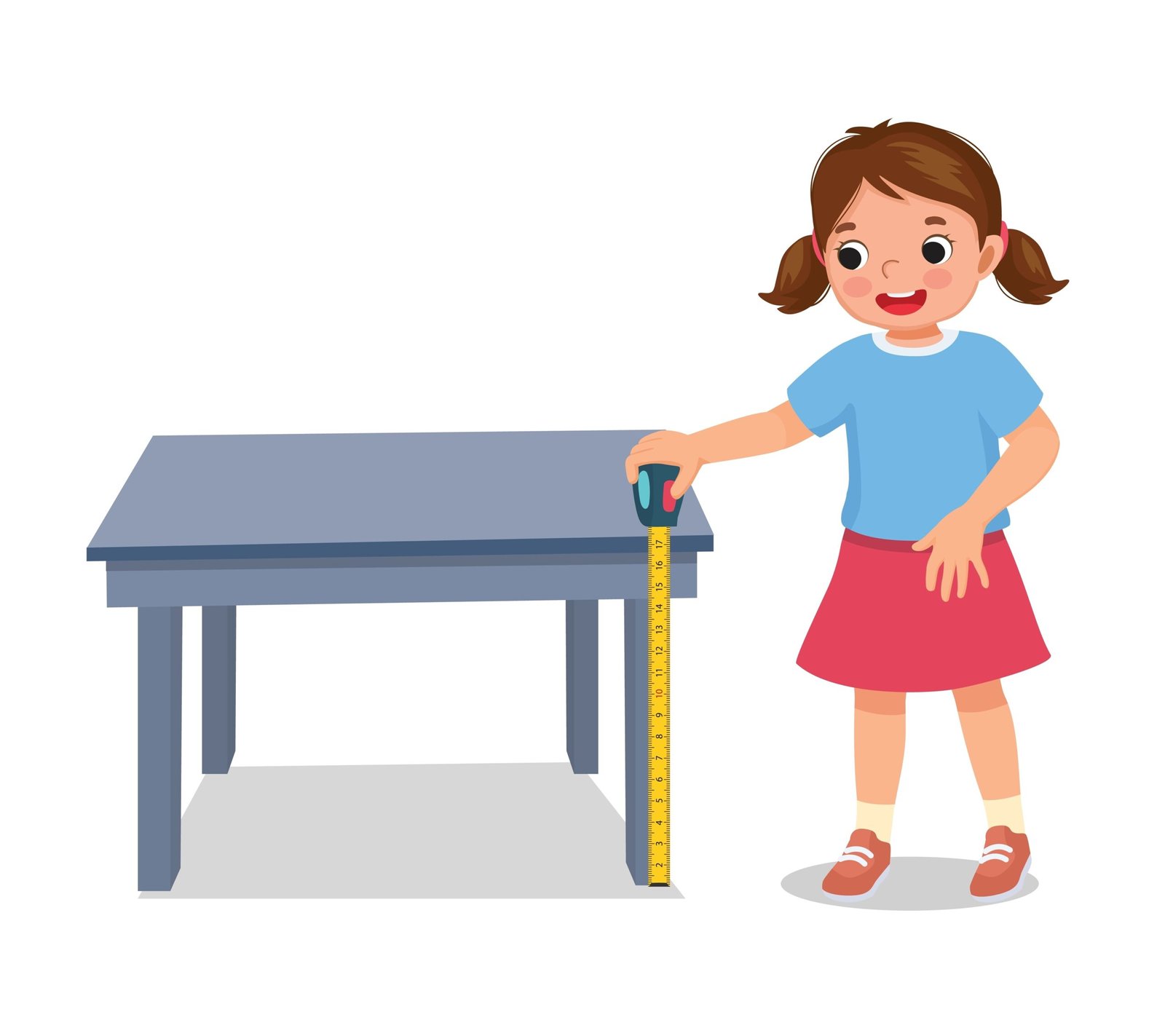
⚠️ Common Errors in Measuring Length
Errors can occur if measurements are not taken properly.
🔴 Parallax error occurs when the eye is not placed directly above the reading mark.
🔵 Zero error occurs when the zero mark of the instrument is damaged or not aligned.
🧠 To reduce errors:
Keep your eye directly above the scale
Use proper measuring tools
Repeat measurements if needed
Accuracy is very important in scientific measurements.
🚶 Understanding Motion
Motion means change in position of an object with time. If an object changes its position relative to a fixed point, it is said to be in motion.
🟢 A moving car 🚗
🟣 A flying bird 🐦
🔵 A rolling ball ⚽
All these show motion because their position changes with time.
If an object does not change its position with time, it is said to be at rest.
⏳ Types of Motion
Motion can be of different types depending on how an object moves.
🟠 Rectilinear motion — movement in a straight line
Example: a car moving on a straight road
🟣 Circular motion — movement along a circular path
Example: hands of a clock ⏰
🔵 Periodic motion — motion that repeats at regular intervals
Example: swinging of a pendulum
🧠 Understanding types of motion helps us describe movements clearly and accurately.
🛤️ Distance and Length in Motion
When an object moves, it covers a certain distance. Distance is the total length of the path travelled by an object.
📌 Distance depends on:
Path taken
Direction of movement
For example, if a child walks around a circular park, the distance covered is the length of the entire path, not the straight line between start and end points.
🧠 Motion Depends on Reference Point
Motion is always described with respect to a reference point.
🔍 A person sitting in a moving bus is at rest with respect to the bus, but in motion with respect to the road.
This shows that motion and rest are relative concepts, not absolute.
⚙️ Importance of Measuring Motion
Measuring motion helps us:
Calculate speed 🚄
Plan journeys 🧭
Design machines ⚙️
Understand natural events 🌍
From simple daily activities to advanced science, motion plays a key role.
🌟 Importance of Measurement in Science
Measurement forms the foundation of science. Experiments depend on accurate measurement of length, time, mass, and temperature.
🧪 Without measurement:
Results cannot be verified
Comparisons cannot be made
Scientific progress slows down
Thus, learning measurement early builds scientific thinking.
📝 Summary of the Lesson
Measurement of length is essential in daily life and science. Early methods used non-standard units like handspan and footstep, which caused confusion due to lack of uniformity. To solve this, standard units such as metre, centimetre, and kilometre were introduced under the SI system. Correct use of measuring tools like rulers and careful observation help reduce errors. Motion refers to change in position with time and can be of different types such as rectilinear, circular, and periodic motion. Understanding measurement and motion helps us observe, describe, and explain movements around us accurately.
⚡ Quick Recap
⭐ Measurement tells us how long or far something is
⭐ Non-standard units are unreliable
⭐ Metre is the SI unit of length
⭐ Proper method avoids measurement errors
⭐ Motion is change in position with time
⭐ Motion depends on reference point
⭐ Measurement supports scientific study
——————————————————————————————————————————————————————————————————————————–
TEXTBOOK AND QUESTIONS
🔒 ❓ Question 1.
Some lengths are given in Column I of Table 5.5. Some units are given in Column II. Match the lengths with the units suitable for measuring those lengths.
📌 ✅ Answer:
Distance between Delhi and Lucknow → kilometre
Thickness of a coin → millimetre
Length of an eraser → centimetre
Length of school ground → metre
🔒 ❓ Question 2.
Read the following statements and mark True (T) or False (F).
(i) The motion of a car moving on a straight road is an example of linear motion.
(ii) Any object which is changing its position with respect to a reference point with time is said to be in motion.
(iii) 1 km = 100 cm
📌 ✅ Answer:
(i) True
(ii) True
(iii) False (1 km = 1000 m = 100000 cm)
🔒 ❓ Question 3.
Which of the following is not a standard unit of measuring length?
(i) millimetre (ii) centimetre (iii) kilometre (iv) handspan
📌 ✅ Answer:
(iv) handspan
Handspan is a non-standard unit and varies from person to person.
🔒 ❓ Question 4.
Search for the different scales or measuring tapes at your home and school. Find out the smallest value that can be measured using each of these scales. Record your observations.
📌 ✅ Answer:
Plastic ruler (15 cm) → smallest division 1 mm
Wooden metre scale → smallest division 1 mm
Measuring tape → smallest division 1 mm
The smallest value measurable by most common scales is 1 millimetre.
🔒 ❓ Question 5.
Suppose the distance between your school and home is 1.5 km. Express it in metres.
📌 ✅ Answer:
1 km = 1000 m
1.5 km = 1.5 × 1000 = 1500 metres
🔒 ❓ Question 6.
Take a tumbler or a bottle. Measure the length of the curved part of the base of glass or bottle and record it.
📌 ✅ Answer:
The curved part can be measured using a thread or measuring tape by wrapping it along the curve and then measuring the thread length with a scale.
🔒 ❓ Question 7.
Measure the height of your friend and express it in
(i) metres (ii) centimetres (iii) millimetres.
📌 ✅ Answer (example):
Height = 1.4 m
= 140 cm
= 1400 mm
🔒 ❓ Question 8.
You are given a coin. Estimate how many coins are required to be placed lengthwise to cover the whole length of a notebook. Verify your estimate.
📌 ✅ Answer:
First, estimate by placing coins along the notebook edge.
Then measure the notebook length and coin diameter using a scale.
Divide notebook length by coin diameter to verify the estimate.
🔒 ❓ Question 9.
Give two examples each for linear, circular and oscillatory motion.
📌 ✅ Answer:
Linear motion: car on straight road, falling stone
Circular motion: hands of a clock, rotating fan
Oscillatory motion: pendulum, swing
🔒 ❓ Question 10.
Observe different objects around you. List three objects each whose lengths are best expressed in mm, cm and m.
📌 ✅ Answer:
mm: thickness of paper, coin thickness, needle diameter
cm: pencil, eraser, book
m: door height, table length, classroom width
🔒 ❓ Question 11.
A rollercoaster track is shown in Fig. 5.19. Identify the types of motion of the ball on the rollercoaster and corresponding portions of the track.
📌 ✅ Answer:
A to B → linear motion
B to C → curved motion
C to E → circular motion
E to F → linear motion
🔒 ❓ Question 12.
Tasneem wants to make a metre scale by herself. Which material should she not use and why?
📌 ✅ Answer:
She should not use cloth or stretchable rubber because these materials can stretch and change length, giving incorrect measurements. Steel or plywood are better choices.
🔒 ❓ Question 13.
Think, design and develop a card game on conversion of units of length.
📌 ✅ Answer:
Cards can show values in mm, cm, m, and km.
Players convert the given value into another unit correctly to win points.
This helps practise unit conversion in a fun way.
——————————————————————————————————————————————————————————————————————————–
OTHER IMPORTANT QUESTIONS
SECTION 1 — MCQs (5 Questions)
(Now each option has two separate icons exactly like your reference: ✅ a coloured dot + ✅ a separate number-in-square)
🔴 Q1. Which is the most suitable unit to measure the distance between two cities?
🔵 1️⃣ centimetre
🟢 2️⃣ metre
🟡 3️⃣ kilometre
🟣 4️⃣ millimetre
✔️ Answer: 🟡 3️⃣ kilometre
🔴 Q2. The motion of a ceiling fan is an example of:
🔵 1️⃣ linear motion
🟢 2️⃣ circular motion
🟡 3️⃣ oscillatory motion
🟣 4️⃣ random motion
✔️ Answer: 🟢 2️⃣ circular motion
🔴 Q3. Which of the following is a non-standard unit of length?
🔵 1️⃣ centimetre
🟢 2️⃣ metre
🟡 3️⃣ kilometre
🟣 4️⃣ handspan
✔️ Answer: 🟣 4️⃣ handspan
🔴 Q4. An object is said to be in motion if it:
🔵 1️⃣ changes colour with time
🟢 2️⃣ changes position with respect to a reference point
🟡 3️⃣ remains at rest
🟣 4️⃣ has weight
✔️ Answer: 🟢 2️⃣ changes position with respect to a reference point
🔴 Q5. Which motion is shown by the hands of a clock?
🔵 1️⃣ linear motion
🟢 2️⃣ oscillatory motion
🟡 3️⃣ circular motion
🟣 4️⃣ random motion
✔️ Answer: 🟡 3️⃣ circular motion
SECTION 2 — Very Short Answer (5 Questions)
(One or two words only)
🔒 ❓ Question 6.
Name the SI unit of length.
📌 ✅ Answer:
metre
🔒 ❓ Question 7.
Which motion is shown by a pendulum?
📌 ✅ Answer:
Oscillatory motion
🔒 ❓ Question 8.
Name the smallest commonly used unit of length.
📌 ✅ Answer:
millimetre
🔒 ❓ Question 9.
What type of motion does a car moving on a straight road show?
📌 ✅ Answer:
Linear motion
🔒 ❓ Question 10.
Write one example of circular motion.
📌 ✅ Answer:
Rotating fan
SECTION 3 — Short Answer (3 Questions)
(≈ 40–50 words, structured)
🔒 ❓ Question 11.
Why are standard units of length necessary?
📌 ✅ Answer:
🔹 Standard units ensure uniform and correct measurement everywhere.
🔸 Non-standard units vary from person to person and can give different results.
🔹 Using standard units like metre makes comparison and communication of measurements reliable.
🔒 ❓ Question 12.
Explain linear motion with one example.
📌 ✅ Answer:
🔹 In linear motion, an object moves along a straight path.
🔸 The position of the object changes in one direction in a straight line.
🔹 A car moving on a straight road shows linear motion.
🔒 ❓ Question 13.
Differentiate between rest and motion.
📌 ✅ Answer:
🔹 Rest means the position of an object does not change with time.
🔸 Motion means the position changes with time with respect to a reference point.
🔹 The same object can be at rest for one observer but in motion for another observer.
SECTION 4 — Long Answer (1 Question)
(≈ 70–80 words)
🔒 ❓ Question 14.
Describe different types of motion with suitable examples.
📌 ✅ Answer:
🔹 Motion can be linear, circular and oscillatory.
🔸 Linear motion happens in a straight line, like a bus moving on a straight road.
🔹 Circular motion happens along a circular path, like the rotating fan blades or clock hands.
🔸 Oscillatory motion is to-and-fro motion, like a swing or pendulum.
🔹 Identifying types of motion helps us describe movement clearly in daily life.
——————————————————————————————————————————————————————————————————————————–
ADVANCE KNOWLEDGE
🧭 Introduction: Why Measurement and Motion Matter
Measurement and motion form the foundation of science and daily life. Every activity—walking to school, measuring cloth, watching a fan rotate, or observing a moving bus—involves length and motion. Accurate measurement allows us to compare objects reliably, while understanding motion helps us describe how objects move in space and time. Without standard measurement and a clear idea of reference, science would become confusing and unreliable.
📏 Evolution of Measuring Length
In early times, people used non-standard units such as handspan, footstep, cubit, or arm length. These units were convenient but inaccurate because they varied from person to person. This caused confusion in trade, construction, and daily activities.
🧠 To solve this problem, scientists developed standard units that remain the same everywhere. Today, the International System of Units (SI) is used worldwide.
📐 The SI unit of length is the metre (m), and it is supported by smaller and larger units like millimetre (mm), centimetre (cm), and kilometre (km).
🔹 Why standard units are essential:
They give uniform results
They allow global comparison
They reduce errors in science and technology
🧰 Measuring Instruments and Least Count
Different objects require different tools for measurement. A single instrument cannot measure everything accurately.
🧱 Common measuring tools:
📏 Ruler or scale — books, pencils
📐 Measuring tape — room size, cloth
📊 Metre rod — classroom objects
🧪 Every measuring instrument has a least count, which is the smallest length it can measure accurately.
For example:
A normal ruler has a least count of 1 mm
⚠️ Choosing the wrong instrument can lead to large errors. Measuring the thickness of a coin with a metre scale is inappropriate; a smaller scale is needed.
⚖️ Errors in Measurement and How to Reduce Them
Even with standard units, errors can occur.
🔍 Common sources of error:
Broken or worn-out scale
Improper eye position (parallax error)
Starting measurement from a damaged edge
🧠 Reducing errors:
Always start from zero mark
Keep eye vertically above the mark
Use suitable instrument
Scientific accuracy depends not just on tools, but also on method and care.
🚶 Understanding Motion
Motion is defined as the change in position of an object with time, with respect to a reference point.
📍 Reference point is crucial.
A person sitting in a bus is at rest with respect to the bus, but in motion with respect to the road.
🧠 This shows that motion and rest are relative, not absolute.
🌀 Types of Motion — Deeper Insight
🟥 Linear Motion
An object moves along a straight path.
Examples:
🚗 Car on a straight road
📦 Falling object
🟦 Circular Motion
An object moves along a circular path around a fixed point.
Examples:
🌀 Ceiling fan
⏰ Hands of a clock
🟩 Oscillatory Motion
An object moves to and fro about a mean position.
Examples:
🎠 Swing
⏱️ Pendulum
🟪 Complex Motion (Combination)
Some objects show more than one type of motion at the same time.
Example:
🛤️ A rolling wheel shows linear + circular motion
🎢 Motion on a Curved Path
Not all motion is straight. When an object moves along a curved or circular track, its motion changes direction continuously.
🎢 Example: Roller-coaster track
Straight parts → linear motion
Curved loop → circular motion
Understanding curved motion helps in designing roads, bridges, and amusement rides safely.
🌍 Motion in Daily Life and Technology
Motion is everywhere, from tiny insects to planets.
🚲 Bicycles use circular and linear motion together
✈️ Aircraft motion is studied to ensure safety
🛰️ Satellites move in circular paths around Earth
Accurate measurement of length and motion is essential in:
Construction
Transportation
Sports
Space science
🧠 Scientific Thinking Skill Development
This lesson builds key scientific skills:
🔹 Observation
🔹 Comparison
🔹 Estimation
🔹 Logical reasoning
When students measure, observe motion, and classify it, they learn how science works, not just facts.
🌱 Importance of Estimation
Estimation is an intelligent guess close to the actual value.
📦 Estimating number of coins to cover a notebook
📏 Guessing height before measuring
Estimation improves mental maths and practical thinking.
⚠️ Why Measurement Must Be Accurate
Incorrect measurement can lead to serious problems.
🏗️ Construction errors
🧪 Wrong scientific results
🚑 Medical risks
Hence, precision in measurement is a responsibility, not just a skill.
📌 Summary of Advanced Learning
Measurement of length requires standard units, proper instruments, and careful methods. Motion depends on reference points and can be linear, circular, oscillatory, or a combination. Errors in measurement must be minimized for accuracy. Understanding these concepts builds the foundation for physics, engineering, and everyday problem-solving.
⚡ Quick Scientific Recap
🟣 Standard units ensure uniform measurement
🟢 Metre is the SI unit of length
🔵 Motion depends on reference point
🟠 Objects show different types of motion
🔴 Accuracy and estimation are both important
🟡 Measurement and motion are part of daily life.
——————————————————————————————————————————————————————————————————————————–