
Class 7 : Science – ( English ) : Lesson 3. Electricity: Circuits and their Components

EXPLANATION AND ANALYSIS
🧭 Electricity is a form of energy that plays a vital role in modern life.
Lights 💡, fans 🌀, televisions 📺, mobile phones 📱, and computers 💻 all work because of electricity. Without electricity, daily life would slow down and many activities would become difficult.
🧠 Even though electricity is invisible, its effects are clearly seen.
When a bulb glows ✨ or a fan rotates 🔄, electricity is at work.
Understanding how electricity flows and how devices are connected helps us use it safely and efficiently.
🔍 To understand electricity, we first need to learn about electric circuits.
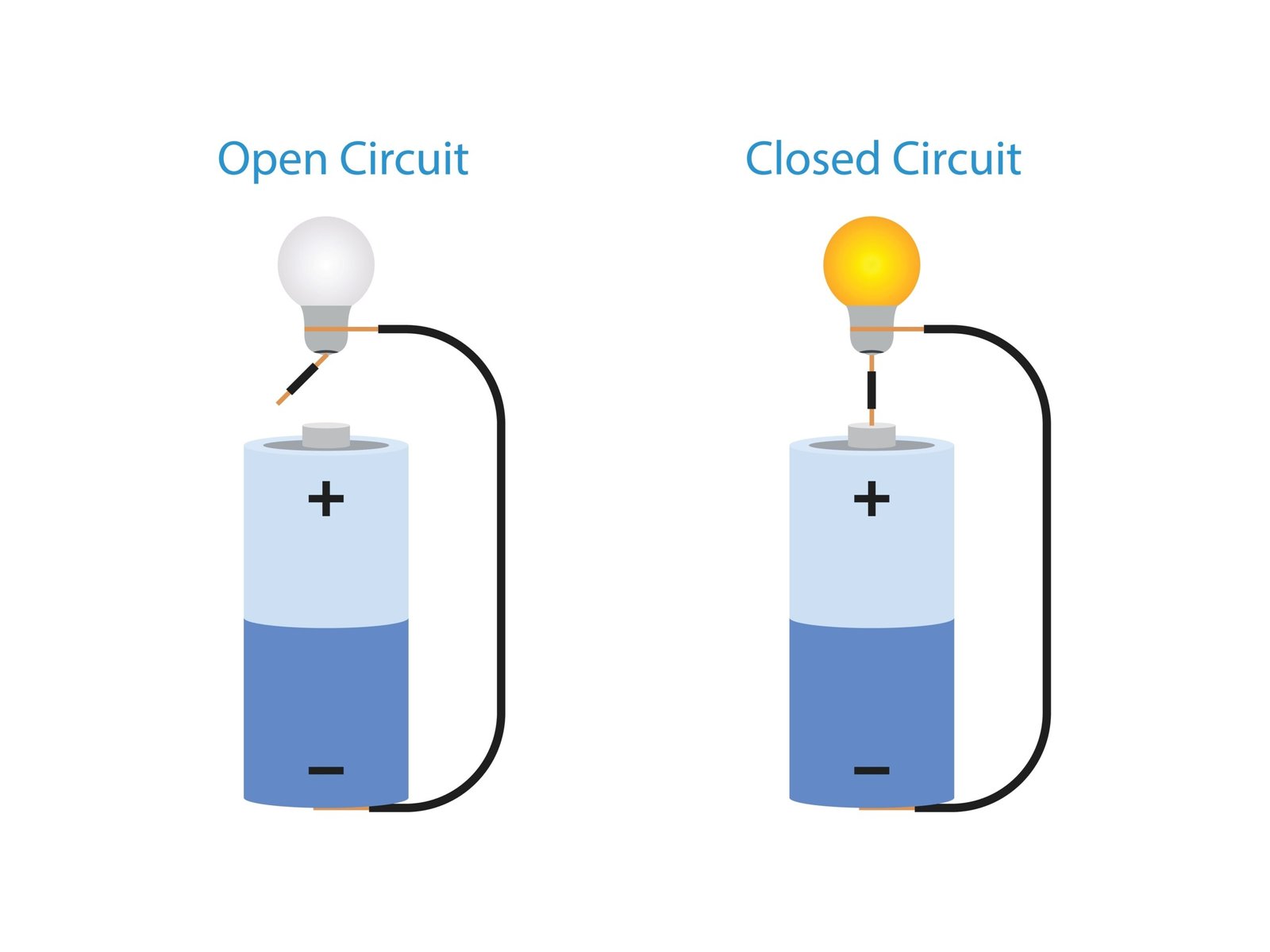
🧪 An electric circuit is a closed path through which electric current flows.
Electric current cannot flow in an open or broken path 🚫.
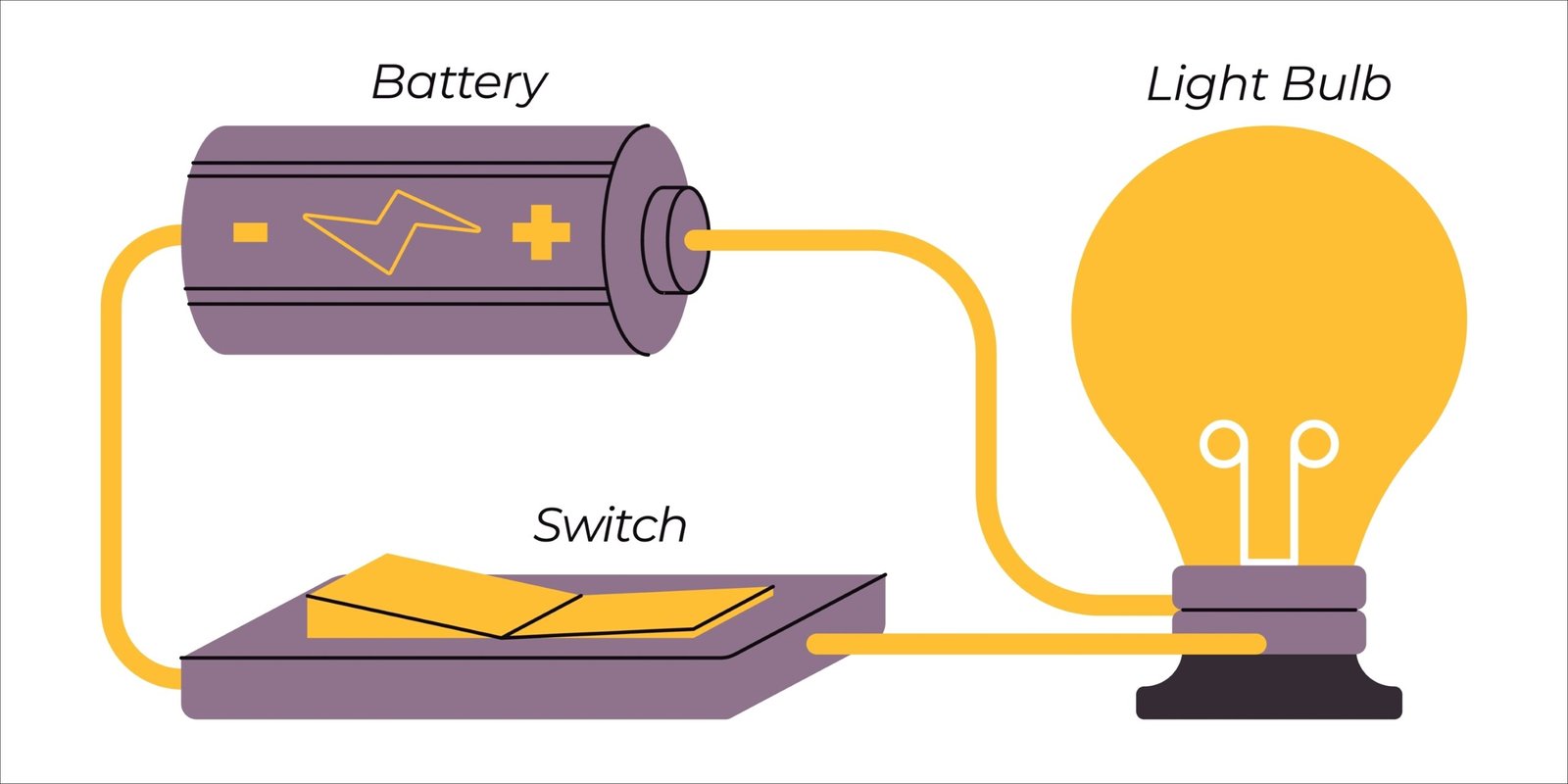
🧠 A simple electric circuit usually has:
A source of electricity 🔋
Connecting wires 🔌
An electric device like a bulb 💡
A switch 🔘
🧭 When all these components are properly connected, the circuit becomes complete.
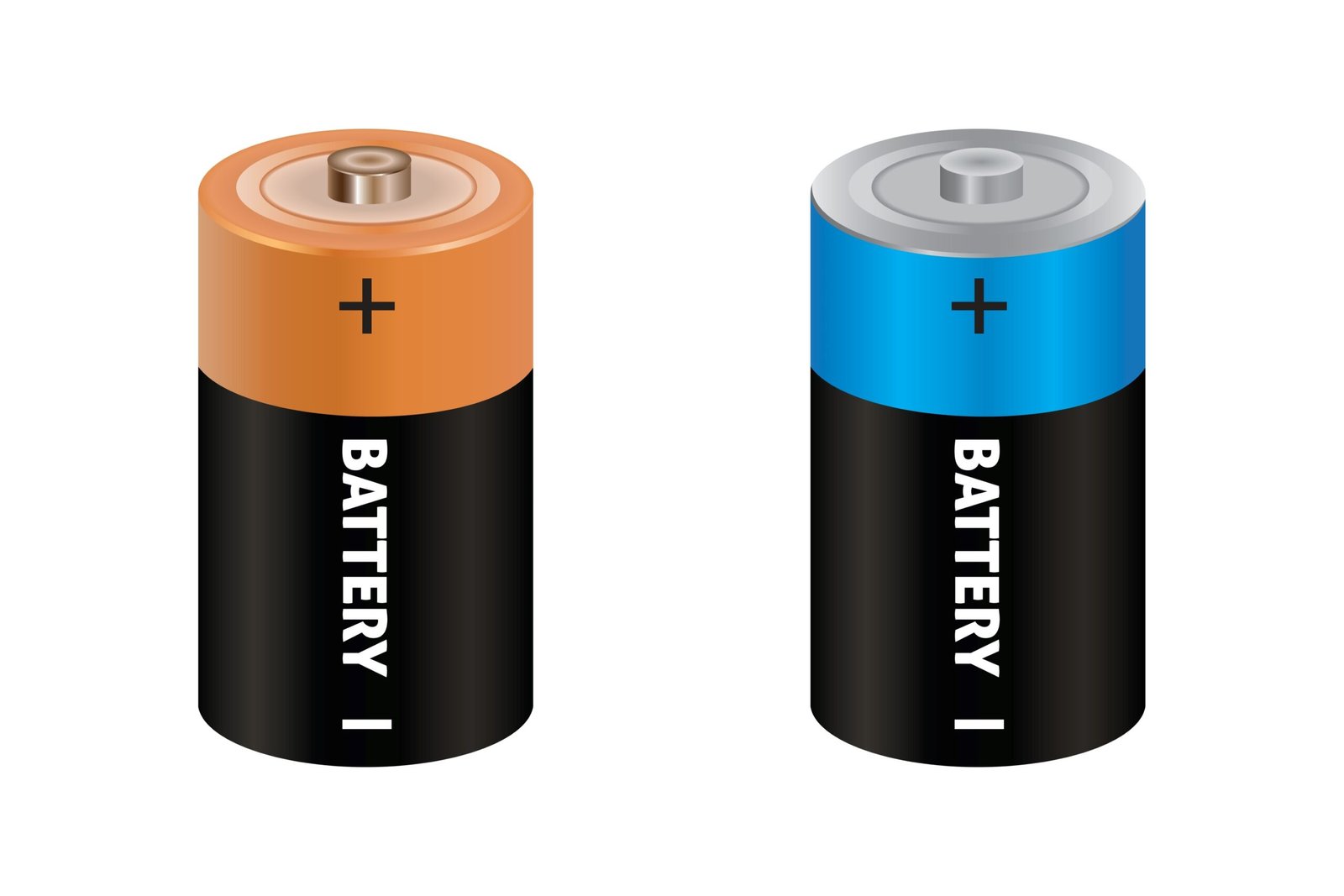
🔋 The electric cell is the source of electricity in many simple circuits.
It converts chemical energy into electrical energy ⚗️➡️⚡.
🧠 An electric cell has two terminals:
Positive terminal ➕
Negative terminal ➖
⚡ Electric current flows from the positive terminal to the negative terminal through the circuit.
🧩 Multiple cells can be connected together to form a battery, which provides more power 🔋🔋.
🔌 Connecting wires allow electricity to flow from one component to another.
These wires are usually made of metals like copper 🧲 because metals conduct electricity well.
🧠 The outer covering of wires is made of plastic or rubber, which does not conduct electricity 🚫⚡.
This prevents electric shock and ensures safety ✔️.
💡 An electric bulb converts electrical energy into light energy.
Inside the bulb is a thin wire called a filament 🧵.
🧠 When electric current passes through the filament, it becomes hot 🔥 and glows, producing light ✨.
💡 If the filament breaks, the bulb does not glow because the circuit becomes incomplete.
🔘 A switch controls the flow of electric current.
It helps turn devices on and off.
🧠 When the switch is ON, the circuit is complete ✔️.
When the switch is OFF, the circuit is broken ❌.
🔄 Switches help save electricity and ensure safety.
🧭 For electricity to flow, the circuit must always be closed.
A gap anywhere in the circuit stops the flow of current 🛑.
🧠 This is why devices stop working when:
A wire is broken
A switch is off
A bulb filament is damaged
🔍 Electricity flows only through materials that allow it to pass.
Such materials are called conductors.
🧲 Metals like copper, iron, and aluminum are good conductors.
They allow electric current to flow easily ⚡➡️.
🧠 Materials that do not allow electricity to flow are called insulators.
Plastic, rubber, and wood 🌳 are good insulators.
⚠️ Insulators are important for safety and protection from electric shock.
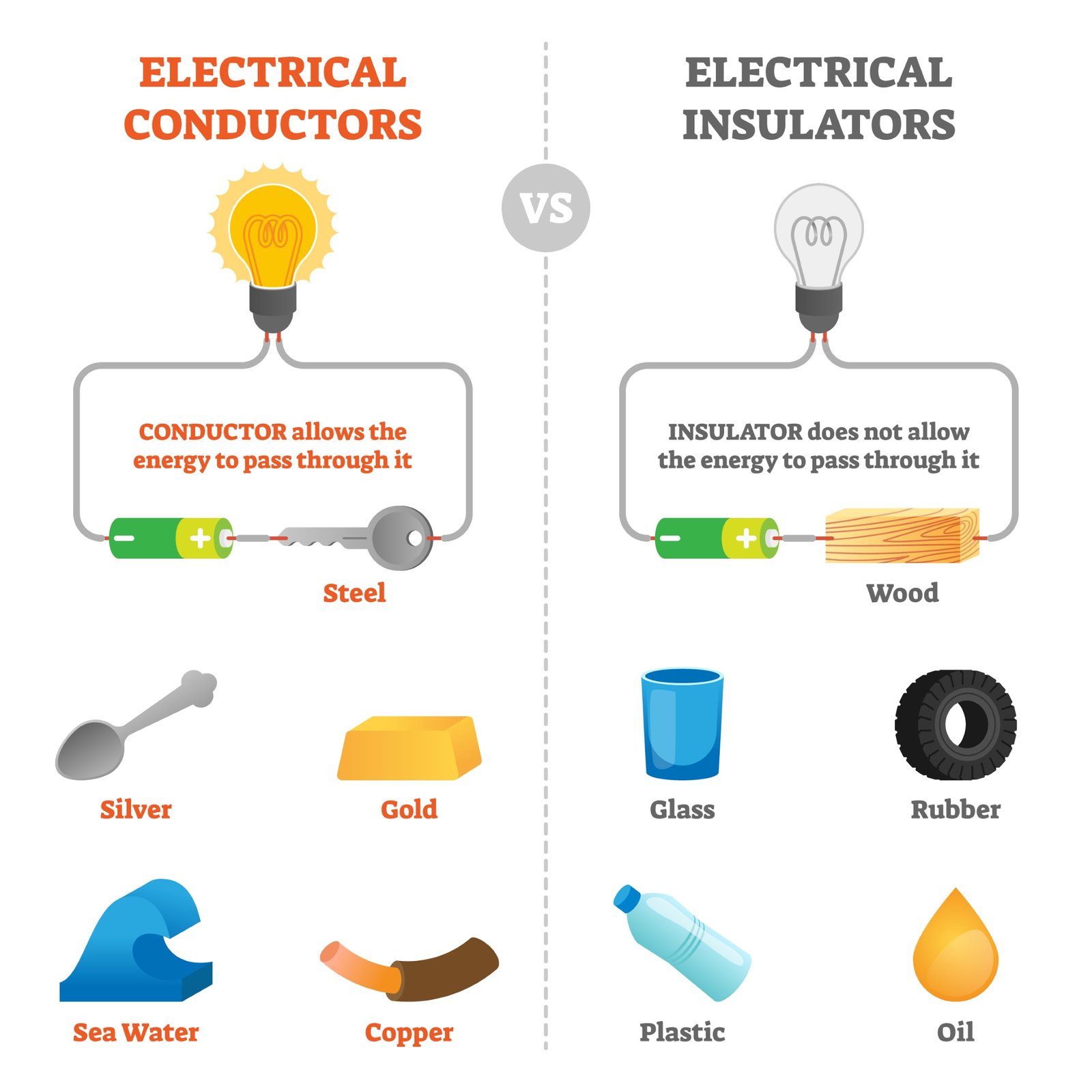
🧪 To check whether a material is a conductor or insulator, a simple tester can be used.
If the bulb in the tester glows ✨, the material is a conductor.
🧠 If the bulb does not glow, the material is an insulator.
🔍 This experiment helps us understand why certain materials are chosen for making electric devices.
⚠️ Electricity can be dangerous if not handled carefully.
Wet hands 💦 increase the risk of electric shock.
🧠 Safety rules must always be followed:
Never touch switches with wet hands
Do not play with electric wires
Use insulated tools
⚡ Careful use of electricity protects life and property.
🌍 Electricity has transformed human life.
It supports communication 📡, transport 🚆, healthcare 🏥, and education 📚.
🧠 From small homes to large industries ⚙️, electricity is essential everywhere.
🔄 Learning about circuits helps us understand how technology works.
🧭 Studying electricity develops scientific thinking.
It improves observation 👀.
It improves reasoning 🧠.
It encourages safe experimentation 🔬.
🧠 Understanding circuits builds a strong foundation for advanced science.
📜 Electricity is a powerful resource.
When used wisely, it improves quality of life 🌟.
When misused, it can cause harm ⚠️.
🧠 Knowledge helps us use electricity responsibly.
📝 Summary of the Lesson
Electricity is a useful form of energy that powers many devices in daily life. An electric circuit is a closed path that allows electric current to flow. A simple circuit includes an electric cell, wires, a bulb, and a switch. Electric cells have positive and negative terminals, and multiple cells form a battery. Conductors allow electricity to flow, while insulators prevent it and ensure safety. A bulb glows when current passes through its filament. Switches control the flow of electricity. Proper handling of electricity and following safety rules are very important. Understanding electric circuits helps us use electrical devices safely and efficiently.
⚡ Quick Recap
⭐ Electricity powers daily life
⭐ A circuit must be closed
⭐ Electric cell provides energy
⭐ Wires connect components
⭐ Switch controls current flow
⭐ Conductors allow electricity
⭐ Safety rules are essential
——————————————————————————————————————————————————————————————————————————–
TEXTBOOK QUESTIONS
🔒 ❓ Question 1.
Choose the incorrect statement.
(i) A switch is the source of electric current in a circuit.
(ii) A switch helps to complete or break the circuit.
(iii) A switch helps us to use electricity as per our requirement.
(iv) When the switch is in ‘OFF’ position, there is an air gap between its terminals.
📌 Answer:
The incorrect statement is (i).
A switch is not the source of electric current. The source of electric current is a cell or battery. A switch only controls the flow of current by completing or breaking the circuit. Statements (ii), (iii), and (iv) are correct.
🔒 ❓ Question 2.
Observe Fig. 3.16. With which material connected between the ends A and B, the lamp will not glow?
📌 Answer:
The lamp will not glow if an insulating material such as plastic, rubber, wood, glass, or paper is connected between points A and B.
This is because insulators do not allow electric current to pass through them, so the circuit remains incomplete.
🔒 ❓ Question 3.
In Fig. 3.17, if the filament of one of the lamps is broken, will the other glow? Justify your answer.
📌 Answer:
No, the other lamp will not glow.
The lamps are connected in series. In a series circuit, if one lamp’s filament breaks, the circuit becomes incomplete. As a result, electric current cannot flow through the circuit, and none of the lamps will glow.
🔒 ❓ Question 4.
A student forgot to remove the insulator covering from the connecting wires while making a circuit. If the lamp and the cell are working properly, will the lamp glow?
📌 Answer:
No, the lamp will not glow.
The insulating covering prevents the metal part of the wire from coming in contact with other components. This stops the flow of electric current, making the circuit incomplete even though the cell and lamp are in good condition.
🔒 ❓ Question 5.
Draw a circuit diagram for a simple torch using symbols for electric components.
📌 Answer:
A simple torch circuit consists of:
One cell (electric source)
One switch
One bulb
Connecting wires
The circuit is drawn using standard symbols showing the cell connected in series with the switch and bulb, forming a closed loop.
🔒 ❓ Question 6.
In Fig. 3.18:
(i) If S₂ is in ‘ON’ position, S₁ is in ‘OFF’ position, which lamp(s) will glow?
(ii) If S₂ is in ‘OFF’ position, S₁ is in ‘ON’ position, which lamp(s) will glow?
(iii) If S₁ and S₂ both are in ‘ON’ position, which lamp(s) will glow?
(iv) If both S₁ and S₂ are in ‘OFF’ position, which lamp(s) will glow?
📌 Answer:
(i) No lamp will glow because the circuit is incomplete due to S₁ being OFF.
(ii) No lamp will glow because S₂ breaks the circuit.
(iii) Both L₁ and L₂ will glow because the circuit is complete.
(iv) No lamp will glow because the circuit is open at both switches.
🔒 ❓ Question 7.
Vidyut has made the circuit shown in Fig. 3.19. Even after closing the circuit, the lamp does not glow. What can be the possible reasons? What will you do to find out why the lamp did not glow?
📌 Answer:
Possible reasons:
The bulb may be fused.
The cell may be exhausted.
Loose or improper wire connections.
Insulation not removed from wire ends.
Faulty switch or poor contact.
To find the fault:
Check the bulb by replacing it with a working one.
Test the cell using another circuit.
Tighten and reconnect wires properly.
Ensure insulation is removed at contact points.
🔒 ❓ Question 8.
In Fig. 3.20, in which case(s) will the lamp not glow when the switch is closed?
📌 Answer:
The lamp will not glow in cases where:
The cell is connected incorrectly.
The LED is connected in reverse direction.
Thus, cases (b) and (d) will not allow the lamp or LED to glow even when the switch is closed.
🔒 ❓ Question 9.
Suppose the ‘+’ and ‘–’ symbols cannot be read on a battery. Suggest a method to identify the two terminals of this battery.
📌 Answer:
Connect the battery to an LED using wires.
If the LED glows, the terminal connected to the longer leg of the LED is the positive terminal.
If it does not glow, reverse the connections.
This helps identify the positive and negative terminals.
🔒 ❓ Question 10.
You are given six cells marked A, B, C, D, E, and F. Some are working and some are not.
(i) List the items required.
(ii) Write the procedure.
(iii) Identify the working cells.
📌 Answer:
(i) Items required:
Small bulb or LED
Connecting wires
Cell holder
(ii) Procedure:
Connect each cell one by one in a simple circuit with the bulb or LED. Close the circuit properly.
(iii) Identification:
Cells that make the bulb glow are working cells. Cells that do not glow the bulb are non-working cells.
🔒 ❓ Question 11.
An LED requires two cells in series to glow. Tanya made the circuit shown in Fig. 3.21. Will the lamp glow? If not, draw the correct connections.
📌 Answer:
No, the LED will not glow because the cells are not connected correctly in series.
For correct connection:
The positive terminal of one cell should be connected to the negative terminal of the other cell.
The free positive and negative terminals should then be connected to the LED correctly.
This proper series connection provides sufficient voltage for the LED to glow.
——————————————————————————————————————————————————————————————————————————–
OTHER IMPORTANT QUESTIONS
SECTION 1 — MCQs (5 Questions)
🔒 ❓ Q1. Which device is used to open or close an electric circuit?
🟢 1️⃣ Bulb
🔵 2️⃣ Switch
🟡 3️⃣ Wire
🟣 4️⃣ Cell
✔️ Answer: 🔵 2️⃣ Switch
🔒 ❓ Q2. Which component provides electrical energy in a circuit?
🟢 1️⃣ Switch
🔵 2️⃣ Bulb
🟡 3️⃣ Electric cell
🟣 4️⃣ Wire
✔️ Answer: 🟡 3️⃣ Electric cell
🔒 ❓ Q3. When does an electric current flow in a circuit?
🟢 1️⃣ When the circuit is open
🔵 2️⃣ When the circuit is closed
🟡 3️⃣ When the switch is broken
🟣 4️⃣ When there is no cell
✔️ Answer: 🔵 2️⃣ When the circuit is closed
🔒 ❓ Q4. Which material is a good conductor of electricity?
🟢 1️⃣ Plastic
🔵 2️⃣ Rubber
🟡 3️⃣ Copper
🟣 4️⃣ Wood
✔️ Answer: 🟡 3️⃣ Copper
🔒 ❓ Q5. Which component glows when current flows through it?
🟢 1️⃣ Switch
🔵 2️⃣ Wire
🟡 3️⃣ Bulb
🟣 4️⃣ Cell
✔️ Answer: 🟡 3️⃣ Bulb
SECTION 2 — Very Short Answer (5 Questions)
🔒 ❓ Q6. Name the source of electricity in a simple circuit.
📌 ✅ Answer: Electric cell
🔒 ❓ Q7. What is a closed path for electric current called?
📌 ✅ Answer: Circuit
🔒 ❓ Q8. Name one conductor of electricity.
📌 ✅ Answer: Copper
🔒 ❓ Q9. Which symbol is used to represent a bulb in a circuit?
📌 ✅ Answer: Bulb symbol
🔒 ❓ Q10. What happens when a circuit is broken?
📌 ✅ Answer: No current
SECTION 3 — Short Answer (3 Questions)
🔒 ❓ Q11. What is an electric circuit?
📌 ✅ Answer:
🔹 An electric circuit is a closed path through which current flows.
🔸 It includes a cell, wires and a device like a bulb.
🔹 Current flows only when the circuit is complete.
🔒 ❓ Q12. Why does a bulb not glow in an open circuit?
📌 ✅ Answer:
🔹 In an open circuit, the path for current is broken.
🔸 Electric current cannot flow to the bulb.
🔹 Therefore, the bulb does not glow.
🔒 ❓ Q13. Why are metals used for making electric wires?
📌 ✅ Answer:
🔹 Metals allow electricity to pass through easily.
🔸 They are good conductors of electric current.
🔹 Hence, metals like copper are used for wires.
SECTION 4 — Long Answer (1 Question)
🔒 ❓ Q14. Explain the components of a simple electric circuit.
📌 ✅ Answer:
🔹 A simple electric circuit consists of an electric cell, wires, a switch and a bulb.
🔸 The cell provides electrical energy.
🔹 Wires connect the components and form a path.
🔸 The switch controls the flow of current.
🔹 The bulb glows when current flows through the closed circuit.
——————————————————————————————————————————————————————————————————————————–
ADVANCE KNOWLEDGE
🌍 Electricity: The Invisible Power That Runs the Modern World
Electricity is everywhere—lighting homes, charging phones, running hospitals, powering satellites—yet it remains invisible to our eyes. We only see its effects, not the electricity itself. This makes electricity one of the most mysterious and powerful discoveries in human history.
🧠 Big idea:
Electricity is not just energy flowing in wires—it is the organized movement of tiny particles.
⚡ What Electricity Really Is (Beyond the Textbook)
Electricity comes from electric charges.
🧪 Inside every atom:
There are positive and negative charges
Negative charges (electrons) can move
🧠 When electrons move in an organized way, electric current is produced.
⭐ Electricity is not created inside a wire—the wire only guides the flow.
⚠️ Misconception vs Reality
⚠️ Misconception: Electricity travels slowly
✅ Reality: Electric signals travel close to the speed of light
⚠️ Misconception: Batteries store electricity
✅ Reality: Batteries store chemical energy, converted into electrical energy
⚠️ Misconception: Thick wires give more electricity automatically
✅ Reality: Thickness affects resistance, not creation of electricity
🔁 Electric Circuit: A Complete Energy Path
An electric circuit is a closed loop that allows current to flow.
🧠 A circuit must be:
Complete
Continuous
Properly connected
⚡ If the path breaks, electricity stops immediately.
⭐ Electricity does not get “used up”—it transfers energy.
🔋 Cells and Batteries: Energy Starters
Cells are the starting points of electric circuits.
🧪 Inside a cell:
Chemical reactions push electrons
This creates potential difference
🧠 Batteries are collections of cells working together.
⭐ More cells → stronger push → more current.
💡 Bulbs: Turning Electricity into Light
Bulbs show electricity’s effect clearly.
🧠 In a bulb:
Electricity heats a thin wire
Wire glows and produces light
⚠️ Modern LED bulbs:
Use far less energy
Produce less heat
⭐ This shows how science improves technology over time.
🔘 Switches: Controllers of Flow
Switches do not create electricity.
🧠 They:
Open circuits
Close circuits
⭐ A simple action controls powerful energy—this is design intelligence.
🧲 Conductors and Insulators: Choosing the Path
Not all materials allow electricity to pass.
🧪 Conductors
Allow electrons to move easily
Examples: copper, aluminium
🧪 Insulators
Block electron movement
Examples: rubber, plastic
🧠 Insulators protect humans from electric shocks.
🌡️ Resistance: Electricity’s Speed Breaker
Resistance is opposition to electric flow.
🧠 Higher resistance:
Slows electrons
Produces heat
⭐ Heaters work because of resistance.
🚀 Scientists control resistance to design:
Devices
Circuits
Safety systems
🌍 Series and Parallel Thinking (Conceptual Insight)
🧠 Circuits can be designed in different ways.
🔁 Series idea
Single path
One break stops everything
🔀 Parallel idea
Multiple paths
Devices work independently
⭐ Homes use parallel circuits for safety and efficiency.
🚀 Electricity Beyond Wires
Electricity does not always need metal wires.
🚀 Examples:
Lightning
Static electricity
Wireless charging
🧠 Electric fields carry energy even through empty space.
🌩️ Lightning: Nature’s Electric Experiment
Lightning is giant electricity in the sky.
🧠 Caused by:
Charge buildup in clouds
Sudden discharge
⭐ One lightning strike carries more energy than thousands of batteries—but only for a moment.
⚠️ Safety: Respecting Electric Power
Electricity is helpful but dangerous.
⚠️ Risks include:
Electric shock
Fires
Device damage
🧠 Safety rules exist because electricity does not forgive mistakes.
🚀 Modern Electricity and the Future
Future electricity focuses on:
Renewable sources
Smart grids
Energy efficiency
🧠 Solar panels and wind turbines convert natural energy into electricity.
⭐ Electricity will shape future transport, medicine, and communication.
⭐ Amazing Electricity Facts
⭐ A single spark can jump across air
⭐ Eels generate electricity naturally
⭐ Human nerves work using electrical signals
⭐ Earth itself has electric fields
🧠 Why Curious Minds Must Go Deeper
Electricity teaches:
Cause and effect
Energy transfer
System thinking
🧠 Understanding circuits prepares minds for:
Engineering
Technology
Innovation
🌟 Final Thought
Electricity is silent, invisible, and obedient—
but only to those who understand and respect it.
🧠 To control electricity is to control motion at the smallest scale.
——————————————————————————————————————————————————————————————————————————–