
Class 6 : Science – ( English ) : Lesson 12. Beyond Earth

EXPLANATION AND ANALYSIS
🌌 Introduction: Looking Beyond Our Planet
From ancient times, humans have looked up at the sky with curiosity and wonder. The Sun rising every morning, the Moon changing its shape, and countless stars shining at night have always raised questions in our minds. Everything that exists beyond the Earth—such as the Sun, Moon, planets, stars, and other heavenly bodies—is studied under astronomy. This lesson takes us beyond our planet to understand the vast universe and our place within it.
Exploring beyond Earth helps us realise that our planet is only a small part of a much larger system. It also shows how carefully balanced conditions on Earth make life possible.
🌍 Earth: Our Home in Space
Earth is the only known planet where life exists.
🌱 It has air, water, suitable temperature, and soil to support living organisms.
💧 Water is available in liquid form, which is essential for life.
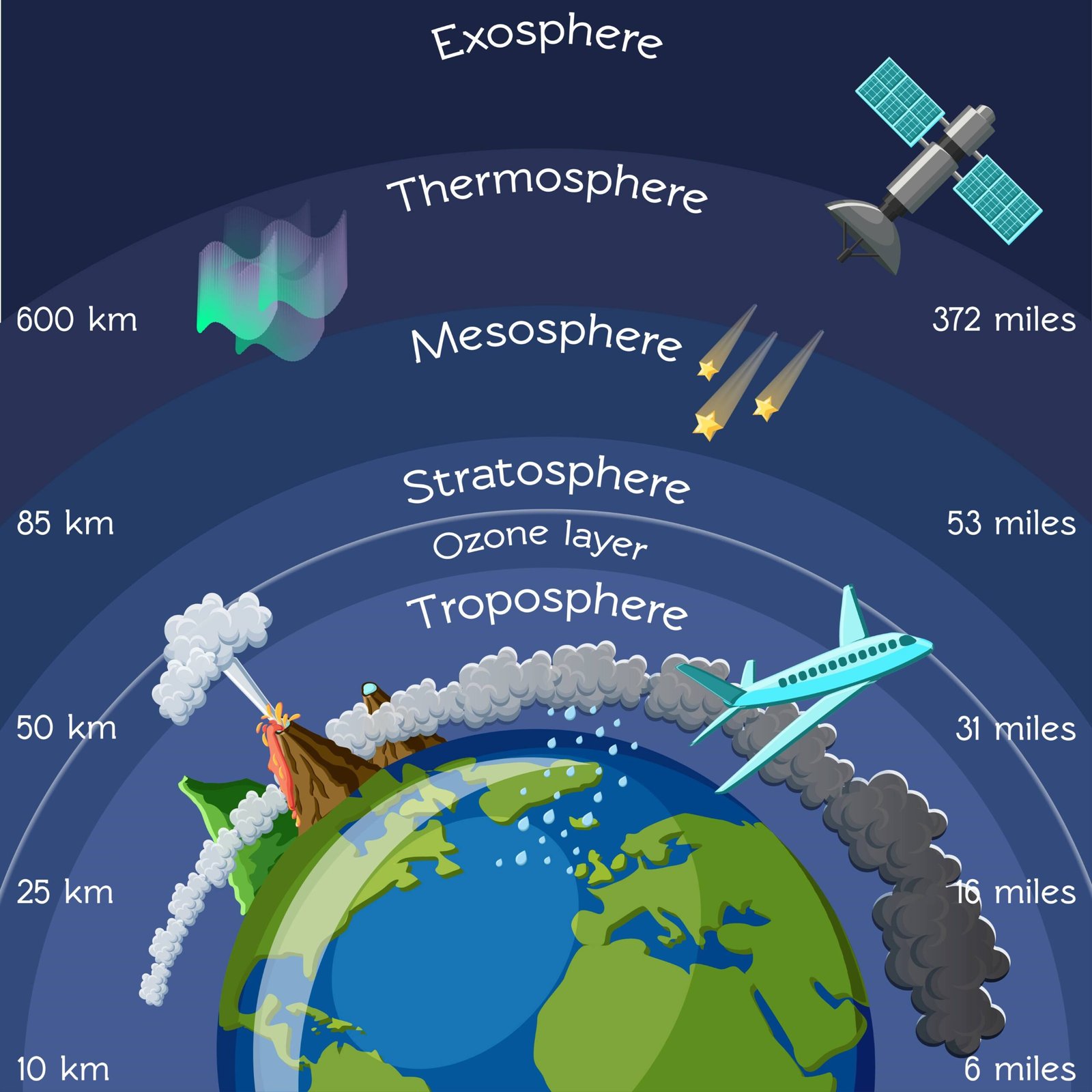
🫁 The atmosphere provides oxygen for breathing and protects us from harmful radiation.
Because of these favourable conditions, Earth is often called a unique planet. When we compare Earth with other planets, we understand how special it is.
☀️ The Sun: Source of Energy
The Sun is a huge ball of hot gases at the centre of our solar system.
🔥 It provides heat and light, making life possible on Earth.
🌱 Plants use sunlight to prepare food through photosynthesis.
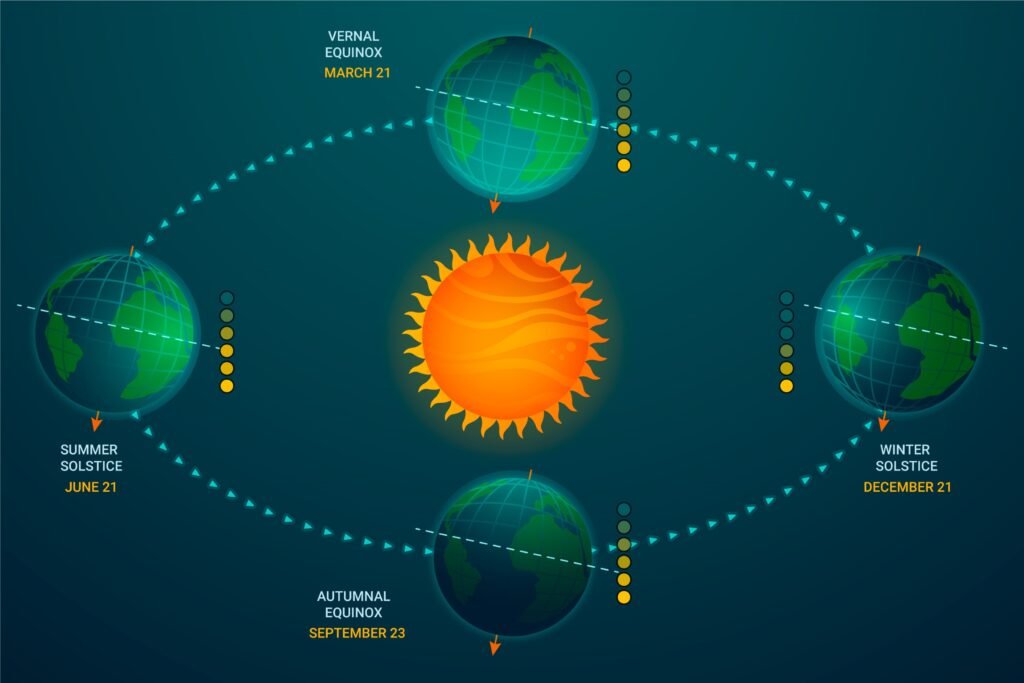
🌦️ Weather and climate depend largely on the Sun’s energy.
Without the Sun, Earth would be dark, cold, and lifeless. This makes the Sun the most important heavenly body for us.
🌙 The Moon: Earth’s Natural Satellite
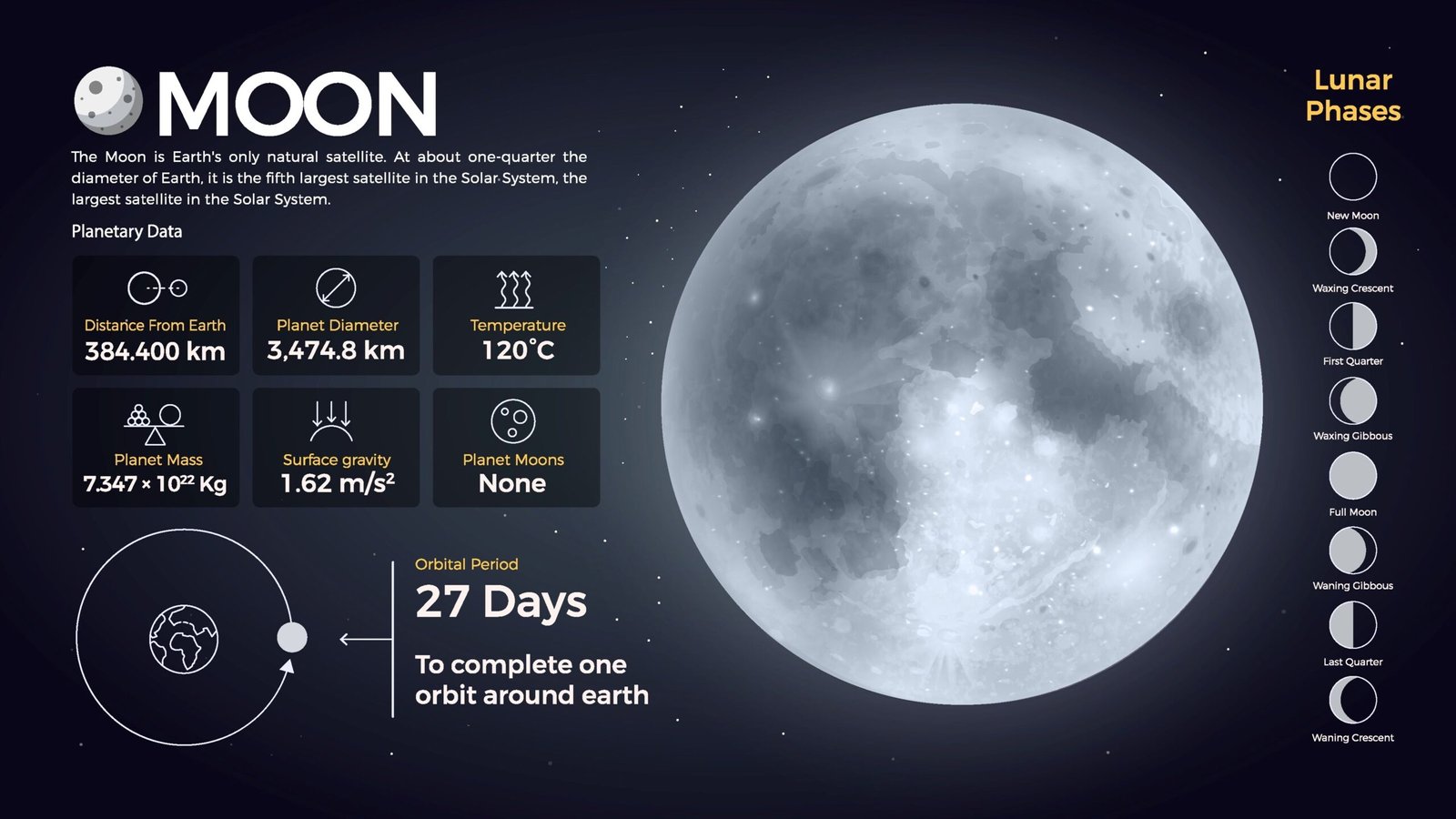
The Moon is the natural satellite of the Earth.
🌕 It does not produce its own light but reflects sunlight.
🌓 The changing shapes of the Moon are called phases of the Moon.
🌊 The Moon’s gravity causes tides in oceans.
The Moon also helps scientists understand the history of the Earth because its surface has remained almost unchanged for millions of years.
🪐 The Solar System
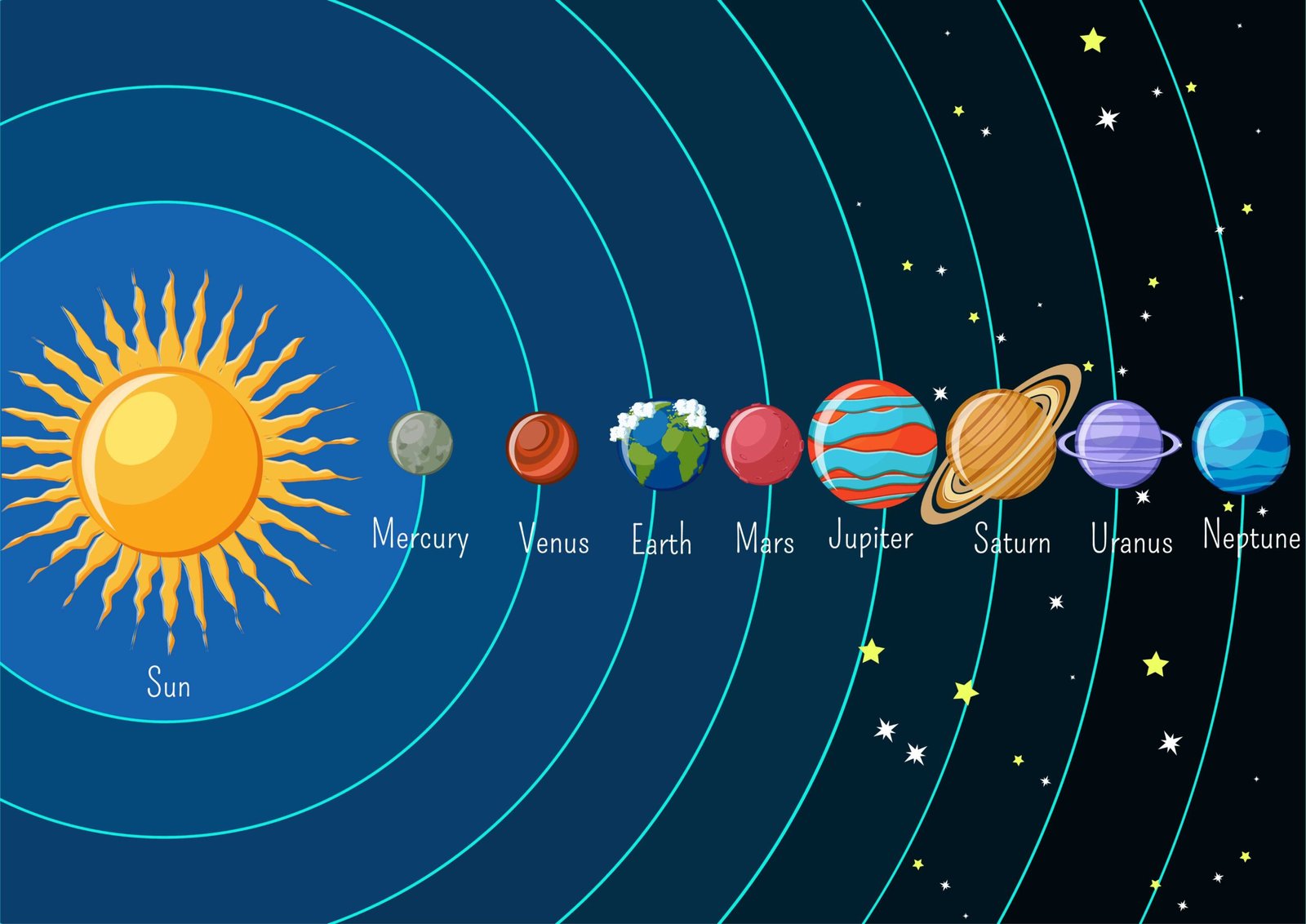
The solar system consists of the Sun and all the objects that revolve around it.
🪐 It includes eight planets, their moons, asteroids, comets, and meteoroids.
🧠 All planets move around the Sun in fixed paths called orbits.
The planets differ in size, distance from the Sun, temperature, and composition. Studying them helps us compare Earth with other planets.
🌑 Planets: Neighbours of Earth
Planets are celestial bodies that revolve around the Sun and do not have their own light.
🟤 Mercury is the closest planet to the Sun.
🔴 Mars is called the Red Planet.
🟡 Jupiter is the largest planet in the solar system.
🌀 Saturn is known for its beautiful rings.
Each planet has unique features, but none have conditions as suitable for life as Earth.
⭐ Stars: Distant Suns
Stars are massive balls of hot gases that produce their own light and heat.
✨ The Sun is actually a star, but it appears bigger because it is closer to us.
🌌 Stars are found in groups called constellations.
Stars help us navigate and understand the structure of the universe. Their light takes many years to reach the Earth, showing how vast space really is.
🌠 Other Objects in Space
Apart from planets and stars, space contains many other objects.
☄️ Comets are icy bodies that glow when they come close to the Sun.
🪨 Asteroids are rocky objects found mainly between Mars and Jupiter.
💫 Meteoroids burn in the atmosphere and appear as shooting stars.
These objects provide clues about the formation of the solar system.
🚀 Human Exploration of Space
Humans have always wanted to explore beyond Earth.
🧑🚀 Space missions help us study planets, stars, and galaxies.
🛰️ Satellites help in communication, weather forecasting, and navigation.
Space exploration has increased our knowledge and improved technology used in daily life.
🧠 Why Studying Space Is Important
Studying space helps us understand the origin of Earth and the universe.
🔬 It answers questions about how planets and stars are formed.
🌍 It helps us protect Earth from space-related dangers like asteroids.
🧠 It inspires curiosity, innovation, and scientific thinking.
Understanding space also teaches us humility, reminding us how small Earth is in the vast universe.
🌱 Earth’s Protection and Responsibility
When we look beyond Earth, we realise the importance of protecting our planet.
🌍 Earth’s atmosphere shields us from harmful rays.
♻️ Human activities should not damage this delicate balance.
Learning about space makes us more responsible towards conserving Earth for future generations.
📘 Summary
Beyond Earth lies a vast universe filled with the Sun, Moon, planets, stars, and many other celestial objects. Earth is a unique planet because it has air, water, and suitable temperature to support life. The Sun provides energy necessary for life, while the Moon influences tides and shows phases. The solar system consists of the Sun, eight planets, and other space objects. Stars are distant suns that form patterns called constellations. Space also contains comets, asteroids, and meteoroids that help scientists understand the formation of the universe. Human space exploration has expanded our knowledge and improved technology. Studying space not only satisfies curiosity but also helps protect Earth and inspires scientific progress.
📝 Quick Recap
🌌 Beyond Earth lies the vast universe
☀️ The Sun provides heat and light
🌙 The Moon shows phases and causes tides
🪐 Planets revolve around the Sun
⭐ Stars are distant suns
☄️ Space has comets and asteroids
🚀 Humans explore space using technology
🌍 Earth must be protected
——————————————————————————————————————————————————————————————————————————–
TEXTBOOK QUESTIONS
🔒 ❓ Question 1. Match the columns.
📌 Answer:
(i) Satellite of Earth → Moon
(ii) Red planet → Mars
(iii) Constellation → Orion
(iv) Planet commonly called an evening star → Venus
🔒 ❓ Question 2 (i). Solve the riddle.
📌 Answer:
The planet is Mars.
The clues point to letters that together form the word MARS, and Mars is a planet that moves around the Sun.
🔒 ❓ Question 2 (ii). Make two similar riddles.
📌 Answer:
Riddle 1:
My first letter is in SUN but not in FUN.
My second letter is in EARTH and also in HEART.
My third letter is in MOON but not in NOON.
I am the brightest planet seen in the night sky.
Answer: Venus
Riddle 2:
My first letter is in RING but not in KING.
My second letter is in PLANET and also in NET.
My third letter is in STONE but not in STAR.
I have beautiful rings around me.
Answer: Saturn
🔒 ❓ Question 3. Which of the following is not a member of our Solar System?
📌 Answer:
Sirius
Sirius is a star outside our Solar System, whereas comets, asteroids and Pluto are members of the Solar System.
🔒 ❓ Question 4. Which of the following is not a planet of the Sun?
📌 Answer:
Pluto
Pluto is classified as a dwarf planet and is no longer counted among the eight planets.
🔒 ❓ Question 5. Which is the brighter star, the Pole Star or Sirius?
📌 Answer:
Sirius
Sirius is the brightest star visible in the night sky. The Pole Star is important for direction but is not very bright.
🔒 ❓ Question 6. Is the order of planets shown in Fig. 12.12 correct? If not, write the correct order.
📌 Answer:
The order shown is not correct.
The correct order of planets from the Sun is:
Mercury → Venus → Earth → Mars → Jupiter → Saturn → Uranus → Neptune
🔒 ❓ Question 7. Identify the Big Dipper and the Little Dipper and locate the Pole Star.
📌 Answer:
The Big Dipper and Little Dipper are groups of stars forming patterns in the night sky.
The Pole Star is located by extending an imaginary line from the two outer stars of the Big Dipper. The Pole Star lies at the end of the handle of the Little Dipper and helps in finding the north direction.
🔒 ❓ Question 8. Identify Orion and label the star Sirius.
📌 Answer:
Orion is a well-known constellation recognised by three bright stars in a straight line called Orion’s Belt.
Sirius lies close to Orion and is the brightest star in the night sky.
🔒 ❓ Question 9. Why do stars fade away at dawn and appear at dusk?
📌 Answer:
During the day, sunlight scattered by the Earth’s atmosphere makes the sky bright. This brightness hides the faint light of stars. At dusk and dawn, sunlight is weaker, allowing stars to become visible again.
🔒 ❓ Question 10. Does the Big Dipper appear to move? Explain.
📌 Answer:
Yes, the Big Dipper appears to move in the sky.
This apparent movement happens due to the rotation of the Earth on its axis. The Pole Star remains almost fixed, while other stars seem to rotate around it.
🔒 ❓ Question 11. Write a poem or a short story on the night sky.
📌 Answer:
The night sky is a vast blanket of shining stars.
The Moon glows softly, while constellations tell silent stories.
Planets wander slowly, and the Pole Star stands still, guiding travellers.
The sky reminds us of the beauty and mystery of the universe beyond Earth.
——————————————————————————————————————————————————————————————————————————–
OTHER IMPORTANT QUESTIONS
SECTION 1 — MCQs (5 Questions)
🔒 ❓ Q1. Which is the main source of light and heat for the Earth?
🟢 1️⃣ Moon
🔵 2️⃣ Sun
🟡 3️⃣ Star
🟣 4️⃣ Planet
✔️ Answer: 🔵 2️⃣ Sun
🔒 ❓ Q2. Which celestial body revolves around the Earth?
🟢 1️⃣ Sun
🔵 2️⃣ Mars
🟡 3️⃣ Moon
🟣 4️⃣ Star
✔️ Answer: 🟡 3️⃣ Moon
🔒 ❓ Q3. What is a group of planets revolving around the Sun called?
🟢 1️⃣ Galaxy
🔵 2️⃣ Constellation
🟡 3️⃣ Solar system
🟣 4️⃣ Universe
✔️ Answer: 🟡 3️⃣ Solar system
🔒 ❓ Q4. Which movement of the Earth causes day and night?
🟢 1️⃣ Revolution
🔵 2️⃣ Rotation
🟡 3️⃣ Oscillation
🟣 4️⃣ Translation
✔️ Answer: 🔵 2️⃣ Rotation
🔒 ❓ Q5. Which object does not have its own light?
🟢 1️⃣ Sun
🔵 2️⃣ Star
🟡 3️⃣ Moon
🟣 4️⃣ Galaxy
✔️ Answer: 🟡 3️⃣ Moon
SECTION 2 — Very Short Answer (5 Questions)
(One or two words only)
🔒 ❓ Q6. Name the natural satellite of the Earth.
📌 ✅ Answer: Moon
🔒 ❓ Q7. What do we call objects seen in the sky beyond Earth?
📌 ✅ Answer: Celestial bodies
🔒 ❓ Q8. Name the path on which planets move around the Sun.
📌 ✅ Answer: Orbit
🔒 ❓ Q9. What is the nearest star to the Earth?
📌 ✅ Answer: Sun
🔒 ❓ Q10. Name the system that includes the Sun and planets.
📌 ✅ Answer: Solar system
SECTION 3 — Short Answer (3 Questions)
(About 40–50 words)
🔒 ❓ Q11. Why do stars appear to twinkle in the night sky?
📌 ✅ Answer:
🔹 Stars are very far from the Earth and appear as tiny points of light.
🔸 Their light passes through layers of air in the atmosphere.
🔹 This causes continuous change in brightness, making stars appear to twinkle.
🔒 ❓ Q12. How is the Moon different from the Sun?
📌 ✅ Answer:
🔹 The Sun is a star and produces its own light and heat.
🔸 The Moon is a natural satellite and does not have its own light.
🔹 The Moon reflects sunlight and revolves around the Earth.
🔒 ❓ Q13. What is the difference between rotation and revolution of the Earth?
📌 ✅ Answer:
🔹 Rotation is the spinning of the Earth on its axis and causes day and night.
🔸 Revolution is the movement of the Earth around the Sun.
🔹 Revolution takes a longer time compared to rotation.
SECTION 4 — Long Answer (1 Question)
(About 70–80 words)
🔒 ❓ Q14. Explain the solar system and its main components.
📌 ✅ Answer:
🔹 The solar system consists of the Sun, planets and their satellites.
🔸 The Sun is at the centre and provides heat and light.
🔹 Planets revolve around the Sun in fixed paths called orbits.
🔸 Some planets have natural satellites like the Moon.
🔹 The solar system also includes asteroids and other small celestial objects.
——————————————————————————————————————————————————————————————————————————–
ADVANCE KNOWLEDGE
🌍 Looking Up: Why Humans Always Asked “What’s Beyond?”
Since ancient times, humans have looked at the night sky with wonder. Tiny lights scattered across darkness made people ask deep questions:
🧠 Are we alone?
🧠 What lies beyond our planet?
Beyond Earth is not just about space—it is about curiosity, imagination, and scientific courage.
🧠 Earth: A Rare Cosmic Home
Earth is not ordinary. It is perfectly balanced.
🌍 Earth has:
Liquid water
Protective atmosphere
Suitable temperature
Gravity strong enough to hold air
⭐ These conditions together make Earth a life-supporting planet.
🧠 Even a small change in distance from the Sun would make life impossible.
🌞 The Sun: Our Powerful Star
The Sun is not a planet—it is a star.
🌞 It provides:
Heat
Light
Energy for life
⭐ Deep fact: The Sun contains 99.8 percent of the total mass of the solar system.
🚀 Without the Sun:
Plants could not make food
Climate would collapse
Life would end
🪐 The Solar System: A Family in Motion
Our solar system includes:
🌞 One Sun
🪐 Eight planets
☄️ Asteroids
❄️ Comets
🌕 Moons
🧠 All objects move in fixed paths due to gravity.
⭐ Gravity is the invisible thread holding the solar system together.
🪐 Planets: Worlds with Unique Stories
Each planet is different.
🌍 Inner planets
Rocky
Smaller
Close to the Sun
🌌 Outer planets
Gaseous or icy
Massive
Many moons
⭐ Venus is hotter than Mercury
⭐ Jupiter has the strongest gravity
⭐ Saturn floats in water (theoretically)
⭐ Uranus rotates on its side
⚠️ Misconception vs Reality
⚠️ Misconception: Space is empty
✅ Reality: Space is filled with radiation, particles, and forces
⚠️ Misconception: Stars are small
✅ Reality: Many stars are far bigger than the Sun
🌕 Moon: Earth’s Silent Partner
The Moon is Earth’s natural satellite.
🌕 It:
Controls tides
Stabilizes Earth’s tilt
Influences climate
🧠 Without the Moon:
Days would be unstable
Seasons would be extreme
⭐ Moon rocks show the Moon once had volcanic activity.
☄️ Asteroids and Comets: Messengers of Space
☄️ Asteroids
Rocky objects
Mostly found between Mars and Jupiter
❄️ Comets
Ice and dust
Create glowing tails near the Sun
🧠 These objects carry clues about early solar system formation.
🚀 Human Journey into Space
⏳ Timeline of courage:
First telescope
First rocket
First satellite
First human in space
🚀 Space exploration is one of humanity’s greatest achievements.
🧠 Space taught us:
Earth is fragile
Borders do not exist from space
Science unites nations
🌌 Beyond the Solar System: Stars and Galaxies
🌌 The Sun is just one star among billions.
🌠 Stars form groups called galaxies.
🌀 Our galaxy: Milky Way
Contains hundreds of billions of stars.
🧠 Many stars have planets—called exoplanets.
🧪 Search for Life Beyond Earth
Scientists look for:
Water
Suitable temperature
Energy sources
🚀 Missions explore:
Mars
Icy moons
Distant planets
🧠 Even tiny bacteria elsewhere would change our understanding of life.
🌡️ Space Environment: Not Friendly
Space is dangerous.
🌌 Space has:
Extreme temperatures
No air
Strong radiation
🧠 Astronauts survive using:
Protective suits
Spacecraft technology
Scientific planning
🚀 Modern Discoveries and Research
🚀 Today’s space science includes:
Space telescopes
Robotic missions
Satellite observations
🧠 These help us study:
Climate change
Asteroids
Deep universe
⭐ Amazing Space Facts
⭐ Light from stars takes years to reach Earth
⭐ A day on Venus is longer than its year
⭐ Black holes bend space and time
⭐ One teaspoon of neutron star matter weighs billions of tons
🧠 Why Beyond Earth Matters to Young Minds
Studying space teaches:
Curiosity
Logical thinking
Humility
🧠 It reminds us Earth is one tiny home in a vast universe.
🌟 Final Thought
Looking beyond Earth teaches us two truths:
🌌 The universe is vast and mysterious
🌍 Earth is precious and rare
🧠 To explore space is to understand our responsibility toward our own planet.
——————————————————————————————————————————————————————————————————————————–