
Class 7 : Science – ( English ) : Lesson 10. Life Processes in Plants

EXPLANATION AND ANALYSIS
🧭 Plants are living organisms, just like animals, and they carry out essential life processes to survive.
Although plants do not move from place to place 🚶❌, they perform complex internal activities that support growth, repair, and reproduction 🌱.
🧠 Understanding life processes in plants helps us realize how plants sustain themselves and support all life on Earth 🌍.
🔍 The major life processes in plants include nutrition 🍃, respiration 🌬️, transport 🚰, and excretion ♻️.
🧪 Nutrition in plants is called autotrophic nutrition.
Plants make their own food using simple substances.
🧠 This food-making process is known as photosynthesis 🌞🍃.
☀️ Sunlight
💧 Water
🌬️ Carbon dioxide
🟢 Chlorophyll
🧠 These four components are essential for photosynthesis.
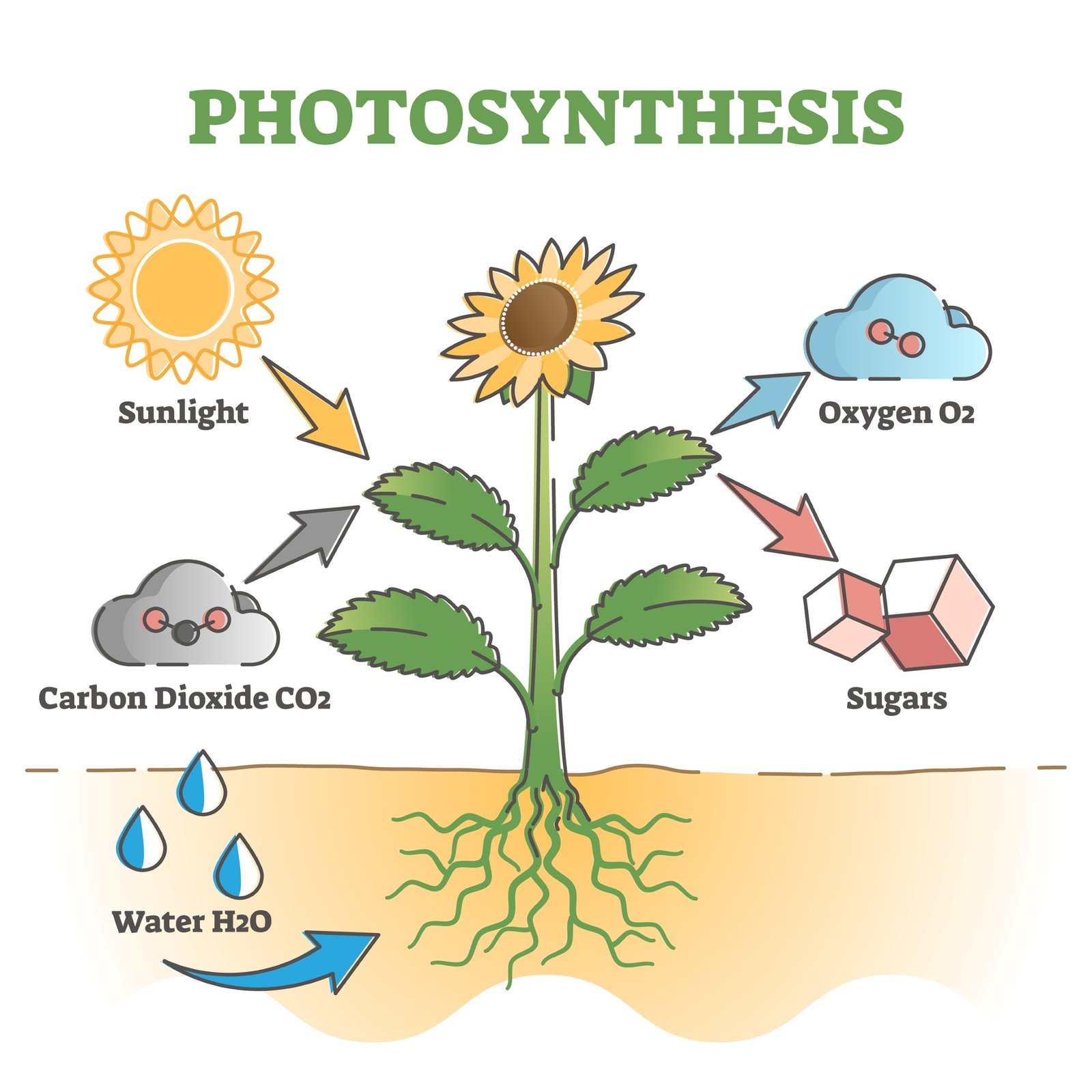
🧬 During photosynthesis, plants prepare food in the form of glucose.
Oxygen 🌬️ is released as a by-product.
🧠 This oxygen is essential for respiration in animals and humans 🫁.
🌍 Photosynthesis maintains balance in nature.
🍃 Leaves are the main food-making organs.
They contain chlorophyll, which traps sunlight ☀️.
🧠 Tiny openings called stomata allow carbon dioxide to enter and oxygen to exit.
🔍 Stomata also help in water loss through transpiration 💦.
🧭 Respiration in plants is the process of releasing energy from food.
Like animals, plants also need energy ⚡.
🧠 Plants respire day and night.
Oxygen is used.
Carbon dioxide is released.
🌬️ Respiration supports growth, repair, and movement inside plant cells 🧬.
🧪 Transport of substances is another important life process.
Water and minerals are absorbed by roots 🌱.
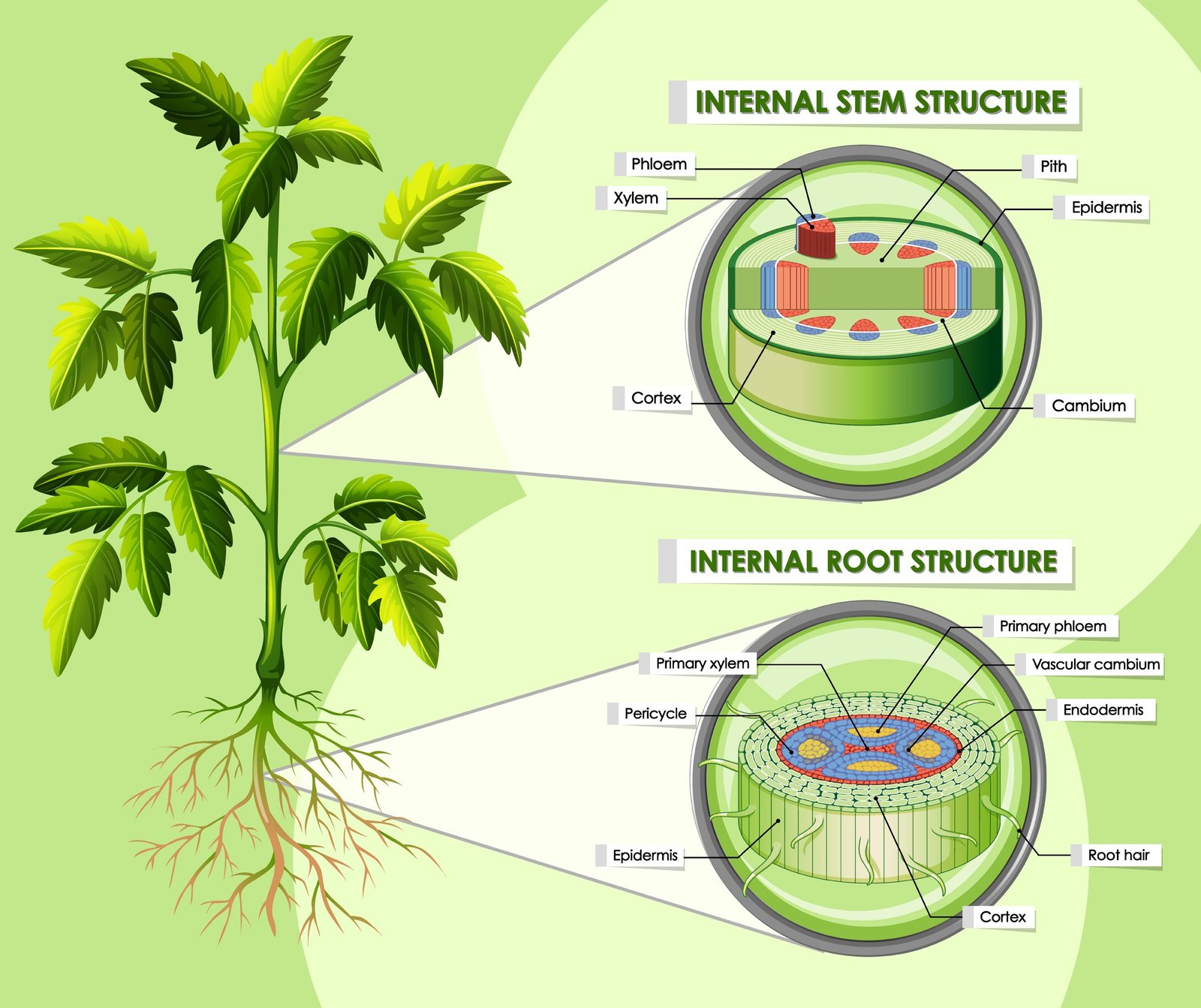
🧠 Special tissues carry materials inside plants.
Xylem 🚰 transports water and minerals upward.
Phloem 🍬 transports food to all parts.
🧠 Transport keeps every plant cell nourished.
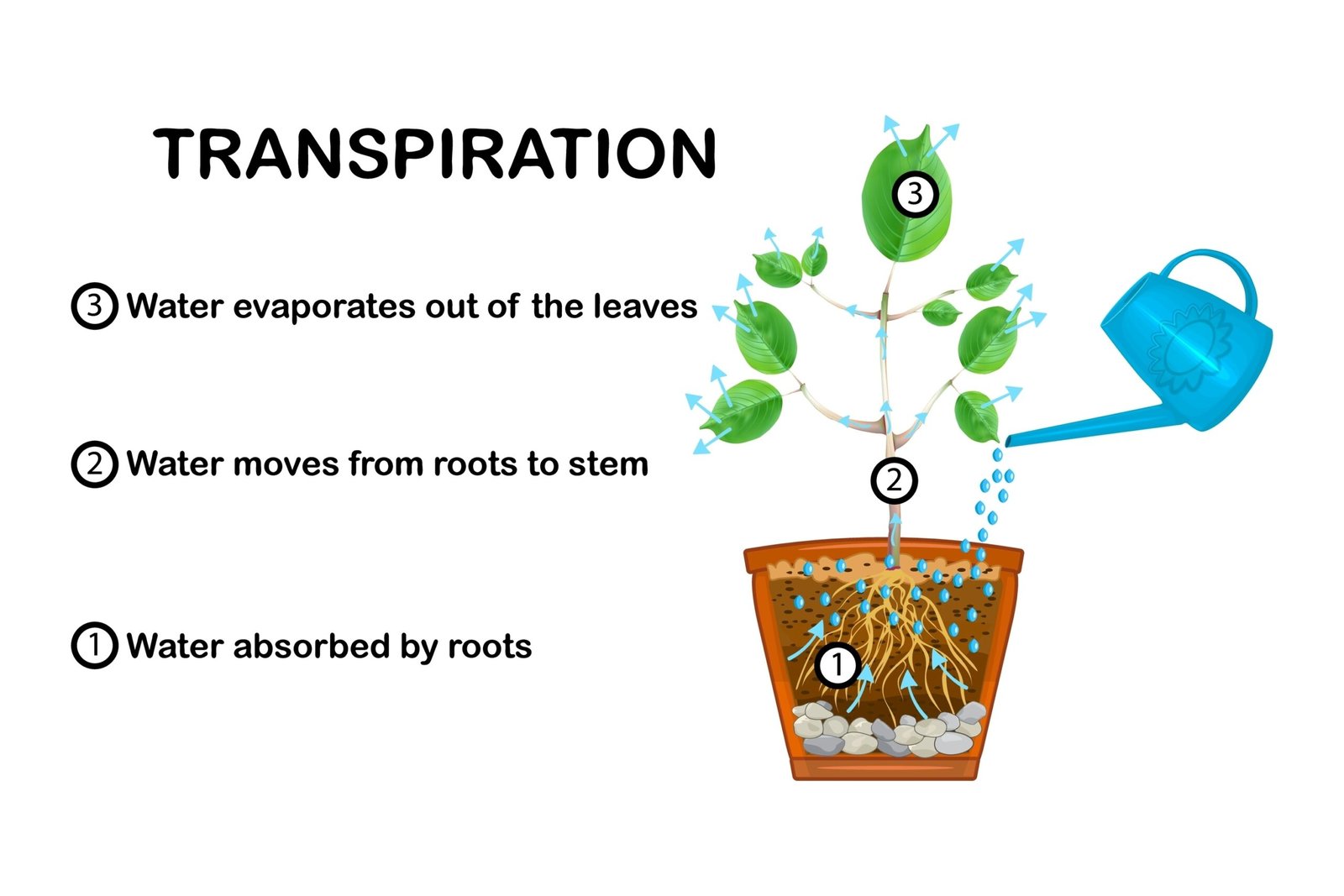
🌊 Transpiration is the loss of water vapour from leaves.
It occurs mainly through stomata 💧➡️🌬️.
🧠 Transpiration cools the plant.
It helps in upward movement of water.
It maintains temperature balance.
🌍 This process links plants with the water cycle.
♻️ Excretion in plants is different from animals.
Plants do not have special excretory organs.
🧠 Waste materials are stored in leaves 🍂, bark 🌳, or fruits 🍎.
🧠 Some wastes are removed as resins, gums, or latex 🧪.
🧭 Plants respond to their surroundings.
They bend toward light 🌞➡️🌱.
Roots grow downward ⬇️.
🧠 These responses help plants survive.
🌱 Growth in plants continues throughout life.
New leaves, branches, and roots keep forming.
🧠 This continuous growth is supported by life processes working together.
🧭 Life processes in plants support all living beings.
Plants produce food 🍚.
Plants provide oxygen 🌬️.
Plants maintain environmental balance 🌍.
🧠 Without plants, life on Earth would not exist.
📜 Studying plant life processes builds scientific understanding.
It explains farming 🌾.
It supports conservation 🌱.
It encourages respect for nature.
🚀 Knowledge of plant processes prepares students for advanced biology.
📝 Summary of the Lesson
Plants carry out essential life processes such as nutrition, respiration, transport, transpiration, and excretion. Plants prepare their own food through photosynthesis using sunlight, water, carbon dioxide, and chlorophyll. Respiration releases energy from food, while transport systems like xylem and phloem move water, minerals, and food within the plant. Transpiration helps in cooling and water movement. Excretion occurs through storage or release of waste substances. These life processes help plants grow, survive, and support life on Earth by providing food and oxygen.
⚡ Quick Recap
⭐ Plants perform life processes
⭐ Photosynthesis makes food
⭐ Respiration releases energy
⭐ Xylem and phloem transport materials
⭐ Transpiration removes water vapour
⭐ Plants support all life
⭐ Life processes maintain balance
——————————————————————————————————————————————————————————————————————————–
TEXTBOOK QUESTIONS
🔒 ❓ Question 1
Complete the following table.
📌 Answer:
🔵 Feature: Raw materials
Photosynthesis: Carbon dioxide + Water
Respiration: Glucose + Oxygen
🔵 Feature: Products
Photosynthesis: Glucose + Oxygen
Respiration: Carbon dioxide + Water + Energy
🔵 Feature: Word equation
Photosynthesis:
Carbon dioxide + Water → Glucose + Oxygen
Respiration:
Glucose + Oxygen → Carbon dioxide + Water + Energy
🔵 Feature: Importance
Photosynthesis: Prepares food and releases oxygen
Respiration: Releases energy for life processes
🔒 ❓ Question 2
If all photosynthesising organisms disappear, what will be the impact on living organisms?
📌 Answer:
🔹 Food production will stop
🔹 Oxygen level will decrease
🔹 Carbon dioxide will increase
🔹 Food chains will collapse
🔹 Life on Earth will gradually end
🔒 ❓ Question 3
A potato shows starch with iodine. Where is starch made and how does it reach the potato?
📌 Answer:
🔹 Starch is synthesised in leaves during photosynthesis
🔹 Glucose formed in leaves is converted into starch
🔹 It is transported to potato through phloem
🔹 Potato stores starch as reserve food
🔒 ❓ Question 4
Do broad and flat leaves make photosynthesis more efficient? Justify.
📌 Answer:
✔️ Yes.
🔹 Broad surface captures more sunlight
🔹 Flat shape allows better gas exchange
🔹 More chlorophyll absorbs more light
🔹 Hence, photosynthesis increases
🔒 ❓ Question 5
X + Y → Carbon dioxide + Z + Energy
What do X, Y and Z represent?
📌 Answer:
🔹 X: Glucose
🔹 Y: Oxygen
🔹 Z: Water
🔒 ❓ Question 6
Two identical plants are kept in sunlight and darkness.
(i) What idea is being tested?
(ii) Visible differences?
(iii) Which leaves give positive iodine test?
📌 Answer:
🔵 (i) Idea tested:
Light is essential for photosynthesis
🔵 (ii) Visible differences:
Sunlight plant: Green, healthy
Dark plant: Pale, weak
🔵 (iii) Iodine test positive in:
Leaves of sunlight plant only
🔒 ❓ Question 7
Carbon dioxide is essential for photosynthesis (Fig. 10.11).
📌 Answer:
🔵 (i) Starch formed in:
(a) Sunlight with carbon dioxide
🔵 (ii) Starch not formed in:
(b), (c), (d)
🔵 (iii) Oxygen generated in:
(a) only
🔵 (iv) Oxygen not generated in:
(b), (c), (d)
🔒 ❓ Question 8
Snail, plant and CO₂ indicator experiment (Fig. 10.12).
📌 Answer:
🔹 She wants to find the relationship between photosynthesis and respiration
🔹 Plant uses CO₂ released by snail
🔹 Indicator colour changes show CO₂ level
🔹 Least CO₂ in tube with snail + plant
➡️ This confirms balance of gases
🔒 ❓ Question 9
Design an experiment to see if water transport is faster in warm or cold conditions.
📌 Answer:
🔹 Take two similar plants
🔹 Place one in warm place, one in cold place
🔹 Add coloured water
🔹 Observe colour movement in stem
🔹 Faster movement in warm condition
🔒 ❓ Question 10
Photosynthesis and respiration maintain balance in nature. Discuss.
📌 Answer:
🔹 Photosynthesis uses CO₂ and releases O₂
🔹 Respiration uses O₂ and releases CO₂
🔹 Both processes depend on each other
🔹 They maintain gas balance
🔹 Essential for survival of life
——————————————————————————————————————————————————————————————————————————–
OTHER IMPORTANT QUESTIONS
SECTION 1 — MCQs (5 Questions)
🔒 ❓ Q1. Which process helps plants make their own food?
🟢 1️⃣ Respiration
🔵 2️⃣ Photosynthesis
🟡 3️⃣ Transpiration
🟣 4️⃣ Germination
✔️ Answer: 🔵 2️⃣ Photosynthesis
🔒 ❓ Q2. Which gas is taken in by plants during photosynthesis?
🟢 1️⃣ Oxygen
🔵 2️⃣ Nitrogen
🟡 3️⃣ Carbon dioxide
🟣 4️⃣ Hydrogen
✔️ Answer: 🟡 3️⃣ Carbon dioxide
🔒 ❓ Q3. Which part of the plant helps in absorption of water?
🟢 1️⃣ Leaf
🔵 2️⃣ Stem
🟡 3️⃣ Root
🟣 4️⃣ Flower
✔️ Answer: 🟡 3️⃣ Root
🔒 ❓ Q4. Which process releases excess water from plant leaves?
🟢 1️⃣ Respiration
🔵 2️⃣ Photosynthesis
🟡 3️⃣ Transpiration
🟣 4️⃣ Germination
✔️ Answer: 🟡 3️⃣ Transpiration
🔒 ❓ Q5. Which pigment gives green colour to leaves?
🟢 1️⃣ Xanthophyll
🔵 2️⃣ Chlorophyll
🟡 3️⃣ Carotene
🟣 4️⃣ Anthocyanin
✔️ Answer: 🔵 2️⃣ Chlorophyll
SECTION 2 — Very Short Answer (5 Questions)
🔒 ❓ Q6. Name the process by which plants make food.
📌 ✅ Answer: Photosynthesis
🔒 ❓ Q7. Which gas is released during photosynthesis?
📌 ✅ Answer: Oxygen
🔒 ❓ Q8. Name the tiny pores on leaves.
📌 ✅ Answer: Stomata
🔒 ❓ Q9. Which part transports food in plants?
📌 ✅ Answer: Phloem
🔒 ❓ Q10. Name the process of breathing in plants.
📌 ✅ Answer: Respiration
SECTION 3 — Short Answer (3 Questions)
🔒 ❓ Q11. Why are leaves called food factories of plants?
📌 ✅ Answer:
🔹 Leaves contain chlorophyll which traps sunlight.
🔸 They use carbon dioxide and water to prepare food.
🔹 Therefore, leaves are called food factories of plants.
🔒 ❓ Q12. What is transpiration and why is it important?
📌 ✅ Answer:
🔹 Transpiration is the loss of water from leaves.
🔸 It helps in cooling the plant body.
🔹 It also aids in the upward movement of water.
🔒 ❓ Q13. How do plants respire?
📌 ✅ Answer:
🔹 Plants respire through tiny pores called stomata.
🔸 Oxygen enters and carbon dioxide is released.
🔹 Respiration provides energy for plant activities.
SECTION 4 — Long Answer (1 Question)
🔒 ❓ Q14. Explain the major life processes in plants.
📌 ✅ Answer:
🔹 Plants perform life processes like photosynthesis, respiration and transpiration.
🔸 Photosynthesis helps plants prepare food using sunlight.
🔹 Respiration releases energy from food.
🔸 Transpiration removes excess water and helps in transport.
🔹 These processes are essential for growth and survival of plants.
——————————————————————————————————————————————————————————————————————————–
ADVANCE KNOWLEDGE
🌍 Plants: Silent Engineers of Life on Earth
Plants do not run, speak, or show emotions, yet they perform some of the most powerful life processes on the planet. Without plants, animals—including humans—would not survive even for a short time. Plants are not passive living things; they are active chemical factories, working silently day and night.
🧠 Big idea:
Plants do not just support life — they create the conditions for life itself.
🧠 What Are Life Processes in Plants?
Life processes are the essential activities that keep plants alive and functioning.
In plants, these include:
🌱 Nutrition (photosynthesis)
🌬️ Respiration
🚚 Transportation
💧 Transpiration
🌿 Growth and response
⭐ Though plants seem still, these processes run continuously at the cellular level.
🌞 Photosynthesis: Nature’s Greatest Invention
Photosynthesis is the process by which plants make their own food.
🧠 Requirements:
Sunlight
Water
Carbon dioxide
Chlorophyll
⭐ Plants convert solar energy into chemical energy, storing it as food.
🧠 Deep truth:
All food chains begin with photosynthesis—even meat eaters depend on it indirectly.
⚠️ Misconception vs Reality
⚠️ Misconception: Photosynthesis happens only during daytime
✅ Reality: Light reaction needs sunlight, but some stages continue without light
⚠️ Misconception: Plants give oxygen only for humans
✅ Reality: Oxygen release is a by-product of food making, not a gift decision
🌬️ Respiration in Plants: Energy Release
Plants respire just like animals.
🧠 Respiration:
Releases energy from food
Happens day and night
⭐ Breathing and respiration are not the same.
🧠 Plants take in oxygen and give out carbon dioxide during respiration—but this is hidden by photosynthesis in daylight.
🚚 Transportation: Moving Water and Food
Plants lack blood, yet they transport materials efficiently.
🧠 Two transport systems:
💧 Xylem → carries water and minerals
🍬 Phloem → carries food
⭐ This upward and downward movement happens against gravity, powered by physical forces.
💧 Transpiration: Cooling and Lifting Power
Transpiration is loss of water vapour from leaves.
🧠 Why it matters:
Cools the plant
Creates suction to pull water upward
Maintains water balance
⭐ A tall tree lifts water without pumps—pure physics at work.
🌱 Growth: Controlled Construction
Plant growth is directional and controlled.
🧠 Growth occurs due to:
Cell division
Cell elongation
⭐ Plants grow throughout life, unlike animals.
🧠 Growth direction responds to:
Light (phototropism)
Gravity (geotropism)
🧠 Response to Stimuli: Plant Intelligence
Plants respond to their surroundings.
🧠 Examples:
Leaves bend toward light
Roots grow toward water
Touch-me-not closes leaves
⭐ Plants do not have brains, yet they sense and respond efficiently.
⚠️ Misconception vs Reality
⚠️ Misconception: Plants are inactive
✅ Reality: Plant cells are constantly working
⚠️ Misconception: Plants do not need oxygen
✅ Reality: Oxygen is essential for plant respiration
🌍 Life Processes and Environment
Plant life processes depend on surroundings.
🌍 Factors affecting them:
Temperature
Water availability
Light intensity
Soil quality
🧠 Environmental damage directly affects plant survival.
🌱 Plants and the Balance of Life
Plants regulate:
Oxygen–carbon dioxide balance
Climate
Soil fertility
⭐ Forests act as natural life-support systems for Earth.
🚀 Modern Science: Studying Plant Life
🚀 Scientists study:
Plant hormones
Stress resistance
Artificial photosynthesis
🧠 These studies help:
Improve crop yield
Fight climate change
Ensure food security
⭐ Amazing Plant Facts
⭐ Plants communicate using chemicals
⭐ Some plants eat insects
⭐ Trees can live for thousands of years
⭐ A single leaf performs millions of reactions per second
🧠 Why Curious Minds Must Understand Plant Life
Understanding plant life processes:
Builds respect for nature
Explains food production
Connects biology with climate science
🧠 Plants are not background objects—they are active life managers.
🌟 Final Thought
Plants do not move loudly, but they power the planet silently.
🧠 Every breath you take is a gift from plant life processes working endlessly.
——————————————————————————————————————————————————————————————————————————–