
Class 7 : English – Lesson 5. A Funny Man

EXPLANATION AND ANALYSIS
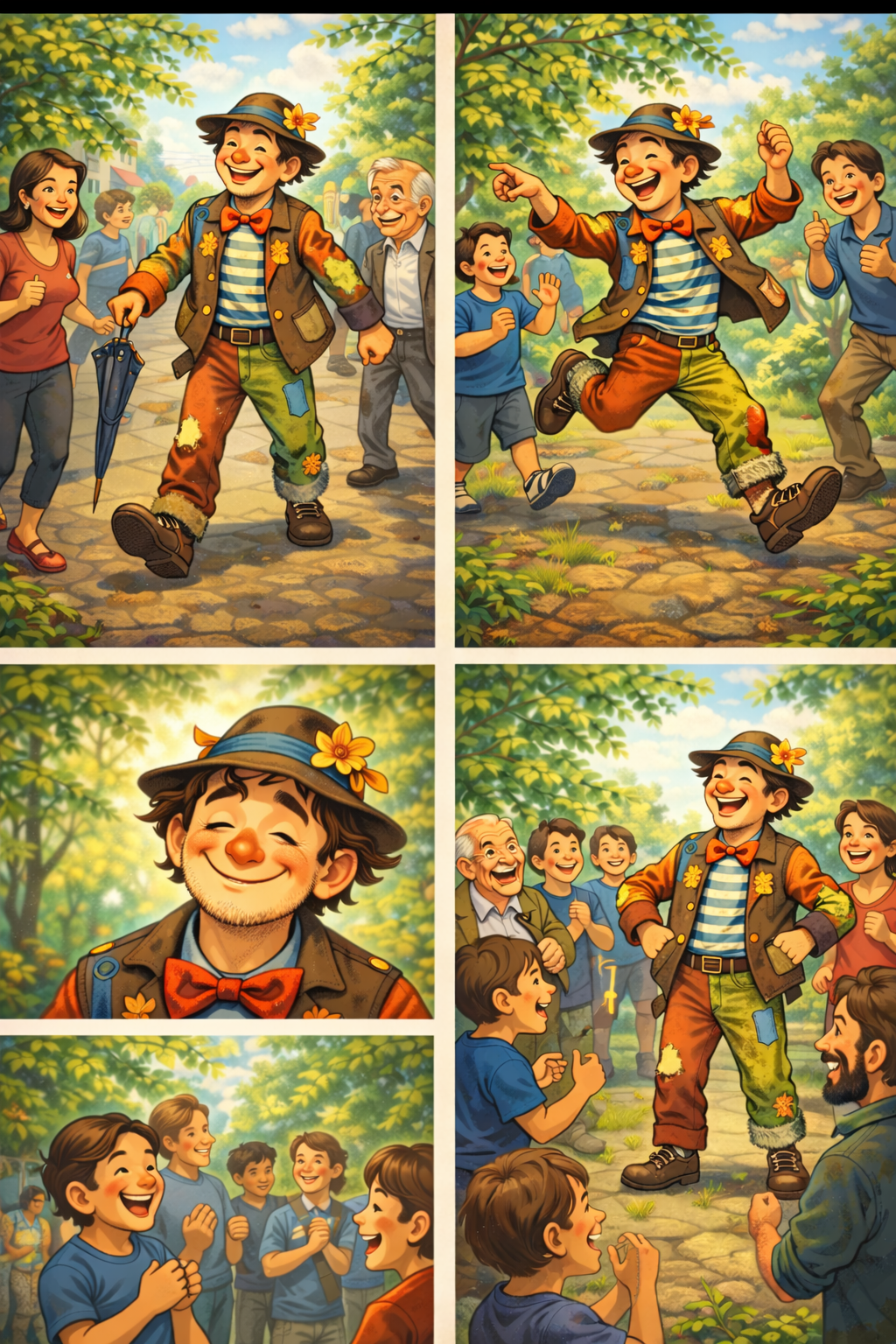
🪶 INTRODUCTORY IDEA AND CENTRAL THEME 🪶
😄 A Funny Man is a light hearted yet thoughtful lesson that explores humour behaviour and human reactions The story presents a man whose actions appear amusing on the surface but carry deeper meaning beneath the laughter The lesson shows how humour can arise from personality habits and social situations while also revealing how people judge others quickly
🏙️ SETTING AND SOCIAL SPACE 🏙️
🚶 The lesson is set in everyday public spaces where people observe and react to one another The ordinary setting makes the character stand out more clearly Because the surroundings are familiar the reader focuses on the man’s actions expressions and behaviour This setting reflects real life situations where humour often emerges unexpectedly
🧍 THE FUNNY MAN AS A CHARACTER 🧍
🤹 The funny man is not intentionally trying to amuse others His humour comes from his natural behaviour movements and way of responding to situations People laugh at him yet he remains unaware or unconcerned This portrayal raises questions about whether humour always comes from intention or sometimes from misunderstanding
🎭 HUMOUR AND HUMAN PERCEPTION 🎭
👀 The lesson highlights how people observe others and form opinions quickly The crowd finds the man amusing without trying to understand him fully This shows how humour is often shaped by perception rather than truth The lesson gently criticises shallow judgement and encourages thoughtful observation
🧠 INNER WORLD AND SILENT DIGNITY 🧠
🌱 Although others laugh the man continues calmly He does not react with anger or embarrassment This silence suggests inner confidence or indifference to public opinion The lesson invites readers to respect individuality and recognise dignity even in those considered different
🤔 LAUGHTER AND ITS LIMITS 🤔
⚖️ The story makes readers question whether laughing at someone is always harmless It subtly draws attention to the line between humour and insensitivity The lesson teaches emotional awareness and empathy reminding readers to consider feelings behind appearances
🌍 RELEVANCE TO DAILY LIFE 🌍
🧩 In schools streets and social spaces people often label others quickly The lesson feels relevant as it encourages students to be kind observant and respectful It warns against mocking behaviour and promotes thoughtful interaction
🌟 CORE MESSAGE AND VALUE EDUCATION 🌟
📘 A Funny Man teaches empathy restraint and awareness It shows that humour should not come at the cost of dignity The lesson encourages readers to look beyond surface actions and treat every individual with respect
📗 SUMMARY 📗
🌸 A Funny Man is a lesson that presents a man whose behaviour appears amusing to others The story explores how humour is created through perception It teaches readers to think before laughing judge less and respect individuality The lesson promotes empathy kindness and emotional maturity
——————————————————————————————————————————————————————————————————————————–
TEXTBOOK QUESTIONS
🔹 Let us think and reflect
🔒 ❓ I. Read the extracts given below and answer the questions that follow.
🔹 Extract 1
🔒 ❓ (i) Why does the funny man address the poet as ‘Your Highness’?
📌 ✅ Answer:
🔹 He uses an exaggerated title to sound polite.
🔹 This creates humour and makes the situation funny.
🔒 ❓ (ii) Choose a phrase from the extract which indicates a polite request.
📌 ✅ Answer:
🔹 “Allow me to present”
🔒 ❓ (iii) Choose the option which shows a ‘currant bun’.
🟢1️⃣ Image 1
🔵2️⃣ Image 2
🟡3️⃣ Image 3
🟣4️⃣ Image 4
✔️ Answer: 🔵2️⃣ Image 2
🔒 ❓ (iv) Complete the sentence with an appropriate reason.
When the poet says, “Well!”, it expresses surprise. This was so because _.
📌 ✅ Answer:
🔹 the funny man suddenly held a currant bun close to the poet’s nose.
🔹 this unexpected action surprised him.
🔹 Extract 2
🔒 ❓ (i) Choose the line from the extract which tells us that the sound was unique.
📌 ✅ Answer:
🔹 “You never heard in all your life
Such a funny feeling sound.”
🔒 ❓ (ii) Complete the sentence with an appropriate reason.
The poet calls the funny man ‘my friend’ because _.
📌 ✅ Answer:
🔹 he speaks to him in a friendly manner.
🔹 there is no formality between them.
🔒 ❓ (iii) What does the reaction of the funny man to the poet’s question tell us about him?
📌 ✅ Answer:
🔹 He is playful.
🔹 He enjoys behaving unusually.
🔹 He likes surprising people.
🔒 ❓ (iv) Choose the correct option to complete the sentence.
The last line of the extract makes the readers feel _.
🟢1️⃣ dreamy
🔵2️⃣ impatient
🟡3️⃣ worried
🟣4️⃣ cheerful
✔️ Answer: 🟣4️⃣ cheerful
🔒 ❓ II. Answer the following questions.
🔒 ❓ 1. Which character trait of the funny man was most appealing to you? Why?
📌 ✅ Answer:
🔹 His playful nature is most appealing.
🔹 It fills the poem with humour and joy.
🔒 ❓ 2. The funny man does unusual things in the poem. How does it affect the overall mood of the poem?
📌 ✅ Answer:
🔹 It makes the poem light-hearted.
🔹 The mood becomes cheerful and amusing.
🔒 ❓ 3. What alternative title would you suggest for the poem? Give reason(s).
📌 ✅ Answer:
🔹 The Man Who Did Everything Differently.
🔹 It reflects the funny man’s strange behaviour.
🔒 ❓ 4. Why do you think the poet has included dialogues in the poem?
📌 ✅ Answer:
🔹 Dialogues make the poem lively.
🔹 They help readers imagine the scene clearly.
🔒 ❓ 5. What does the poet wish to convey by highlighting the unusual behaviour of the funny man?
📌 ✅ Answer:
🔹 Being different can bring happiness.
🔹 Life can be joyful if taken lightly.
🔹 Let us learn
🔒 ❓ I. Study the following words taken from the text.
humorous, hilariously, coming, beautiful
📌 ✅ Answer:
🔹 These words are formed by adding suffixes to root words.
🔹 humour + ous
🔹 hilarious + ly
🔹 come + ing
🔹 beauty + ful
🔒 ❓ Now, divide the following words from the text as root words and suffixes.
gladly, banker, guidance, quietly, walking
📌 ✅ Answer:
🔹 gladly → glad + ly
🔹 banker → bank + er
🔹 guidance → guide + ance
🔹 quietly → quiet + ly
🔹 walking → walk + ing
🔒 ❓ 1. Study the words in Column 1. Match the suffixes in Column 2 with their meanings or purposes in Column 3.
📌 ✅ Answer:
🔹 Biology → -logy → a study of → Sociology
🔹 tolerance → -ance → change to a noun
🔹 stopped → -ed → change to past tense
🔹 backward → -ward → in a certain direction
🔹 courageous → -ous → change to adjective
🔹 quietly → -ly → change to adverb
🔹 toughest → -est → change to superlative
🔹 tomatoes → -es → change to plural
🔒 ❓ 2. Fill in the blanks using words given in the brackets by adding suitable suffixes.
📌 ✅ Answer:
🔹 effectively
🔹 wisely
🔹 discussing
🔹 respectful
🔹 appreciation
🔹 responsive
🔒 ❓ II. Select the correct answer.
Is there a difference in the meanings of ‘say’ and ‘tell’?
📌 ✅ Answer:
🔹 Yes
🔹 ‘Say’ focuses on the message.
🔹 ‘Tell’ focuses on the listener.
🔒 ❓ III. Fill in the blanks with suitable words from the box.
📌 ✅ Answer:
🔹 (i) looked, see
🔹 (ii) fetch
🔹 (iii) study, learn
🔹 (iv) hear, listen
🔹 (v) speak, talk
🔹 (vi) live, stay
🔒 ❓ IV. Fill in the blanks using the verbs given in brackets in present continuous or present perfect continuous tense.
📌 ✅ Answer:
🔹 are organising
🔹 have been preparing
🔹 are rehearsing
🔹 is growing
🔹 is testing
🔹 has been working
🔹 is buzzing
🔒 ❓ V. Identify the kinds of sentences and punctuate them appropriately.
📌 ✅ Answer:
🔹 Declarative
🔹 Exclamatory
🔹 Interrogative
🔹 Interrogative
🔹 Exclamatory
🔹 Imperative
🔹 Declarative
🔹 Imperative
——————————————————————————————————————————————————————————————————————————–
OTHER IMPORTANT QUESTIONS
📖 Passage
People often laughed at the man because of his unusual movements and quiet manner. He neither reacted to their laughter nor tried to explain himself. His calm presence revealed an inner balance that the observers failed to notice. The humour existed more in the minds of onlookers than in the man himself.
🔒 ❓ Q1. The word unusual in the passage most nearly suggests
🟢 1️⃣ ordinary
🔵 2️⃣ distinctive
🟡 3️⃣ careless
🟣 4️⃣ temporary
✔️ Answer: 🔵 2️⃣ distinctive
🔒 ❓ Q2. Which word best captures the man’s response to public laughter
🟢 1️⃣ defensive
🔵 2️⃣ indifferent
🟡 3️⃣ aggressive
🟣 4️⃣ anxious
✔️ Answer: 🔵 2️⃣ indifferent
🔒 ❓ Q3. The passage implies that humour arises from human __ rather than the man’s intention.
📌 ✅ Answer: perception
🔒 ❓ Q4. Why does the man not react to people laughing at him
📌 ✅ Answer: Because he remains calm and unaffected by others’ opinions.
🔒 ❓ Q5. What quality of the man do observers fail to recognise
📌 ✅ Answer: His inner balance and quiet dignity.
🔒 ❓ Q6. Explain how the passage challenges the way society judges individuals.
📌 ✅ Answer: The passage shows that people often judge based on surface behaviour without understanding inner qualities. By laughing at the man they reveal their own assumptions. The man’s calm silence suggests dignity and self control reminding readers that true worth is not defined by public opinion.
——————————————————————————————————————————————————————————————————————————–