
Class 6 : English – Lesson 9. Spices That Heal Us

EXPLANATION AND ANALYSIS
🌿 OPENING IDEA AND HEALTH CENTRED THEME 🌿
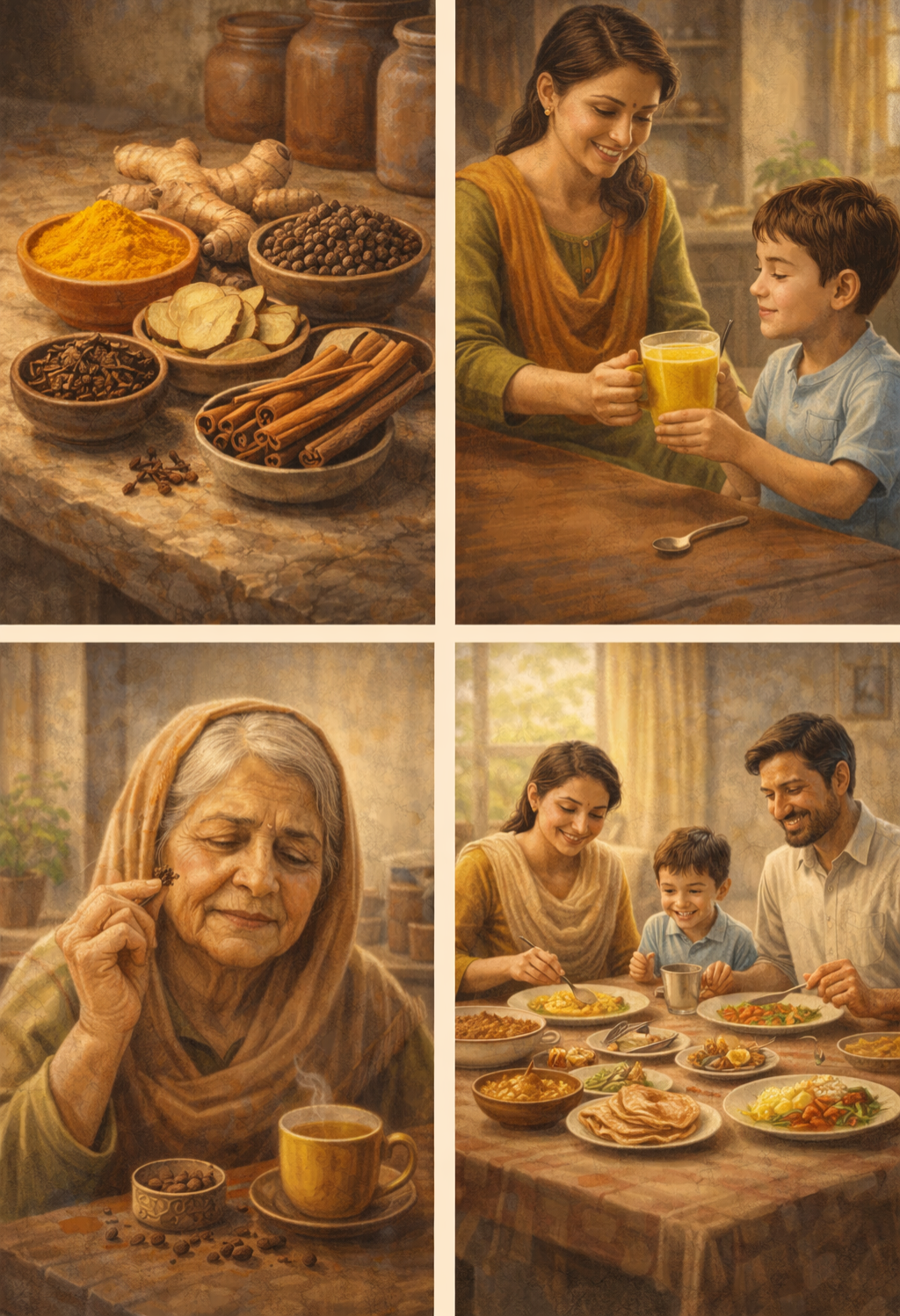
🧂 Spices that Heal Us is an informative and meaningful lesson that connects food health tradition and nature The lesson explains how common spices used in everyday cooking also possess healing qualities It helps students understand that food is not only for taste but also for maintaining balance and well being The lesson builds awareness about natural remedies and traditional knowledge in a simple engaging manner
🏡 TRADITIONAL KITCHEN AS A HEALING SPACE 🏡
🍲 The story places the Indian kitchen at the centre of health and care Kitchens are shown as spaces where knowledge is passed from elders to children Spices kept in jars are not ordinary ingredients but guardians of health This setting helps students value household wisdom and respect everyday practices that support healthy living
🌼 NATURE AND ITS HIDDEN GIFTS 🌼
🌱 The lesson highlights that spices come from plants seeds roots and bark Nature provides healing quietly without demanding attention This idea encourages gratitude toward nature Students learn that plants protect human health naturally when used wisely The lesson strengthens respect for the environment and natural resources
🧄 COMMON SPICES AND THEIR BENEFITS 🧄
🌶️ The lesson explains how spices like turmeric ginger cloves pepper and cumin help the body Turmeric soothes wounds Ginger eases cold and digestion Cloves reduce pain Pepper improves immunity These examples help students see science within tradition The lesson shows that ancient knowledge often has practical value
🧠 BALANCE BETWEEN TRADITION AND AWARENESS 🧠
⚖️ The lesson does not promote blind belief It encourages understanding how spices work and why they are useful Students learn that natural remedies must be used thoughtfully This balanced approach develops scientific thinking along with cultural respect
🤒 CARE DURING ILLNESS AND DAILY LIFE 🤒
🛌 Spices are shown as helpers during illness and daily weakness Warm drinks and simple remedies bring comfort This teaches students that care begins at home and healing does not always require complex solutions The lesson promotes self care and attentiveness to the body
🧓 ROLE OF ELDERS AND SHARED KNOWLEDGE 🧓
📚 Elders play an important role in passing down knowledge They guide children about remedies and habits This connection between generations builds respect and continuity Students understand the importance of listening learning and preserving wisdom
🌍 RELEVANCE IN MODERN TIMES 🌍
🌎 In a time of processed food and fast living the lesson reminds readers to return to simple healthy habits It encourages using natural resources responsibly The lesson supports sustainable living and preventive health awareness among young learners
🌟 MORAL AND HEALTH AWARENESS 🌟
💚 The story teaches that good health depends on daily choices Knowledge patience and moderation are essential Students learn that healing does not always come from medicine but also from mindful living
🌈 LEARNING OUTCOMES AND CHARACTER BUILDING 🌈
📘 Students develop awareness about nutrition hygiene and tradition The lesson builds curiosity and respect for science hidden in daily life It promotes responsibility toward body family and environment
📗 SUMMARY 📗
🌸 Spices that Heal Us explains how common kitchen spices help in keeping the body healthy The lesson shows that spices like turmeric ginger and pepper have healing properties Passed down through generations this knowledge helps during illness and daily care The story teaches students to respect nature traditional wisdom and healthy living It highlights that simple habits and awareness can protect health naturally
——————————————————————————————————————————————————————————————————————————–
TEXTBOOK QUESTIONS
LET US THINK AND REFLECT
🔒 ❓ I. Read the given lines and answer the following questions.
“When I was a child, I learnt them from my grandmother. She used to find cures for most of the weather-related common illnesses in the kitchen.”
🔒 ❓ 1. Where exactly in the kitchen did her grandmother find the cures?
📌 ✅ Answer:
🔹 She found the cures in the spices and ingredients kept in the kitchen.
🔒 ❓ 2. Give one example of weather-related common illnesses.
📌 ✅ Answer:
🔹 Cold
🔒 ❓ 3. What kind of relationship did the speaker have with her grandmother?
📌 ✅ Answer:
🔹 The speaker shared a close, caring, and trusting relationship with her grandmother.
🔒 ❓ II. Fill in the blanks to complete the sentence.
Daadi soaked methi seeds overnight and drank the water in the morning to manage _ and _.
📌 ✅ Answer:
🔹 digestion and blood sugar
🔒 ❓ III. Circle the spice that is not useful for body pain according to Daadi’s letter.
🟢 1. Turmeric
🔵 2. Fennel seeds
🟡 3. Ginger
🟣 4. Black pepper
✔️ Answer:
🔵 2. Fennel seeds
🔒 ❓ IV. Why did Daadi ask Vikram and Vaibhavi to share the natural cures with their friends?
📌 ✅ Answer:
🔹 So that more people could benefit from natural cures and traditional knowledge.
🔒 ❓ V. What was Daadi’s final advice to Vikram and Vaibhavi?
📌 ✅ Answer:
🔹 She advised them to remember and use natural cures wisely and responsibly.
🔒 ❓ VI. How do we know that natural cures are passed from one generation to another?
📌 ✅ Answer:
🔹 The speaker learnt the cures from her grandmother, showing they were passed down through generations.
🔒 ❓ VII. Why do you think we should know about the healing properties of spices?
📌 ✅ Answer:
🔹 Because spices can help treat common illnesses naturally and keep us healthy.
LET US LEARN
🔒 ❓ I. You have read the uses of spices in the letter. Complete the following information with the help of your teacher.
📌 ✅ Answer:
🔹 Turmeric
Part of plant: root
Colour: yellow
Texture: rough
Taste: bitter
🔹 Fenugreek
Part of plant: seeds
Colour: yellow
Texture: hard
Taste: bitter
🔹 Cinnamon
Part of plant: bark
Colour: brown
Texture: rough
Taste: sweet
🔹 Clove
Part of plant: flower buds
Colour: brown
Texture: hard
Taste: spicy
🔹 Black pepper
Part of plant: seeds
Colour: black
Texture: rough
Taste: spicy
🔹 Cardamom
Part of plant: seeds
Colour: green
Texture: soft
Taste: sweet
🔒 ❓ II. Read the sentences given below.
🔹 You may share them with your friends.
🔹 You should try to remember these cures.
🔹 It can help control cough and cold.
🔹 You must consult an elder before you use them.
🔹 I need to soak the methi seeds overnight.
🔹 I used to put heeng water on your tummy.
📌 ✅ Answer:
🔹 (Read and understood as given in the text.)
——————————————————————————————————————————————————————————————————————————–
OTHER IMPORTANT QUESTIONS
📖 Passage
In many homes elders rely on common kitchen spices to care for health. Turmeric is used for wounds ginger for cough and digestion and cloves for pain relief. These spices are not treated as ordinary ingredients but as natural helpers. Such practices show how traditional knowledge understands the healing power hidden in everyday food.
🔒 ❓ Q1. The word rely in the passage most nearly means
🟢 1️⃣ ignore
🔵 2️⃣ depend
🟡 3️⃣ doubt
🟣 4️⃣ replace
✔️ Answer: 🔵 2️⃣ depend
🔒 ❓ Q2. Which word best describes the knowledge passed down by elders
🟢 1️⃣ temporary
🔵 2️⃣ traditional
🟡 3️⃣ accidental
🟣 4️⃣ careless
✔️ Answer: 🔵 2️⃣ traditional
🔒 ❓ Q3. The passage suggests that healing qualities of spices are often __ within daily food habits.
📌 ✅ Answer: embedded
🔒 ❓ Q4. Why are spices considered more than ordinary ingredients
📌 ✅ Answer: Because they are believed to support health and healing.
🔒 ❓ Q5. Who usually shares the knowledge about using spices for health
📌 ✅ Answer: Elders in the family.
🔒 ❓ Q6. How does the passage connect food with traditional wisdom
📌 ✅ Answer: The passage shows that everyday food contains healing value understood through long experience. By using spices as natural remedies elders combine daily cooking with health care proving that tradition preserves practical wisdom.
——————————————————————————————————————————————————————————————————————————–