Class 11 : Biology (In English) – Lesson 5. Morphology of Flowering Plants

EXPLANATION & SUMMARY
🌿✨ Introduction
🪴 Morphology deals with the external form, shape, and structure of organisms.
In flowering plants (angiosperms), it focuses on the visible organs — root, stem, leaf, flower, fruit, and seed 🌸.
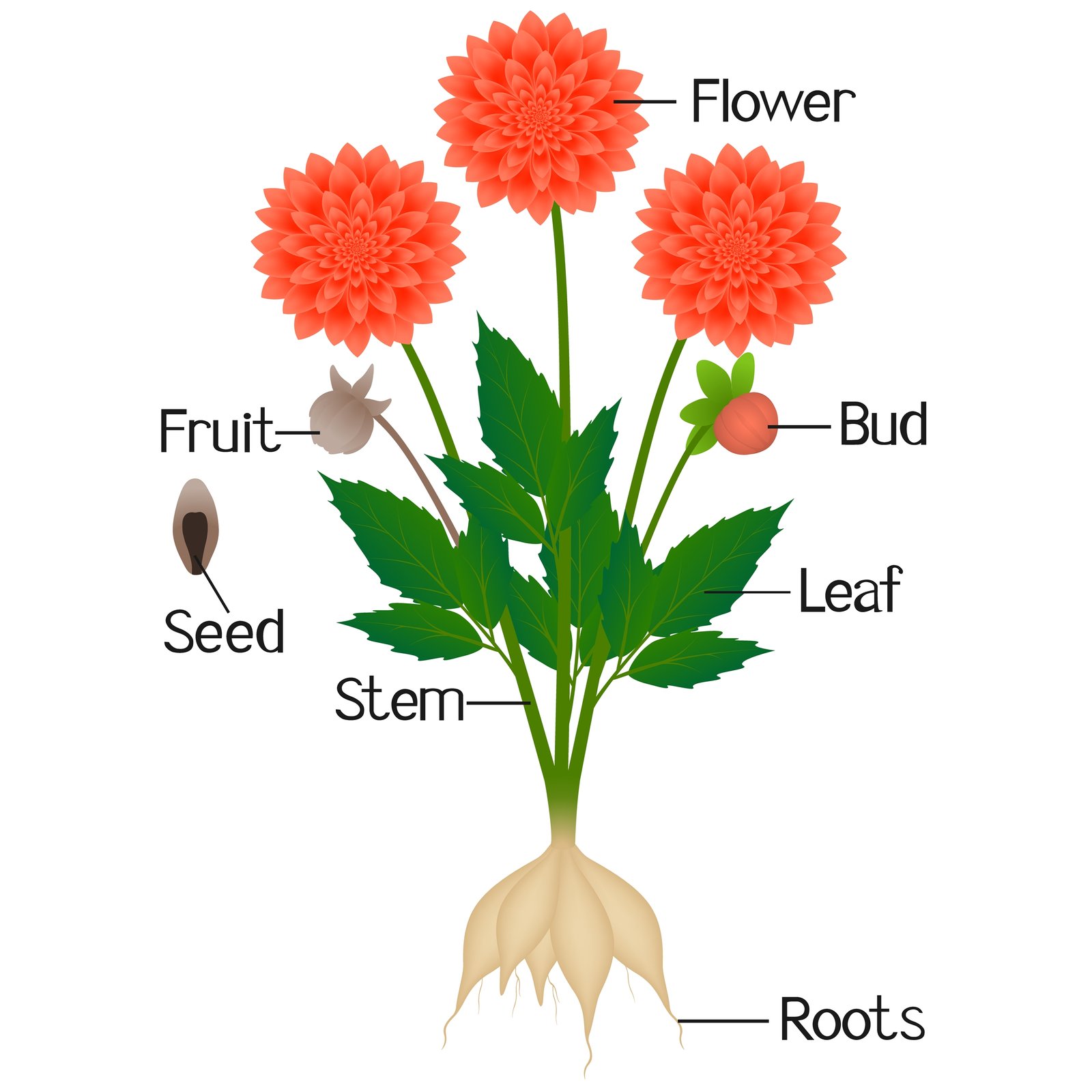
🧠 It helps botanists and learners in identification, classification, and understanding adaptive features that enable survival in diverse environments 🌍.
💡 Concept:
Morphology → outer features
Anatomy → internal tissues
🌱 This chapter systematically explores each organ, its structure, functions, and modifications.
🌱 Root
🧬 Definition
The root is the descending, non-green part of the plant axis that grows towards gravity (positive geotropism) and towards water (positive hydrotropism). It provides anchorage, absorption, conduction, and sometimes storage.
🧭 Types of Root Systems
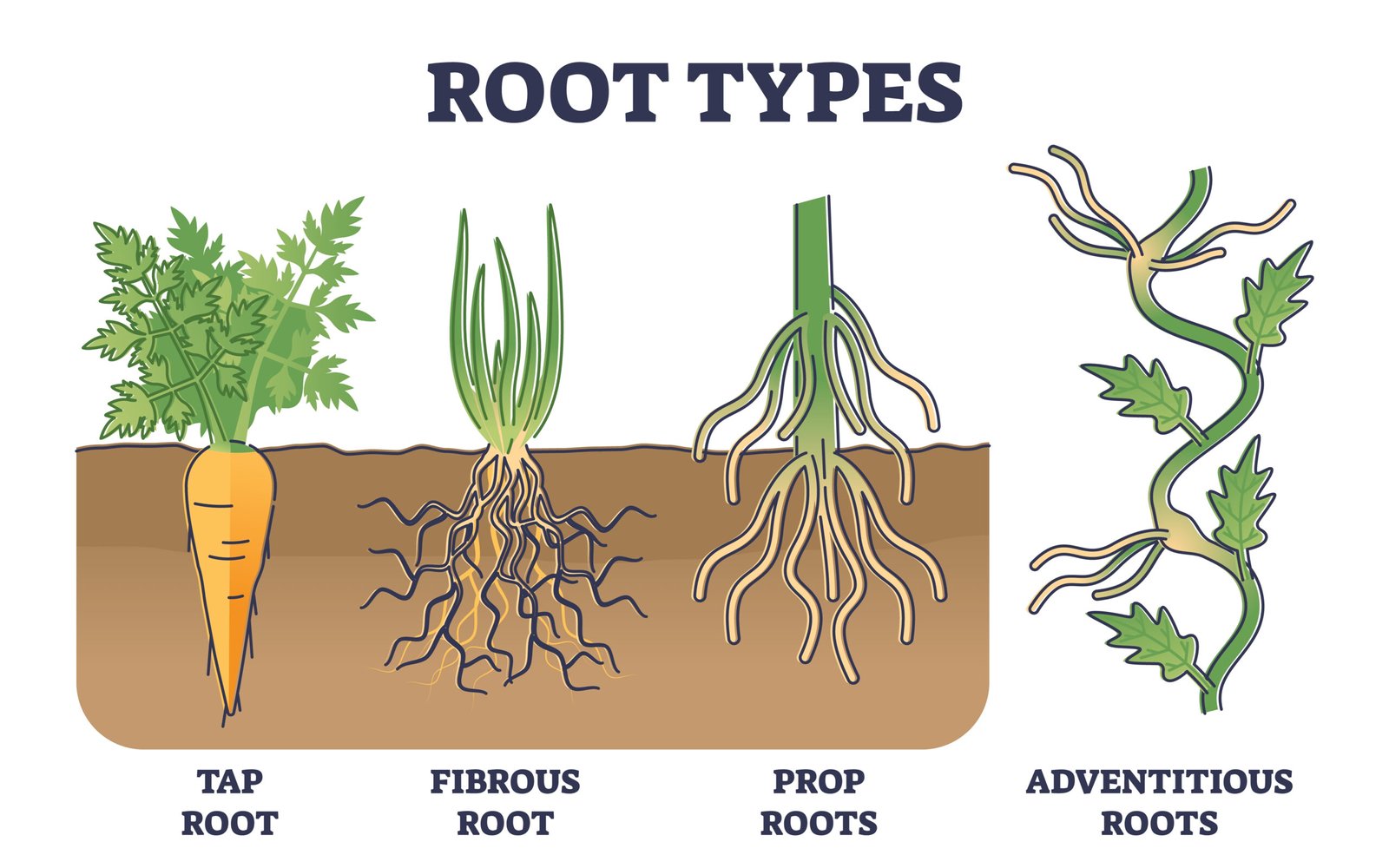
🌾 Tap Root System
➤ Develops from the radicle of the embryo
➤ Has one main root with lateral branches
➤ Typical of dicots (e.g., 🌸 mustard)
🍀 Fibrous Root System
➤ Arises from the base of the stem
➤ All roots are similar-sized
➤ Found in monocots (e.g., 🌾 wheat)
🌿 Adventitious Root System
➤ Originates from stem or leaves
➤ Examples: 🪴 Maize – prop roots; 🪻 Sweet potato – tuberous roots
🧪 Regions of a Young Root
🔹 Root cap – covers and protects apex
🔹 Region of cell division – meristematic cells
🔹 Region of elongation – cells enlarge, increasing length
🔹 Region of maturation – root hairs appear; absorb water 💧
🌿 Modifications of Roots
💡 Purpose: Adaptations for storage, support, respiration, or special roles 🌍
🧺 Storage Roots
🥕 Conical – carrot ⚪ Napiform – turnip 🔶 Fusiform – radish
🪵 Support Roots
🪴 Prop roots – banyan (hang like pillars)
🪜 Stilt roots – maize, sugarcane (from lower nodes)
💨 Respiratory Roots
🌾 Pneumatophores in mangroves (e.g., Rhizophora); grow upward for oxygen exchange 🫧
🌸 Special Modifications
🌱 Climbing roots – betel (adhesion)
🍀 Epiphytic roots – Vanda (velamen absorbs moisture)
☀️ Photosynthetic roots – Tinospora
✏️ Note: Each modification reflects ecological adaptation 🌎.
🌿 Stem
🧠 Definition
The stem is the ascending axis bearing branches, leaves, flowers, and fruits, conducting water, minerals, and food through vascular tissues 🍃.
⚙️ Functions
⚡ Support aerial parts
💧 Conduction via xylem (up) & phloem (down)
🌱 Photosynthesis in green stems
🧺 Storage of food in some species
🌾 Propagation by vegetative means
🌾 Stem Modifications
🧺 Underground (Perennation + Storage)
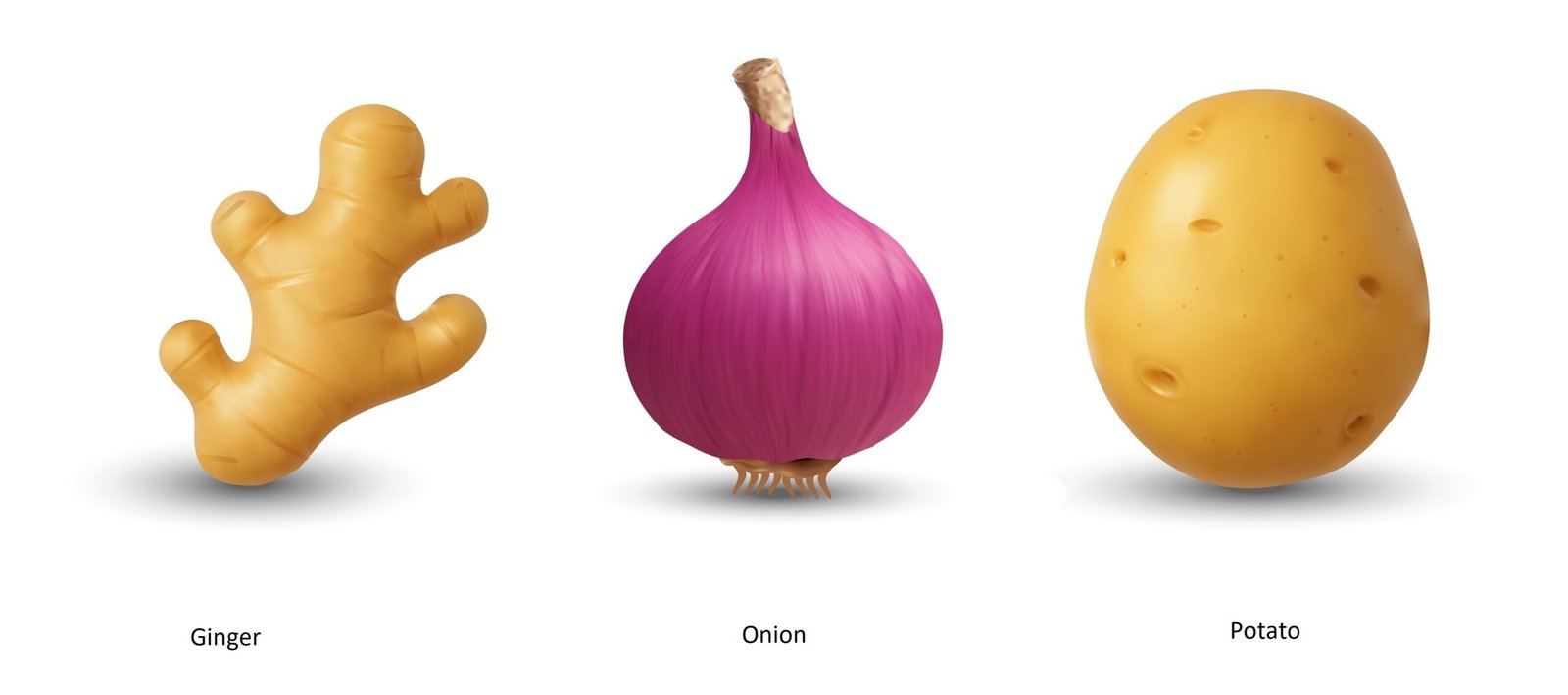
🥔 Tuber – potato
🧅 Bulb – onion
🌿 Rhizome – ginger
🍠 Corm – colocasia
🌱 Subaerial (Vegetative Propagation)
🌿 Runner – grass 🌸 Stolon – jasmine
💧 Sucker – mint 🌼 Offset – water hyacinth
🌳 Aerial (Modifications Above Ground)
🌀 Tendrils – climbing (grapevine)
🗡️ Thorns – defense (bougainvillea)
🍀 Phylloclade – flattened, photosynthetic stem (Opuntia)
💡 Concept: Modified stems ensure survival, defense, reproduction, and water conservation.
🍃 Leaf
🌱 Definition
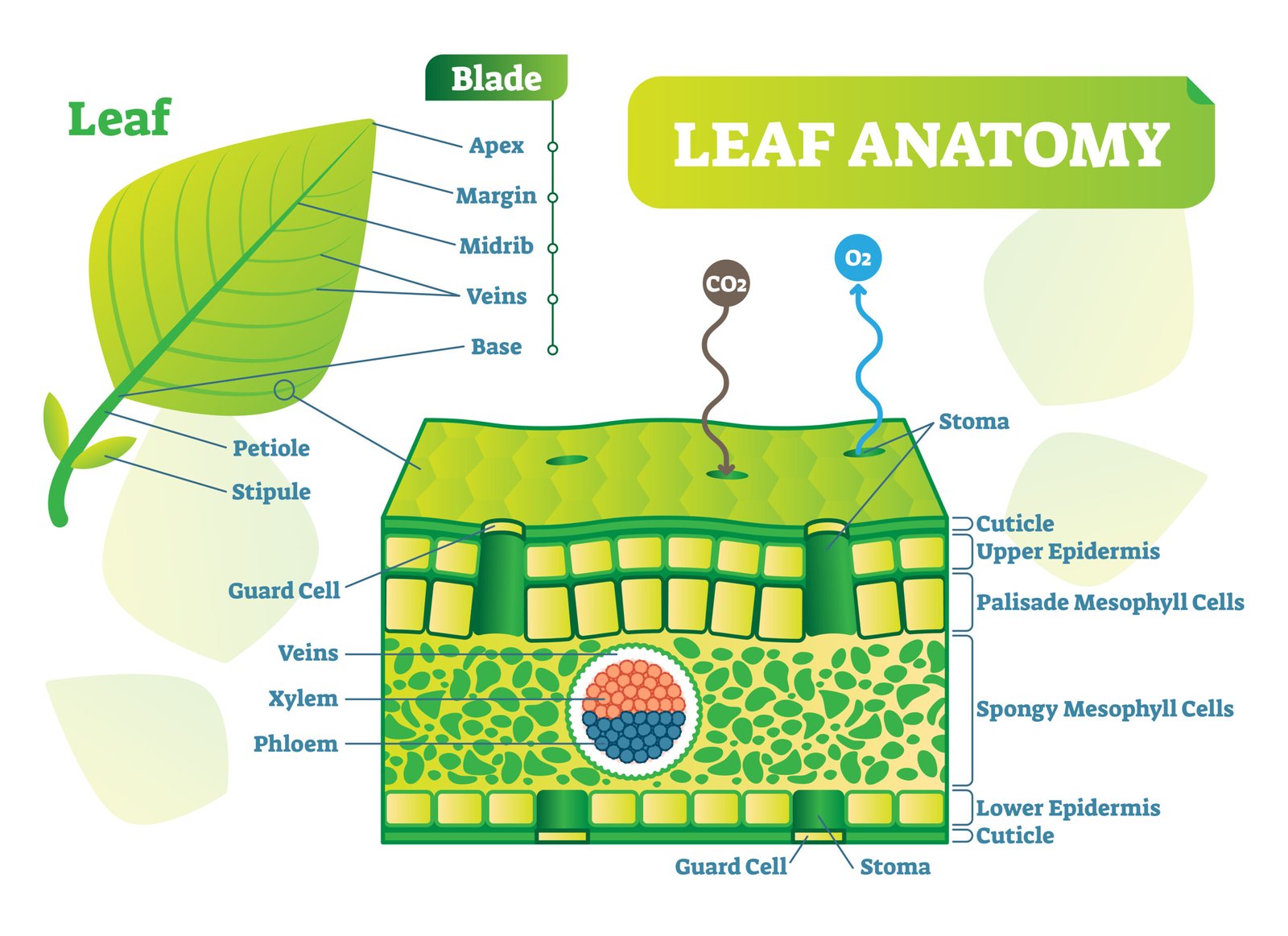
The leaf is a green, flattened lateral organ borne on the stem at nodes; primary site of photosynthesis, transpiration, and gas exchange 🍀.
📖 Parts
🌿 Leaf base – may form a pulvinus (legumes)
🧵 Petiole – stalk linking leaf to stem
🍃 Lamina – flat blade performing photosynthesis
🧭 Venation
🟢 Reticulate – dicots (net-like)
🟡 Parallel – monocots (lines run side by side)
🌸 Phyllotaxy
➤ Alternate – one leaf/node (sunflower)
➤ Opposite – two leaves/node (calotropis)
➤ Whorled – three + leaves/node (alstonia)
🌿 Leaf Modifications
🎯 Tendrils – pea (climbing)
🛡️ Spines – cactus (defense)
🧺 Fleshy leaves – onion (storage)
🪰 Insectivorous leaves – pitcher plant, Venus flytrap
✏️ Note: Modifications reveal adaptations for protection, nutrition, or water storage.
🌸 Flower
🧬 Definition
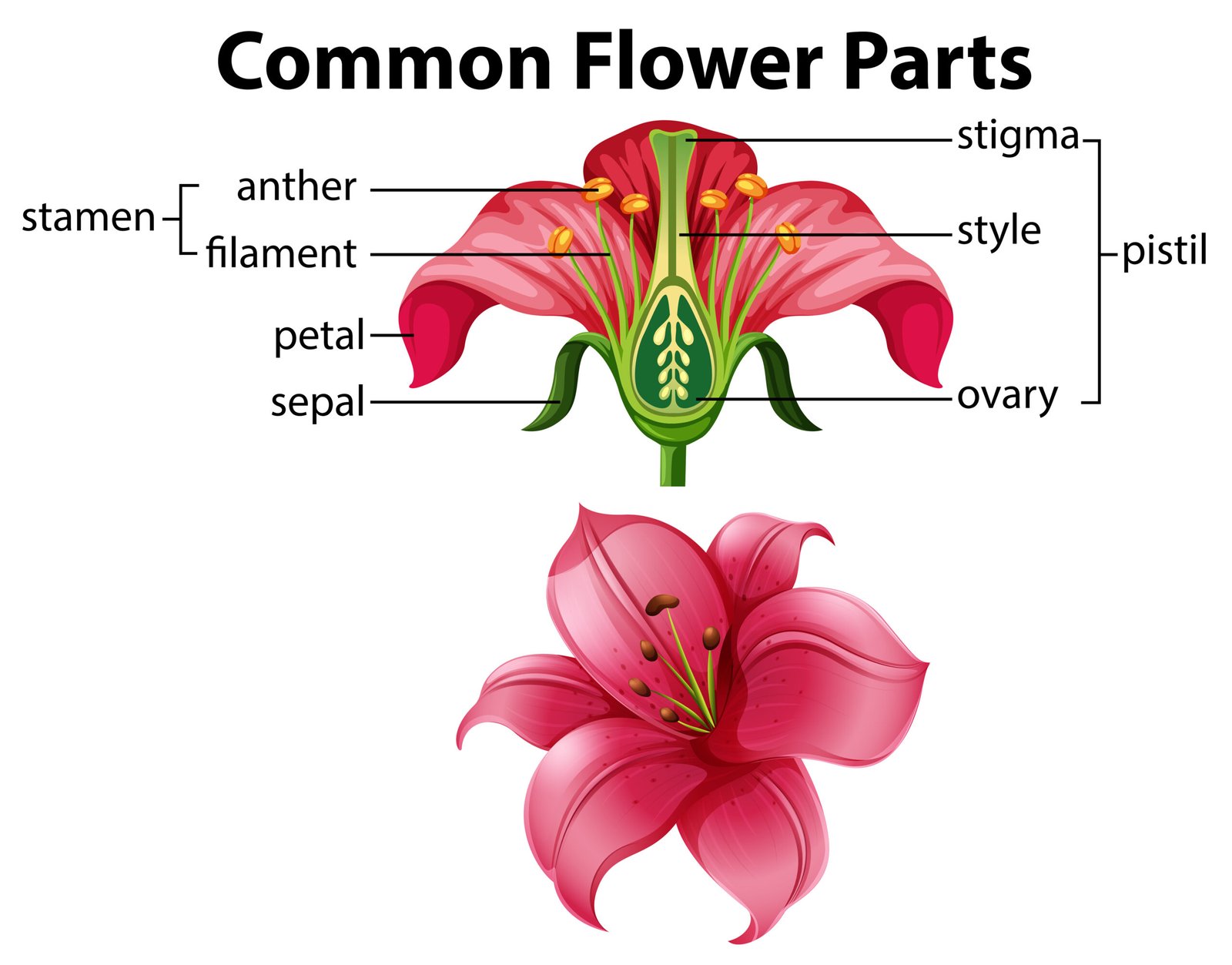
The flower is the reproductive organ, a modified shoot responsible for sexual reproduction.
🌺 Four Whorls (on thalamus)
🟢 Calyx – sepals, protect bud
🔴 Corolla – petals, attract pollinators
🟣 Androecium – stamens, male part
🟡 Gynoecium – carpels, female part
🧠 Symmetry
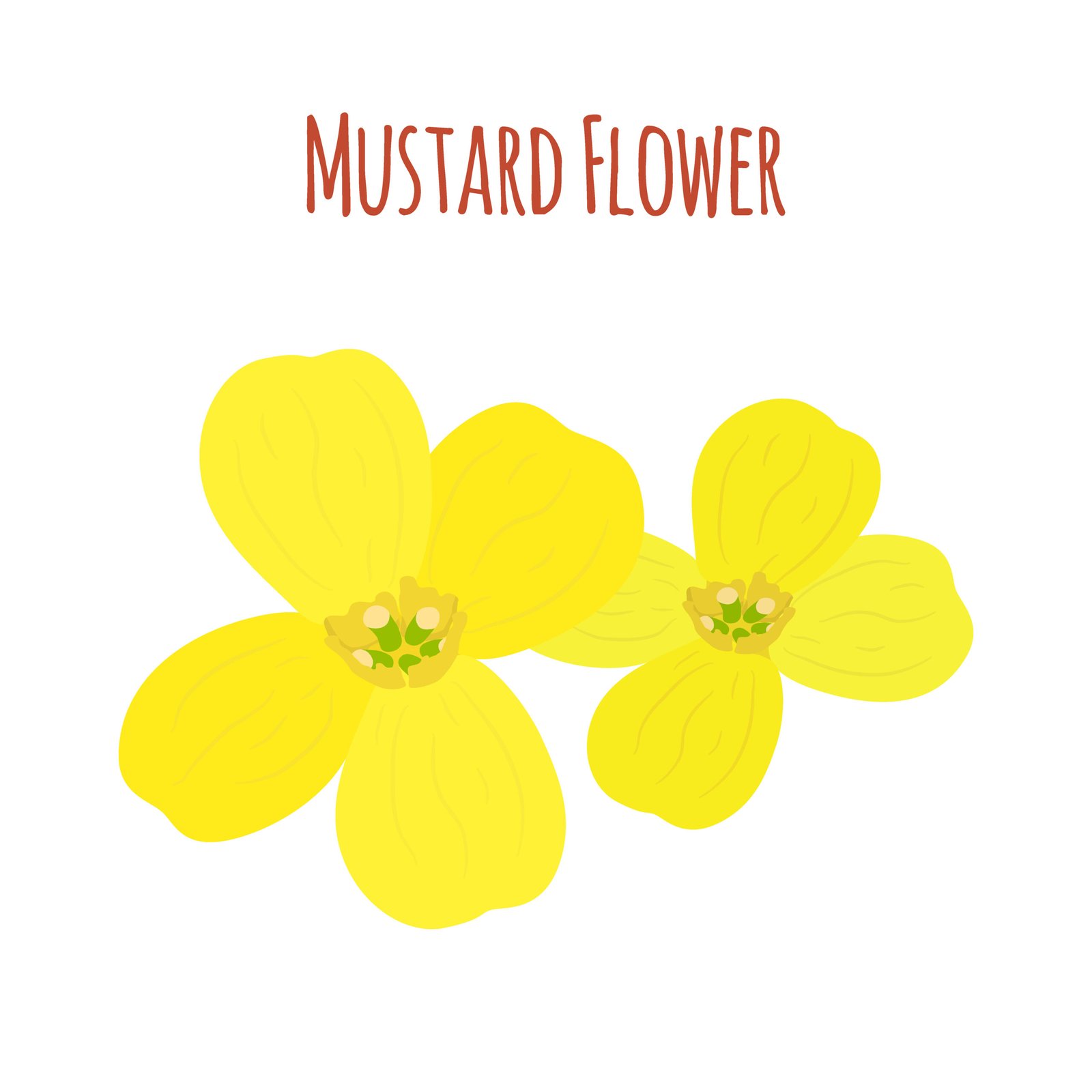
🌀 Actinomorphic – radial (mustard)
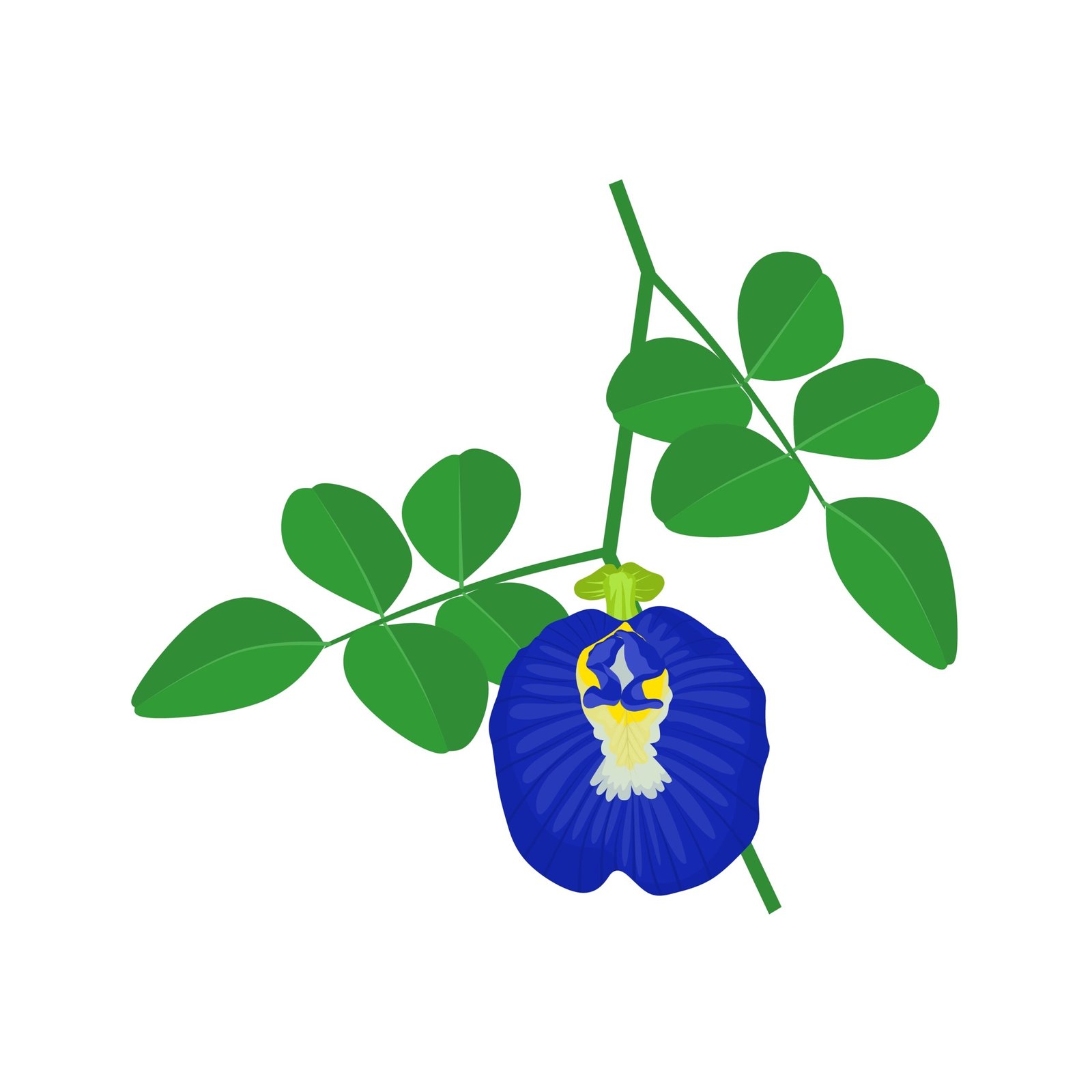
↔️ Zygomorphic – bilateral (pea)
🧭 Ovary Position
🍃 Superior – hypogynous (mustard)
🌼 Half-inferior – perigynous (rose)
🍏 Inferior – epigynous (guava)
🪻 Aestivation
🌸 Valvate – edges touch, no overlap
🌺 Twisted – overlap one side
🌼 Imbricate – irregular overlap
🐝 Vexillary – pea family (standard, wings, keel)
💡 Concept: Floral structure is crucial for taxonomy and pollination biology.
🍈 Fruit
🌿 Definition
A fruit develops from the ovary after fertilization 🍎; encloses and protects seeds.
Sometimes develops without fertilization → parthenocarpic (banana).
🧬 Types
🍎 True – ovary only (mango)
🍏 False – ovary + other parts (apple)
🍓 Aggregate – many ovaries, one flower (strawberry)
🍍 Composite – whole inflorescence (pineapple)
✏️ Note: Fruits aid in seed dispersal by wind, water, or animals.
🌾 Seed
🧠 Definition
Seed = mature ovule with embryo, cotyledon(s), seed coat; ensures species continuity.
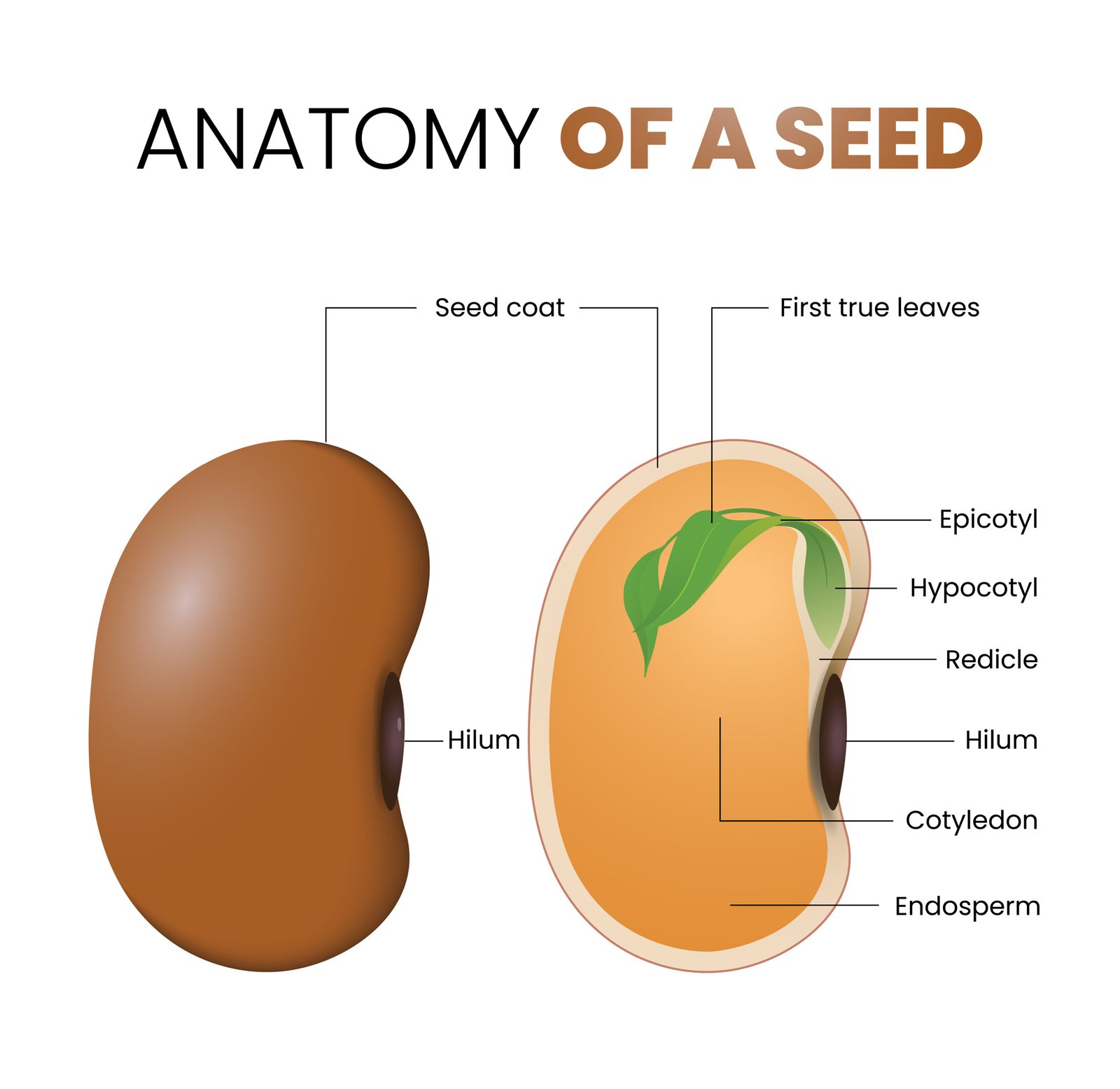
🌿 Dicot Seed (Bean)
🧅 Two cotyledons storing food
🌿 Embryo → plumule + radicle
🧠 Non-endospermic
🌾 Monocot Seed (Maize)
🌾 One cotyledon (scutellum)
🍬 Endosperm supplies food
🌱 Embryo with plumule and radicle
💡 Concept: Seed structure reflects germination strategy and nutrient storage.
🌍 Why This Lesson Matters
🌿 Forms basis of plant taxonomy & identification
🧬 Explains organ adaptations for environment
🧠 Essential for NEET / JEE Biology concepts
⚡ Links form → function; aids agricultural innovation 🌾
📝 Quick Recap
🌱 Root – tap, fibrous, adventitious; modified for storage, support, respiration
🪴 Stem – conducts, supports; underground, subaerial, aerial modifications
🍃 Leaf – photosynthesis; varied venation & phyllotaxy; adaptations
🌸 Flower – four whorls; symmetry, ovary position, aestivation types
🍈 Fruit – true, false, aggregate, composite; dispersal unit
🌾 Seed – dicot vs monocot; ensures propagation
📘 Summary
Morphology studies external parts of angiosperms—root, stem, leaf, flower, fruit, and seed—each specialized for survival and reproduction.
Roots absorb and anchor; stems support, transport, and modify for storage or defense; leaves photosynthesize and adapt to environment; flowers enable sexual reproduction; fruits protect and disperse seeds; seeds ensure continuity.
Understanding these structures assists in classification, agriculture, horticulture, and ecology, and builds a strong base for higher biological studies.
————————————————————————————————————————————————————————————————————————————
QUESTIONS FROM TEXTBOOK
🔵 Question 1. How is a pinnately compound leaf different from a palmately compound leaf?
🟢 Answer:
🌿 In a pinnately compound leaf, the leaflets are arranged along both sides of a common axis (rachis), resembling a feather.
➡️ Example: Neem (Azadirachta indica).
🌸 In a palmately compound leaf, the leaflets are attached at a single point at the tip of the petiole, like fingers on a palm.
➡️ Example: Silk cotton (Bombax).
✔️ Key Difference: Arrangement of leaflets — along rachis (pinnate) vs. single point (palmate).
🔵 Question 2. Explain with suitable examples the different types of phyllotaxy.
🟢 Answer:
🧬 Phyllotaxy is the pattern of arrangement of leaves on the stem or branch to provide optimum light exposure.
There are three main types:
🌿 Alternate phyllotaxy:
➡️ A single leaf arises at each node in alternate manner.
➡️ Example: China rose (Hibiscus), mustard.
🌸 Opposite phyllotaxy:
➡️ A pair of leaves arise opposite to each other at each node.
➡️ Example: Calotropis, guava.
🍃 Whorled phyllotaxy:
➡️ More than two leaves arise in a whorl at a node.
➡️ Example: Alstonia.
✔️ Purpose: Maximizes photosynthesis by minimizing overlap.
🔵 Question 3. Define the following terms:
🟢 Answer:
(a) 🌼 Aestivation: The mode of arrangement of sepals or petals in a floral bud before it opens.
➡️ Example: Valvate, twisted, imbricate, vexillary.
(b) 🧫 Placentation: The arrangement of ovules within the ovary.
➡️ Types: Marginal, axile, parietal, free central, basal.
(c) 🌸 Actinomorphic: When a flower can be divided into two equal halves by any vertical plane passing through the centre.
➡️ Example: Mustard.
(d) 🌼 Zygomorphic: When a flower can be divided into two equal halves only by one particular vertical plane.
➡️ Example: Pea.
(e) ⚗️ Superior ovary: Ovary is placed above the other floral parts; flower is hypogynous.
➡️ Example: Mustard.
(f) 🧪 Perigynous flower: Ovary is situated in the centre, and other floral parts are at the rim of the thalamus at same level.
➡️ Example: Peach.
(g) 🌿 Epipetalous stamen: Stamens are attached to petals.
➡️ Example: Brinjal.
🔵 Question 4. Differentiate between:
🟢 Answer:
(a) 🌸 Racemose and Cymose Inflorescence:
Feature Racemose Cymose
Growth Main axis shows indefinite growth Main axis shows definite growth
Flowers Older flowers at base, younger towards apex Older flowers at apex, younger towards base
Example Mustard Jasmine
(b) 🌿 Apocarpous and Syncarpous Ovary:
Feature Apocarpous Syncarpous
Carpels Free Fused
Example Michelia Hibiscus
🔵 Question 5. Draw the labelled diagram of the following:
(i) Gram seed
(ii) V.S. of maize seed
🟢 Answer:
✏️ (i) Gram Seed: Describe diagram — shows seed coat, micropyle, hilum, cotyledons, embryo.
✏️ (ii) V.S. of Maize Seed: Shows endosperm, scutellum, embryo, coleoptile, coleorhiza.
💡 diagrams are not drawn — describe them clearly as above.
🔵 Question 6. Take one flower of the family Solanaceae and write its semi-technical description. Also draw their floral diagram.
🟢 Answer:
🌸 Example: Datura
Habit: Herb
Root: Taproot
Stem: Erect, branched
Leaves: Alternate, simple
Inflorescence: Solitary, axillary
Flower: Bisexual, actinomorphic
Calyx: 5, united (gamosepalous)
Corolla: 5, united (gamopetalous), funnel-shaped
Androecium: 5 stamens, epipetalous
Gynoecium: Bicarpellary, syncarpous, superior ovary, axile placentation
Fruit: Capsule
Seed: Endospermic
💡 Floral formula: ⚥ K(5) C(5) A5 G(2)
📜 Floral diagram: Central ovary with five united petals and sepals, stamens alternate with petals.
🔵 Question 7. Describe the various types of placentations found in flowering plants.
🟢 Answer:
🧫 Placentation refers to the arrangement of ovules within the ovary. Types:
🌿 Marginal: Ovules attached along margin of ovary. → Pea
🌸 Axile: Ovules on central axis with septa. → Lemon
🌾 Parietal: Ovules on inner wall of ovary. → Mustard
🧬 Free Central: Ovules on central axis, no septa. → Dianthus
⚗️ Basal: Single ovule at base. → Sunflower
🔵 Question 8. What is a flower? Describe the parts of a typical angiosperm flower.
🟢 Answer:
🌸 Flower is the reproductive unit of angiosperms meant for sexual reproduction.
🧠 Parts:
Calyx (Sepals): Outer whorl, protective.
Corolla (Petals): Attractive, aids pollination.
Androecium (Stamens): Male reproductive part.
Gynoecium (Carpels): Female reproductive part with stigma, style, ovary.
✔️ Function: Produces gametes and facilitates fertilization.
🔵 Question 9. Define the term inflorescence. Explain the basis for the different types of inflorescence in flowering plants.
🟢 Answer:
🌿 Inflorescence is the arrangement of flowers on the floral axis.
🧬 Basis of classification:
➡️ Determinate or Indeterminate growth of main axis.
🌸 Types:
Racemose: Main axis grows continuously; younger flowers at top.
Cymose: Main axis ends in a flower; limited growth.
🔵 Question 10. Describe the arrangement of floral members in relation to their insertion on thalamus.
🟢 Answer:
🧠 Arrangement is based on position of ovary:
🌿 Hypogynous: Ovary superior; other parts below. → Mustard
🌸 Perigynous: Ovary in centre, other parts on rim. → Peach
🧬 Epigynous: Ovary inferior; other parts above. → Guava
✔️ Significance: Helps identify flower type and ovary position.
————————————————————————————————————————————————————————————————————————————
OTHER IMPORTANT QUESTIONS FOR EXAMS
(CBSE MODEL QUESTIONS PAPER)
ESPECIALLY MADE FROM THIS LESSON ONLY
🔴 Question 1:
Which among the following is an underground modification of stem?
🔴1️⃣ Carrot 🥕
🟢2️⃣ Sweet potato 🍠
🟡3️⃣ Potato 🥔
🔵4️⃣ Turnip
🟢 Answer: 3️⃣ Potato 🥔
🔴 Question 2:
Which of the following is a tap root modification for storage?
🔴1️⃣ Carrot 🥕
🟢2️⃣ Sweet potato 🍠
🟡3️⃣ Maize 🌾
🔵4️⃣ Grass
🟢 Answer: 1️⃣ Carrot 🥕
🔴 Question 3:
Which part of the plant performs photosynthesis in Opuntia 🌵?
🔴1️⃣ Stem
🟢2️⃣ Leaves
🟡3️⃣ Root
🔵4️⃣ Flowers 🌸
🟢 Answer: 1️⃣ Stem
🔴 Question 4:
In Cuscuta, the type of root present is:
🔴1️⃣ Tap root
🟢2️⃣ Adventitious root
🟡3️⃣ Haustorial root
🔵4️⃣ Respiratory root
🟡 Answer: 3️⃣ Haustorial root
🔴 Question 5:
Which of the following plants show prop roots?
🔴1️⃣ Maize 🌾
🟢2️⃣ Banyan tree 🌳
🟡3️⃣ Sugarcane
🔵4️⃣ Coconut 🌴
🟢 Answer: 2️⃣ Banyan tree 🌳
🔴 Question 6:
Leaves arranged alternately on stem are seen in:
🔴1️⃣ China rose 🌸
🟢2️⃣ Calotropis
🟡3️⃣ Alstonia
🔵4️⃣ Guava 🍈
🟢 Answer: 1️⃣ China rose 🌸
🔴 Question 7:
The pattern of veins and veinlets in a leaf is called:
🔴1️⃣ Venation
🟢2️⃣ Phyllotaxy
🟡3️⃣ Aestivation
🔵4️⃣ Vernation
🟢 Answer: 1️⃣ Venation
🔴 Question 8:
Parallel venation is the characteristic feature of:
🔴1️⃣ Dicot plants 🌻
🟢2️⃣ Monocot plants 🌾
🟡3️⃣ Gymnosperms 🌲
🔵4️⃣ Bryophytes
🟢 Answer: 2️⃣ Monocot plants 🌾
🔴 Question 9:
In pea plant 🌿, the leaf modification is:
🔴1️⃣ Spines
🟢2️⃣ Tendrils
🟡3️⃣ Pitcher
🔵4️⃣ Hooks
🟢 Answer: 2️⃣ Tendrils
🔴 Question 10:
Which among the following is an underground stem for vegetative propagation?
🔴1️⃣ Ginger
🟢2️⃣ Carrot 🥕
🟡3️⃣ Sweet potato 🍠
🔵4️⃣ Turnip
🟢 Answer: 1️⃣ Ginger
🔴 Question 11:
What is phyllotaxy? Mention its types.
🟢 Answer:
Phyllotaxy — arrangement of leaves on stem or branch for maximum sunlight 🌞.
Types:
1️⃣ Alternate: One leaf per node (e.g. China rose 🌸).
2️⃣ Opposite: Two leaves per node opposite each other (e.g. Calotropis).
3️⃣ Whorled: More than two leaves per node (e.g. Alstonia).
🔴 Question 12:
Define aestivation and give its types.
🟢 Answer:
Aestivation — arrangement of sepals or petals in floral bud 🌸 before opening.
Types:
1️⃣ Valvate: Margins do not overlap (e.g. Calotropis).
2️⃣ Twisted: Each petal overlaps the next (e.g. China rose 🌺).
3️⃣ Imbricate: Irregular overlapping (e.g. Cassia).
4️⃣ Vexillary: Largest petal covers others (e.g. Pea flower 🌼).
🔴 Question 13:
Describe the modifications of tap root for storage with examples.
🟢 Answer:
Tap roots store food and become fleshy.
Types:
1️⃣ Conical: Cone-shaped; broad at base, tapering at tip — Carrot 🥕.
2️⃣ Napiform: Spherical with narrow apex — Turnip, Beetroot.
3️⃣ Fusiform: Swollen in middle, tapering at both ends — Radish.
Function: Stores reserve food and helps in survival during adverse conditions.
🔴 Question 14:
What are modifications of adventitious roots? Give examples.
🟢 Answer:
1️⃣ Storage: Thick and fleshy roots storing food — Sweet potato 🍠.
2️⃣ Support:
• Prop roots: Hang from branches and provide support — Banyan tree 🌳.
• Stilt roots: Arise from lower nodes for support — Maize 🌾, Sugarcane.
3️⃣ Special functions:
• Respiratory roots: For gas exchange — Rhizophora.
• Sucking roots: Absorb nutrients from host — Cuscuta.
• Epiphytic roots: Absorb moisture — Orchid.
🔴 Question 15:
Write about stem modifications for different functions.
🟢 Answer:
1️⃣ Storage: Stores food and nutrients:
• Rhizome: Ginger
• Tuber: Potato 🥔
• Corm: Colocasia
• Bulb: Onion 🧅
2️⃣ Support:
• Stem tendrils for climbing — Cucumber, Pumpkin.
3️⃣ Protection:
• Thorns — Bougainvillea.
4️⃣ Photosynthesis:
• Phylloclade — Opuntia 🌵.
🔴 Question 16:
Describe leaf modifications and their functions.
🟢 Answer:
1️⃣ Tendrils: Climbing — Pea 🌿.
2️⃣ Spines: Protection — Cactus 🌵.
3️⃣ Storage leaves: Store food/water — Onion 🧅.
4️⃣ Pitcher leaves: Trap insects — Nepenthes.
5️⃣ Phyllode: Petiole performs photosynthesis — Acacia.
💡 Leaf modifications adapt plants to special habitats and functions.
🔴 Question 17:
Explain phyllotaxy and its types with examples.
🟢 Answer:
Definition: Arrangement of leaves on stem or branch.
Types:
1️⃣ Alternate: One leaf per node — China rose 🌸.
2️⃣ Opposite: Two leaves per node opposite each other — Calotropis.
3️⃣ Whorled: More than two leaves per node — Alstonia.
Function: Ensures maximum sunlight exposure 🌞.
🔴 Question 18:
What is venation? Explain its types.
🟢 Answer:
Definition: Arrangement of veins and veinlets in leaf lamina 🍃.
Types:
1️⃣ Reticulate venation: Veins form network — Dicot leaves (e.g. Pea 🌿).
2️⃣ Parallel venation: Veins run parallel — Monocot leaves (e.g. Maize 🌾).
Significance: Helps in conduction and mechanical support to leaf.
🔴 Question 19:
Describe the types of placentation with examples.
🟢 Answer:
Definition: Arrangement of ovules within ovary.
Types:
1️⃣ Marginal: Along margin — Pea 🌿.
2️⃣ Axile: On central axis — Lemon 🍋, Hibiscus 🌺.
3️⃣ Parietal: On inner wall — Mustard.
4️⃣ Free central: Around central column — Dianthus.
5️⃣ Basal: Single ovule at base — Sunflower 🌻.
🔴 Question 20:
Define aestivation and describe its types.
🟢 Answer:
Definition: Arrangement of sepals or petals in floral bud before it opens 🌸.
Types:
1️⃣ Valvate: Margins don’t overlap — Calotropis.
2️⃣ Twisted: Each petal overlaps the next — China rose 🌺.
3️⃣ Imbricate: Irregular overlapping — Cassia.
4️⃣ Vexillary (Papilionaceous): One large standard covers others — Pea 🌿.
🔴 Question 21:
What are the main parts of a typical flower?
🟢 Answer:
1️⃣ Calyx: Outer whorl, green sepals, protection.
2️⃣ Corolla: Coloured petals, attract pollinators 🐝.
3️⃣ Androecium: Male whorl; stamens produce pollen.
4️⃣ Gynoecium: Female whorl; carpels contain ovary, style, stigma.
After fertilization: ovary → fruit, ovules → seeds.
🔴 Question 22:
Explain different types of inflorescence.
🟢 Answer:
1️⃣ Racemose: Main axis grows indefinitely; acropetal flowering.
• Types: Raceme, Spike, Umbel, Head.
• Example: Mustard, Sunflower 🌻.
2️⃣ Cymose: Main axis ends in flower; basipetal order.
• Example: Jasmine.
3️⃣ Special types: Cyathium (Euphorbia), Hypanthodium (Ficus 🌳).
🔴 Question 23:
Describe the structure of a typical flower 🌸 with its parts and functions.
🟢 Answer:
A flower is a reproductive organ of angiosperms, borne on thalamus.
Main parts:
1️⃣ Calyx:
• Outermost whorl; green sepals protect bud.
2️⃣ Corolla:
• Coloured petals; attract pollinators 🐝.
3️⃣ Androecium:
• Male reproductive whorl; stamens produce pollen grains.
4️⃣ Gynoecium:
• Female reproductive part; carpels with ovary, style, stigma.
Function:
✅ Reproduction by formation of gametes.
✅ After fertilization, ovary forms fruit 🍎, ovules form seeds 🌱.
🔴 Question 24:
Explain the types of fruits 🍎 with suitable examples.
🟢 Answer:
Definition: A fruit is a ripened ovary formed after fertilization.
Types:
1️⃣ Simple fruit: From single ovary of one flower — Mango 🥭, Tomato 🍅.
2️⃣ Aggregate fruit: From multiple ovaries of a single flower — Strawberry 🍓.
3️⃣ Multiple (Composite) fruit: From inflorescence — Pineapple 🍍.
Pericarp: Differentiated into epicarp, mesocarp, endocarp.
Function: Protection and seed dispersal.
🔴 Question 25:
Describe the structure of a dicot seed 🌱 with labelled parts.
🟢 Answer:
Example: Bean seed.
Parts:
1️⃣ Seed coat:
• Outer testa, inner tegmen — protection.
2️⃣ Embryo:
• Plumule (future shoot), radicle (future root), and two cotyledons.
3️⃣ Hilum: Scar where seed attached to fruit.
4️⃣ Micropyle: Tiny pore for water entry.
Feature: Two cotyledons store food.
Type: Non-endospermic (food in cotyledons).
🔴 Question 26:
Explain structure of a monocot seed 🌾 with an example.
🟢 Answer:
Example: Maize seed 🌽.
Parts:
1️⃣ Seed coat fused with fruit wall.
2️⃣ Endosperm: Large, stores food.
3️⃣ Embryo:
• Single cotyledon (scutellum).
• Plumule covered by coleoptile, radicle by coleorhiza.
Type: Endospermic seed.
Function: Nutrition and protection of embryo.
🔴 Question 27:
Write a note on flower symmetry and sexuality in flowers 🌸.
🟢 Answer:
Symmetry:
1️⃣ Actinomorphic: Radial symmetry — Mustard, Datura.
2️⃣ Zygomorphic: Bilateral symmetry — Pea 🌿, Gulmohar.
3️⃣ Asymmetrical: No symmetry — Canna.
Sexuality:
1️⃣ Bisexual: Both stamens and carpels — Hibiscus 🌺.
2️⃣ Unisexual: Either stamens or carpels — Papaya, Maize 🌾.
Function: Helps in pollination type and classification.
🔴 Question 28:
Describe the structure and types of floral symmetry and aestivation.
🟢 Answer:
Floral symmetry:
1️⃣ Actinomorphic: Radial — Mustard.
2️⃣ Zygomorphic: Bilateral — Pea 🌿.
3️⃣ Asymmetrical: No symmetry — Canna.
Aestivation: Arrangement of petals/sepals in floral bud.
• Valvate: Calotropis
• Twisted: China rose 🌺
• Imbricate: Cassia
• Vexillary: Pea 🌿
These are key characters in floral formula and taxonomy.
🔴 Question 29:
What is a floral formula? Explain symbols used with example.
🟢 Answer:
Definition: Symbolic representation of flower structure.
Symbols:
⚫ ⚥ → Bisexual
⚫ ♂ / ♀ → Unisexual
⚫ ⊕ → Actinomorphic
⚫ % → Zygomorphic
⚫ K → Calyx
⚫ C → Corolla
⚫ A → Androecium
⚫ G → Gynoecium
Example: Pea 🌿
🔹 Floral formula: % ⚥ K(5) C1+2+(2) A(9)+1 G1
Shows number and fusion of floral parts.
🔴 Question 30:
Discuss pollination types and their significance.
🟢 Answer:
Pollination: Transfer of pollen from anther to stigma.
Types:
1️⃣ Self-pollination (Autogamy): Same flower — Pea 🌿.
2️⃣ Geitonogamy: Different flowers on same plant — Maize 🌾.
3️⃣ Cross-pollination (Xenogamy): Different plants — Papaya.
Agents: Wind 🌬️, Water 💧, Insects 🐝, Birds 🕊️.
Significance:
✔️ Genetic variation
✔️ Evolution
✔️ Seed and fruit formation
————————————————————————————————————————————————————————————————————————————
NEET QUESTIONS FROM THIS LESSON
🔵 Q1. In most dicot roots, the protective outermost layer is called
🟡 A. Pericycle
🟡 B. Endodermis
🟡 C. Epiblema
🟡 D. Cortex
🟢 Answer: C. Epiblema
📅 NEET 2020
🔵 Q2. The term pericarp refers to
🟡 A. Seed coat of dicot seeds
🟡 B. Wall of the fruit developed from the ovary wall
🟡 C. Ovule covering before fertilisation
🟡 D. Endosperm layer of a seed
🟢 Answer: B. Wall of the fruit developed from the ovary wall
📅 AIPMT 2015
🔵 Q3. A flower having petals, sepals, stamens and carpels is known as
🟡 A. Complete flower
🟡 B. Unisexual flower
🟡 C. Apocarpous flower
🟡 D. Aestivation flower
🟢 Answer: A. Complete flower
📅 NEET 2017
🔵 Q4. Phyllotaxy in sunflower is
🟡 A. Opposite
🟡 B. Alternate
🟡 C. Whorled
🟡 D. Decussate
🟢 Answer: B. Alternate
📅 AIPMT 2012
🔵 Q5. The arrangement of sepals or petals in a floral bud is called
🟡 A. Venation
🟡 B. Placentation
🟡 C. Aestivation
🟡 D. Phyllotaxy
🟢 Answer: C. Aestivation
📅 NEET 2019
🔵 Q6. In leguminous plants, the cotyledons are
🟡 A. Green and photosynthetic
🟡 B. Thin and dry
🟡 C. Present as scales
🟡 D. Fleshy and store food
🟢 Answer: D. Fleshy and store food
📅 AIPMT 2010
🔵 Q7. Type of placentation in tomato is
🟡 A. Axile
🟡 B. Basal
🟡 C. Parietal
🟡 D. Free central
🟢 Answer: A. Axile
📅 NEET 2018
🔵 Q8. The swollen basal part of the gynoecium that develops into fruit is
🟡 A. Stigma
🟡 B. Style
🟡 C. Ovary
🟡 D. Ovule
🟢 Answer: C. Ovary
📅 AIPMT 2013
🔵 Q9. A flower divisible into two equal halves only in one vertical plane is
🟡 A. Actinomorphic
🟡 B. Zygomorphic
🟡 C. Asymmetric
🟡 D. Radial
🟢 Answer: B. Zygomorphic
📅 NEET 2021
🔵 Q10. Parallel venation is characteristic of
🟡 A. Monocots
🟡 B. Dicots
🟡 C. Gymnosperms
🟡 D. Pteridophytes
🟢 Answer: A. Monocots
📅 AIPMT 2014
🔵 Q11. The perigynous condition of a flower occurs in
🟡 A. Mustard
🟡 B. Brinjal
🟡 C. Guava
🟡 D. Plum
🟢 Answer: D. Plum
📅 NEET 2016
🔵 Q12. The union of stamens among themselves is
🟡 A. Adnation
🟡 B. Adhesion
🟡 C. Cohesion
🟡 D. Fusion of gynoecium
🟢 Answer: C. Cohesion
📅 AIPMT 2011
🔵 Q13. Hypanthium is a feature of
🟡 A. Epigynous flowers
🟡 B. Perigynous flowers
🟡 C. Hypogynous flowers
🟡 D. Apocarpous ovary
🟢 Answer: B. Perigynous flowers
📅 NEET 2015
🔵 Q14. Ovary is half-inferior in
🟡 A. Brinjal
🟡 B. Mustard
🟡 C. Sunflower
🟡 D. Plum
🟢 Answer: D. Plum
📅 AIPMT 2009
🔵 Q15. The edible part of coconut is
🟡 A. Seed coat
🟡 B. Mesocarp
🟡 C. Endosperm
🟡 D. Pericarp
🟢 Answer: C. Endosperm
📅 NEET 2022
🔵 Q16. Epipetalous stamens are present in
🟡 A. Brinjal
🟡 B. Mustard
🟡 C. Sunflower
🟡 D. Pea
🟢 Answer: A. Brinjal
📅 AIPMT 2008
🔵 Q17. Fibrous root system is a feature of
🟡 A. Dicots
🟡 B. Monocots
🟡 C. Gymnosperms
🟡 D. Bryophytes
🟢 Answer: B. Monocots
📅 NEET 2020
🔵 Q18. Phyllode is a modification of
🟡 A. Leaf blade
🟡 B. Stipule
🟡 C. Petiole
🟡 D. Inflorescence
🟢 Answer: C. Petiole
📅 AIPMT 2014
🔵 Q19. The fleshy edible part of apple is
🟡 A. Pericarp
🟡 B. Endosperm
🟡 C. Ovary
🟡 D. Thalamus
🟢 Answer: D. Thalamus
📅 NEET 2012
🔵 Q20. In ginger, the underground stem serves for
🟡 A. Storage and vegetative propagation
🟡 B. Photosynthesis
🟡 C. Sexual reproduction
🟡 D. Protection only
🟢 Answer: A. Storage and vegetative propagation
📅 AIPMT 2010
🔵 Q21. Reticulate venation is typical of
🟡 A. Monocots
🟡 B. Dicots
🟡 C. Ferns
🟡 D. Gymnosperms
🟢 Answer: B. Dicots
📅 NEET 2019
🔵 Q22. Stem modification in maize and sugarcane is
🟡 A. Tuber
🟡 B. Bulb
🟡 C. Corm
🟡 D. Sucker/Runner
🟢 Answer: D. Sucker/Runner
📅 AIPMT 2012
🔵 Q23. Arrangement of ovules within the ovary is termed
🟡 A. Placentation
🟡 B. Phyllotaxy
🟡 C. Venation
🟡 D. Aestivation
🟢 Answer: A. Placentation
📅 NEET 2021
🔵 Q24. The edible part of banana consists of
🟡 A. Mesocarp only
🟡 B. Pericarp and persistent tepal bases
🟡 C. Endosperm
🟡 D. Seed coat
🟢 Answer: B. Pericarp and persistent tepal bases
📅 AIPMT 2015
🔵 Q25. Placentation in sunflower is
🟡 A. Axile
🟡 B. Free central
🟡 C. Basal
🟡 D. Marginal
🟢 Answer: C. Basal
📅 NEET 2013
🔵 Q26. A seed in which the endosperm is persistent is called
🟡 A. Albuminous seed
🟡 B. Exalbuminous seed
🟡 C. Non-albuminous seed
🟡 D. Monocot seed
🟢 Answer: A. Albuminous seed
📅 NEET 2018
🔵 Q27. When stamens are attached to petals, they are described as
🟡 A. Epipetalous
🟡 B. Epiphyllous
🟡 C. Polyandrous
🟡 D. Monadelphous
🟢 Answer: A. Epipetalous
📅 AIPMT 2014
🔵 Q28. An example of a plant with unbranched, underground, swollen stem is
🟡 A. Potato
🟡 B. Ginger
🟡 C. Turmeric
🟡 D. Onion
🟢 Answer: D. Onion
📅 NEET 2020
🔵 Q29. The edible part of mango is derived from
🟡 A. Endosperm
🟡 B. Mesocarp
🟡 C. Pericarp only
🟡 D. Thalamus
🟢 Answer: B. Mesocarp
📅 AIPMT 2012
🔵 Q30. A fleshy modification of adventitious root occurs in
🟡 A. Turnip
🟡 B. Carrot
🟡 C. Sweet potato
🟡 D. Radish
🟢 Answer: C. Sweet potato
📅 NEET 2019
🔵 Q31. Venation in neem leaf is
🟡 A. Parallel
🟡 B. Reticulate
🟡 C. Palmately compound
🟡 D. Whorled
🟢 Answer: B. Reticulate
📅 AIPMT 2011
🔵 Q32. The edible part of pomegranate is
🟡 A. Pericarp only
🟡 B. Juicy testa
🟡 C. Endosperm
🟡 D. Mesocarp
🟢 Answer: B. Juicy testa
📅 NEET 2017
🔵 Q33. Imbricate aestivation is found in
🟡 A. Mustard
🟡 B. Pea
🟡 C. Gulmohar
🟡 D. China rose
🟢 Answer: C. Gulmohar
📅 AIPMT 2010
🔵 Q34. Aestivation in Calotropis is
🟡 A. Valvate
🟡 B. Vexillary
🟡 C. Imbricate
🟡 D. Twisted
🟢 Answer: A. Valvate
📅 NEET 2016
🔵 Q35. The edible part of groundnut is
🟡 A. Cotyledons
🟡 B. Endosperm
🟡 C. Seed coat
🟡 D. Pericarp
🟢 Answer: A. Cotyledons
📅 AIPMT 2009
🔵 Q36. A phyllotaxy where two leaves are opposite each other at a node is
🟡 A. Whorled
🟡 B. Alternate
🟡 C. Decussate
🟡 D. Opposite
🟢 Answer: D. Opposite
📅 NEET 2021
🔵 Q37. An example of a hypogynous flower is
🟡 A. Brinjal
🟡 B. Plum
🟡 C. Guava
🟡 D. Cucumber
🟢 Answer: A. Brinjal
📅 AIPMT 2013
🔵 Q38. The edible part of beetroot is
🟡 A. Tap root
🟡 B. Adventitious root
🟡 C. Hypocotyl and tap root
🟡 D. Mesocarp
🟢 Answer: C. Hypocotyl and tap root
📅 NEET 2022
🔵 Q39. The type of placentation in mustard is
🟡 A. Basal
🟡 B. Marginal
🟡 C. Parietal
🟡 D. Axile
🟢 Answer: C. Parietal
📅 AIPMT 2015
🔵 Q40. The edible part of pea is
🟡 A. Seed coat
🟡 B. Cotyledons
🟡 C. Pericarp
🟡 D. Mesocarp
🟢 Answer: B. Cotyledons
📅 NEET 2018
🔵 Q41. A whorled phyllotaxy occurs in
🟡 A. Alstonia
🟡 B. Sunflower
🟡 C. Mustard
🟡 D. China rose
🟢 Answer: A. Alstonia
📅 AIPMT 2012
🔵 Q42. Adventitious roots modified for support occur in
🟡 A. Sweet potato
🟡 B. Maize
🟡 C. Carrot
🟡 D. Turnip
🟢 Answer: B. Maize
📅 NEET 2014
🔵 Q43. In coriander, the type of fruit is
🟡 A. Drupe
🟡 B. Caryopsis
🟡 C. Schizocarpic
🟡 D. Achene
🟢 Answer: C. Schizocarpic
📅 AIPMT 2011
🔵 Q44. The edible part of apple guava and pear is
🟡 A. Endosperm
🟡 B. Thalamus
🟡 C. Pericarp
🟡 D. Mesocarp
🟢 Answer: B. Thalamus
📅 NEET 2019
🔵 Q45. The condition in which stamens are united but anthers are free is
🟡 A. Diadelphous
🟡 B. Polyandrous
🟡 C. Monadelphous
🟡 D. Syngenesious
🟢 Answer: C. Monadelphous
📅 AIPMT 2008
🔵 Q46. Aestivation in pea is
🟡 A. Valvate
🟡 B. Twisted
🟡 C. Imbricate
🟡 D. Vexillary
🟢 Answer: D. Vexillary
📅 NEET 2020
🔵 Q47. The edible part of coconut water is
🟡 A. Endosperm (liquid)
🟡 B. Mesocarp
🟡 C. Pericarp
🟡 D. Cotyledon
🟢 Answer: A. Endosperm (liquid)
📅 AIPMT 2012
🔵 Q48. The placentation in Dianthus is
🟡 A. Basal
🟡 B. Marginal
🟡 C. Free central
🟡 D. Axile
🟢 Answer: C. Free central
📅 NEET 2017
🔵 Q49. The edible part of jackfruit is derived from
🟡 A. Fused sepals
🟡 B. Perianth
🟡 C. Fused pericarp and perianth
🟡 D. Endosperm
🟢 Answer: C. Fused pericarp and perianth
📅 AIPMT 2015
🔵 Q50. The condition of ovary in sunflower is
🟡 A. Half-inferior
🟡 B. Inferior
🟡 C. Superior
🟡 D. Partially inferior
🟢 Answer: B. Inferior
📅 NEET 2013
————————————————————————————————————————————————————————————————————————————
PRACTICE SETS FROM THIS LESSON
🔵 Question 1:
The root system that develops from the radicle is called:
🔴 1️⃣ Fibrous root
🟢 2️⃣ Tap root
🟡 3️⃣ Adventitious root
🔵 4️⃣ Pneumatophore
✔️ Answer: 2️⃣ Tap root
🔵 Question 2:
Which of the following is a modification of stem for food storage?
🔴 1️⃣ Ginger
🟢 2️⃣ Onion
🟡 3️⃣ Potato
🔵 4️⃣ All of these
✔️ Answer: 4️⃣ All of these
🔵 Question 3:
In maize, the fibrous roots originate from:
🔴 1️⃣ Radicle
🟢 2️⃣ Base of stem
🟡 3️⃣ Embryo
🔵 4️⃣ Hypocotyl
✔️ Answer: 2️⃣ Base of stem
🔵 Question 4:
Which one of the following is a stem modification for climbing?
🔴 1️⃣ Tendril
🟢 2️⃣ Thorn
🟡 3️⃣ Phyllode
🔵 4️⃣ Bulbil
✔️ Answer: 1️⃣ Tendril
🔵 Question 5:
Phyllotaxy refers to:
🔴 1️⃣ Arrangement of flowers
🟢 2️⃣ Arrangement of leaves on the stem
🟡 3️⃣ Arrangement of roots
🔵 4️⃣ Arrangement of buds
✔️ Answer: 2️⃣ Arrangement of leaves on the stem
🔵 Question 6:
In China rose, the arrangement of floral parts is:
🔴 1️⃣ Valvate
🟢 2️⃣ Twisted
🟡 3️⃣ Imbricate
🔵 4️⃣ Vexillary
✔️ Answer: 2️⃣ Twisted
🔵 Question 7:
Which of the following plants shows pinnately compound leaf?
🔴 1️⃣ Neem
🟢 2️⃣ Gulmohar
🟡 3️⃣ Acacia
🔵 4️⃣ Coral tree
✔️ Answer: 1️⃣ Neem
🔵 Question 8:
The placenta in sunflower is:
🔴 1️⃣ Axile
🟢 2️⃣ Basal
🟡 3️⃣ Parietal
🔵 4️⃣ Free central
✔️ Answer: 2️⃣ Basal
🔵 Question 9:
Which floral whorl protects the flower in bud condition?
🔴 1️⃣ Calyx
🟢 2️⃣ Corolla
🟡 3️⃣ Androecium
🔵 4️⃣ Gynoecium
✔️ Answer: 1️⃣ Calyx
🔵 Question 10:
In pea, the modification of leaf for climbing is:
🔴 1️⃣ Leaf tendril
🟢 2️⃣ Stem tendril
🟡 3️⃣ Hook
🔵 4️⃣ Thorn
✔️ Answer: 1️⃣ Leaf tendril
🔵 Question 11:
Rhizome differs from root in having:
🔴 1️⃣ Nodes and internodes
🟢 2️⃣ Root hairs
🟡 3️⃣ Root cap
🔵 4️⃣ Absence of buds
✔️ Answer: 1️⃣ Nodes and internodes
🔵 Question 12:
Which of the following is a thorn modification?
🔴 1️⃣ Citrus
🟢 2️⃣ Bougainvillea
🟡 3️⃣ Both 1 and 2
🔵 4️⃣ None
✔️ Answer: 3️⃣ Both 1 and 2
🔵 Question 13:
Vexillary aestivation is found in:
🔴 1️⃣ Mustard
🟢 2️⃣ Pea
🟡 3️⃣ China rose
🔵 4️⃣ Calotropis
✔️ Answer: 2️⃣ Pea
🔵 Question 14:
Which is a unisexual flower?
🔴 1️⃣ Mustard
🟢 2️⃣ Maize
🟡 3️⃣ Hibiscus
🔵 4️⃣ Datura
✔️ Answer: 2️⃣ Maize
🔵 Question 15:
When sepals and petals are fused, the condition is called:
🔴 1️⃣ Gamosepalous and gamopetalous
🟢 2️⃣ Polysepalous and polypetalous
🟡 3️⃣ Apocarpous
🔵 4️⃣ Syncarpous
✔️ Answer: 1️⃣ Gamosepalous and gamopetalous
🔵 Question 16:
Superior ovary is present in:
🔴 1️⃣ Mustard
🟢 2️⃣ Tomato
🟡 3️⃣ Lily
🔵 4️⃣ China rose
✔️ Answer: 1️⃣ Mustard
🔵 Question 17:
Which floral formula represents a bisexual actinomorphic flower?
🔴 1️⃣ ⚥⊕
🟢 2️⃣ ⚥%
🟡 3️⃣ ⚦⊕
🔵 4️⃣ ⚦%
✔️ Answer: 1️⃣ ⚥⊕
🔵 Question 18:
In which type of aestivation do sepals overlap each other but not in one direction?
🔴 1️⃣ Twisted
🟢 2️⃣ Valvate
🟡 3️⃣ Imbricate
🔵 4️⃣ Vexillary
✔️ Answer: 3️⃣ Imbricate
🔵 Question 19:
The fruit of groundnut is a:
🔴 1️⃣ Drupe
🟢 2️⃣ Legume
🟡 3️⃣ Berry
🔵 4️⃣ Capsule
✔️ Answer: 2️⃣ Legume
🔵 Question 20:
Which of the following shows phyllode modification?
🔴 1️⃣ Acacia
🟢 2️⃣ Opuntia
🟡 3️⃣ Asparagus
🔵 4️⃣ Cactus
✔️ Answer: 1️⃣ Acacia
🔵 Question 21:
The floral diagram provides information about:
🔴 1️⃣ Position of floral parts
🟢 2️⃣ Number of floral parts
🟡 3️⃣ Fusion and symmetry
🔵 4️⃣ All of the above
✔️ Answer: 4️⃣ All of the above
🔵 Question 22:
A fleshy underground modification of stem is seen in:
🔴 1️⃣ Ginger
🟢 2️⃣ Turmeric
🟡 3️⃣ Colocasia
🔵 4️⃣ All of these
✔️ Answer: 4️⃣ All of these
🔵 Question 23:
Which of the following is not a floral whorl?
🔴 1️⃣ Calyx
🟢 2️⃣ Corolla
🟡 3️⃣ Pericarp
🔵 4️⃣ Gynoecium
✔️ Answer: 3️⃣ Pericarp
🔵 Question 24:
An example of zygomorphic flower is:
🔴 1️⃣ Gulmohar
🟢 2️⃣ Pea
🟡 3️⃣ Datura
🔵 4️⃣ Mustard
✔️ Answer: 2️⃣ Pea
🔵 Question 25:
In mustard, the placentation is:
🔴 1️⃣ Axile
🟢 2️⃣ Parietal
🟡 3️⃣ Free central
🔵 4️⃣ Basal
✔️ Answer: 2️⃣ Parietal
🔵 Question 26:
When flowers are borne in acropetal succession, the youngest flower is at:
🔴 1️⃣ Base
🟢 2️⃣ Tip
🟡 3️⃣ Middle
🔵 4️⃣ Random position
✔️ Answer: 2️⃣ Tip
🔵 Question 27:
The floral symmetry in Mustard is:
🔴 1️⃣ Zygomorphic
🟢 2️⃣ Actinomorphic
🟡 3️⃣ Asymmetric
🔵 4️⃣ None
✔️ Answer: 2️⃣ Actinomorphic
🔵 Question 28:
Phyllotaxy in sunflower is:
🔴 1️⃣ Opposite
🟢 2️⃣ Whorled
🟡 3️⃣ Alternate
🔵 4️⃣ Spiral
✔️ Answer: 4️⃣ Spiral
🔵 Question 29:
Which of the following is not an underground stem?
🔴 1️⃣ Rhizome
🟢 2️⃣ Corm
🟡 3️⃣ Tuber
🔵 4️⃣ Tap root
✔️ Answer: 4️⃣ Tap root
🔵 Question 30:
Which type of placentation is seen in tomato?
🔴 1️⃣ Basal
🟢 2️⃣ Parietal
🟡 3️⃣ Axile
🔵 4️⃣ Free central
✔️ Answer: 3️⃣ Axile
🔵 Question 31:
The flower with both androecium and gynoecium is termed:
🔴 1️⃣ Unisexual
🟢 2️⃣ Bisexual
🟡 3️⃣ Staminate
🔵 4️⃣ Pistillate
✔️ Answer: 2️⃣ Bisexual
🔵 Question 32:
Which among the following shows valvate aestivation?
🔴 1️⃣ Calotropis
🟢 2️⃣ Pea
🟡 3️⃣ Mustard
🔵 4️⃣ China rose
✔️ Answer: 3️⃣ Mustard
🔵 Question 33:
The gynoecium of Hibiscus is:
🔴 1️⃣ Apocarpous
🟢 2️⃣ Syncarpous
🟡 3️⃣ Monocarpellary
🔵 4️⃣ Multicarpellary apocarpous
✔️ Answer: 2️⃣ Syncarpous
🔵 Question 34:
Which of the following is an edible underground stem?
🔴 1️⃣ Ginger
🟢 2️⃣ Carrot
🟡 3️⃣ Turnip
🔵 4️⃣ Beet
✔️ Answer: 1️⃣ Ginger
🔵 Question 35:
Leaf base that swells into a pulvinus is seen in:
🔴 1️⃣ Mango
🟢 2️⃣ Mustard
🟡 3️⃣ Legumes
🔵 4️⃣ Rice
✔️ Answer: 3️⃣ Legumes
🔵 Question 36:
When floral parts are attached above the ovary, the flower is:
🔴 1️⃣ Hypogynous
🟢 2️⃣ Perigynous
🟡 3️⃣ Epigynous
🔵 4️⃣ Neuter
✔️ Answer: 1️⃣ Hypogynous
🔵 Question 37:
The outermost whorl of a flower is:
🔴 1️⃣ Calyx
🟢 2️⃣ Corolla
🟡 3️⃣ Androecium
🔵 4️⃣ Gynoecium
✔️ Answer: 1️⃣ Calyx
🔵 Question 38:
A flower with inferior ovary is called:
🔴 1️⃣ Epigynous
🟢 2️⃣ Hypogynous
🟡 3️⃣ Perigynous
🔵 4️⃣ Apogynous
✔️ Answer: 1️⃣ Epigynous
🔵 Question 39:
The modification of stem to perform photosynthesis is seen in:
🔴 1️⃣ Opuntia
🟢 2️⃣ Euphorbia
🟡 3️⃣ Cactus
🔵 4️⃣ All of these
✔️ Answer: 4️⃣ All of these
🔵 Question 40:
The underground modification for vegetative propagation is seen in:
🔴 1️⃣ Rhizome
🟢 2️⃣ Bulb
🟡 3️⃣ Tuber
🔵 4️⃣ All of these
✔️ Answer: 4️⃣ All of these
🔵 Question 41:
Which of the following is a false fruit?
🔴 1️⃣ Banana
🟢 2️⃣ Apple
🟡 3️⃣ Mango
🔵 4️⃣ Coconut
✔️ Answer: 2️⃣ Apple
🔵 Question 42:
Inflorescence in mustard is:
🔴 1️⃣ Cymose
🟢 2️⃣ Racemose
🟡 3️⃣ Panicle
🔵 4️⃣ Spike
✔️ Answer: 2️⃣ Racemose
🔵 Question 43:
When stamens are united by their filaments but not anthers, it is called:
🔴 1️⃣ Monadelphous
🟢 2️⃣ Diadelphous
🟡 3️⃣ Polyadelphous
🔵 4️⃣ Synandrous
✔️ Answer: 1️⃣ Monadelphous
🔵 Question 44:
Which plant shows diadelphous stamens?
🔴 1️⃣ Pea
🟢 2️⃣ Hibiscus
🟡 3️⃣ Mustard
🔵 4️⃣ Calotropis
✔️ Answer: 1️⃣ Pea
🔵 Question 45:
If a flower has bracts, it is called:
🔴 1️⃣ Bracteate
🟢 2️⃣ Ebracteate
🟡 3️⃣ Involucre
🔵 4️⃣ None
✔️ Answer: 1️⃣ Bracteate
🔵 Question 46:
The seed with endosperm is called:
🔴 1️⃣ Albuminous
🟢 2️⃣ Exalbuminous
🟡 3️⃣ Non-endospermic
🔵 4️⃣ None
✔️ Answer: 1️⃣ Albuminous
🔵 Question 47:
Which of the following is an example of syncarpous ovary?
🔴 1️⃣ Mustard
🟢 2️⃣ Datura
🟡 3️⃣ Tomato
🔵 4️⃣ All of these
✔️ Answer: 4️⃣ All of these
🔵 Question 48:
Leaf modification for insect capture is found in:
🔴 1️⃣ Pitcher plant
🟢 2️⃣ Venus fly trap
🟡 3️⃣ Drosera
🔵 4️⃣ All of these
✔️ Answer: 4️⃣ All of these
🔵 Question 49:
Which of the following is an example of a corm?
🔴 1️⃣ Colocasia
🟢 2️⃣ Potato
🟡 3️⃣ Ginger
🔵 4️⃣ Onion
✔️ Answer: 1️⃣ Colocasia
🔵 Question 50:
In which plant, roots come out of nodes of prostrate stem?
🔴 1️⃣ Grass
🟢 2️⃣ Maize
🟡 3️⃣ Banyan
🔵 4️⃣ Money plant
✔️ Answer: 1️⃣ Grass
————————————————————————————————————————————————————————————————————————————
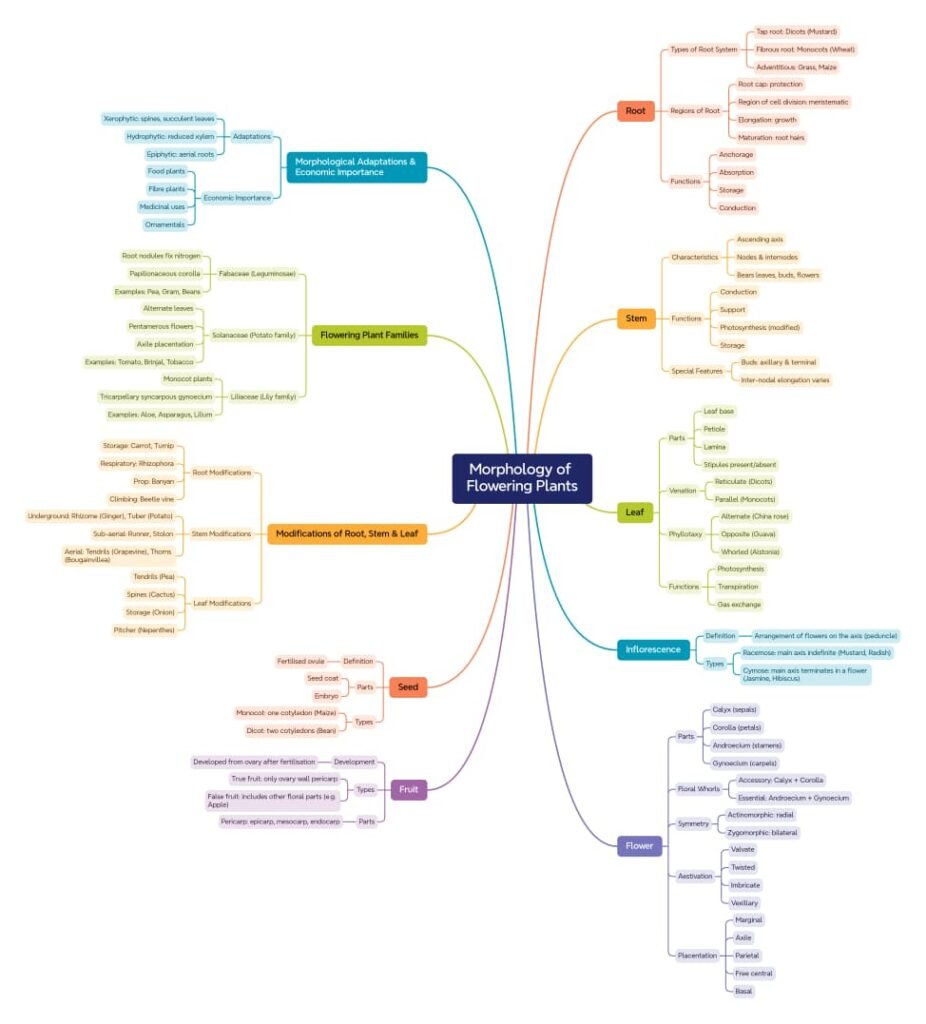
MIND MAPS
————————————————————————————————————————————————————————————————————————————