
CHEMISTRY, Class 12

Class 12 : Chemistry (English) – Chapter 8: Aldehydes, Ketones and Carboxylic Acids

EXPLANATION & SUMMARY


✨ Introduction
🔵 Aldehydes, Ketones, and Carboxylic acids form a crucial group of carbonyl compounds containing the polar carbonyl group (>C=O).
🟢 These compounds are widely found in natural products, drugs, flavours, fragrances, industrial raw materials, and biomolecules.
🟠 The high reactivity of carbonyl group arises due to polarisation of C=O bond (C δ⁺, O δ⁻).
🔴 Their chemistry includes structure, nomenclature, methods of preparation, physical and chemical properties, mechanisms of reactions, and uses.

🌿 Nomenclature
Aldehydes (-CHO):
Common names: derived from acids (e.g., formaldehyde, acetaldehyde).
IUPAC: Replace -e of alkane with -al (e.g., methanal, ethanal).
Ketones (>C=O):
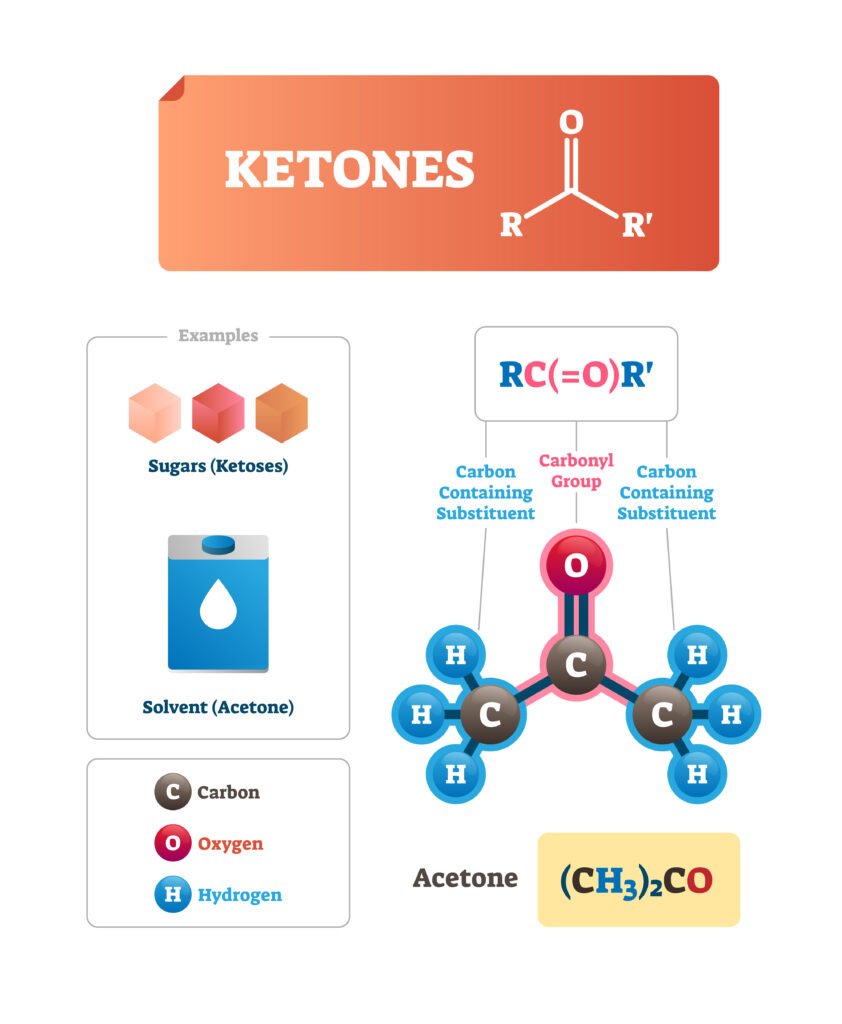

Common names: Alkyl groups + ketone (e.g., acetone, methyl ethyl ketone).
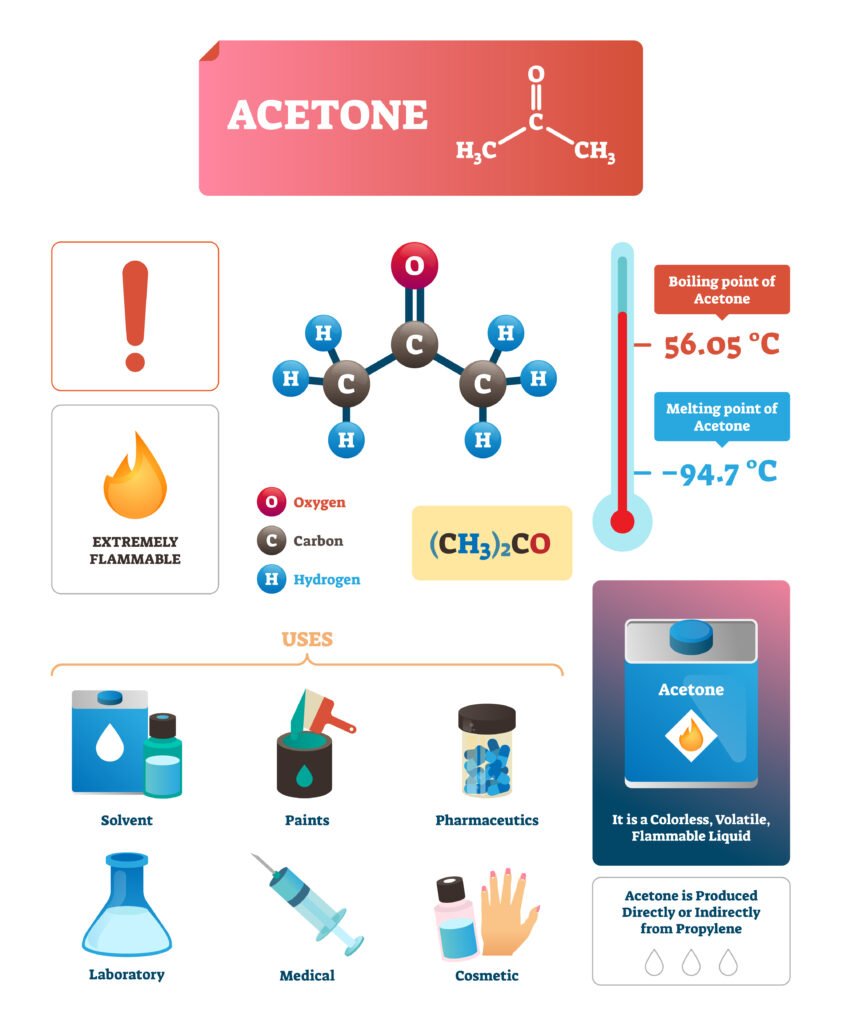

IUPAC: Replace -e of alkane with -one (e.g., propanone, butanone).
Carboxylic acids (-COOH):
Common names: Derived from Latin/Greek names of sources (formic, acetic).
IUPAC: Replace -e of alkane with -oic acid (e.g., ethanoic acid, propanoic acid).
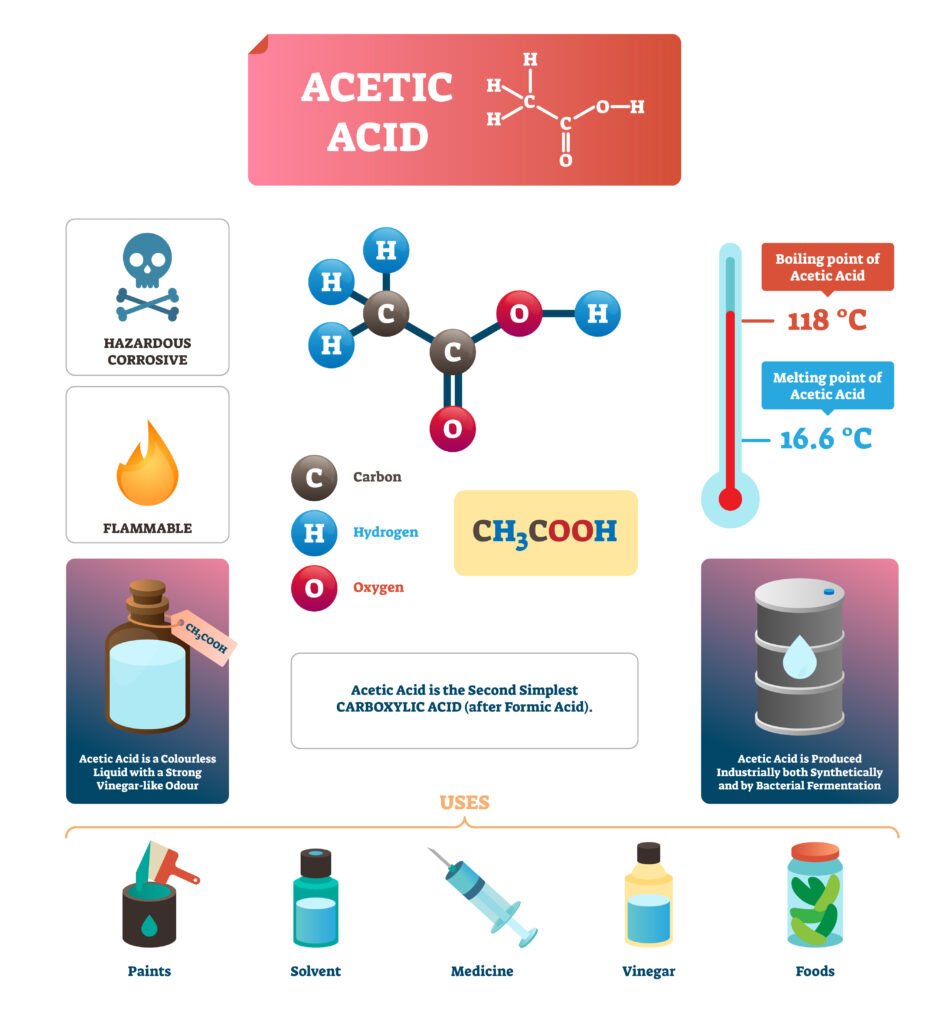


🧪 Preparation
Aldehydes and Ketones
🟦 By oxidation of alcohols:
1° alcohols → Aldehydes
2° alcohols → Ketones
🟩 By ozonolysis of alkenes:
RCH=CHR’ + O₃ → RCHO + R’CHO / RCOCH₃
🟨 By Rosenmund reduction:
Acyl chloride + H₂ (Pd/BaSO₄) → Aldehyde
🟧 By Friedel–Crafts acylation (for aromatic ketones).
Carboxylic acids
🟦 By oxidation of primary alcohols/aldehydes with KMnO₄ or CrO₃.
🟩 From nitriles: RCN + 2H₂O + H⁺ → RCOOH + NH₄⁺.
🟨 From Grignard reagents: RMgX + CO₂ → RCOOH.

⚡ Physical Properties
🔵 Aldehydes & Ketones:
Polar, higher boiling points than hydrocarbons but lower than alcohols.
Simple members soluble in water due to H-bonding.
Pleasant odours, used in perfumes/flavouring.
🟢 Carboxylic acids:
Very high boiling points due to strong H-bonding (dimers in liquid phase).
Soluble in water (up to C4), solubility decreases with chain length.
Have sharp, pungent odours.

🔬 Chemical Properties
Aldehydes vs Ketones
Nucleophilic addition reactions:
HCN → cyanohydrin
NaHSO₃ → bisulphite adduct
NH₂-Z (Z = alkyl/aryl) → imines, oximes, hydrazones
Reduction (NaBH₄, LiAlH₄) → alcohols
Addition of Grignard reagents → alcohols
Oxidation:
Aldehydes → acids easily (Tollen’s, Fehling’s positive).
Ketones resist oxidation but give acids with strong oxidisers.
Reduction:
Catalytic hydrogenation → alcohols.
Clemmensen, Wolff–Kishner → hydrocarbons.
Tests:
Aldehydes: Tollen’s (silver mirror), Fehling’s (red ppt Cu₂O), Schiff’s test.
Ketones: No such reactions (except methyl ketones → iodoform test).

Carboxylic Acids
Acidic nature:
Dissociate as RCOOH ⇌ RCOO⁻ + H⁺
Strength affected by electron-withdrawing/donating groups.
Reactions:
Salt formation with bases.
Esterification with alcohols (H₂SO₄ catalyst).
Amides from acid chlorides.
Reduction → primary alcohols.
Decarboxylation → hydrocarbons.

🌍 Uses
Aldehydes: Formaldehyde (plastics, disinfectant), Acetaldehyde (acetic acid manufacture).
Ketones: Acetone (solvent), Acetophenone (perfume).
Carboxylic acids: Acetic acid (vinegar, esters, solvents), Benzoic acid (food preservative), Fatty acids (lipids).

📝 Summary
Aldehydes (-CHO), Ketones (>C=O), and Carboxylic acids (-COOH) are vital carbonyl compounds.
Nomenclature follows IUPAC rules: -al, -one, -oic acid endings.
Prepared by oxidation of alcohols, ozonolysis, Rosenmund reduction, Friedel–Crafts acylation (for aldehydes/ketones), and oxidation of primary alcohols, nitriles, Grignard reagents (for acids).
Physical properties depend on C=O polarity and hydrogen bonding. Acids have highest boiling points due to dimerisation.
Aldehydes/ketones undergo nucleophilic addition (HCN, NH₂-Z, Grignard reagents), oxidation (Tollen’s, Fehling’s for aldehydes), reduction (alcohols/hydrocarbons), and characteristic tests.
Carboxylic acids show acidic behaviour, esterification, salt formation, reduction, and decarboxylation.
Used extensively in industry (solvents, polymers, preservatives) and biology (lipids, metabolites).

————————————————————————————————————————————————————————————————————————————

QUESTIONS FROM TEXTBOOK


Question 8.1
What is meant by the following terms? Give an example of the reaction in each case
Answer
🔵 (i) Cyanohydrin
Compound containing both –OH and –CN groups on the same carbon.
➡ Example: CH₃CHO + HCN → CH₃–CH(OH)–CN
🟢 (ii) Acetal
Product formed when aldehyde reacts with two equivalents of alcohol in presence of dry HCl.
➡ Example: CH₃CHO + 2C₂H₅OH → CH₃–CH(OC₂H₅)₂
🟠 (iii) Semicarbazone
Formed by reaction of aldehyde/ketone with semicarbazide.
➡ Example: CH₃COCH₃ + H₂N–NH–CONH₂ → CH₃C=NNHCONH₂
🔴 (iv) Aldol
β-Hydroxy aldehyde or ketone formed by aldol condensation.
➡ Example: 2CH₃CHO → CH₃–CH(OH)–CH₂–CHO
🟡 (v) Hemiacetal
Formed when one molecule of alcohol adds to an aldehyde.
➡ Example: CH₃CHO + C₂H₅OH → CH₃–CH(OH)(OC₂H₅)
🔵 (vi) Oxime
Compound formed by reaction of aldehyde/ketone with hydroxylamine.
➡ Example: CH₃CHO + NH₂OH → CH₃–CH=NOH
🟢 (vii) Ketal
Compound formed by ketone reacting with two equivalents of alcohol.
➡ Example: CH₃COCH₃ + 2C₂H₅OH → (C₂H₅O)₂C(CH₃)₂
🟠 (viii) Imine
Product formed when carbonyl compound reacts with primary amine.
➡ Example: CH₃CHO + C₂H₅NH₂ → CH₃–CH=NC₂H₅
🔴 (ix) 2,4-DNP derivative
Aldehydes/ketones react with 2,4-dinitrophenylhydrazine to give crystalline derivative.
➡ Example: CH₃CHO + 2,4-DNP → CH₃CH=NNH–C₆H₃(NO₂)₂
🟡 (x) Schiff’s base
Aldehyde/ketone reacts with aromatic primary amine to form –C=N– compound.
➡ Example: CH₃CHO + C₆H₅NH₂ → CH₃CH=NC₆H₅

Question 8.2
Name the following compounds according to IUPAC system of nomenclature:
Answer
🔵 (i) CH₃CH₂CH₂CH₂CHO → Pentanal
🟢 (ii) CH₃CH₂COCH₂CH₂CH₂Cl → 6-Chlorohexan-2-one
🟠 (iii) CH₃CH=CHCHO → But-2-enal
🔴 (iv) CH₃COCH₂COCH₃ → Pentane-2,4-dione
🟡 (v) CH₃CH₂CH₂CH₂COCH₃ → Hexan-2-one
🔵 (vi) (CH₃)₃C–COOH → 2,2-Dimethylpropanoic acid
🟢 (vii) OHCC₆H₄CHO-p → Benzene-1,4-dicarbaldehyde

Question 8.3
Draw the structures of the following compounds.
Answer
🔵 (i) 3-Methylbutanal → CH₃–CH(CH₃)–CH₂–CHO
🟢 (ii) p-Nitropropiophenone → O₂N–C₆H₄–CO–CH₂–CH₃
🟠 (iii) p-Methylbenzaldehyde → CH₃–C₆H₄–CHO (para-position)
🔴 (iv) 4-Methylpent-3-en-2-one → CH₃–C(=O)–CH=C(CH₃)–CH₃
🟡 (v) 4-Chloropentan-2-one → CH₃–CO–CHCl–CH₂–CH₃
🔵 (vi) 3-Bromo-4-phenylpentanoic acid → C₆H₅–CH₂–CH(Br)–CH₂–COOH
🟢 (vii) p,p′-Dihydroxybenzophenone → HO–C₆H₄–CO–C₆H₄–OH (para-para)
🟠 (viii) Hex-2-en-4-ynoic acid → CH₃–CH=CH–C≡C–COOH

Question 8.4
Write the IUPAC names of the following ketones and aldehydes. Wherever possible, give also common names.
Answer
🔵 (i) (CH₃)₂CH–CH₂–CHO → 3-Methylbutanal (common: isovaleraldehyde)
🟢 (ii) CH₃CH₂CH₂–CHO → Butanal (common: butyraldehyde)
🟠 (iii) CH₃(CH₂)₃CHO → Pentanal (common: valeraldehyde)
🔴 (iv) Ph–CH=CH–CHO → 3-Phenylprop-2-enal (common: cinnamaldehyde)
🟡 (v) CH₃COCH₂CH₂CH₃ → Pentan-2-one (common: methyl propyl ketone)
🔵 (vi) Ph–CO–Ph → Diphenylmethanone (common: benzophenone)

Question 8.5
Draw structures of the following derivatives:
Answer
🔵 (i) 2,4-Dinitrophenylhydrazone of benzaldehyde: C₆H₅–CH=N–NH–C₆H₃(NO₂)₂
🟢 (ii) Cyclopropanone oxime: C₃H₄=NOH (oxime form)
🟠 (iii) Acetaldehyde dimethylacetal: CH₃–CH(OMe)₂
🔴 (iv) Semicarbazone of cyclobutanone: cyclic C=NNHCONH₂
🟡 (v) Ethylene ketal of hexan-3-one: cyclic ketal structure with O–CH₂–CH₂–O
🔵 (vi) Methyl hemiacetal of formaldehyde: HO–CH₂–OCH₃

Question 8.6
Predict the products formed when cyclohexanecarbaldehyde reacts with following reagents:
Answer
🔵 (i) PhMgBr → Ph–CH(OH)–C₆H₁₁ (Grignard addition product)
🟢 (ii) Tollen’s reagent → C₆H₁₁–COOH (carboxylic acid, silver mirror test)
🟠 (iii) Semicarbazide + weak acid → Cyclohexane–CH=NNHCONH₂ (semicarbazone)
🔴 (iv) Excess ethanol + acid → Cyclohexane–CH(OEt)₂ (acetal)
🟡 (v) Zn–Hg + HCl → Cyclohexylmethane (Wolff–Kishner/Clemmensen reduction)

Question 8.7
Which of the following compounds would undergo aldol condensation, which the Cannizzaro reaction and which neither? Write the structures of the expected products:
(i) Methanal
(ii) 2-Methylpentanal
(iii) Benzaldehyde
(iv) Cyclohexanone
(v) Benzophenone
(vi) Cyclohexanone
(vii) Phenylacetaldehyde
(viii) Butan-1-ol
(ix) 2,2-Dimethylbutanal
Answer
🟦 Aldol condensation (compounds having α-H):
2-Methylpentanal, Cyclohexanone, Phenylacetaldehyde → give aldol products.
🟩 Cannizzaro reaction (no α-H atom):
Methanal, Benzaldehyde, 2,2-Dimethylbutanal → disproportionation (alcohol + acid).
🟨 Neither reaction:
Benzophenone (no aldehydic H, stable), Butan-1-ol (alcohol, not carbonyl).

Question 8.8
How will you convert ethanol into the following compounds?
(i) Butane-1,3-diol
(ii) But-2-enal
(iii) But-2-enoic acid
Answer
🔵 (i) Ethanol → Butane-1,3-diol
➡ Ethanol → Ethanal (oxidation with PCC)
➡ Ethanal + HCN → CH₃CH(OH)CN
➡ Hydrolysis → HOCH₂–CH₂–CH₂–OH
🟢 (ii) Ethanol → But-2-enal
➡ Ethanol → Ethanal (oxidation)
➡ Aldol condensation of 2CH₃CHO → CH₃–CH=CH–CHO
🟠 (iii) Ethanol → But-2-enoic acid
➡ Ethanol → Ethanal
➡ Aldol condensation → CH₃–CH=CH–CHO
➡ Oxidation → CH₃–CH=CH–COOH

Question 8.9
Write structural formulas and names of four possible aldol condensation products from propanal and butanal. Indicate which aldehyde acts as nucleophile and which as electrophile.
Answer
🟦 Aldol condensation possible pairs:
Propanal + Propanal
➡ CH₃–CH₂–CH=CH–CHO (Pent-2-enal)
Butanal + Butanal
➡ CH₃–CH₂–CH=CH–CH₂–CHO (Hept-2-enal)
Propanal (nucleophile) + Butanal (electrophile)
➡ CH₃–CH₂–CH=CH–CH₂–CHO (Hex-2-enal)
Butanal (nucleophile) + Propanal (electrophile)
➡ CH₃–CH₂–CH=CH–CH₂–CHO (Isomeric Hex-2-enal)
✅ In each case, –CH₂– next to carbonyl acts as nucleophile.

Question 8.10
An organic compound with molecular formula C₇H₆O forms 2,4-DNP derivative, reduces Tollen’s reagent and undergoes Cannizzaro reaction. On vigorous oxidation, it gives 1,2-benzenedicarboxylic acid. Identify the compound.
Answer
🟦 Conditions:
C₇H₆O → aromatic aldehyde.
2,4-DNP positive → carbonyl present.
Tollen’s + Cannizzaro → aldehyde without α-H.
Oxidation → 1,2-benzenedicarboxylic acid → ortho-disubstituted aromatic.
🎯 Compound = o-Phthalaldehyde (benzene-1,2-dicarbaldehyde).

Question 8.11
An organic compound (A) (C₉H₁₀O) was hydrolysed with dilute H₂SO₄ to give a carboxylic acid (B) and alcohol (C). Oxidation of (C) with chromic acid gave (B) again. (C) on dehydration gave but-1-ene. Write equations.
Answer
🟦 Step 1: Hydrolysis → ester breakdown
A = Ester → C₄H₉–OOC–C₆H₅
🟩 Step 2: Products →
B = C₆H₅COOH (benzoic acid)
C = C₄H₉OH (butan-1-ol)
🟨 Step 3: Oxidation → C₄H₉OH → C₄H₉COOH (butanoic acid)
But in question, given B again → so (C) is actually CH₃CH₂CH₂CH₂OH (butanol).
🟧 Step 4: Dehydration → CH₃–CH₂–CH=CH₂ (but-1-ene).
✅ Hence, A = Butyl benzoate.

Question 8.12
Arrange the following compounds in increasing order of their property as indicated:
(i) Acetaldehyde, Acetone, Di-tert-butyl ketone, Methyl tert-butyl ketone (Reactivity towards HCN)
(ii) CH₃CH₂COOH, CH₃CH(Br)COOH, CH₃CH(Cl)COOH, (CH₃)₃CCOOH (Acid strength)
(iii) Benzoic acid, 4-Nitrobenzoic acid, 3,4-Dinitrobenzoic acid, 4-Methoxybenzoic acid (Acid strength)
Answer
🔵 (i) Reactivity towards HCN (depends on steric hindrance):
Di-tert-butyl ketone < Methyl tert-butyl ketone < Acetone < Acetaldehyde
🟢 (ii) Acid strength (–I effect of substituents):
(CH₃)₃CCOOH < CH₃CH₂COOH < CH₃CH(Cl)COOH < CH₃CH(Br)COOH
🟠 (iii) Acid strength (–I/–R effect):
4-Methoxybenzoic acid < Benzoic acid < 4-Nitrobenzoic acid < 3,4-Dinitrobenzoic acid

Question 8.13
Give simple chemical tests to distinguish between the following pairs of compounds:
Answer
🔵 (i) Propanal and Propanone
Propanal: Gives positive Tollen’s (silver mirror) and Fehling’s test.
Propanone: Negative to both.
🟢 (ii) Acetophenone and Benzophenone
Acetophenone: Positive iodoform test (methyl ketone).
Benzophenone: Negative.
🟠 (iii) Phenol and Benzoic acid
Phenol: Neutral FeCl₃ → violet colour.
Benzoic acid: Effervescence with NaHCO₃.
🔴 (iv) Pentan-2-one and Pentan-3-one
Pentan-2-one: Positive iodoform test.
Pentan-3-one: Negative.

Question 8.14
How will you bring about the following conversions?
Answer
🔵 (i) Benzoic acid → Benzaldehyde
RCOOH → (RCOCl using SOCl₂) → Rosenmund reduction → RCHO.
🟢 (ii) Ethanol → 3-Hydroxybutanal
Ethanol → Ethanal (oxidation) → Aldol condensation → CH₃–CH(OH)–CH₂–CHO.
🟠 (iii) Propanal → 2-Methylpropan-2-ol
CH₃CH₂CHO + CH₃MgBr → CH₃CH₂–C(OH)(CH₃)₂.
🔴 (iv) Benzoic acid → m-Nitrobenzoic acid
Benzoic acid → Nitration (HNO₃/H₂SO₄) → m-nitrobenzoic acid (–COOH = m-directing).
🟡 (v) Benzaldehyde → Benzophenone
Benzaldehyde → Benzoin condensation → Benzoin → Oxidation → Benzil → Friedel–Crafts acylation → Benzophenone.

Question 8.15
How will you bring about the following conversions?
Answer
🔵 (i) Benzoic acid → Benzaldehyde → Benzyl alcohol
Benzoic acid → Benzaldehyde (Rosenmund reduction).
Benzaldehyde → Benzyl alcohol (reduction with NaBH₄).
🟢 (ii) Acetophenone → Benzoyl chloride
Acetophenone → Oxidation → Benzoic acid → SOCl₂ → Benzoyl chloride.
🟠 (iii) Propanal → 2-Methylpropan-2-ol
Same as Q8.14(iii).

Question 8.16
Describe the following reactions:
Answer
🔵 (i) Cannizzaro reaction
Disproportionation of aldehydes without α-H in conc. alkali.
➡ 2HCHO + NaOH → HCOONa + CH₃OH
🟢 (ii) Cross aldol condensation
Aldehydes/ketones with α-H react with another carbonyl compound.
➡ CH₃CHO + PhCHO → CH₃–CH(OH)–CH₂–PhCHO
🟠 (iii) Decarboxylation
Carboxylates heated with soda lime release CO₂.
➡ RCOONa + NaOH → RH + Na₂CO₃

Question 8.17
Give possible explanation for each of the following observations:
Answer
🔵 (i) Aldehydes are more reactive than ketones towards nucleophilic addition.
Less steric hindrance and greater +I effect in ketones → aldehydes are more electrophilic.
🟢 (ii) The boiling points of aldehydes and ketones are lower than those of alcohols of comparable molecular mass.
Aldehydes/ketones: Dipole–dipole interactions only.
Alcohols: Strong intermolecular H-bonding → higher boiling point.
🟠 (iii) Carboxylic acids have higher boiling points than aldehydes, ketones and alcohols of comparable molecular mass.
Carboxylic acids: Dimerise via strong H-bonding → very high boiling point.

————————————————————————————————————————————————————————————————————————————

OTHER IMPORTANT QUESTIONS FOR EXAMS


Section A (Q1–Q16) — MCQs (16 × 1 = 16 marks)
Options for Assertion–Reason Questions:
Both Assertion (A) and Reason (R) are true, and R is the correct explanation of A
Both A and R are true, but R is not the correct explanation of A
A is true, but R is false
A is false, but R is true

Question 1. The IUPAC name of CH₃–CH₂–CHO is:
🔵 (A) Propanal
🟢 (B) Propanone
🟠 (C) Acetone
🔴 (D) Ethanal
Answer: 🔵 (A) Propanal
Question 2. Which of the following undergoes Cannizzaro reaction?
🔵 (A) Acetone
🟢 (B) Formaldehyde
🟠 (C) Propanal
🔴 (D) Butanone
Answer: 🟢 (B) Formaldehyde
Question 3. Aldol condensation involves:
🔵 (A) Nucleophilic substitution
🟢 (B) Free radical substitution
🟠 (C) Enolate ion attack
🔴 (D) Electrophilic substitution
Answer: 🟠 (C) Enolate ion attack
Question 4. The product of iodoform test is yellow ppt of:
🔵 (A) CHI₃
🟢 (B) AgI
🟠 (C) KI
🔴 (D) I₂
Answer: 🔵 (A) CHI₃
Question 5. Oxidation of acetaldehyde gives:
🔵 (A) Acetic acid
🟢 (B) Ethanol
🟠 (C) Methanoic acid
🔴 (D) Propanoic acid
Answer: 🔵 (A) Acetic acid
Question 6. Which compound gives silver mirror test?
🔵 (A) Acetone
🟢 (B) Benzaldehyde
🟠 (C) Acetophenone
🔴 (D) 2-Butanone
Answer: 🟢 (B) Benzaldehyde
Question 7. Assertion (A): Carboxylic acids have higher boiling points than aldehydes/ketones.
Reason (R): They form dimers by hydrogen bonding.
Answer: 1
Question 8. Assertion (A): Acetone gives iodoform test.
Reason (R): It has –CO–CH₃ group.
Answer: 1
Question 9. The strongest acid among the following is:
🔵 (A) Formic acid
🟢 (B) Acetic acid
🟠 (C) Propanoic acid
🔴 (D) Benzoic acid
Answer: 🔵 (A) Formic acid
Question 10. Which of the following is not a nucleophilic addition reaction?
🔵 (A) Addition of HCN to aldehyde
🟢 (B) Aldol condensation
🟠 (C) Cannizzaro reaction
🔴 (D) Reduction to alcohol
Answer: 🟠 (C) Cannizzaro reaction
Question 11. The product of Clemmensen reduction of acetophenone is:
🔵 (A) Ethylbenzene
🟢 (B) Styrene
🟠 (C) Benzene
🔴 (D) Toluene
Answer: 🔵 (A) Ethylbenzene
Question 12. Which compound gives positive Fehling’s test?
🔵 (A) Benzaldehyde
🟢 (B) Acetaldehyde
🟠 (C) Acetone
🔴 (D) Formaldehyde
Answer: 🟢 (B) Acetaldehyde and 🔴 (D) Formaldehyde (both acceptable, aldehydes with α-H)
Question 13. Ethyl formate hydrolyses to give:
🔵 (A) Ethanol + Formic acid
🟢 (B) Methanol + Acetic acid
🟠 (C) Ethanol + Acetic acid
🔴 (D) Methanol + Formic acid
Answer: 🔵 (A) Ethanol + Formic acid
Question 14. Which of the following does not undergo decarboxylation easily?
🔵 (A) Sodium acetate
🟢 (B) Sodium formate
🟠 (C) Sodium benzoate
🔴 (D) Sodium oxalate
Answer: 🔴 (D) Sodium oxalate
Question 15. The mechanism of esterification involves:
🔵 (A) Electrophilic substitution
🟢 (B) Nucleophilic addition–elimination
🟠 (C) Free radical
🔴 (D) Oxidation
Answer: 🟢 (B) Nucleophilic addition–elimination
Question 16. Reduction of carboxylic acids with LiAlH₄ gives:
🔵 (A) Aldehydes
🟢 (B) Alcohols
🟠 (C) Ketones
🔴 (D) Hydrocarbons
Answer: 🟢 (B) Alcohols

Section B (Q17–Q21) — Very Short Answer (2 marks each)
Question 17. Write one difference between aldol condensation and Cannizzaro reaction.
Answer
🟦 Aldol: Requires α-H; gives β-hydroxy carbonyl compounds.
🟩 Cannizzaro: No α-H; gives alcohol + carboxylate.

Question 18. Write IUPAC name of the product formed in iodoform test with acetone.
Answer
🟦 Product: Triiodomethane (CHI₃).
🟩 IUPAC name: Triiodomethane.

Question 19. Write the structure of the compound formed when ethanol reacts with CH₃COOH in presence of H₂SO₄.
Answer
🟦 Reaction: CH₃CH₂OH + CH₃COOH ⇌ CH₃COOCH₂CH₃ + H₂O
🟩 Product: Ethyl ethanoate (Ester).

Question 20. Write the equation for decarboxylation of sodium acetate.
Answer
🟦 Reaction: CH₃COONa + NaOH → CH₄ + Na₂CO₃ (Δ, CaO).

Question 21. Why are aldehydes more reactive than ketones towards nucleophilic addition?
Answer
🟦 Aldehydes: Less steric hindrance, carbonyl C more δ⁺.
🟩 Ketones: Greater +I effect of two alkyl groups reduces reactivity.

Section C (Q22–Q28) — Short Answer (3 marks each)
Question 22. Write structures of aldol products from:
(i) CH₃CHO
(ii) CH₃COCH₃
Answer
🟦 (i) 2CH₃CHO → CH₃–CH(OH)–CH₂–CHO (3-Hydroxybutanal).
🟩 (ii) 2CH₃COCH₃ → CH₃–C(OH)–CH₂–COCH₃ (4-Hydroxy-4-methylpentan-2-one).

Question 23. What happens when benzaldehyde is treated with conc. NaOH?
Answer
🟦 No α-H → undergoes Cannizzaro reaction.
🟩 Products: Benzyl alcohol + Sodium benzoate.

Question 24. Give one chemical test to distinguish between:
(i) Acetone and Acetaldehyde
(ii) Formic acid and Acetic acid
Answer
🟦 (i) Acetaldehyde gives silver mirror with Tollen’s; acetone does not.
🟩 (ii) Formic acid decolourises alkaline KMnO₄ (as it can be oxidised further); acetic acid does not.

Question 25. Write a short note on esterification reaction.
Answer
🟦 Carboxylic acid + Alcohol → Ester + Water (in presence of H₂SO₄).
🟩 Example: CH₃COOH + CH₃CH₂OH ⇌ CH₃COOCH₂CH₃ + H₂O.
🟧 Mechanism: Protonation → nucleophilic attack → elimination.

Question 26. Write the mechanism of nucleophilic addition of HCN to a carbonyl group.
Answer
🟦 Step 1: CN⁻ attacks C=O carbon → tetrahedral alkoxide.
🟩 Step 2: Protonation of alkoxide → cyanohydrin (R₂C(OH)–CN).

Question 27. Arrange in increasing order of acidity: Formic acid, Acetic acid, Propanoic acid. Give reason.
Answer
🟦 Order: Propanoic acid < Acetic acid < Formic acid.
🟩 Reason: –I effect decreases with chain length; no alkyl in formic acid → strongest acid.

Question 28. Write the equation for Rosenmund reduction.
Answer
🟦 RCOCl + H₂ (Pd/BaSO₄, quinoline) → RCHO.

Section D (Q29–Q30) — Case-Based Questions (2 × 4 = 8 marks)

Question 29.
Read the passage and answer the questions:
Ethanal (CH₃CHO) undergoes self-condensation in presence of dilute alkali to give β-hydroxy aldehyde. On heating, it loses water to form an α,β-unsaturated aldehyde.
(i) Write the equation for the reaction.
(ii) What is the IUPAC name of the β-hydroxy aldehyde?
(iii) What is the IUPAC name of the α,β-unsaturated aldehyde formed?
Answer
🟦 (i) CH₃CHO + CH₃CHO ⇌ CH₃–CH(OH)–CH₂–CHO → (Δ) → CH₃–CH=CH–CHO
🟩 (ii) Product: 3-Hydroxybutanal
🟧 (iii) Product: But-2-enal

Question 30.
Read the passage and answer:
Formic acid behaves differently from other carboxylic acids. It is easily oxidised and also gives positive Tollen’s test.
(i) Write the oxidation product of formic acid.
(ii) Write the Tollen’s test reaction for formic acid.
(iii) Explain why formic acid shows this behaviour.
Answer
🟦 (i) Oxidation: HCOOH + [O] → CO₂ + H₂O
🟩 (ii) HCOOH + 2[Ag(NH₃)₂]⁺ + 3OH⁻ → 2Ag (mirror) + 2NH₃ + CO₂ + 2H₂O
🟧 (iii) Reason: Formic acid has –CHO group (aldehydic), hence acts like aldehyde.

Section E (Q31–Q33) — Long Answer Questions (3 × 5 = 15 marks)

Question 31.
Explain the mechanism of nucleophilic addition reaction of HCN to aldehydes and ketones.
OR
Describe the mechanism of esterification reaction of carboxylic acids with alcohols.
Answer
🟦 Mechanism of HCN addition
CN⁻ ion generated from HCN (in base) acts as nucleophile.
CN⁻ attacks carbonyl carbon → tetrahedral alkoxide intermediate.
Protonation of alkoxide (by HCN) → cyanohydrin (R₂C(OH)–CN).
✅ Final Product: Cyanohydrin.
🟩 OR – Mechanism of esterification
Protonation of C=O oxygen of R–COOH by H⁺.
Nucleophilic attack of alcohol (R′OH) on carbonyl carbon.
Proton transfer and elimination of water.
Deprotonation → Ester (RCOOR′).

Question 32.
Account for the following:
(i) Carboxylic acids have higher boiling points than aldehydes, ketones and alcohols of comparable mass.
(ii) Aldehydes are more reactive than ketones towards nucleophilic addition.
(iii) Aldehydes and ketones undergo nucleophilic addition reactions.
OR
Discuss the acidic strength of carboxylic acids. How is it affected by substituents?
Answer
🟦 (i) Carboxylic acids form strong H-bonded dimers → very high b.p.
🟩 (ii) Aldehydes: less steric hindrance, more δ⁺ carbonyl C.
🟧 (iii) Due to polar C=O bond, nucleophiles attack easily.
🟩 OR – Acidic strength
Carboxylic acids ionise: RCOOH ⇌ RCOO⁻ + H⁺.
Strength increases with –I substituents (Cl, NO₂).
Decreases with +I substituents (alkyl, –OCH₃).
Example order: CH₃COOH < ClCH₂COOH < NO₂CH₂COOH.

Question 33.
Explain with equations:
(i) Rosenmund reduction
(ii) Clemmensen reduction
(iii) Wolff–Kishner reduction
OR
Describe the following with examples:
(i) Aldol condensation
(ii) Cannizzaro reaction
(iii) Haloform test
Answer
🟦 (i) Rosenmund: RCOCl + H₂ (Pd/BaSO₄, quinoline) → RCHO
🟩 (ii) Clemmensen: RCOR′ + Zn(Hg)/HCl → RCH₂R′
🟧 (iii) Wolff–Kishner: RCOR′ + NH₂NH₂/KOH → RCH₂R′
🟩 OR
(i) Aldol: 2CH₃CHO → CH₃–CH(OH)–CH₂–CHO → CH₃–CH=CH–CHO
(ii) Cannizzaro: 2HCHO + NaOH → CH₃OH + HCOONa
(iii) Haloform: CH₃COCH₃ + I₂/NaOH → CHI₃ (yellow ppt) + salt.

————————————————————————————————————————————————————————————————————————————

NEET QUESTIONS FROM THIS LESSON


Part 1 — Q1 to Q25
Q1. Aldehydes are generally more reactive than ketones towards nucleophilic addition because:
🔵 (A) They are less sterically hindered
🟢 (B) Carbonyl carbon in aldehydes is more electrophilic
🟠 (C) Both (A) and (B)
🔴 (D) None of these
Answer: (C) Both (A) and (B)
Year: 2024 | NEET | Shift: 2
Q2. Which compound does not give Tollens’ test?
🔵 (A) Formaldehyde
🟢 (B) Acetaldehyde
🟠 (C) Acetone
🔴 (D) Glucose
Answer: (C) Acetone
Year: 2024 | NEET | Shift: 1
Q3. The product obtained when acetone reacts with semicarbazide is:
🔵 (A) Semicarbazone
🟢 (B) Hydrazone
🟠 (C) Oxime
🔴 (D) Imines
Answer: (A) Semicarbazone
Year: 2023 | NEET | Shift: 2
Q4. Which test is used for detection of aldehydes only?
🔵 (A) 2,4-DNP test
🟢 (B) Tollen’s reagent
🟠 (C) Fehling’s solution
🔴 (D) Brady’s test
Answer: (B) Tollen’s reagent
Year: 2023 | NEET | Shift: 1
Q5. Which of the following gives a positive iodoform test?
🔵 (A) Formaldehyde
🟢 (B) Acetaldehyde
🟠 (C) Benzaldehyde
🔴 (D) Acetic acid
Answer: (B) Acetaldehyde
Year: 2022 | NEET | Shift: 2
Q6. The reagent used to distinguish between aldehydes and ketones is:
🔵 (A) 2,4-DNP
🟢 (B) Tollen’s reagent
🟠 (C) Brady’s reagent
🔴 (D) Schiff’s reagent
Answer: (B) Tollen’s reagent
Year: 2022 | NEET | Shift: 1
Q7. Which acid is used in the manufacture of aspirin?
🔵 (A) Benzoic acid
🟢 (B) Salicylic acid
🟠 (C) Acetic acid
🔴 (D) Oxalic acid
Answer: (B) Salicylic acid
Year: 2021 | NEET | Shift: 2
Q8. Which carboxylic acid is used as a food preservative?
🔵 (A) Benzoic acid
🟢 (B) Acetic acid
🟠 (C) Oxalic acid
🔴 (D) Formic acid
Answer: (A) Benzoic acid
Year: 2021 | NEET | Shift: 1
Q9. Which product is formed when benzaldehyde undergoes Cannizzaro reaction?
🔵 (A) Benzyl alcohol and benzoic acid
🟢 (B) Benzyl alcohol and benzaldehyde
🟠 (C) Benzoic acid only
🔴 (D) Benzyl alcohol only
Answer: (A) Benzyl alcohol and benzoic acid
Year: 2020 | NEET | Shift: 2
Q10. Which of the following does not undergo aldol condensation?
🔵 (A) Formaldehyde
🟢 (B) Acetaldehyde
🟠 (C) Acetone
🔴 (D) Benzaldehyde
Answer: (D) Benzaldehyde
Year: 2020 | NEET | Shift: 1
Q11. The compound giving positive iodoform test is:
🔵 (A) Methanol
🟢 (B) Ethanol
🟠 (C) Benzaldehyde
🔴 (D) Methanal
Answer: (B) Ethanol
Year: 2019 | NEET
Q12. Which of the following does not reduce Fehling’s solution?
🔵 (A) Glucose
🟢 (B) Formaldehyde
🟠 (C) Acetaldehyde
🔴 (D) Benzaldehyde
Answer: (D) Benzaldehyde
Year: 2019 | NEET
Q13. The acid used in soft drink bottles is:
🔵 (A) Acetic acid
🟢 (B) Benzoic acid
🟠 (C) Phthalic acid
🔴 (D) Terephthalic acid
Answer: (D) Terephthalic acid
Year: 2018 | NEET
Q14. Which aldehyde does not contain an α-hydrogen atom?
🔵 (A) Acetaldehyde
🟢 (B) Formaldehyde
🟠 (C) Propanal
🔴 (D) Butanal
Answer: (B) Formaldehyde
Year: 2018 | NEET
Q15. Which of the following gives silver mirror test?
🔵 (A) Benzaldehyde
🟢 (B) Formaldehyde
🟠 (C) Acetone
🔴 (D) Both (A) and (B)
Answer: (D) Both (A) and (B)
Year: 2017 | NEET
Q16. The reaction of aldehydes with HCN gives:
🔵 (A) Cyanohydrin
🟢 (B) Imines
🟠 (C) Oximes
🔴 (D) Hydrazone
Answer: (A) Cyanohydrin
Year: 2017 | NEET
Q17. The acid used in vinegar is:
🔵 (A) Formic acid
🟢 (B) Acetic acid
🟠 (C) Citric acid
🔴 (D) Benzoic acid
Answer: (B) Acetic acid
Year: 2016 | NEET
Q18. Which compound does not undergo Cannizzaro reaction?
🔵 (A) Formaldehyde
🟢 (B) Benzaldehyde
🟠 (C) Acetaldehyde
🔴 (D) Trimethylacetaldehyde
Answer: (C) Acetaldehyde
Year: 2016 | NEET
Q19. Which acid is used as a preservative in pickles?
🔵 (A) Formic acid
🟢 (B) Benzoic acid
🟠 (C) Acetic acid
🔴 (D) Oxalic acid
Answer: (C) Acetic acid
Year: 2015 | AIPMT
Q20. Which compound gives effervescence with NaHCO₃?
🔵 (A) Acetone
🟢 (B) Acetic acid
🟠 (C) Benzaldehyde
🔴 (D) Methanal
Answer: (B) Acetic acid
Year: 2015 | AIPMT
Q21. The product obtained by oxidation of toluene with KMnO₄ is:
🔵 (A) Benzaldehyde
🟢 (B) Benzoic acid
🟠 (C) Benzyl alcohol
🔴 (D) Acetophenone
Answer: (B) Benzoic acid
Year: 2014 | AIPMT
Q22. Which reagent converts aldehydes to primary alcohols?
🔵 (A) LiAlH₄
🟢 (B) KMnO₄
🟠 (C) K₂Cr₂O₇
🔴 (D) Conc. HNO₃
Answer: (A) LiAlH₄
Year: 2014 | AIPMT
Q23. Which of the following gives Cannizzaro reaction?
🔵 (A) Acetone
🟢 (B) Propanal
🟠 (C) Benzaldehyde
🔴 (D) Butanal
Answer: (C) Benzaldehyde
Year: 2013 | AIPMT
Q24. Which acid is used in the production of soft drink bottles (PET)?
🔵 (A) Phthalic acid
🟢 (B) Terephthalic acid
🟠 (C) Acetic acid
🔴 (D) Benzoic acid
Answer: (B) Terephthalic acid
Year: 2013 | AIPMT
Q25. The compound that gives iodoform test is:
🔵 (A) Acetaldehyde
🟢 (B) Benzaldehyde
🟠 (C) Formaldehyde
🔴 (D) Acetic acid
Answer: (A) Acetaldehyde
Year: 2012 | AIPMT

Q26. Which acid is responsible for the sour taste of vinegar?
🔵 (A) Formic acid
🟢 (B) Acetic acid
🟠 (C) Oxalic acid
🔴 (D) Citric acid
Answer: (B) Acetic acid
Year: 2012 | AIPMT
Q27. Which compound among the following does not give iodoform test?
🔵 (A) Ethanol
🟢 (B) Acetaldehyde
🟠 (C) Benzaldehyde
🔴 (D) Acetone
Answer: (C) Benzaldehyde
Year: 2011 | AIPMT
Q28. Which aldehyde undergoes Cannizzaro reaction?
🔵 (A) Acetaldehyde
🟢 (B) Formaldehyde
🟠 (C) Propanal
🔴 (D) Butanal
Answer: (B) Formaldehyde
Year: 2011 | AIPMT
Q29. The carboxylic acid used in the manufacture of nylon is:
🔵 (A) Oxalic acid
🟢 (B) Adipic acid
🟠 (C) Acetic acid
🔴 (D) Benzoic acid
Answer: (B) Adipic acid
Year: 2010 | AIPMT
Q30. Which of the following reacts with NaHCO₃ to produce effervescence?
🔵 (A) Acetone
🟢 (B) Acetaldehyde
🟠 (C) Acetic acid
🔴 (D) Benzaldehyde
Answer: (C) Acetic acid
Year: 2010 | AIPMT
Q31. The reaction of aldehydes with primary amines produces:
🔵 (A) Imines
🟢 (B) Oximes
🟠 (C) Hydrazones
🔴 (D) Semicarbazones
Answer: (A) Imines
Year: 2009 | AIPMT
Q32. Which of the following is an aliphatic carboxylic acid?
🔵 (A) Benzoic acid
🟢 (B) Acetic acid
🟠 (C) Phthalic acid
🔴 (D) Terephthalic acid
Answer: (B) Acetic acid
Year: 2009 | AIPMT
Q33. Aldehydes are easily oxidised to:
🔵 (A) Alcohols
🟢 (B) Carboxylic acids
🟠 (C) Ketones
🔴 (D) Hydrocarbons
Answer: (B) Carboxylic acids
Year: 2008 | AIPMT
Q34. The acid used in preservation of butter is:
🔵 (A) Acetic acid
🟢 (B) Butyric acid
🟠 (C) Benzoic acid
🔴 (D) Citric acid
Answer: (B) Butyric acid
Year: 2008 | AIPMT
Q35. The aldehyde that cannot undergo aldol condensation is:
🔵 (A) Acetaldehyde
🟢 (B) Formaldehyde
🟠 (C) Propanal
🔴 (D) Butanal
Answer: (B) Formaldehyde
Year: 2007 | AIPMT
Q36. The functional group in formaldehyde is:
🔵 (A) –COOH
🟢 (B) –CHO
🟠 (C) –C=O
🔴 (D) –OH
Answer: (B) –CHO
Year: 2007 | AIPMT
Q37. Which one among the following is an aromatic aldehyde?
🔵 (A) Acetaldehyde
🟢 (B) Benzaldehyde
🟠 (C) Formaldehyde
🔴 (D) Acetone
Answer: (B) Benzaldehyde
Year: 2006 | AIPMT
Q38. Which acid is present in red ants?
🔵 (A) Acetic acid
🟢 (B) Formic acid
🟠 (C) Oxalic acid
🔴 (D) Butyric acid
Answer: (B) Formic acid
Year: 2006 | AIPMT
Q39. The product of oxidation of ethanol with alkaline KMnO₄ is:
🔵 (A) Methanoic acid
🟢 (B) Ethanoic acid
🟠 (C) Acetone
🔴 (D) Propanoic acid
Answer: (B) Ethanoic acid
Year: 2005 | AIPMT
Q40. Which one of the following is an α,β-unsaturated aldehyde?
🔵 (A) Acetaldehyde
🟢 (B) Acrolein
🟠 (C) Formaldehyde
🔴 (D) Benzaldehyde
Answer: (B) Acrolein
Year: 2005 | AIPMT
Q41. Acetone reacts with HCN in the presence of base to give:
🔵 (A) Cyanohydrin
🟢 (B) Imine
🟠 (C) Hydrazone
🔴 (D) Oxime
Answer: (A) Cyanohydrin
Year: 2004 | AIPMT
Q42. Which reagent reduces aldehydes to primary alcohols?
🔵 (A) LiAlH₄
🟢 (B) HNO₃
🟠 (C) KMnO₄
🔴 (D) K₂Cr₂O₇
Answer: (A) LiAlH₄
Year: 2004 | AIPMT
Q43. The reaction between benzaldehyde and acetone in presence of dilute alkali is called:
🔵 (A) Cannizzaro reaction
🟢 (B) Aldol condensation
🟠 (C) Perkin reaction
🔴 (D) Claisen condensation
Answer: (B) Aldol condensation
Year: 2003 | AIPMT
Q44. The acid used in vinegar is:
🔵 (A) Formic acid
🟢 (B) Acetic acid
🟠 (C) Butanoic acid
🔴 (D) Citric acid
Answer: (B) Acetic acid
Year: 2003 | AIPMT
Q45. Which acid is present in milk?
🔵 (A) Formic acid
🟢 (B) Acetic acid
🟠 (C) Lactic acid
🔴 (D) Citric acid
Answer: (C) Lactic acid
Year: 2002 | AIPMT
Q46. The compound giving positive iodoform test is:
🔵 (A) Benzaldehyde
🟢 (B) Ethanol
🟠 (C) Methanol
🔴 (D) Methanal
Answer: (B) Ethanol
Year: 2002 | AIPMT
Q47. The product of oxidation of toluene is:
🔵 (A) Benzyl alcohol
🟢 (B) Benzoic acid
🟠 (C) Benzaldehyde
🔴 (D) Phenol
Answer: (B) Benzoic acid
Year: 2001 | AIPMT
Q48. Which acid is present in lemon?
🔵 (A) Acetic acid
🟢 (B) Citric acid
🟠 (C) Formic acid
🔴 (D) Butanoic acid
Answer: (B) Citric acid
Year: 2001 | AIPMT
Q49. The product obtained from Cannizzaro reaction of formaldehyde is:
🔵 (A) Methanol and formic acid
🟢 (B) Methanol and carbon dioxide
🟠 (C) Formaldehyde and methanol
🔴 (D) Formic acid only
Answer: (A) Methanol and formic acid
Year: 2000 | PMT
Q50. Which acid is present in apples?
🔵 (A) Oxalic acid
🟢 (B) Malic acid
🟠 (C) Citric acid
🔴 (D) Acetic acid
Answer: (B) Malic acid
Year: 1999 | PMT

————————————————————————————————————————————————————————————————————————————


JEE MAINS QUESTIONS FROM THIS LESSON


Q1. Which of the following compounds gives a positive iodoform test?
🔵 (A) Formaldehyde
🟢 (B) Acetaldehyde
🟠 (C) Benzaldehyde
🔴 (D) Formic acid
Answer: (B) Acetaldehyde
Year: 2024 | JEE Main | Shift: 1
Q2. The acid used in vinegar is:
🔵 (A) Formic acid
🟢 (B) Acetic acid
🟠 (C) Oxalic acid
🔴 (D) Citric acid
Answer: (B) Acetic acid
Year: 2024 | JEE Main | Shift: 2
Q3. Which of the following does not undergo aldol condensation?
🔵 (A) Acetaldehyde
🟢 (B) Acetone
🟠 (C) Formaldehyde
🔴 (D) Propanal
Answer: (C) Formaldehyde
Year: 2023 | JEE Main | Shift: 2
Q4. Which test is used to distinguish aldehydes from ketones?
🔵 (A) Iodoform test
🟢 (B) Tollen’s test
🟠 (C) 2,4-DNP test
🔴 (D) Brady’s test
Answer: (B) Tollen’s test
Year: 2023 | JEE Main | Shift: 1
Q5. Which acid is used in manufacture of PET bottles?
🔵 (A) Oxalic acid
🟢 (B) Terephthalic acid
🟠 (C) Formic acid
🔴 (D) Benzoic acid
Answer: (B) Terephthalic acid
Year: 2022 | JEE Main | Shift: 2
Q6. Which among the following does not give Fehling’s test?
🔵 (A) Acetaldehyde
🟢 (B) Formaldehyde
🟠 (C) Benzaldehyde
🔴 (D) Propanal
Answer: (C) Benzaldehyde
Year: 2022 | JEE Main | Shift: 1
Q7. The product formed when acetone reacts with HCN is:
🔵 (A) Cyanohydrin
🟢 (B) Imines
🟠 (C) Hydrazones
🔴 (D) Oximes
Answer: (A) Cyanohydrin
Year: 2021 | JEE Main | Shift: 2
Q8. Which compound undergoes Cannizzaro reaction?
🔵 (A) Formaldehyde
🟢 (B) Acetaldehyde
🟠 (C) Acetone
🔴 (D) Propanal
Answer: (A) Formaldehyde
Year: 2021 | JEE Main | Shift: 1
Q9. The carboxylic acid used in preservation of food is:
🔵 (A) Acetic acid
🟢 (B) Benzoic acid
🟠 (C) Oxalic acid
🔴 (D) Formic acid
Answer: (B) Benzoic acid
Year: 2020 | JEE Main | Shift: 2
Q10. Which of the following is α,β-unsaturated aldehyde?
🔵 (A) Formaldehyde
🟢 (B) Acrolein
🟠 (C) Benzaldehyde
🔴 (D) Acetaldehyde
Answer: (B) Acrolein
Year: 2020 | JEE Main | Shift: 1
Q11. Which acid is present in lemon?
🔵 (A) Citric acid
🟢 (B) Oxalic acid
🟠 (C) Formic acid
🔴 (D) Acetic acid
Answer: (A) Citric acid
Year: 2019 | JEE Main | Shift: 2
Q12. Which aldehyde gives silver mirror test?
🔵 (A) Acetaldehyde
🟢 (B) Benzaldehyde
🟠 (C) Formaldehyde
🔴 (D) All of these
Answer: (D) All of these
Year: 2019 | JEE Main | Shift: 1
Q13. The reduction of aldehydes with NaBH₄ gives:
🔵 (A) Primary alcohols
🟢 (B) Secondary alcohols
🟠 (C) Carboxylic acids
🔴 (D) Ketones
Answer: (A) Primary alcohols
Year: 2018 | JEE Main
Q14. Which of the following gives effervescence with NaHCO₃?
🔵 (A) Acetone
🟢 (B) Acetaldehyde
🟠 (C) Acetic acid
🔴 (D) Formaldehyde
Answer: (C) Acetic acid
Year: 2018 | JEE Main
Q15. The reaction of aldehydes with primary amines forms:
🔵 (A) Imines
🟢 (B) Oximes
🟠 (C) Semicarbazones
🔴 (D) Hydrazones
Answer: (A) Imines
Year: 2017 | JEE Main
Q16. Which acid is responsible for the sour taste of apples?
🔵 (A) Citric acid
🟢 (B) Malic acid
🟠 (C) Acetic acid
🔴 (D) Tartaric acid
Answer: (B) Malic acid
Year: 2017 | JEE Main
Q17. The product obtained when benzaldehyde reacts with acetone in dilute alkali is:
🔵 (A) Benzyl alcohol
🟢 (B) Benzoic acid
🟠 (C) Aldol condensation product
🔴 (D) Cannizzaro product
Answer: (C) Aldol condensation product
Year: 2016 | JEE Main
Q18. Which acid is used in aspirin synthesis?
🔵 (A) Oxalic acid
🟢 (B) Salicylic acid
🟠 (C) Acetic acid
🔴 (D) Benzoic acid
Answer: (B) Salicylic acid
Year: 2016 | JEE Main
Q19. The Cannizzaro reaction involves:
🔵 (A) Aldehydes without α-hydrogen
🟢 (B) Ketones
🟠 (C) Carboxylic acids
🔴 (D) Esters
Answer: (A) Aldehydes without α-hydrogen
Year: 2015 | JEE Main
Q20. Which aldehyde undergoes aldol condensation?
🔵 (A) Formaldehyde
🟢 (B) Acetaldehyde
🟠 (C) Benzaldehyde
🔴 (D) None of these
Answer: (B) Acetaldehyde
Year: 2015 | JEE Main
Q21. The product of oxidation of ethanol with KMnO₄ is:
🔵 (A) Acetic acid
🟢 (B) Acetone
🟠 (C) Formic acid
🔴 (D) Methanol
Answer: (A) Acetic acid
Year: 2014 | JEE Main
Q22. Which acid is present in red ants?
🔵 (A) Formic acid
🟢 (B) Acetic acid
🟠 (C) Citric acid
🔴 (D) Butyric acid
Answer: (A) Formic acid
Year: 2014 | JEE Main
Q23. The compound that does not give Fehling’s test is:
🔵 (A) Formaldehyde
🟢 (B) Acetaldehyde
🟠 (C) Benzaldehyde
🔴 (D) Propanal
Answer: (C) Benzaldehyde
Year: 2013 | JEE Main
Q24. The product formed when acetic acid is treated with PCl₅ is:
🔵 (A) Acetyl chloride
🟢 (B) Acetone
🟠 (C) Ethanol
🔴 (D) Chloroform
Answer: (A) Acetyl chloride
Year: 2013 | JEE Main
Q25. Which aldehyde undergoes Cannizzaro reaction?
🔵 (A) Formaldehyde
🟢 (B) Acetaldehyde
🟠 (C) Propanal
🔴 (D) Butanal
Answer: (A) Formaldehyde
Year: 2012 | AIEEE


Q26. Which acid is used as a preservative in pickles?
🔵 (A) Oxalic acid
🟢 (B) Acetic acid
🟠 (C) Formic acid
🔴 (D) Butyric acid
Answer: (B) Acetic acid
Year: 2012 | AIEEE
Q27. The product of benzaldehyde treated with concentrated NaOH is:
🔵 (A) Benzyl alcohol and benzoic acid
🟢 (B) Benzyl alcohol only
🟠 (C) Benzoic acid only
🔴 (D) Benzyl alcohol and acetophenone
Answer: (A) Benzyl alcohol and benzoic acid
Year: 2011 | AIEEE
Q28. Which compound undergoes aldol condensation?
🔵 (A) Methanal
🟢 (B) Ethanal
🟠 (C) Benzaldehyde
🔴 (D) Both (A) and (C)
Answer: (B) Ethanal
Year: 2011 | AIEEE
Q29. Which acid is present in sour milk?
🔵 (A) Lactic acid
🟢 (B) Acetic acid
🟠 (C) Formic acid
🔴 (D) Butanoic acid
Answer: (A) Lactic acid
Year: 2010 | AIEEE
Q30. Acetone with semicarbazide gives:
🔵 (A) Oxime
🟢 (B) Hydrazone
🟠 (C) Semicarbazone
🔴 (D) Imines
Answer: (C) Semicarbazone
Year: 2010 | AIEEE
Q31. The acid used in manufacture of nylon is:
🔵 (A) Adipic acid
🟢 (B) Acetic acid
🟠 (C) Formic acid
🔴 (D) Oxalic acid
Answer: (A) Adipic acid
Year: 2009 | AIEEE
Q32. Which of the following gives effervescence with NaHCO₃?
🔵 (A) Acetone
🟢 (B) Acetic acid
🟠 (C) Formaldehyde
🔴 (D) Ethanal
Answer: (B) Acetic acid
Year: 2009 | AIEEE
Q33. The reduction of carboxylic acids with LiAlH₄ produces:
🔵 (A) Primary alcohols
🟢 (B) Secondary alcohols
🟠 (C) Aldehydes
🔴 (D) Ketones
Answer: (A) Primary alcohols
Year: 2008 | AIEEE
Q34. Which aldehyde gives Cannizzaro reaction?
🔵 (A) Benzaldehyde
🟢 (B) Propanal
🟠 (C) Acetaldehyde
🔴 (D) Butanal
Answer: (A) Benzaldehyde
Year: 2008 | AIEEE
Q35. The acid present in ant sting is:
🔵 (A) Acetic acid
🟢 (B) Formic acid
🟠 (C) Citric acid
🔴 (D) Butanoic acid
Answer: (B) Formic acid
Year: 2007 | AIEEE
Q36. The product formed when acetic acid reacts with alcohol in presence of conc. H₂SO₄ is:
🔵 (A) Ester
🟢 (B) Aldehyde
🟠 (C) Ketone
🔴 (D) Acid chloride
Answer: (A) Ester
Year: 2007 | AIEEE
Q37. Which one undergoes iodoform test?
🔵 (A) Methanol
🟢 (B) Ethanol
🟠 (C) Benzaldehyde
🔴 (D) Formaldehyde
Answer: (B) Ethanol
Year: 2006 | AIEEE
Q38. The oxidation of toluene gives:
🔵 (A) Benzyl alcohol
🟢 (B) Benzoic acid
🟠 (C) Benzaldehyde
🔴 (D) Acetophenone
Answer: (B) Benzoic acid
Year: 2006 | AIEEE
Q39. The reaction of benzaldehyde with acetone in presence of dilute alkali is:
🔵 (A) Aldol condensation
🟢 (B) Cannizzaro reaction
🟠 (C) Perkin reaction
🔴 (D) Claisen condensation
Answer: (A) Aldol condensation
Year: 2005 | AIEEE
Q40. Which acid is present in lemon?
🔵 (A) Citric acid
🟢 (B) Oxalic acid
🟠 (C) Formic acid
🔴 (D) Butyric acid
Answer: (A) Citric acid
Year: 2005 | AIEEE
Q41. The aldehyde that does not contain an α-hydrogen atom is:
🔵 (A) Acetaldehyde
🟢 (B) Benzaldehyde
🟠 (C) Propanal
🔴 (D) Butanal
Answer: (B) Benzaldehyde
Year: 2004 | AIEEE
Q42. Which of the following gives silver mirror test?
🔵 (A) Acetaldehyde
🟢 (B) Benzaldehyde
🟠 (C) Formaldehyde
🔴 (D) All of these
Answer: (D) All of these
Year: 2004 | AIEEE
Q43. The acid present in apples is:
🔵 (A) Malic acid
🟢 (B) Citric acid
🟠 (C) Acetic acid
🔴 (D) Tartaric acid
Answer: (A) Malic acid
Year: 2003 | AIEEE
Q44. Which aldehyde undergoes Cannizzaro reaction?
🔵 (A) Acetaldehyde
🟢 (B) Formaldehyde
🟠 (C) Butanal
🔴 (D) Propanal
Answer: (B) Formaldehyde
Year: 2003 | AIEEE
Q45. The product obtained by oxidation of ethanol with acidified K₂Cr₂O₇ is:
🔵 (A) Acetic acid
🟢 (B) Acetaldehyde
🟠 (C) Methanoic acid
🔴 (D) Propanoic acid
Answer: (A) Acetic acid
Year: 2002 | AIEEE
Q46. Which compound undergoes iodoform reaction?
🔵 (A) Methanol
🟢 (B) Ethanol
🟠 (C) Methanal
🔴 (D) Formaldehyde
Answer: (B) Ethanol
Year: 2002 | AIEEE
Q47. The acid used in aspirin preparation is:
🔵 (A) Salicylic acid
🟢 (B) Acetic acid
🟠 (C) Oxalic acid
🔴 (D) Benzoic acid
Answer: (A) Salicylic acid
Year: 2001 | AIEEE
Q48. Which acid is present in butter?
🔵 (A) Butyric acid
🟢 (B) Acetic acid
🟠 (C) Citric acid
🔴 (D) Formic acid
Answer: (A) Butyric acid
Year: 2001 | AIEEE
Q49. The product of oxidation of toluene with KMnO₄ is:
🔵 (A) Benzaldehyde
🟢 (B) Benzoic acid
🟠 (C) Benzyl alcohol
🔴 (D) Acetophenone
Answer: (B) Benzoic acid
Year: 2000 | AIEEE
Q50. The functional group in aldehydes is:
🔵 (A) –COOH
🟢 (B) –C=O
🟠 (C) –CHO
🔴 (D) –OH
Answer: (C) –CHO
Year: 2000 | AIEEE


————————————————————————————————————————————————————————————————————————————

JEE ADVANCED QUESTIONS FROM THIS LESSON


Question 1
Which of the following reagents can distinguish between aldehydes and ketones?
🔴 (A) Fehling’s solution
🟢 (B) Tollens’ reagent
🟡 (C) 2,4-DNP reagent
🔵 (D) Brady’s reagent
Answer: (B) Tollens’ reagent (silver mirror test)
Exam: JEE Advanced | Year: 2013 | Paper: 1 | IIT Delhi

Question 2
The product formed when acetone reacts with HCN is —
🔴 (A) Cyanohydrin
🟢 (B) Acetal
🟡 (C) Oxime
🔵 (D) Hydroxy acid
Answer: (A) Cyanohydrin
Exam: JEE Advanced | Year: 2012 | Paper: 1 | IIT Delhi

Question 3
Aldehydes are more reactive than ketones towards nucleophilic addition because —
🔴 (A) Aldehydes have less steric hindrance
🟢 (B) Aldehydes are more electron deficient
🟡 (C) Both (A) and (B)
🔵 (D) None
Answer: (C) Both (A) and (B)
Exam: JEE Advanced | Year: 2016 | Paper: 1 | IIT Guwahati

Question 4
Which of the following gives a positive iodoform test?
🔴 (A) Acetaldehyde
🟢 (B) Ethanol
🟡 (C) 2-Propanol
🔵 (D) All of these
Answer: (D) All of these
Exam: JEE Advanced | Year: 2011 | Paper: 1 | IIT Kanpur

Question 5
Formic acid reduces Tollens’ reagent because it —
🔴 (A) Contains aldehydic hydrogen
🟢 (B) Contains alpha hydrogen
🟡 (C) Has one carbon atom
🔵 (D) Is a strong acid
Answer: (A) Contains aldehydic hydrogen
Exam: JEE Advanced | Year: 2015 | Paper: 1 | IIT Bombay

Question 6
Which of the following will not reduce Fehling’s solution?
🔴 (A) Formaldehyde
🟢 (B) Acetaldehyde
🟡 (C) Benzaldehyde
🔵 (D) Propionaldehyde
Answer: (C) Benzaldehyde
Exam: JEE Advanced | Year: 2012 | Paper: 1 | IIT Delhi

Question 7
Which reagent converts a ketone into a secondary alcohol?
🔴 (A) LiAlH4
🟢 (B) NaBH4
🟡 (C) Both (A) and (B)
🔵 (D) HCN
Answer: (C) Both (A) and (B)
Exam: JEE Advanced | Year: 2014 | Paper: 1 | IIT Kharagpur

Question 8
A compound (A) on oxidation gives acetic acid and on reduction gives ethanol. The compound (A) is —
🔴 (A) Acetaldehyde
🟢 (B) Acetone
🟡 (C) Ethyl acetate
🔵 (D) Formaldehyde
Answer: (A) Acetaldehyde
Exam: JEE Advanced | Year: 2016 | Paper: 1 | IIT Guwahati

Question 9
When acetaldehyde reacts with NaHSO3, the product formed is —
🔴 (A) Aldehyde bisulfite addition compound
🟢 (B) Acid chloride
🟡 (C) Alcohol
🔵 (D) Ester
Answer: (A) Aldehyde bisulfite addition compound
Exam: JEE Advanced | Year: 2013 | Paper: 1 | IIT Delhi

Question 10
Which of the following compounds shows Cannizzaro reaction?
🔴 (A) Benzaldehyde
🟢 (B) Formaldehyde
🟡 (C) Acetaldehyde
🔵 (D) Propanal
Answer: (A) Benzaldehyde
Exam: JEE Advanced | Year: 2014 | Paper: 1 | IIT Kharagpur

Question 11
Which of the following will give a silver mirror with Tollens’ reagent?
🔴 (A) HCOOH
🟢 (B) HCHO
🟡 (C) CH3CHO
🔵 (D) Both (A) and (B)
Answer: (D) Both (A) and (B)
Exam: JEE Advanced | Year: 2017 | Paper: 1 | IIT Madras

Question 12
A mixture of benzaldehyde and formaldehyde undergoes Cannizzaro reaction to give —
🔴 (A) Benzyl alcohol and formic acid
🟢 (B) Benzoic acid and methanol
🟡 (C) Benzyl alcohol and benzoic acid
🔵 (D) Benzyl alcohol and methanoic acid
Answer: (B) Benzoic acid and methanol
Exam: JEE Advanced | Year: 2015 | Paper: 1 | IIT Bombay

Question 13
Which of the following reagents is used to convert a carboxylic acid to an alcohol?
🔴 (A) H2/Ni
🟢 (B) LiAlH4
🟡 (C) NaBH4
🔵 (D) HCN
Answer: (B) LiAlH4
Exam: JEE Advanced | Year: 2019 | Paper: 1 | IIT Roorkee

Question 14
Which of the following will produce effervescence with NaHCO3?
🔴 (A) Alcohol
🟢 (B) Phenol
🟡 (C) Carboxylic acid
🔵 (D) Aldehyde
Answer: (C) Carboxylic acid (due to CO2 liberation)
Exam: JEE Advanced | Year: 2011 | Paper: 1 | IIT Kanpur

Question 15
Which of the following cannot be prepared by oxidation of primary alcohols?
🔴 (A) Formaldehyde
🟢 (B) Acetaldehyde
🟡 (C) Acetone
🔵 (D) Butanal
Answer: (C) Acetone (derived from secondary alcohol)
Exam: JEE Advanced | Year: 2012 | Paper: 1 | IIT Delhi

Question 16
The functional group which gives violet colour with neutral FeCl3 solution is —
🔴 (A) Aldehyde
🟢 (B) Phenol
🟡 (C) Ketone
🔵 (D) Carboxylic acid
Answer: (B) Phenol
Exam: JEE Advanced | Year: 2018 | Paper: 1 | IIT Kanpur

Question 17
The compound which does not give a positive iodoform test is —
🔴 (A) CH3CHO
🟢 (B) CH3COCH3
🟡 (C) CH3CH2CHO
🔵 (D) C2H5OH
Answer: (C) CH3CH2CHO
Exam: JEE Advanced | Year: 2020 | Paper: 1 | IIT Delhi


Question 18
Which of the following gives an iodoform test?
🔴 (A) Ethanol
🟢 (B) Methanol
🟡 (C) Benzaldehyde
🔵 (D) Formic acid
Answer: (A) Ethanol
Exam: JEE Advanced | Year: 2013 | Paper: 1 | IIT Delhi

Question 19
The reagent used to convert acid chloride to aldehyde is —
🔴 (A) LiAlH4
🟢 (B) Rosenmund’s catalyst (H2, Pd/BaSO4)
🟡 (C) NaBH4
🔵 (D) H2SO4
Answer: (B) Rosenmund’s catalyst (H2, Pd/BaSO4)
Exam: JEE Advanced | Year: 2012 | Paper: 1 | IIT Delhi

Question 20
Aldol condensation involves —
🔴 (A) Nucleophilic substitution
🟢 (B) Nucleophilic addition followed by dehydration
🟡 (C) Free radical addition
🔵 (D) Electrophilic substitution
Answer: (B) Nucleophilic addition followed by dehydration
Exam: JEE Advanced | Year: 2014 | Paper: 1 | IIT Kharagpur

Question 21
Which of the following reactions will give secondary alcohol?
🔴 (A) Reduction of aldehyde
🟢 (B) Reduction of ketone
🟡 (C) Reduction of carboxylic acid
🔵 (D) Reduction of ester
Answer: (B) Reduction of ketone
Exam: JEE Advanced | Year: 2015 | Paper: 1 | IIT Bombay

Question 22
The compound which forms a yellow precipitate with 2,4-DNP reagent is —
🔴 (A) Ethanol
🟢 (B) Acetone
🟡 (C) Methanoic acid
🔵 (D) Sodium acetate
Answer: (B) Acetone
Exam: JEE Advanced | Year: 2011 | Paper: 1 | IIT Kanpur

Question 23
Benzaldehyde on oxidation gives —
🔴 (A) Benzoic acid
🟢 (B) Benzyl alcohol
🟡 (C) Benzene
🔵 (D) Phenol
Answer: (A) Benzoic acid
Exam: JEE Advanced | Year: 2017 | Paper: 1 | IIT Madras

Question 24
Which one of the following on oxidation gives acetic acid?
🔴 (A) Ethanal
🟢 (B) Ethanol
🟡 (C) Ethyl chloride
🔵 (D) Ethene
Answer: (A) Ethanal
Exam: JEE Advanced | Year: 2019 | Paper: 1 | IIT Roorkee

Question 25
When propanal reacts with NaOH, the product is —
🔴 (A) Propanoic acid
🟢 (B) 3-Hydroxy-2-methylpentanal
🟡 (C) Aldol product
🔵 (D) Propanol
Answer: (C) Aldol product
Exam: JEE Advanced | Year: 2018 | Paper: 1 | IIT Kanpur

Question 26
Acetone reacts with semicarbazide to form —
🔴 (A) Semicarbazone
🟢 (B) Hydrazone
🟡 (C) Oxime
🔵 (D) Cyanohydrin
Answer: (A) Semicarbazone
Exam: JEE Advanced | Year: 2014 | Paper: 1 | IIT Kharagpur

Question 27
Ethyl formate on hydrolysis gives —
🔴 (A) Ethanol and formic acid
🟢 (B) Ethanoic acid
🟡 (C) Methanol and acetic acid
🔵 (D) Propanoic acid
Answer: (A) Ethanol and formic acid
Exam: JEE Advanced | Year: 2012 | Paper: 1 | IIT Delhi

Question 28
Which of the following acids does not decarboxylate easily?
🔴 (A) Formic acid
🟢 (B) Acetic acid
🟡 (C) Oxalic acid
🔵 (D) Malonic acid
Answer: (B) Acetic acid
Exam: JEE Advanced | Year: 2016 | Paper: 1 | IIT Guwahati

Question 29
Formaldehyde and acetaldehyde react with NaOH to give —
🔴 (A) Cannizzaro product
🟢 (B) Cross Cannizzaro product
🟡 (C) Aldol product
🔵 (D) Alcohol and acid mixture
Answer: (B) Cross Cannizzaro product (methanol + sodium formate)
Exam: JEE Advanced | Year: 2013 | Paper: 1 | IIT Delhi

Question 30
When acetone reacts with phenylhydrazine, the product is —
🔴 (A) Phenylhydrazone
🟢 (B) Oxime
🟡 (C) Hydrazide
🔵 (D) Aldehyde
Answer: (A) Phenylhydrazone
Exam: JEE Advanced | Year: 2015 | Paper: 1 | IIT Bombay

Question 31
The reduction of acetic acid with LiAlH4 gives —
🔴 (A) Acetaldehyde
🟢 (B) Ethanol
🟡 (C) Methanol
🔵 (D) Propanol
Answer: (B) Ethanol
Exam: JEE Advanced | Year: 2014 | Paper: 1 | IIT Kharagpur

Question 32
Which of the following acids on heating gives anhydride?
🔴 (A) Acetic acid
🟢 (B) Benzoic acid
🟡 (C) Oxalic acid
🔵 (D) Formic acid
Answer: (A) Acetic acid → (CH3CO)2O
Exam: JEE Advanced | Year: 2016 | Paper: 1 | IIT Guwahati

Question 33
The compound that will not undergo Cannizzaro reaction is —
🔴 (A) HCHO
🟢 (B) CH3CHO
🟡 (C) Benzaldehyde
🔵 (D) p-Nitrobenzaldehyde
Answer: (B) CH3CHO (alpha-H present)
Exam: JEE Advanced | Year: 2017 | Paper: 1 | IIT Madras

Question 34
The product formed when acetaldehyde is treated with NH2OH is —
🔴 (A) Acetone oxime
🟢 (B) Acetaldoxime
🟡 (C) Ethyl alcohol
🔵 (D) Ethanal
Answer: (B) Acetaldoxime
Exam: JEE Advanced | Year: 2020 | Paper: 1 | IIT Delhi

————————————————————————————————————————————————————————————————————————————

PRACTICE SETS FROM THIS LESSON


🔹 NEET Level (Q1–Q20)
Q1. The IUPAC name of CH₃–CH₂–CHO is:
🔵 (A) Propanal
🟢 (B) Propanone
🟠 (C) Acetaldehyde
🔴 (D) Ethanal
Answer: 🔵 (A) Propanal
Q2. Which of the following gives Cannizzaro reaction?
🔵 (A) Acetaldehyde
🟢 (B) Formaldehyde
🟠 (C) Acetone
🔴 (D) Propanal
Answer: 🟢 (B) Formaldehyde
Q3. The product of aldol condensation of acetaldehyde is:
🔵 (A) Acetic acid
🟢 (B) 3-Hydroxybutanal
🟠 (C) Butanone
🔴 (D) Methanol
Answer: 🟢 (B) 3-Hydroxybutanal
Q4. The test used to distinguish aldehydes from ketones is:
🔵 (A) 2,4-DNP test
🟢 (B) Tollen’s test
🟠 (C) Brady’s test
🔴 (D) Chromic acid test
Answer: 🟢 (B) Tollen’s test
Q5. Iodoform test is given by:
🔵 (A) Ethanal
🟢 (B) Methanal
🟠 (C) Benzaldehyde
🔴 (D) Propanal
Answer: 🔵 (A) Ethanal
Q6. Which is formed when acetic acid reacts with ethanol in presence of conc. H₂SO₄?
🔵 (A) Acetaldehyde
🟢 (B) Ethyl acetate
🟠 (C) Ethanol
🔴 (D) Methanoic acid
Answer: 🟢 (B) Ethyl acetate
Q7. Oxidation of acetone with strong oxidising agent gives:
🔵 (A) Acetic acid
🟢 (B) Methanoic acid
🟠 (C) Acetic acid + CO₂
🔴 (D) Acetic acid + Methanoic acid
Answer: 🔴 (D) Acetic acid + Methanoic acid
Q8. The compound giving silver mirror test is:
🔵 (A) Propanone
🟢 (B) Formaldehyde
🟠 (C) Acetone
🔴 (D) 2-Butanone
Answer: 🟢 (B) Formaldehyde
Q9. Which has highest boiling point?
🔵 (A) Acetone
🟢 (B) Propanol
🟠 (C) Acetic acid
🔴 (D) Formaldehyde
Answer: 🟠 (C) Acetic acid
Q10. Which does not undergo aldol condensation?
🔵 (A) Propanal
🟢 (B) Ethanal
🟠 (C) Methanal
🔴 (D) Acetone
Answer: 🟠 (C) Methanal
Q11. Reduction of carboxylic acids with LiAlH₄ gives:
🔵 (A) Aldehydes
🟢 (B) Alcohols
🟠 (C) Ketones
🔴 (D) Hydrocarbons
Answer: 🟢 (B) Alcohols
Q12. Which one undergoes decarboxylation easily?
🔵 (A) Sodium acetate
🟢 (B) Sodium formate
🟠 (C) Sodium benzoate
🔴 (D) Sodium oxalate
Answer: 🔵 (A) Sodium acetate
Q13. The carbonyl compound giving positive Fehling’s test is:
🔵 (A) Acetone
🟢 (B) Formaldehyde
🟠 (C) Acetophenone
🔴 (D) Benzophenone
Answer: 🟢 (B) Formaldehyde
Q14. Which is the strongest acid?
🔵 (A) Acetic acid
🟢 (B) Formic acid
🟠 (C) Benzoic acid
🔴 (D) Propanoic acid
Answer: 🟢 (B) Formic acid
Q15. The reaction of aldehydes with ammonia derivatives is:
🔵 (A) Nucleophilic addition
🟢 (B) Nucleophilic substitution
🟠 (C) Electrophilic substitution
🔴 (D) Free radical reaction
Answer: 🔵 (A) Nucleophilic addition
Q16. In Rosenmund reduction, the catalyst used is:
🔵 (A) Pd on BaSO₄ poisoned with S
🟢 (B) Ni catalyst
🟠 (C) Fe catalyst
🔴 (D) Zn/HCl
Answer: 🔵 (A) Pd on BaSO₄ poisoned with S
Q17. Which does not reduce Fehling’s solution?
🔵 (A) Formaldehyde
🟢 (B) Acetaldehyde
🟠 (C) Benzaldehyde
🔴 (D) Propanal
Answer: 🟠 (C) Benzaldehyde
Q18. Which does not give Cannizzaro reaction?
🔵 (A) Methanal
🟢 (B) Benzaldehyde
🟠 (C) Acetaldehyde
🔴 (D) Trimethylacetaldehyde
Answer: 🟠 (C) Acetaldehyde
Q19. The structure of hemiacetal contains:
🔵 (A) –OH and –OR on the same carbon
🟢 (B) –CN and –OH on the same carbon
🟠 (C) –COOH group
🔴 (D) –CHO group
Answer: 🔵 (A) –OH and –OR on the same carbon
Q20. Which gives yellow ppt. of iodoform?
🔵 (A) Acetone
🟢 (B) Formaldehyde
🟠 (C) Propanal
🔴 (D) Benzaldehyde
Answer: 🔵 (A) Acetone

🔹 JEE Main Level (Q21–Q40)
Q21. The product formed when acetaldehyde is treated with HCN is:
🔵 (A) Ethyl cyanide
🟢 (B) 2-Hydroxypropanenitrile
🟠 (C) Acetonitrile
🔴 (D) Propanenitrile
Answer: 🟢 (B) 2-Hydroxypropanenitrile
Q22. Which has the highest reactivity towards nucleophilic addition?
🔵 (A) Formaldehyde
🟢 (B) Acetaldehyde
🟠 (C) Acetone
🔴 (D) Benzaldehyde
Answer: 🔵 (A) Formaldehyde
Q23. Benzaldehyde does not respond to Fehling’s test because:
🔵 (A) It has no α-hydrogen
🟢 (B) It is aromatic
🟠 (C) It polymerises
🔴 (D) It is not oxidisable
Answer: 🟢 (B) It is aromatic
Q24. Cannizzaro reaction is best described as:
🔵 (A) Self-oxidation and reduction of aldehydes without α-H
🟢 (B) Self-condensation of aldehydes
🟠 (C) Oxidation of ketones
🔴 (D) Reduction of acids
Answer: 🔵 (A) Self-oxidation and reduction of aldehydes without α-H
Q25. Which undergoes haloform reaction?
🔵 (A) Acetophenone
🟢 (B) Formaldehyde
🟠 (C) Benzaldehyde
🔴 (D) Propanoic acid
Answer: 🔵 (A) Acetophenone
Q26. The boiling point order is:
🔵 (A) Propane < Propanal < Propanol < Propanoic acid
🟢 (B) Propane < Propanol < Propanal < Propanoic acid
🟠 (C) Propanoic acid < Propanol < Propanal < Propane
🔴 (D) Propanal < Propane < Propanoic acid < Propanol
Answer: 🔵 (A) Propane < Propanal < Propanol < Propanoic acid
Q27. The intermediate in aldol condensation is:
🔵 (A) Carbocation
🟢 (B) Enolate ion
🟠 (C) Free radical
🔴 (D) Carbene
Answer: 🟢 (B) Enolate ion
Q28. The reduction of ketones to hydrocarbons is carried out by:
🔵 (A) LiAlH₄
🟢 (B) Zn–Hg/HCl
🟠 (C) H₂/Ni
🔴 (D) NaBH₄
Answer: 🟢 (B) Zn–Hg/HCl
Q29. The IUPAC name of CH₃–CO–CH₂–CO–CH₃ is:
🔵 (A) Pentane-2,4-dione
🟢 (B) Butane-2,3-dione
🟠 (C) Propane-1,2-dione
🔴 (D) Pentanal
Answer: 🔵 (A) Pentane-2,4-dione
Q30. The product of benzaldehyde with conc. NaOH is:
🔵 (A) Benzyl alcohol + Sodium benzoate
🟢 (B) Benzoic acid + Benzyl alcohol
🟠 (C) Sodium benzoate + Formaldehyde
🔴 (D) Benzyl alcohol only
Answer: 🔵 (A) Benzyl alcohol + Sodium benzoate
Q31. Which compound forms a cyclic hemiacetal?
🔵 (A) Glucose
🟢 (B) Ethanol
🟠 (C) Acetic acid
🔴 (D) Propanal
Answer: 🔵 (A) Glucose
Q32. Which pair of reagents converts a carboxylic acid into an aldehyde?
🔵 (A) SOCl₂ + H₂/Pd–BaSO₄
🟢 (B) KMnO₄ + H₂O
🟠 (C) NaOH + I₂
🔴 (D) NaBH₄
Answer: 🔵 (A) SOCl₂ + H₂/Pd–BaSO₄
Q33. The product of reduction of acetophenone with Zn–Hg/HCl is:
🔵 (A) Benzene
🟢 (B) Ethylbenzene
🟠 (C) Toluene
🔴 (D) Phenol
Answer: 🟢 (B) Ethylbenzene
Q34. Which gives positive iodoform test?
🔵 (A) Ethanol
🟢 (B) Methanol
🟠 (C) Formaldehyde
🔴 (D) Benzaldehyde
Answer: 🔵 (A) Ethanol
Q35. The acidity of carboxylic acids is due to:
🔵 (A) High bond polarity of C=O
🟢 (B) Resonance stabilisation of carboxylate ion
🟠 (C) Hydrogen bonding
🔴 (D) Electrostatic attraction
Answer: 🟢 (B) Resonance stabilisation of carboxylate ion
Q36. Which is the most acidic?
🔵 (A) p-Methoxybenzoic acid
🟢 (B) Benzoic acid
🟠 (C) p-Nitrobenzoic acid
🔴 (D) m-Methylbenzoic acid
Answer: 🟠 (C) p-Nitrobenzoic acid
Q37. The hybridisation of carbon in carboxylic acid group (–COOH) is:
🔵 (A) sp³
🟢 (B) sp²
🟠 (C) sp
🔴 (D) sp³d
Answer: 🟢 (B) sp²
Q38. The correct decreasing order of reactivity towards nucleophilic addition is:
🔵 (A) CH₃CHO > CH₃COCH₃ > C₆H₅CHO
🟢 (B) CH₃COCH₃ > CH₃CHO > C₆H₅CHO
🟠 (C) C₆H₅CHO > CH₃CHO > CH₃COCH₃
🔴 (D) C₆H₅CHO > CH₃COCH₃ > CH₃CHO
Answer: 🔵 (A) CH₃CHO > CH₃COCH₃ > C₆H₅CHO
Q39. Which reagent is used in Wolff–Kishner reduction?
🔵 (A) NH₂NH₂ + KOH
🟢 (B) Zn–Hg + HCl
🟠 (C) LiAlH₄
🔴 (D) NaBH₄
Answer: 🔵 (A) NH₂NH₂ + KOH
Q40. The reaction of carboxylic acid with alcohol in presence of conc. H₂SO₄ is:
🔵 (A) Esterification
🟢 (B) Neutralisation
🟠 (C) Decarboxylation
🔴 (D) Reduction
Answer: 🔵 (A) Esterification

🔹 JEE Advanced Level (Q41–Q50)
Q41. Why do aldehydes generally show higher reactivity than ketones?
🔵 (A) Aldehydes are less sterically hindered
🟢 (B) Aldehydes have more positive carbonyl C
🟠 (C) Both A and B
🔴 (D) Aldehydes have stronger C=O bond
Answer: 🟠 (C) Both A and B
Q42. In crossed aldol condensation between benzaldehyde and acetone, the product is:
🔵 (A) 4-Phenyl-3-buten-2-one
🟢 (B) 1-Phenylprop-2-en-1-one
🟠 (C) Benzyl alcohol
🔴 (D) Acetophenone
Answer: 🔵 (A) 4-Phenyl-3-buten-2-one
Q43. Which reaction does not involve carbocation or carbanion intermediates?
🔵 (A) Aldol condensation
🟢 (B) Cannizzaro reaction
🟠 (C) Haloform test
🔴 (D) Acetal formation
Answer: 🟢 (B) Cannizzaro reaction
Q44. The major product in the reaction of CH₃CHO with dilute NaOH at 0 °C is:
🔵 (A) Acetic acid
🟢 (B) Ethanol
🟠 (C) 3-Hydroxybutanal
🔴 (D) Ethane
Answer: 🟠 (C) 3-Hydroxybutanal
Q45. Which has the lowest pKa value?
🔵 (A) Acetic acid
🟢 (B) Formic acid
🟠 (C) Chloroacetic acid
🔴 (D) Dichloroacetic acid
Answer: 🔴 (D) Dichloroacetic acid
Q46. The reagent that distinguishes aldehydes from ketones most reliably is:
🔵 (A) 2,4-DNP
🟢 (B) Tollen’s reagent
🟠 (C) NaHSO₃
🔴 (D) NaOH
Answer: 🟢 (B) Tollen’s reagent
Q47. In Clemmensen reduction, the medium is:
🔵 (A) Acidic
🟢 (B) Basic
🟠 (C) Neutral
🔴 (D) Alkaline peroxide
Answer: 🔵 (A) Acidic
Q48. In Wolff–Kishner reduction, the medium is:
🔵 (A) Acidic
🟢 (B) Basic
🟠 (C) Neutral
🔴 (D) Alkaline peroxide
Answer: 🟢 (B) Basic
Q49. The sequence of steps in haloform reaction includes:
🔵 (A) Halogenation of methyl ketone → Hydrolysis → Precipitation of CHI₃
🟢 (B) Nucleophilic substitution only
🟠 (C) Elimination only
🔴 (D) Oxidation only
Answer: 🔵 (A) Halogenation of methyl ketone → Hydrolysis → Precipitation of CHI₃
Q50. Which of the following explains the higher boiling point of formic acid than acetic acid?
🔵 (A) Higher molecular weight
🟢 (B) Stronger hydrogen bonding
🟠 (C) Presence of –CHO group
🔴 (D) More resonance
Answer: 🟢 (B) Stronger hydrogen bonding

————————————————————————————————————————————————————————————————————————————

MIND MAPS

————————————————————————————————————————————————————————————————————————————

Leave a Reply