
Class 12 : Biology (English) – Lesson 12: Ecosystem

EXPLANATION & SUMMARY
✨ Introduction
🌍 Ecosystem = a functional unit where biotic (living) and abiotic (non-living) components interact.
🔄 It involves flow of energy and cycling of nutrients to maintain balance.
📊 Examples: Pond, forest, desert, estuary.
🌿 Components of Ecosystem
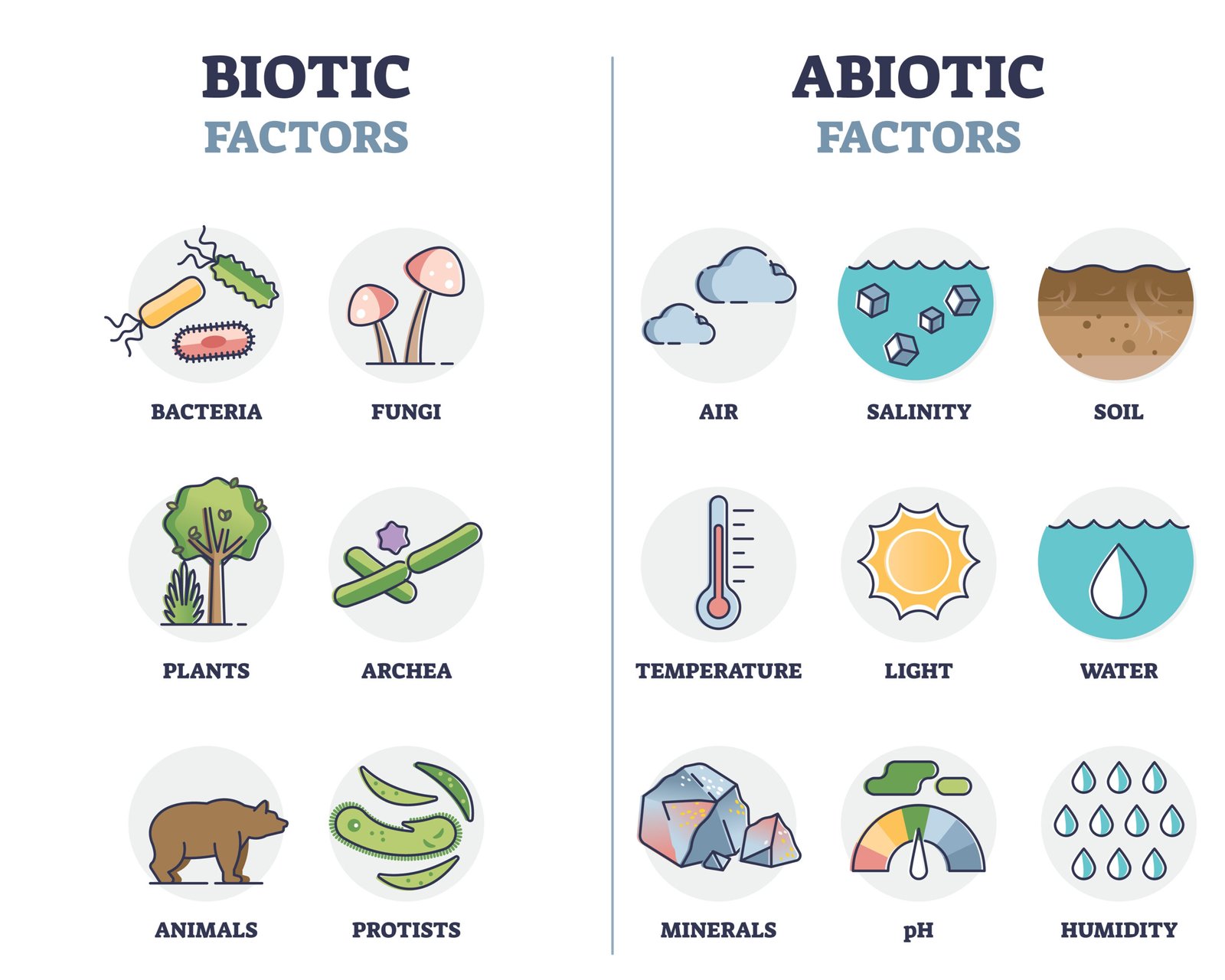
🔵 Abiotic components
☀️ Sunlight, 🌡️ temperature, 💧 water, 🪨 soil, 🌬️ air, inorganic nutrients.
🟢 Biotic components
🌱 Producers (autotrophs): green plants, algae, cyanobacteria.
🐟 Consumers (heterotrophs):
Primary (herbivores 🐇, 🐛)
Secondary (carnivores 🦊, 🐍)
Tertiary (top carnivores 🦅, 🦁)
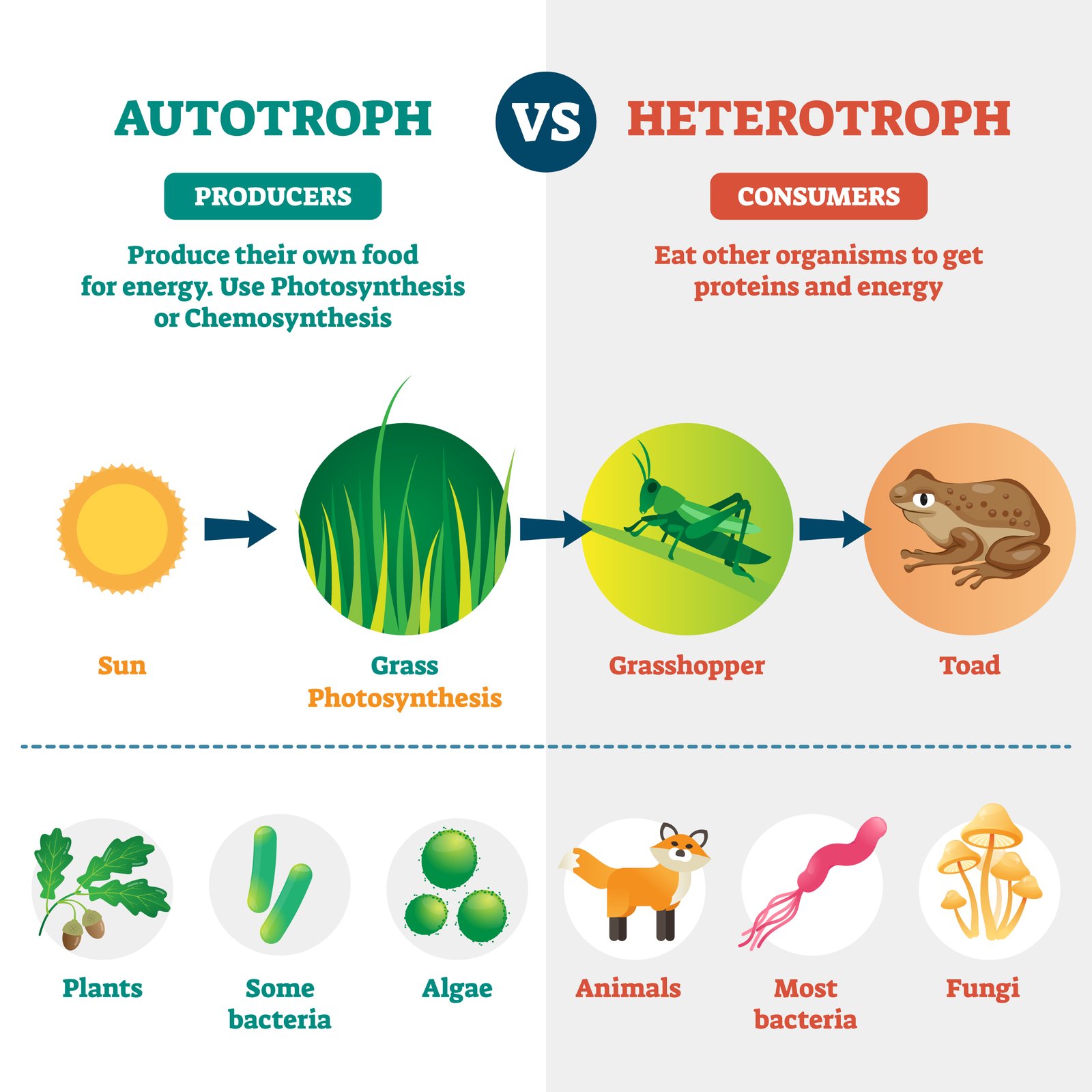
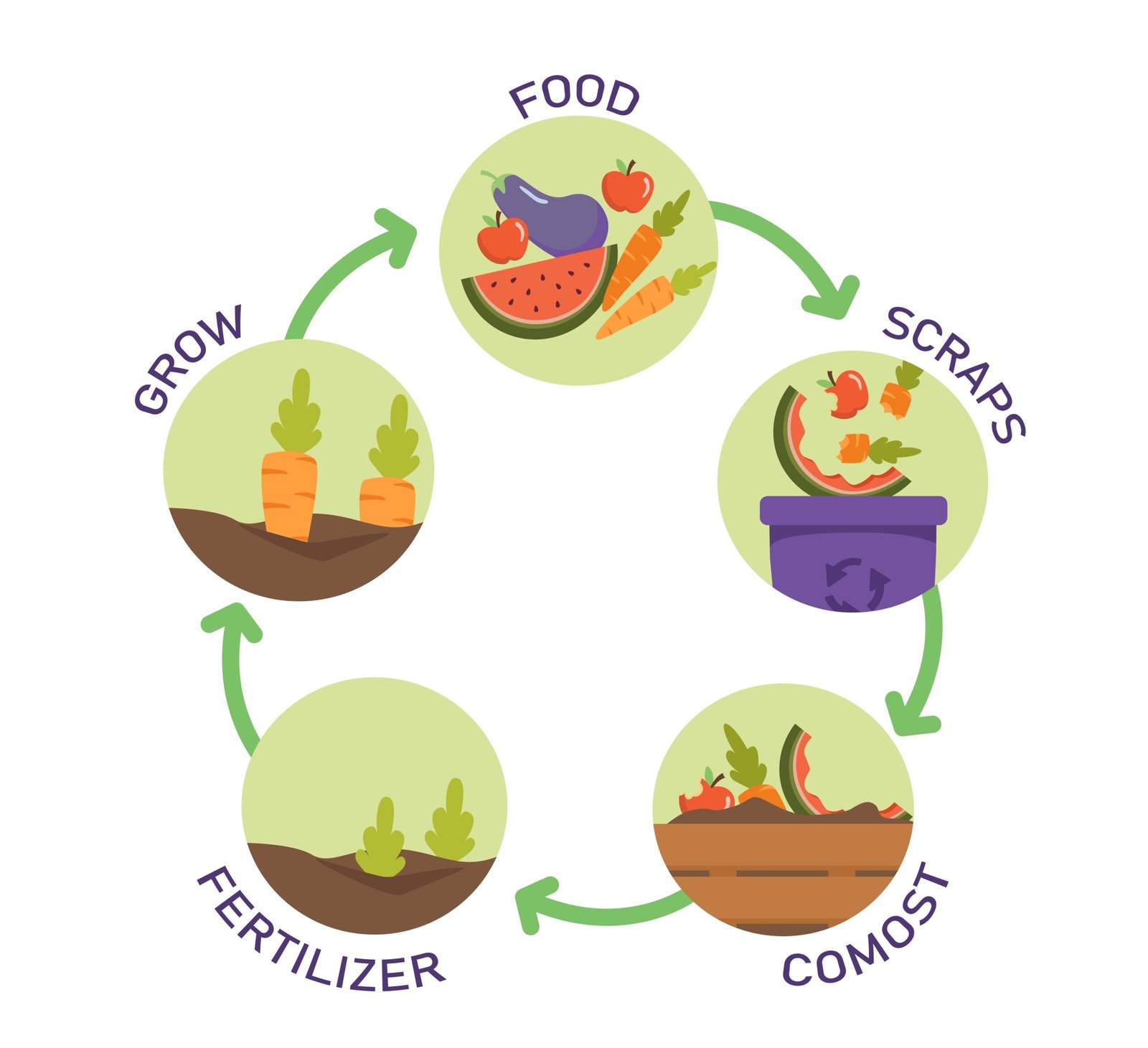
🍂 Decomposers (saprotrophs): bacteria 🦠, fungi 🍄, recycle nutrients.
🌱 Productivity
📌 Productivity = rate of biomass production
🔵 Primary productivity → energy fixed by autotrophs.
Gross primary productivity (GPP): total photosynthetic energy captured.
Net primary productivity (NPP): GPP – energy lost in respiration.
✏️ NPP = GPP – R
🟢 Secondary productivity → energy captured by consumers.
🟠 Community productivity → total productivity of producers & consumers.
🔗 Food Chains
🟢 Grazing food chain (GFC):
🌱 Producers → 🐛 Herbivores → 🐍 Carnivores → 🦅 Top carnivores.
🟠 Detritus food chain (DFC):
🍂 Dead organic matter → 🦠 Decomposers → Small carnivores → Larger carnivores.
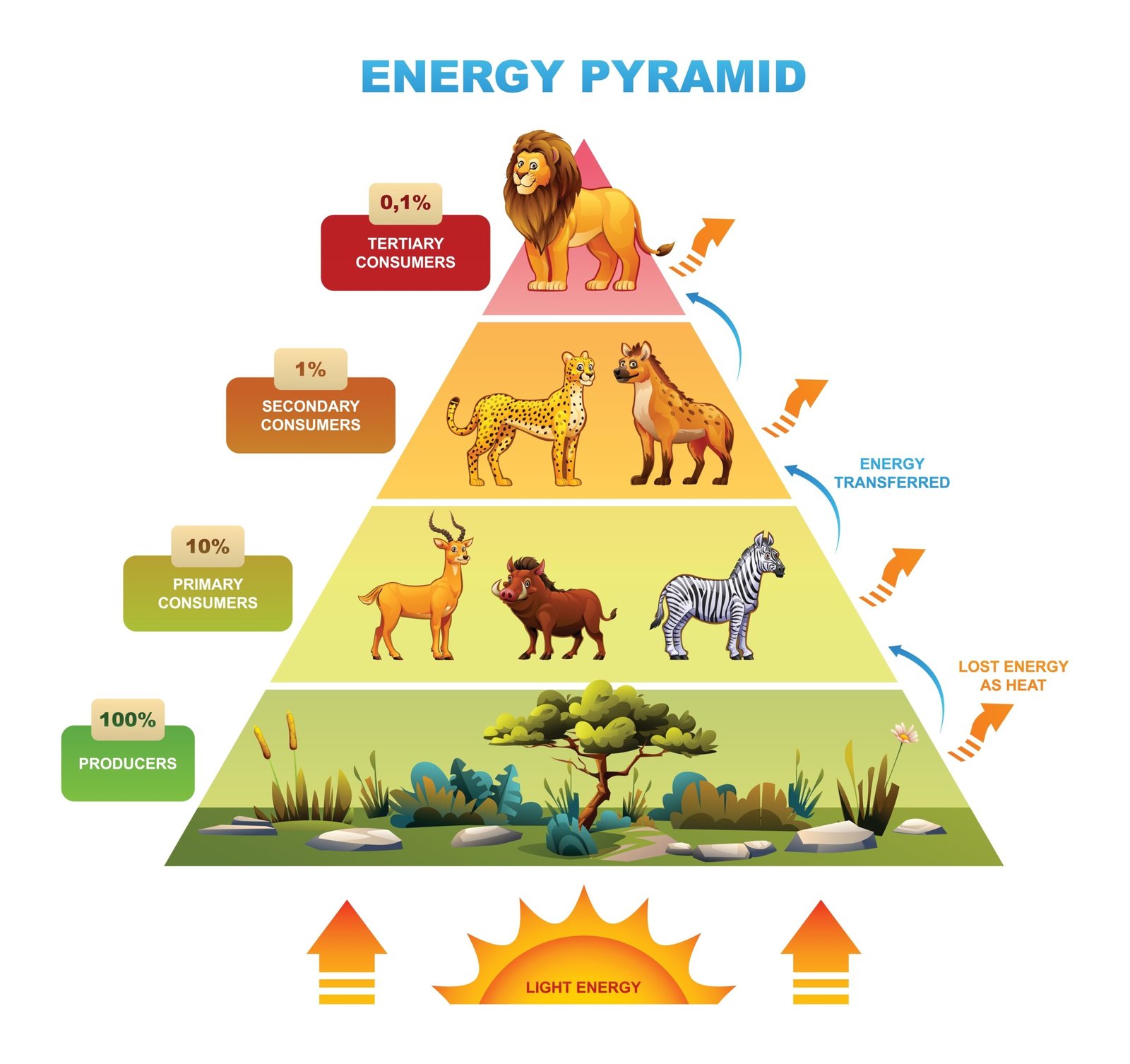
⚡ Energy transfer is unidirectional, about 10% efficiency at each step (10% law).

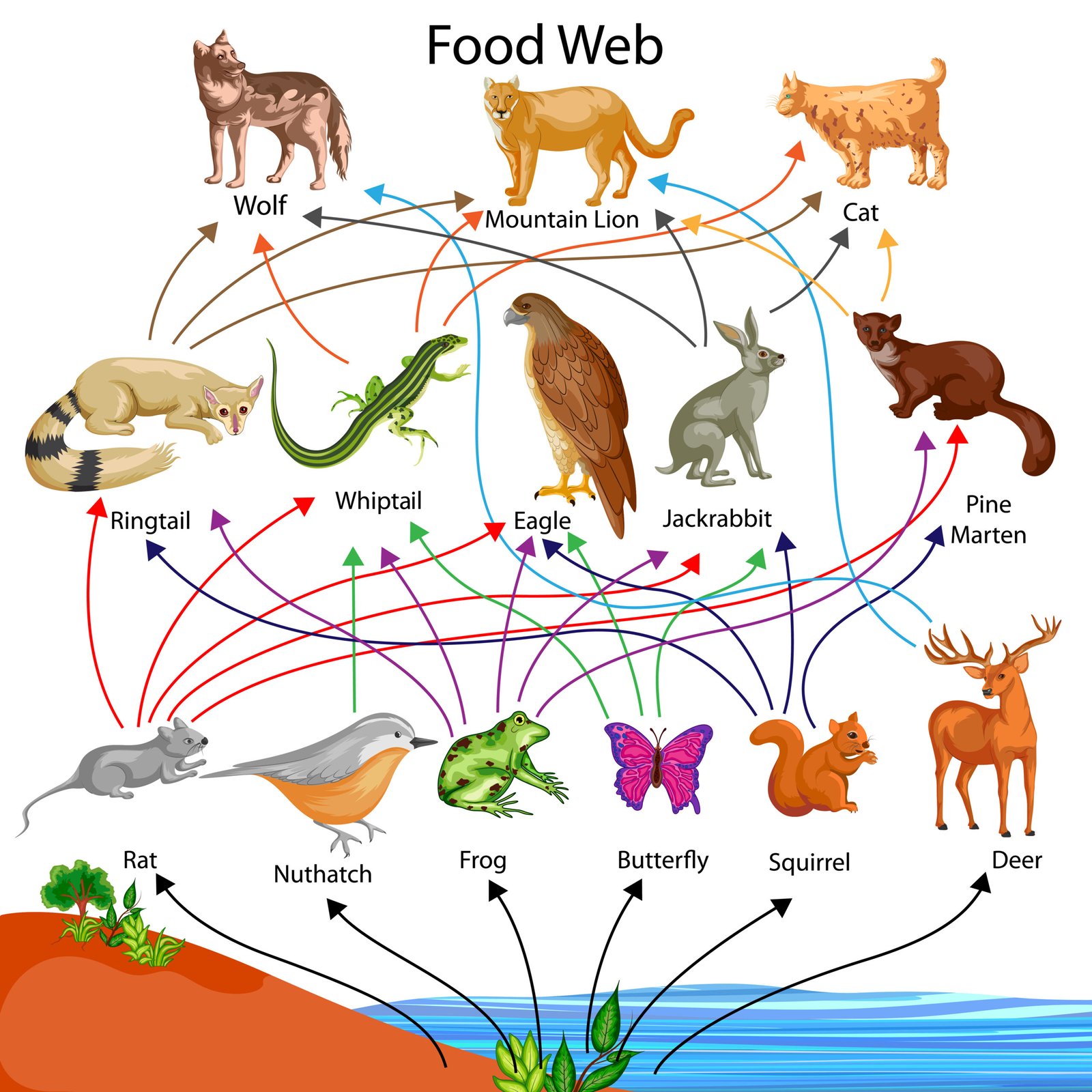
🌐 Food Web
🕸️ Interconnection of food chains → food web.
✅ Provides stability to ecosystem.
📈 Ecological Pyramids
🔺 Pyramid of number → upright in grassland; inverted in parasitic chain.
🔺 Pyramid of biomass → upright in forest; inverted in pond.
🔺 Pyramid of energy → always upright (energy decreases at each level).
🔄 Ecological Succession
🌱 Natural, gradual change in community composition.
🔵 Primary succession: on bare rocks, sand dunes → pioneer species = lichens/moss.
🟢 Secondary succession: on abandoned fields, cut forests → faster.
🔴 Hydrarch succession: starts in water, ends in forest.
🟠 Xerarch succession: starts in dry habitat, ends in forest.
🌏 Nutrient Cycling
🔄 Circulation of nutrients (C, N, P) in ecosystems.
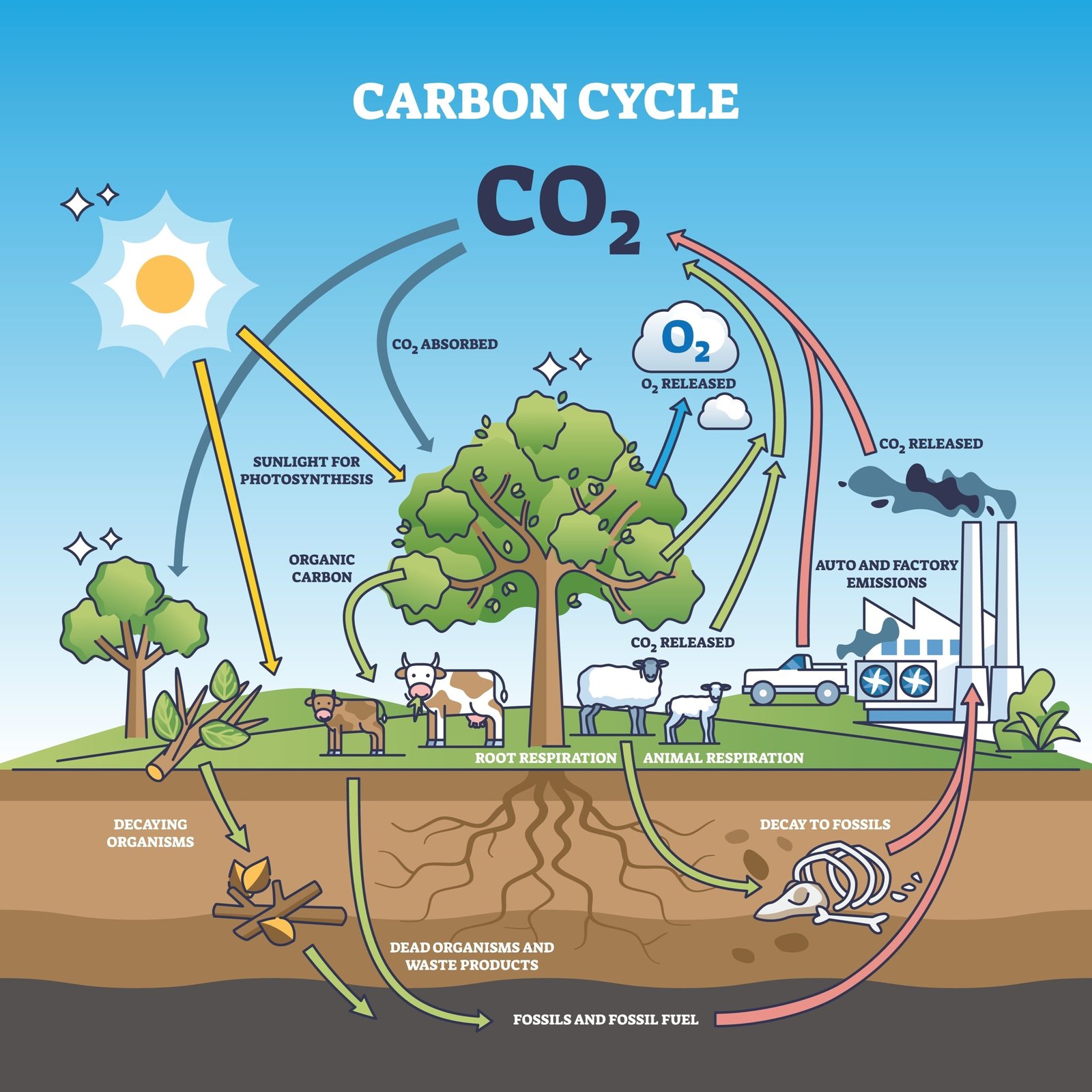
Carbon cycle: 🌬️ CO₂ fixed by plants → consumed → respired/released → decomposed.
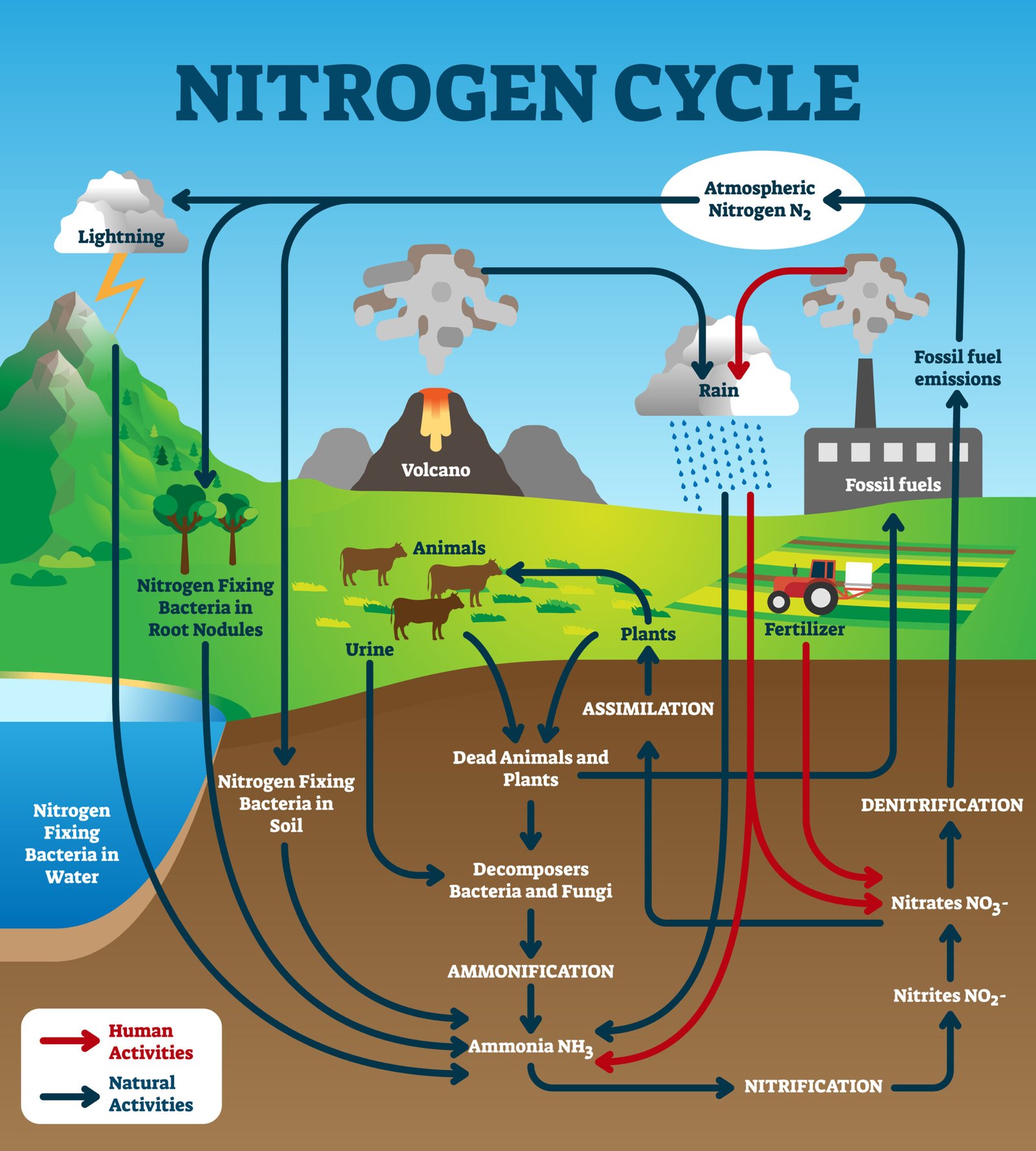
Nitrogen cycle: fixation → nitrification → assimilation → ammonification → denitrification.
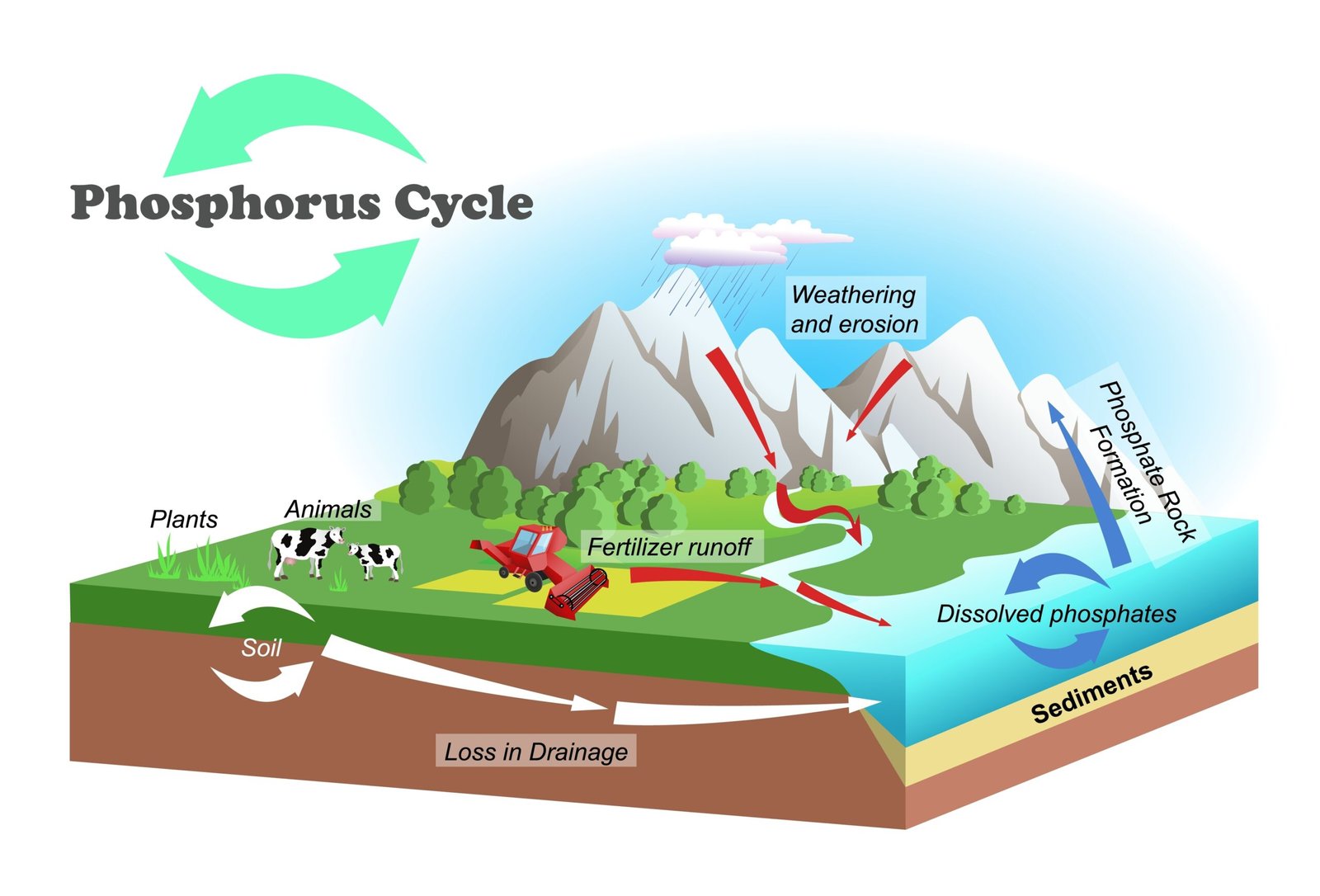
Phosphorus cycle: rocks → soil → plants → animals → detritus → sedimentation.
⚡ Ecosystem Services

Ecosystems provide:
🌬️ Oxygen production
💧 Water purification
🌳 Climate regulation
🌾 Soil fertility
🍎 Food, fuel, fibre, medicine
💡 Value estimated at US $33 trillion/year.
📝 Summary (≈300 words)
An ecosystem is a structural and functional unit where organisms interact with each other and the environment. It has abiotic (climate, soil, water, nutrients) and biotic (producers, consumers, decomposers) components.
Ecosystem functions include energy flow, productivity, food chains, food webs, ecological pyramids, succession, and nutrient cycling.
Productivity is classified as gross primary (GPP), net primary (NPP), and secondary. Food chains may be grazing or detritus; both interlink into food webs ensuring stability.
Ecological pyramids depict structure: energy pyramid is always upright; number and biomass pyramids may be upright or inverted depending on ecosystem.
Succession describes natural replacement of communities: primary succession on bare substrates, secondary succession on pre-existing soil, hydrarch in aquatic habitats, xerarch in dry habitats.
Nutrient cycling ensures reuse of carbon, nitrogen, phosphorus. The carbon cycle involves photosynthesis and respiration, nitrogen cycle includes fixation and denitrification, phosphorus cycle links rocks, soil, organisms, sediments.
Ecosystems also provide services: oxygen, water, soil fertility, food, climate regulation, medicines, biodiversity. Their economic valuation highlights their global significance.
Thus, ecosystems maintain life support systems, regulate climate, recycle nutrients, and sustain biodiversity.
🎯 Quick Recap
🟢 Components: Abiotic + Biotic (Producers, Consumers, Decomposers)
🟠 Productivity: GPP, NPP, Secondary
🔵 Food chains: Grazing & Detritus → Food web
🔴 Ecological pyramids: Number, Biomass, Energy
🌱 Succession: Primary, Secondary, Hydrarch, Xerarch
🌍 Nutrient cycles: Carbon, Nitrogen, Phosphorus
✨ Ecosystem services: O₂, food, water, soil, climate regulation
————————————————————————————————————————————————————————————————————————————
QUESTIONS FROM TEXTBOOK
Q1. Fill in the blanks
🟢 (a) Plants are called as producers because they fix carbon dioxide.
🔵 (b) In an ecosystem dominated by trees, the pyramid (of numbers) is inverted type.
🟠 (c) In aquatic ecosystems, the limiting factor for the productivity is light.
🔴 (d) Common detritivores in our ecosystem are earthworms, termites.
🟡 (e) The major reservoir of carbon on earth is ocean.
Q2. Which one of the following has the largest population in a food chain?
🔵 (A) Producers
🟢 (B) Primary consumers
🟠 (C) Secondary consumers
🔴 (D) Decomposers
✅ Answer: (A) Producers
Q3. The second trophic level in a lake is
🔵 (A) Phytoplankton
🟢 (B) Zooplankton
🟠 (C) Benthos
🔴 (D) Fishes
✅ Answer: (B) Zooplankton
Q4. Secondary producers are
🔵 (A) Herbivores
🟢 (B) Producers
🟠 (C) Carnivores
🔴 (D) None of the above
✅ Answer: (D) None of the above
👉 Explanation: There is no category of “secondary producers” in ecology.
Q5. What is the percentage of photosynthetically active radiation (PAR) in the incident solar radiation?
🔵 (A) 100%
🟢 (B) 50%
🟠 (C) 1–5%
🔴 (D) 2–10%
✅ Answer: (D) 2–10%
Q6. Distinguish between
🔵 (a) Grazing food chain & Detritus food chain
GFC: Starts with producers → herbivores → carnivores.
DFC: Starts with dead organic matter → decomposers.
🟢 (b) Production & Decomposition
Production: Formation of biomass through photosynthesis.
Decomposition: Breakdown of complex matter into simpler substances.
🟠 (c) Upright & Inverted pyramid
Upright: Energy pyramid, biomass in forest.
Inverted: Pyramid of biomass in pond, pyramid of number in tree ecosystem.
🔴 (d) Food chain & Food web
Food chain: Linear sequence of energy flow.
Food web: Interconnection of food chains.
🟡 (e) Litter & Detritus
Litter: Freshly fallen leaves/twigs.
Detritus: Dead remains undergoing decomposition.
🟣 (f) Primary & Secondary productivity
Primary: Biomass produced by autotrophs.
Secondary: Biomass produced by consumers.
Q7. Describe the components of an ecosystem.
✅ Components:
Abiotic: Light, temperature, water, air, soil, inorganic nutrients.
Biotic:
Producers 🌱 (plants, algae)
Consumers 🐛 (herbivores, carnivores, omnivores)
Decomposers 🍄 (bacteria, fungi).
Q8. Define ecological pyramids and describe with examples, pyramids of number and biomass.
✅ Ecological pyramids: Graphical representation of number, biomass, or energy at successive trophic levels.
Pyramid of number: Grassland → Upright, Tree ecosystem → Inverted.
Pyramid of biomass: Forest → Upright, Aquatic pond → Inverted.
Q9. What is primary productivity? Give brief description of factors that affect primary productivity.
✅ Primary productivity: Amount of biomass produced by autotrophs per unit area per unit time.
Factors:
Abiotic (light, temperature, water, nutrients).
Plant factors (species, photosynthetic efficiency).
Community interactions.
Q10. Define decomposition and describe the processes and products of decomposition.
✅ Decomposition: Breakdown of complex organic matter into simple inorganic substances by decomposers.
Steps:
Fragmentation: Detritus broken into small particles.
Leaching: Soluble nutrients washed out.
Catabolism: Enzymatic breakdown.
Humification: Formation of humus.
Mineralisation: Release of inorganic nutrients.
Products: Humus, CO₂, water, nutrients (N, P, K, Ca).
Q11. Give an account of energy flow in an ecosystem.
✅ Energy flow:
Solar energy → captured by producers.
Transfer to herbivores → carnivores → decomposers.
Only 10% energy transferred to next level (10% law).
Unidirectional, always decreases at higher trophic levels.
Represented as ecological pyramid of energy (always upright).
————————————————————————————————————————————————————————————————————————————
OTHER IMPORTANT QUESTIONS FOR EXAMS
(CBSE MODEL QUESTION PAPER)
ESPECIALLY MADE FROM THIS CHAPTER ONLY
🟢 Section A — MCQs (Q1–Q10)
🔸 Q1. In most ecosystems, the main source of energy is ☀️
🔵 (A) Moonlight
🟢 (B) Sunlight
🟠 (C) Geothermal heat
🔴 (D) Chemical energy
✅ Answer: (B) Sunlight
🔸 Q2. In a forest food chain, the largest population is generally at the level of 🌳
🔵 (A) Tertiary consumers
🟢 (B) Secondary consumers
🟠 (C) Primary consumers
🔴 (D) Producers
✅ Answer: (D) Producers
🔸 Q3. The second trophic level in a lake is 🐟
🔵 (A) Phytoplankton
🟢 (B) Zooplankton
🟠 (C) Benthos
🔴 (D) Fishes
✅ Answer: (B) Zooplankton
🔸 Q4. “Secondary producers” in ecological literature are 📘
🔵 (A) Herbivores
🟢 (B) Carnivores
🟠 (C) Decomposers
🔴 (D) Not used (no such category)
✅ Answer: (D) Not used (no such category)
🔸 Q5. Photosynthetically active radiation (PAR) is about ☀️📊
🔵 (A) 100% of insolation
🟢 (B) 50% of insolation
🟠 (C) 1–5%
🔴 (D) 2–10%
✅ Answer: (D) 2–10%
🔸 Q6. In aquatic ecosystems, the principal limiting factor for productivity is 🌊
🔵 (A) Wind
🟢 (B) Light
🟠 (C) Soil pH
🔴 (D) Calcium
✅ Answer: (B) Light
🔸 Q7. In a tree-dominated ecosystem, the pyramid of numbers is 🌲
🔵 (A) Upright
🟢 (B) Inverted
🟠 (C) Spindle-shaped
🔴 (D) Hour-glass
✅ Answer: (B) Inverted
🔸 Q8. Pyramid of energy is ⚡
🔵 (A) Always upright
🟢 (B) Always inverted
🟠 (C) Upright only in forests
🔴 (D) Variable
✅ Answer: (A) Always upright
🔸 Q9. Major reservoir of carbon on Earth is 🌏
🔵 (A) Atmosphere
🟢 (B) Ocean
🟠 (C) Plants
🔴 (D) Soil litter
✅ Answer: (B) Ocean
🔸 Q10. Common detritivores include 🍂
🔵 (A) Earthworms and termites
🟢 (B) Hawks and owls
🟠 (C) Deer and rabbits
🔴 (D) Phytoplankton
✅ Answer: (A) Earthworms and termites
🟡 Section B — Very Short Answer (Q11–Q15)
🔸 Q11. Define Gross Primary Productivity (GPP) and Net Primary Productivity (NPP).
✅ Answer:
GPP: total photosynthetic fixation of energy by producers per unit area per unit time.
NPP: GPP − R (R = respiration loss) per unit area per unit time.
🔸 Q12. State the 10% law of energy transfer.
✅ Answer: About 10% of the energy at one trophic level is transferred to the next higher trophic level; the rest is lost as heat/respiration.
🔸 Q13. Name the two main types of food chains. Give one starter for each.
✅ Answer:
Grazing food chain: starts with producers (grass).
Detritus food chain: starts with detritus (dead leaves) eaten by decomposers/detritivores.
🔸 Q14. Write any two ecosystem services.
✅ Answer: Oxygen production, water purification, climate regulation, soil fertility (any two).
🔸 Q15. List the five steps of decomposition in correct order.
✅ Answer: Fragmentation → Leaching → Catabolism → Humification → Mineralisation.
🔴 Section C — Short Answer (Q16–Q17)
🔸 Q16. Distinguish between the following (one line each):
✅ Answer:
(a) Food chain vs Food web: Chain = linear pathway; Web = interlinked chains providing stability.
(b) Litter vs Detritus: Litter = freshly fallen organic matter; Detritus = partly decomposed remains.
(c) Upright vs Inverted biomass pyramid: Forest = upright; Pond = inverted (phytoplankton biomass < zooplankton/fish at an instant).
🔸 Q17. Numericals on productivity: A grassland has GPP = 2000 kJ m^-2 yr^-1 and R = 800 kJ m^-2 yr^-1.
✅ Answer (stepwise):
Step 1: NPP = GPP − R
Step 2: NPP = 2000 − 800
Step 3: NPP = 1200 kJ m^-2 yr^-1
🔸 Q18. Define ecological succession. Differentiate between primary and secondary succession.
✅ Answer:
Ecological succession: gradual, predictable change in species composition in an area.
Primary succession: starts on bare substrates (rock, sand, waterbody) with no soil/organisms; very slow.
Secondary succession: starts on areas with pre-existing soil and life (abandoned fields, cut forests); faster.
🔸 Q19. What is humus? Why is it important for soil fertility?
✅ Answer:
Humus: dark, amorphous, colloidal organic matter formed during decomposition.
Importance: increases soil porosity, nutrient retention, and fertility.
🔸 Q20. Mention two differences between hydrarch succession and xerarch succession.
✅ Answer:
Hydrarch succession: begins in water; pioneer = phytoplankton.
Xerarch succession: begins in dry habitats; pioneer = lichens.
End point (climax): both → forest ecosystem.
🔸 Q21. Explain carbon cycling in nature.
✅ Answer:
CO₂ fixed by plants in photosynthesis → eaten by consumers → released in respiration.
Decomposition and combustion also release CO₂.
Main reservoir = oceans and fossil fuels.
🔸 Q22. Write short notes on nitrogen fixation.
✅ Answer:
Conversion of atmospheric N₂ → usable forms (NH₄⁺, NO₃⁻).
Carried out by free-living bacteria (Azotobacter, Clostridium), symbiotic bacteria (Rhizobium), and by lightning.
🔸 Q23. Explain the structure of a simple pond ecosystem.
✅ Answer:
Abiotic: water, light, temperature, minerals.
Biotic:
Producers: phytoplankton, aquatic plants.
Consumers: zooplankton, fishes.
Decomposers: bacteria, fungi.
Shows grazing and detritus food chains.
🔸 Q24. Name any two ecosystem services and explain their importance.
✅ Answer:
Oxygen production (through photosynthesis): essential for life.
Climate regulation (carbon sequestration): prevents global warming.
🔸 Q25. State the 10% law of Lindeman with an example.
✅ Answer: Only 10% energy at one trophic level is transferred to the next.
Example: Grass (1000 J) → Grasshopper (100 J) → Frog (10 J) → Snake (1 J).
🔴 Section D — Long Answer (Q26–Q30)
🔸 Q26. Describe the process of decomposition.
✅ Answer:
Steps: Fragmentation → Leaching → Catabolism → Humification → Mineralisation.
Products: inorganic nutrients, humus, CO₂, water.
🔸 Q27. Explain the energy flow in an ecosystem with a suitable diagram.
✅ Answer:
Unidirectional flow: Sun → Producers → Consumers → Decomposers.
Only 10% energy passed on at each level.
Represented as an upright pyramid of energy.
🔸 Q28. Write an essay on ecosystem services with examples.
✅ Answer: Ecosystem services include:
Provisioning: food, fuel, medicines.
Regulating: climate control, water purification.
Supporting: nutrient cycling, pollination.
Cultural: recreation, aesthetic value.
🔸 Q29. What is ecological pyramid? Explain pyramids of number, biomass, and energy with examples.
✅ Answer:
Pyramid of number: upright (grassland); inverted (tree ecosystem).
Pyramid of biomass: upright (forest); inverted (pond).
Pyramid of energy: always upright.
🔸 Q30. Describe nitrogen cycle with diagrammatic explanation.
✅ Answer:
Steps: Nitrogen fixation → Nitrification → Assimilation → Ammonification → Denitrification.
Reservoir = atmosphere.
Maintains nitrogen balance in biosphere.
🟣 Section E — Case Study & MCQs (Q31–Q33)
📘 Case Study:
In a grassland ecosystem, the GPP = 2500 kJ m⁻² yr⁻¹ and respiration loss = 1500 kJ m⁻² yr⁻¹. Secondary consumers assimilate 200 kJ m⁻² yr⁻¹.
🔸 Q31. Calculate the NPP.
✅ Answer (stepwise):
Formula: NPP = GPP − R
= 2500 − 1500
= 1000 kJ m⁻² yr⁻¹
🔸 Q32. MCQ: Energy available to secondary consumers is:
🔵 (A) 200 kJ
🟢 (B) 1000 kJ
🟠 (C) 1500 kJ
🔴 (D) 2500 kJ
✅ Answer: (A) 200 kJ
🔸 Q33. MCQ: Which ecological principle is best illustrated in the above case?
🔵 (A) 10% law
🟢 (B) Gause’s competitive exclusion principle
🟠 (C) Principle of succession
🔴 (D) Allen’s rule
✅ Answer: (A) 10% law
————————————————————————————————————————————————————————————————————————————