
Class 11 : Biology (In English) – Lesson 11: Photosynthesis in Higher Plants

EXPLANATION & SUMMARY
🌱✨ Introduction
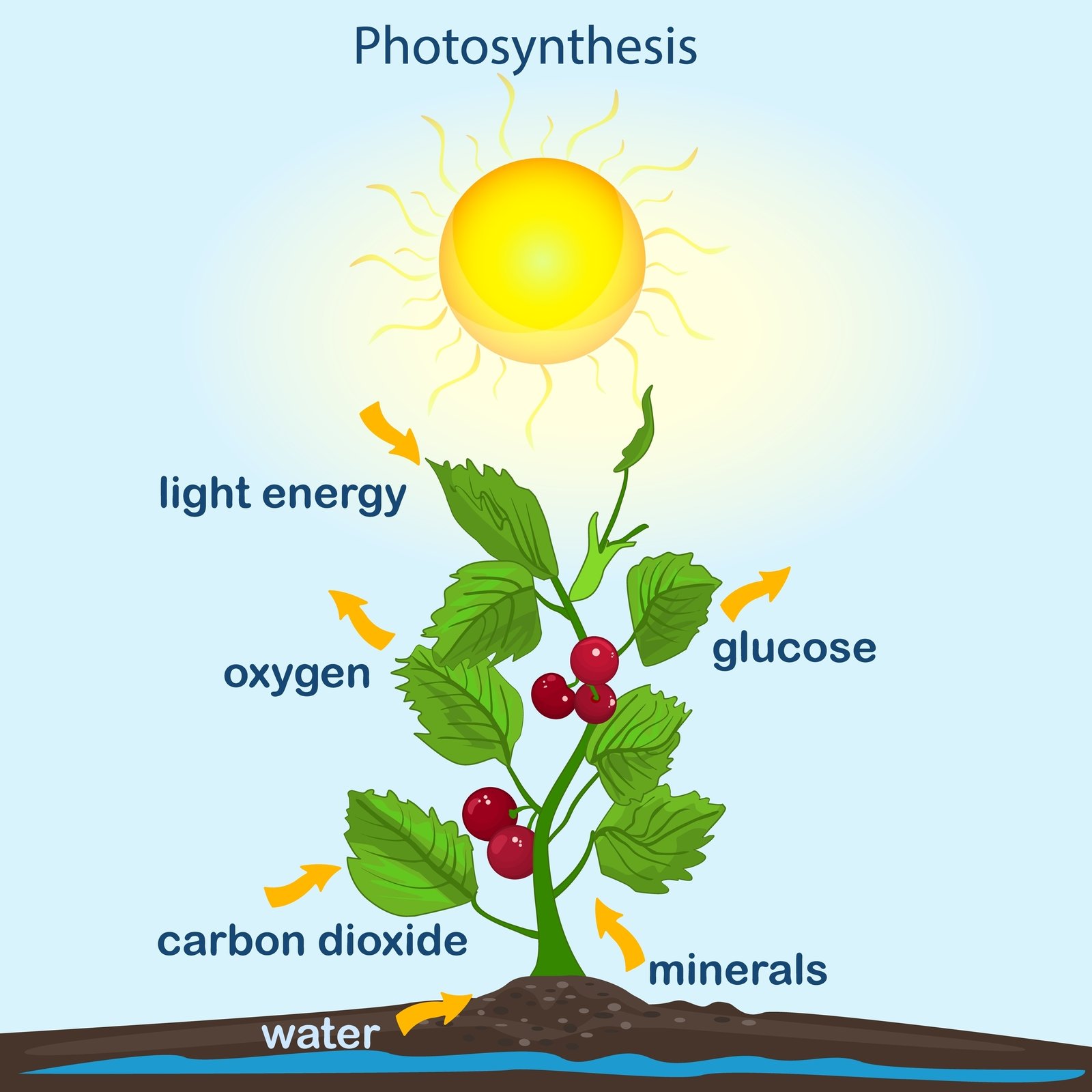
🧠 Photosynthesis is the physicochemical process by which green plants, algae, and some bacteria convert light energy into chemical energy (glucose).
🌿 It is the foundation of life on Earth — providing food and oxygen for all living beings.
💡 Concept:
☀️ Light energy → stored as chemical energy in bonds of organic molecules.
🌍 Photosynthesis = Energy gateway for the biosphere.
🧬 Equation:
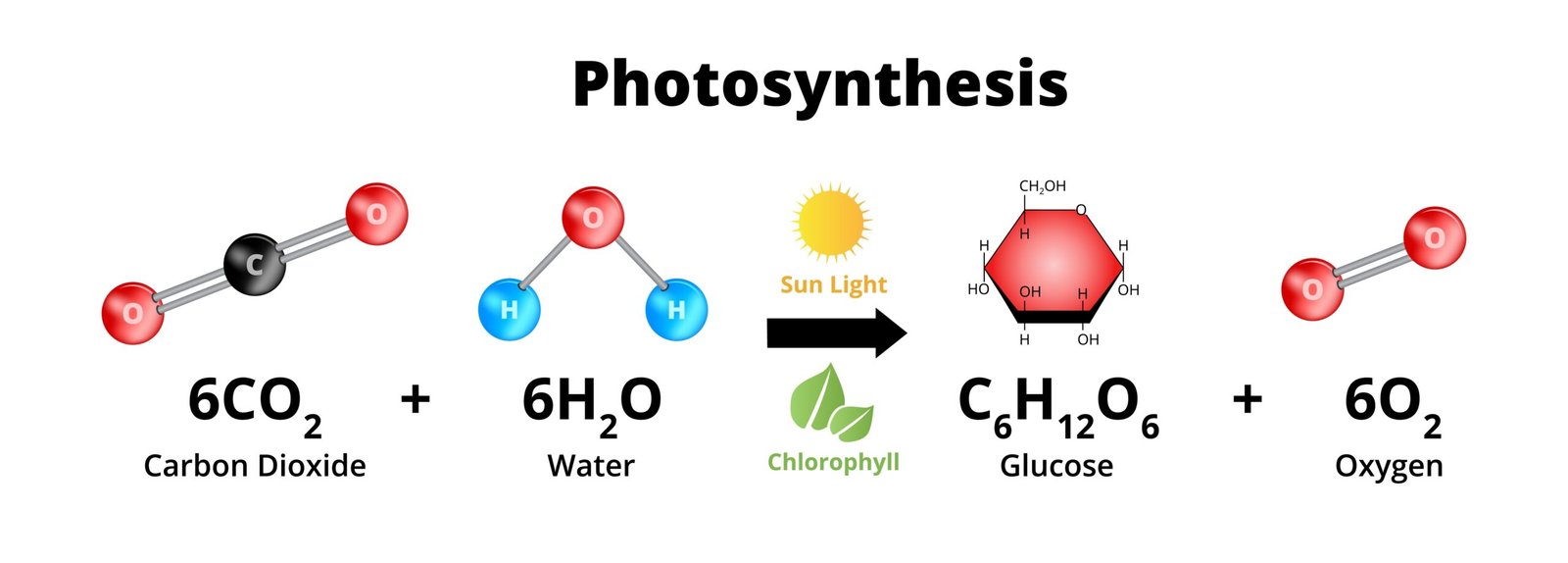
6 CO₂ + 12 H₂O → C₆H₁₂O₆ + 6 O₂ + 6 H₂O (in presence of light & chlorophyll)
🌾 Historical Background
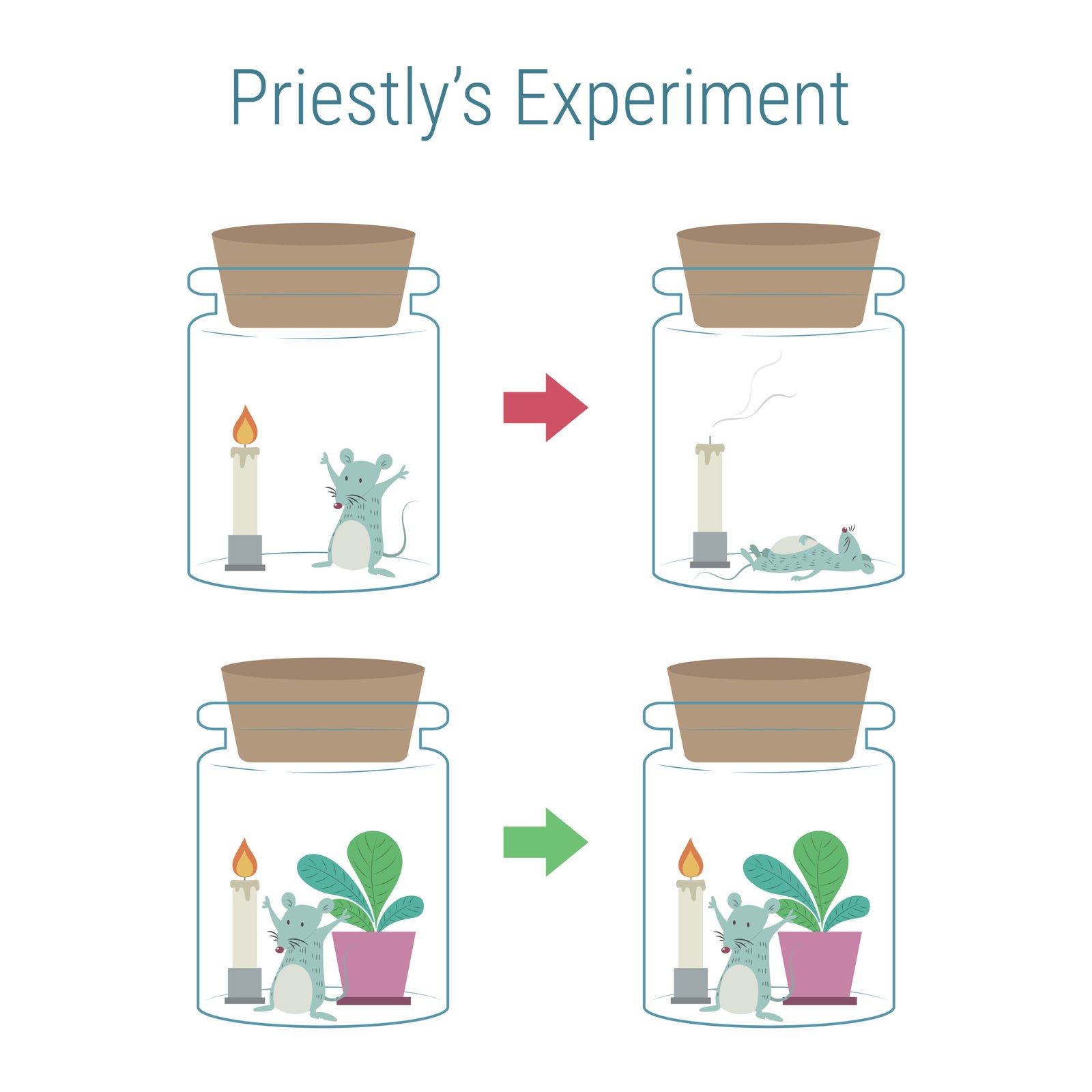
1️⃣ Priestley (1770): Discovered that plants release oxygen — candle relit experiment.
2️⃣ Ingenhousz (1779): Light essential; only green parts produce oxygen.
3️⃣ Jan Senebier: CO₂ is used in photosynthesis.
4️⃣ Sachs: Confirmed chlorophyll and light needed; product is starch.
5️⃣ Blackman (1905): Gave Law of Limiting Factors — photosynthesis controlled by light, CO₂, temperature.
💡 Concept: Photosynthesis = light-dependent & enzymatic reactions.
🌿 Site of Photosynthesis
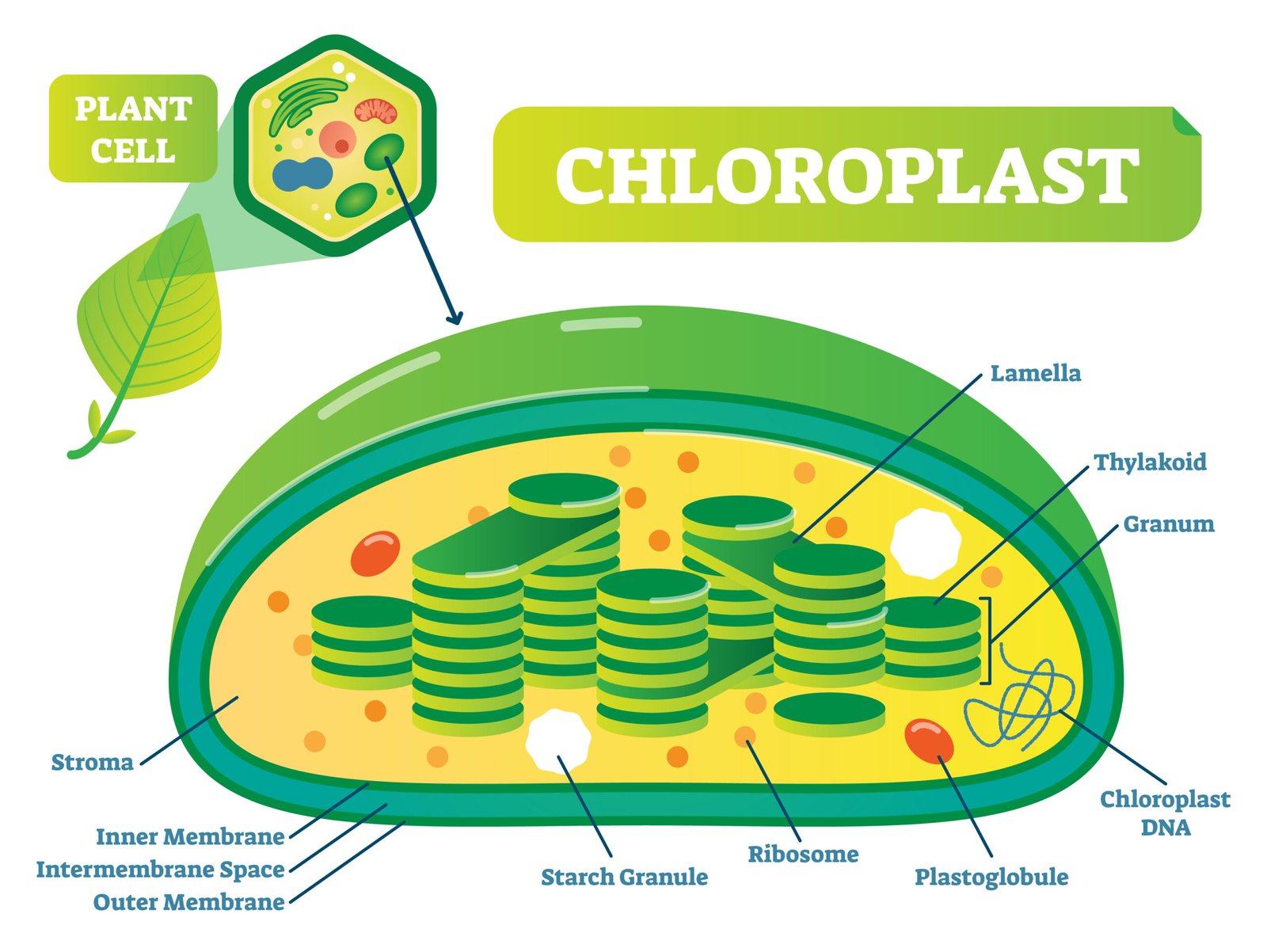
🪴 Chloroplasts — double-membrane organelles in mesophyll cells.
Contains:
🌱 Grana: stacks of thylakoids (light reactions)
🍃 Stroma: fluid matrix (dark reactions)
💚 Chlorophyll pigments in thylakoid membranes capture light energy.
🌸 Pigments Involved
1️⃣ Chlorophyll a – primary pigment
2️⃣ Chlorophyll b, xanthophylls, carotenes – accessory pigments
💡 Absorb different wavelengths → broader absorption spectrum
🌈 Absorption & Action Spectrum
Absorption spectrum: Light wavelengths absorbed by pigments.
Action spectrum: Photosynthetic rate vs light wavelength (max in blue & red regions).
🧠 Engelmann’s experiment: Demonstrated O₂ evolution maximum under blue & red light using algae and bacteria.
🌞 Light Reaction (Photochemical Phase)
⚙️ Occurs in thylakoid membranes of chloroplast.
Requires light and water; produces ATP, NADPH, O₂.
🧪 Major Steps
1️⃣ Light absorption by pigments
2️⃣ Excitation of electrons in chlorophyll
3️⃣ Photophosphorylation – formation of ATP
4️⃣ Photoreduction – NADP⁺ → NADPH
5️⃣ Photolysis of water – splits water into O₂, H⁺, e⁻
💡 Equation:
2 H₂O → 4 H⁺ + 4 e⁻ + O₂
🧬 Oxygen released is from water (Hill reaction confirmed).
⚡ Types of Photophosphorylation
🌿 1. Cyclic
Electrons return to PS I
ATP only formed, no NADPH/O₂
Occurs when NADP⁺ low or light intense
🌾 2. Non-Cyclic
Uses PS II and PS I
Electrons move linearly: H₂O → PS II → PS I → NADP⁺
ATP, NADPH, O₂ formed
💡 Concept: Light reaction provides energy currency (ATP) and reducing power (NADPH) for the next phase.
🌿 Dark Reaction (Biosynthetic Phase)
🧠 Takes place in stroma; independent of light but uses ATP and NADPH from light reaction.
🌱 Main process: CO₂ fixation → glucose synthesis.
🌸 Calvin Cycle (C₃ Pathway)
Discovered by Melvin Calvin using radioactive carbon.
Occurs in C₃ plants (wheat, rice, beans).
🌀 Three phases:
1️⃣ Carboxylation
CO₂ + RuBP (Ribulose 1,5-bisphosphate) → 2 molecules of 3-PGA
(Enzyme: RuBisCO)
2️⃣ Reduction
3-PGA + ATP + NADPH → G3P (PGAL) → forms glucose
3️⃣ Regeneration
Some G3P regenerates RuBP using ATP
💡 Net Result:
6 CO₂ + 18 ATP + 12 NADPH → 1 glucose
🧬 C₄ Pathway (Hatch & Slack Pathway)
🌿 Found in tropical grasses (maize, sugarcane).
Adaptation to high light and low CO₂.
🧩 Key features:
Two cell types: mesophyll & bundle sheath
First product: 4-carbon oxaloacetic acid (OAA)
Enzyme: PEP carboxylase (no affinity for O₂)
CO₂ released in bundle sheath → enters Calvin cycle
⚙️ Result: Avoids photorespiration, increases efficiency.
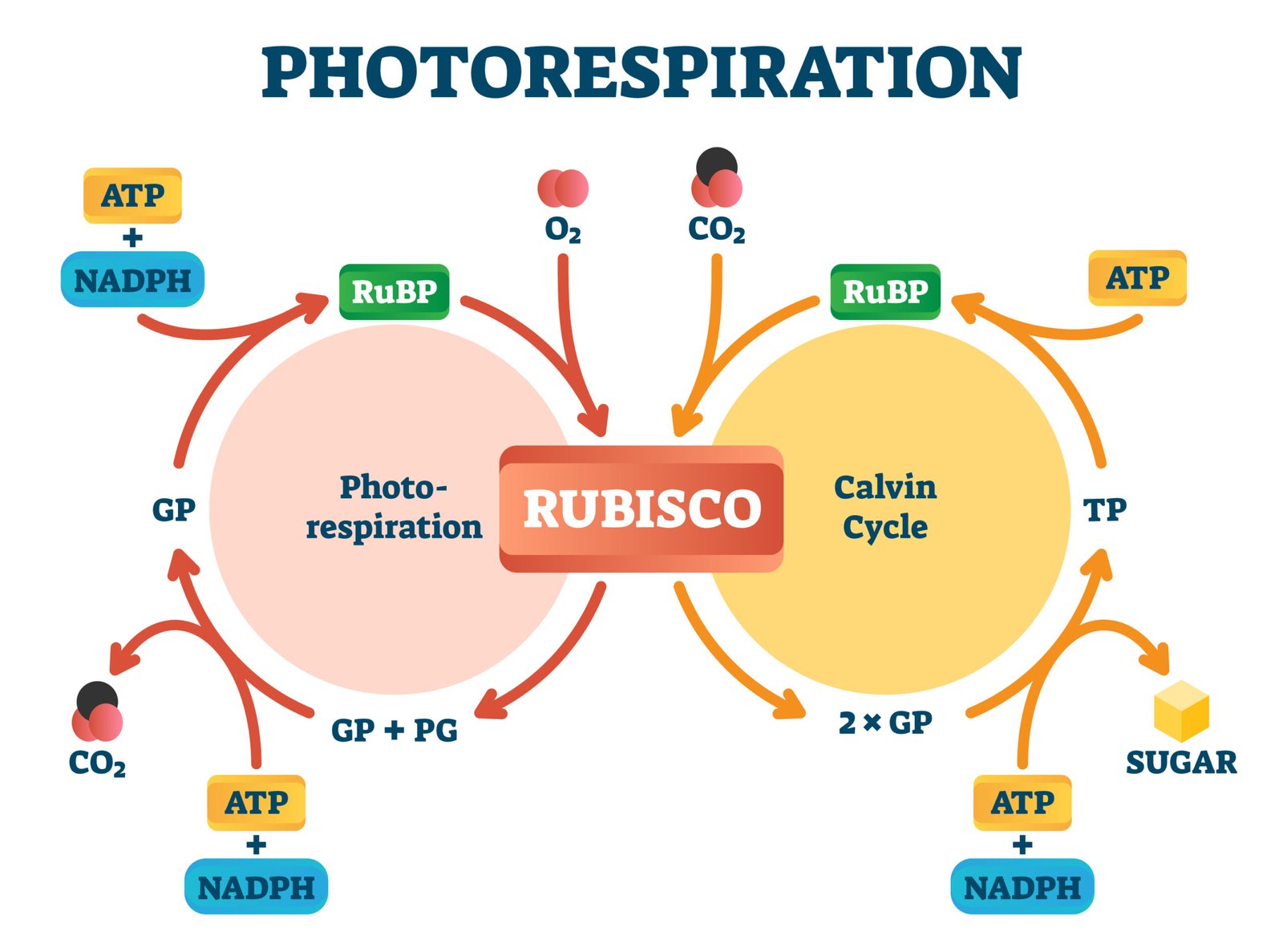
💨 Photorespiration (C₂ Cycle)
🧠 Occurs when RuBisCO binds O₂ instead of CO₂.
Leads to CO₂ loss; no ATP/glucose produced.
Significant in C₃ plants, absent in C₄ plants.
💡 C₄ pathway = evolutionary adaptation to reduce photorespiration.
🌳 Factors Affecting Photosynthesis
1️⃣ Light: intensity, quality, duration
2️⃣ CO₂ concentration: directly affects rate
3️⃣ Temperature: optimum 25–35°C
4️⃣ Water: deficiency closes stomata
5️⃣ Internal factors: chlorophyll content, protoplasmic condition
📘 Blackman’s Law of Limiting Factors:
When a process is conditioned by several factors, the rate is limited by the slowest factor.
🧠 Significance of Photosynthesis
🌿 Source of food and energy
💨 Releases O₂ for respiration
🧪 Maintains CO₂–O₂ balance
⚡ Forms base of food chain
🌱 Provides fossil fuels (stored solar energy)
🌍 Why This Lesson Matters
🧬 Explains primary energy process on Earth
🌿 Essential for agriculture and ecology
🧠 Basis for understanding plant physiology
⚡ Important for climate balance and sustainability
📝 Quick Recap
☀️ Photosynthesis = light energy → chemical energy
🧪 Light reaction (thylakoid): ATP, NADPH, O₂
🧬 Dark reaction (stroma): CO₂ → glucose
🌾 C₃ plants use Calvin cycle; C₄ plants use Hatch–Slack
💨 Photorespiration wastes energy; absent in C₄
⚙️ Factors: light, CO₂, temperature
🌍 Provides food, oxygen, and energy for biosphere
📘 Summary
Photosynthesis is the fundamental process converting solar energy into chemical form.
The light reaction captures sunlight to form ATP and NADPH, while the dark reaction (Calvin cycle) fixes CO₂ into carbohydrates.
C₄ plants possess adaptations for higher efficiency by minimising photorespiration.
Environmental factors such as light, CO₂, and temperature regulate the rate.
This process sustains life, balancing gases and supporting all ecosystems.
————————————————————————————————————————————————————————————————————————————
QUESTIONS FROM TEXTBOOK
🔵 Question 1. By looking at a plant externally, can you tell whether a plant is C₃ or C₄? Why and how?
🟢 Answer:
🌿 No, it is not possible to identify a C₃ or C₄ plant externally by appearance.
💡 The difference lies in their internal anatomy and biochemical pathways.
✔️ Reason:
C₃ and C₄ plants have similar external morphology.
The difference is in photosynthetic mechanism and leaf anatomy (Kranz anatomy in C₄).
➡️ Hence, microscopic observation is needed to distinguish them.
🔵 Question 2. By looking at which internal structure of a plant can you tell whether a plant is C₃ or C₄? Explain.
🟢 Answer:
🧫 Examine the leaf anatomy:
🌿 C₄ plants show Kranz anatomy:
Vascular bundles surrounded by bundle sheath cells (large, chloroplast-rich).
Presence of dimorphic chloroplasts (granal in mesophyll, agranal in bundle sheath).
🌸 C₃ plants:
No Kranz anatomy.
Only mesophyll cells perform photosynthesis.
✔️ Thus, presence of Kranz anatomy = C₄ plant.
🔵 Question 3. Even though a very few cells in a C₄ plant carry out the biosynthetic Calvin pathway, yet they are highly productive. Can you discuss why?
🟢 Answer:
🧬 C₄ plants are more productive due to:
🌿 Efficient CO₂ fixation — minimal photorespiration.
⚡ Spatial separation of initial CO₂ fixation (mesophyll) and Calvin cycle (bundle sheath).
🌸 High CO₂ concentration in bundle sheath enhances RuBisCO efficiency.
🌱 Better water-use efficiency.
✔️ Result: More biomass produced per unit time → high productivity.
🔵 Question 4. RuBisCO is an enzyme that acts both as a carboxylase and oxygenase. Why do you think RuBisCO carries out more carboxylation in C₄ plants?
🟢 Answer:
🧪 In C₄ plants, RuBisCO is located in bundle sheath cells, where CO₂ concentration is high due to C₄ cycle.
➡️ High CO₂ / O₂ ratio favours carboxylase activity and suppresses oxygenase activity.
➡️ Thus, photorespiration is negligible.
✔️ Therefore, RuBisCO performs more carboxylation in C₄ plants.
🔵 Question 5. Suppose there were plants that had a high concentration of Chlorophyll b, but lacked Chlorophyll a, would it carry out photosynthesis? Then why do plants have Chlorophyll b and other accessory pigments?
🟢 Answer:
🌿 No, photosynthesis would not occur with only chlorophyll b.
💡 Reason:
Chlorophyll a is the reaction centre pigment that converts light energy into chemical energy.
Chlorophyll b and accessory pigments (carotenoids, xanthophylls) absorb additional wavelengths and transfer energy to chlorophyll a.
✔️ Hence, accessory pigments broaden the absorption spectrum but cannot replace chlorophyll a.
🔵 Question 6. Why is the colour of a leaf kept in the dark frequently yellow or pale green? Which pigment do you think is more stable?
🟢 Answer:
🌱 In darkness, chlorophyll is degraded, but carotenoids remain intact.
💡 Result: Leaf becomes yellow/pale green.
➡️ Carotenoids are more stable than chlorophyll.
✔️ Reason: Carotenoids resist photo-oxidation and persist longer.
🔵 Question 7. Look at leaves of the same plant on the shady side and compare it with the leaves on the sunny side. Or, compare the potted plants kept in sunlight with those in the shade. Which of them has leaves that are darker green? Why?
🟢 Answer:
🌿 Shady-side leaves are darker green.
💡 Reason:
Shade leaves have more chlorophyll to capture limited light.
Sun-exposed leaves have less chlorophyll but thicker cuticle.
✔️ Adaptation ensures optimum photosynthesis in varying light conditions.
🔵 Question 8. Figure 11.10 shows the effect of light on the rate of photosynthesis. Based on the graph, answer the following questions:
(a) At which point/s (A, B or C) in the curve light is a limiting factor?
(b) What could be the limiting factor/s in region A?
(c) What do C and D represent on the curve?
🟢 Answer:
🧠 (a) Region A — light is limiting factor (rate increases with light intensity).
(b) Limiting factors in A: Light intensity and CO₂ concentration.
(c) C and D:
➡️ C — light saturation point (rate no longer increases)
➡️ D — plateau region; another factor (CO₂ or temperature) becomes limiting.
✔️ Photosynthesis rate depends on interacting limiting factors.
🔵 Question 9. Give comparison between the following:
🟢 (a) C₃ and C₄ pathways
Feature C₃ Pathway C₄ Pathway
First stable product 3C (PGA) 4C (OAA)
Site Mesophyll cells Mesophyll + bundle sheath
Enzyme RuBisCO PEP carboxylase + RuBisCO
Photorespiration High Negligible
Productivity Moderate High
🟢 (b) Cyclic and Non-cyclic Photophosphorylation
Feature Cyclic Non-cyclic
Pathway Electrons cycle back to PS I Electrons move PS II → PS I
Product ATP only ATP + NADPH
Water splitting Absent Present
O₂ evolution No Yes
🟢 (c) Anatomy of leaf in C₃ and C₄ plants
Feature C₃ Leaf C₄ Leaf
Anatomy No Kranz anatomy Kranz anatomy present
Bundle sheath Small, few chloroplasts Large, many chloroplasts
Chloroplasts Only mesophyll Both mesophyll and bundle sheath
Photorespiration High Absent
✔️ C₄ plants are more efficient in hot, dry climates.
————————————————————————————————————————————————————————————————————————————
OTHER IMPORTANT QUESTIONS FOR EXAMS
(CBSE MODEL QUESTIONS PAPER)
ESPECIALLY MADE FROM THIS LESSON ONLY
🔴 Question 1:
The site of light-dependent reactions is —
🔴1️⃣ Stroma
🟢2️⃣ Thylakoid membrane
🟡3️⃣ Matrix
🔵4️⃣ Inner membrane
🟢 Answer: 2️⃣ Thylakoid membrane
🔴 Question 2:
The dark reactions occur in —
🔴1️⃣ Grana
🟢2️⃣ Stroma
🟡3️⃣ Thylakoid lumen
🔵4️⃣ Inter-membrane space
🟢 Answer: 2️⃣ Stroma
🔴 Question 3:
The oxygen released in photosynthesis originates from —
🔴1️⃣ CO₂
🟢2️⃣ H₂O
🟡3️⃣ Glucose
🔵4️⃣ Chlorophyll
🟢 Answer: 2️⃣ H₂O
🔴 Question 4:
Who discovered that plants release oxygen in sunlight?
🔴1️⃣ Priestley
🟢2️⃣ Ingenhousz
🟡3️⃣ Blackman
🔵4️⃣ Calvin
🟢 Answer: 2️⃣ Ingenhousz
🔴 Question 5:
The first stable product of C₃ cycle is —
🔴1️⃣ OAA
🟢2️⃣ 3-PGA
🟡3️⃣ PEP
🔵4️⃣ RuBP
🟢 Answer: 2️⃣ 3-PGA
🔴 Question 6:
Primary CO₂ acceptor in C₄ plants is —
🔴1️⃣ RuBP
🟢2️⃣ PEP
🟡3️⃣ 3-PGA
🔵4️⃣ OAA
🟢 Answer: 2️⃣ PEP
🔴 Question 7:
RUBISCO enzyme shows —
🔴1️⃣ Only carboxylase activity
🟢2️⃣ Only oxygenase activity
🟡3️⃣ Both carboxylase and oxygenase activity
🔵4️⃣ None
🟢 Answer: 3️⃣ Both activities
🔴 Question 8:
Which statement is true for cyclic photophosphorylation?
🔴1️⃣ Involves both PS I & PS II
🟢2️⃣ Involves only PS I
🟡3️⃣ Produces O₂
🔵4️⃣ Produces NADPH
🟢 Answer: 2️⃣ Involves only PS I
🔴 Question 9:
Light reaction results in formation of —
🔴1️⃣ ATP + NADPH + O₂
🟢2️⃣ Glucose
🟡3️⃣ 3-PGA
🔵4️⃣ CO₂
🟢 Answer: 1️⃣ ATP + NADPH + O₂
🔴 Question 10:
Name the scientist who proposed the Calvin cycle.
🔴1️⃣ Blackman
🟢2️⃣ Calvin
🟡3️⃣ Hatch
🔵4️⃣ Hill
🟢 Answer: 2️⃣ Calvin
🔴 Question 11:
Define photophosphorylation.
🟢 Answer: Formation of ATP from ADP + Pi using light energy during light reaction ⚡
🔴 Question 12:
Give one difference between C₃ and C₄ plants.
🟢 Answer:
C₃: First product = 3-PGA; occurs in mesophyll only 🌿
C₄: First product = OAA; occurs in mesophyll + bundle-sheath 🌾
🔴 Question 13:
Define photosynthesis and give its overall equation.
🟢 Answer:
Definition: Process by which green plants synthesize food using sunlight, CO₂ and water.
Equation:
6CO₂ + 12H₂O —(light & chlorophyll)→ C₆H₁₂O₆ + 6O₂ + 6H₂O ☀️🌿
Significance: Converts solar energy into chemical energy.
🔴 Question 14:
Describe the main phases of photosynthesis.
🟢 Answer:
1️⃣ Light Reaction: Occurs in thylakoid membranes; forms ATP, NADPH, O₂.
2️⃣ Dark Reaction (Calvin Cycle): Occurs in stroma; uses ATP & NADPH to fix CO₂.
3️⃣ Photolysis of Water: Splits H₂O into H⁺, e⁻, and O₂ gas.
🔴 Question 15:
Explain the major events of light reaction.
🟢 Answer:
Photon absorption by chlorophyll in PS II and PS I ☀️
Electron transport chain produces ATP (photophosphorylation) ⚡
Formation of NADPH from electrons of PS I 💡
Photolysis of water releases O₂ 💧
🔴 Question 16:
Differentiate between cyclic and non-cyclic photophosphorylation.
🟢 Answer:
Feature Cyclic Non-cyclic
Photosystems Only PS I PS II + PS I
Products ATP only ATP, NADPH, O₂
O₂ Release Absent Present
Pathway Circular Linear
💡 Cyclic: Used when ATP demand is high.
Non-cyclic: Main pathway.
🔴 Question 17:
Describe the steps of Calvin cycle.
🟢 Answer:
1️⃣ Carboxylation: CO₂ fixed to RuBP → 3-PGA formed.
2️⃣ Reduction: ATP & NADPH convert 3-PGA → Triose phosphate.
3️⃣ Regeneration: RuBP regenerated for continuation.
✅ End product: Glucose 🍞
🔴 Question 18:
What are C₄ plants? Mention their advantages.
🟢 Answer:
Definition: Plants where first stable product is 4-carbon OAA (e.g. Maize 🌾).
Advantages:
1️⃣ High photosynthetic efficiency.
2️⃣ No photorespiration.
3️⃣ Adapted to high light & temperature.
🔴 Question 19:
Explain photorespiration and its consequences.
🟢 Answer:
Definition: Process using O₂ and releasing CO₂ without ATP or sugar gain.
Occurs when: O₂ > CO₂; RUBISCO acts as oxygenase.
Consequences:
1️⃣ Energy waste.
2️⃣ Reduced productivity.
3️⃣ Absent in C₄ plants.
🔴 Question 20:
Write the differences between light and dark reactions.
🟢 Answer:
Feature Light Reaction Dark Reaction
Site Thylakoid Stroma
Requirement Light No direct light
Products ATP, NADPH, O₂ Glucose
Function Energy capture CO₂ fixation
🌿 Both are interdependent.
🔴 Question 21:
Explain the role of chlorophyll a, chlorophyll b, and accessory pigments.
🟢 Answer:
Chlorophyll a: Main pigment, absorbs blue & red light, converts to chemical energy.
Chlorophyll b: Accessory, absorbs additional wavelengths, transfers energy.
Carotenoids & xanthophylls: Protect chlorophyll, broaden absorption spectrum. 🌈
🔴 Question 22:
List the factors affecting photosynthesis.
🟢 Answer:
1️⃣ Light: Intensity, wavelength, duration ☀️
2️⃣ CO₂ concentration: Higher = more rate till saturation.
3️⃣ Temperature: Optimum around 25–35°C 🌡️
4️⃣ Water: Deficiency reduces photosynthesis.
🔴 Question 23:
Explain the mechanism of light reaction in photosynthesis.
🟢 Answer:
Site: Thylakoid membrane of chloroplast 🌿
Steps:
1️⃣ Excitation of electrons: Light absorbed by pigments in PS II → electrons energized ☀️
2️⃣ Electron transport: Electrons move through ETC → ATP formed (photophosphorylation) ⚡
3️⃣ PS I activity: Electrons re-energized, reduce NADP⁺ → NADPH 💡
4️⃣ Photolysis of water: 2H₂O → 4H⁺ + 4e⁻ + O₂ ↑
Products: ATP, NADPH, O₂
✅ Purpose: Provide energy & reducing power for CO₂ fixation.
🔴 Question 24:
Describe the Calvin cycle in detail.
🟢 Answer:
Site: Stroma of chloroplast 🌱
Enzyme: RUBISCO
Phases:
1️⃣ Carboxylation: CO₂ + RuBP → 3-PGA
2️⃣ Reduction: 3-PGA → Triose phosphate using ATP & NADPH
3️⃣ Regeneration: RuBP regenerated using ATP
Products: One glucose molecule after 6 turns 🍞
Significance: Converts inorganic CO₂ into organic food.
🔴 Question 25:
Describe the pathway of C₄ photosynthesis.
🟢 Answer:
Site: Mesophyll + bundle sheath cells 🌾
Steps:
1️⃣ CO₂ fixation: CO₂ + PEP → OAA (C₄ compound) by PEP carboxylase.
2️⃣ Transport: OAA → Malic acid → moves to bundle sheath.
3️⃣ Decarboxylation: CO₂ released → enters Calvin cycle.
4️⃣ Regeneration: PEP regenerated in mesophyll.
Advantages:
✔️ No photorespiration
✔️ High efficiency in hot, bright conditions ☀️
🔴 Question 26:
Compare C₃ and C₄ plants.
🟢 Answer:
Feature C₃ Plants C₄ Plants
First product 3-PGA (3C) OAA (4C)
Enzyme RUBISCO PEP carboxylase & RUBISCO
Site Mesophyll only Mesophyll + bundle sheath
Photorespiration Present Absent
Examples Wheat, Rice 🌾 Maize, Sugarcane 🌿
💡 C₄ plants more efficient under high light & temperature.
🔴 Question 27:
Explain Blackman’s law of limiting factors with example.
🟢 Answer:
Statement: When a process is governed by several factors, the rate is determined by the factor in least supply.
Example:
– If CO₂ is low, increasing light intensity won’t increase photosynthesis.
– If CO₂ increased, rate rises till another factor becomes limiting.
Graph: Shows plateau when one factor becomes limiting.
✅ Conclusion: All factors must be optimum for maximum photosynthesis.
🔴 Question 28:
What is photorespiration? Describe its pathway.
🟢 Answer:
Definition: Wasteful process where RUBISCO fixes O₂ instead of CO₂.
Pathway:
1️⃣ In chloroplast: RuBP + O₂ → PGA + Phosphoglycolate
2️⃣ In peroxisome: Phosphoglycolate → Glycolate → Glycine
3️⃣ In mitochondria: Glycine → Serine + CO₂ released
Result: No ATP gain, CO₂ lost.
❌ Not in C₄ plants.
🔴 Question 29:
Explain the significance of light and dark reactions.
🟢 Answer:
Light Reaction:
– Converts solar energy → ATP & NADPH ⚡
– Releases O₂ for life 🌬️
Dark Reaction:
– Fixes CO₂ into carbohydrates 🍞
– Uses ATP & NADPH from light reaction
✅ Together: Ensure energy transformation and food synthesis.
🔴 Question 30:
Write notes on photolysis of water and its importance.
🟢 Answer:
Reaction:
2H₂O → 4H⁺ + 4e⁻ + O₂ ↑
Site: PS II of thylakoid membrane 💧
Catalysts: Mn²⁺, Cl⁻, Ca²⁺
Importance:
1️⃣ Provides electrons to PS II.
2️⃣ Supplies protons for NADPH formation.
3️⃣ Releases O₂ used by all living organisms 🌍.
————————————————————————————————————————————————————————————————————————————