
Class 8 : Science – ( English ) : Lesson 12. How Nature Works in Harmony

EXPLANATION AND ANALYSIS
🧭 Nature functions as a connected system where living and non-living components support one another.
Air 🌬️, water 💧, soil 🌱, sunlight ☀️, plants 🌿, animals 🐾, and microorganisms 🦠 interact continuously to maintain balance on Earth.
🔍 Understanding harmony in nature helps explain why disturbing one part of the system affects everything else.
🌍 Natural balance means all components of nature work together in a stable way.
No element exists alone.
📌 Forests 🌳 depend on soil nutrients, water, and sunlight.
📌 Animals 🐘 depend on plants for food and oxygen.
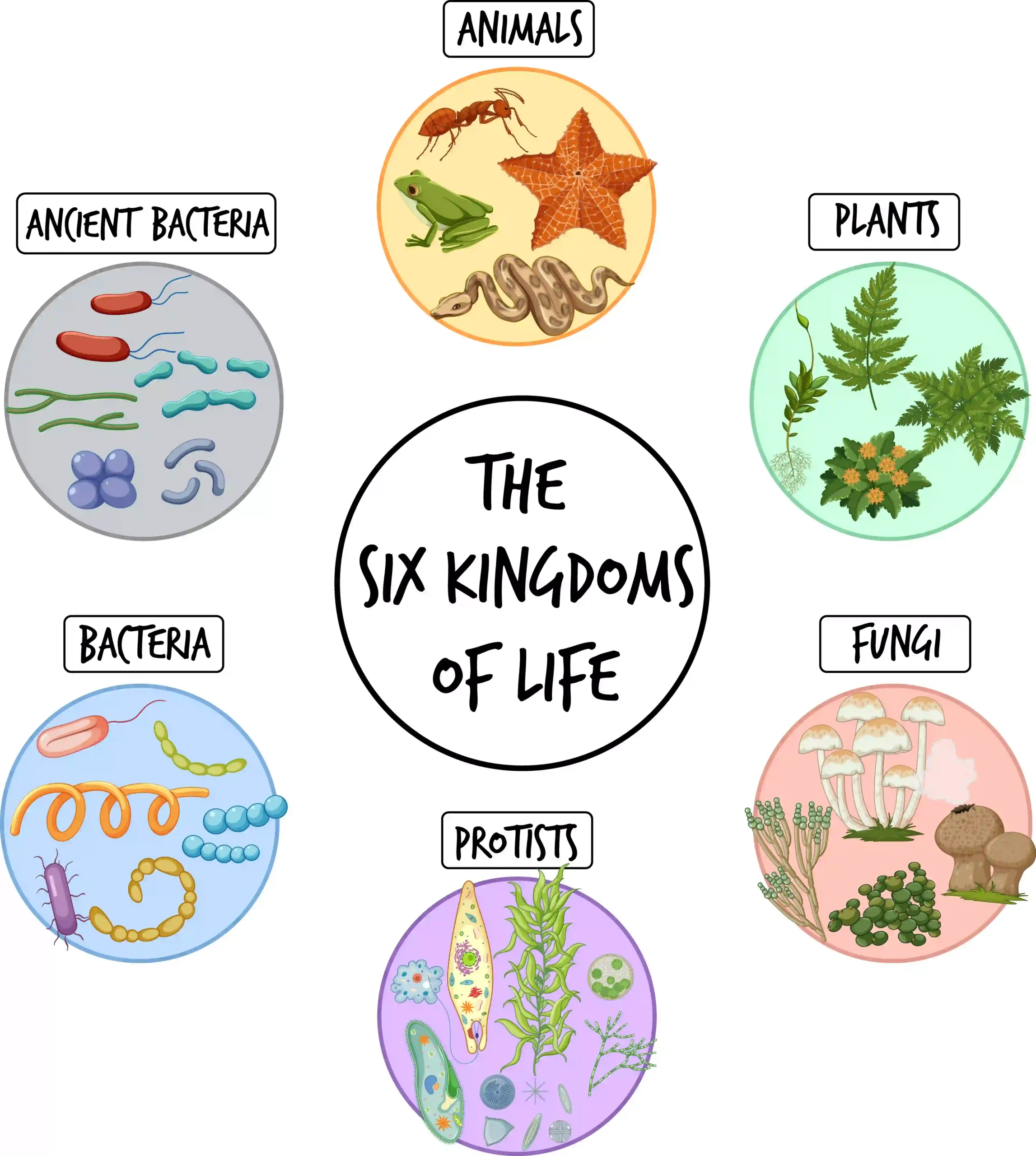
🌿 Plants play a central role in nature.
They prepare food using sunlight ☀️➡️🍃.
They release oxygen 🌬️.
They provide shelter 🏡 for animals.
📌 Without plants, food chains would collapse.
🐾 Animals help maintain balance in many ways.
Herbivores control plant growth 🌱➡️🐄.
Carnivores control herbivore population 🦁.
📌 This prevents overuse of resources.
🦠 Microorganisms are nature’s recyclers.
They decompose dead plants and animals ♻️.
📌 Nutrients return to soil, supporting new life 🌱.
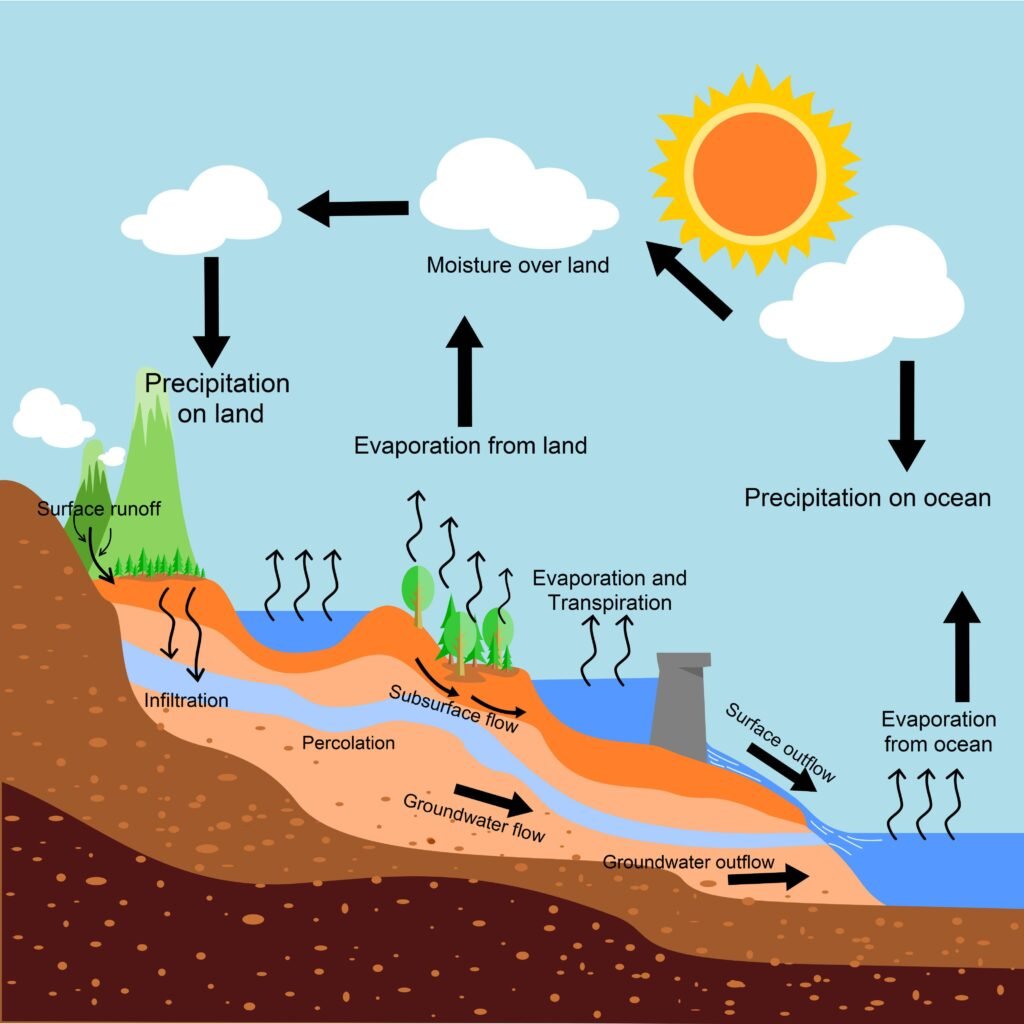
🌊 Water cycle shows harmony between land, water, and air.
Evaporation ☀️➡️💧🌬️
Condensation ☁️
Rainfall 🌧️
📌 This cycle supplies fresh water to all living beings.
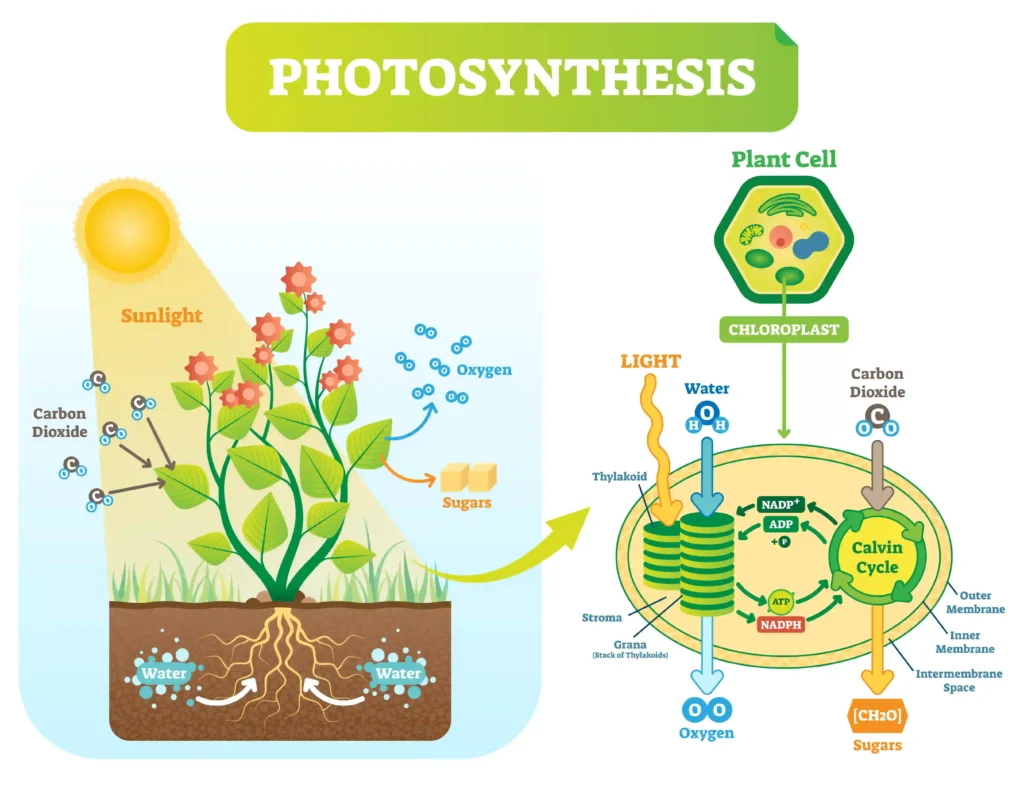
🌬️ Air connects all life forms.
Plants take in carbon dioxide 🌫️.
Animals take in oxygen 🌬️.
📌 Gas exchange maintains atmospheric balance.
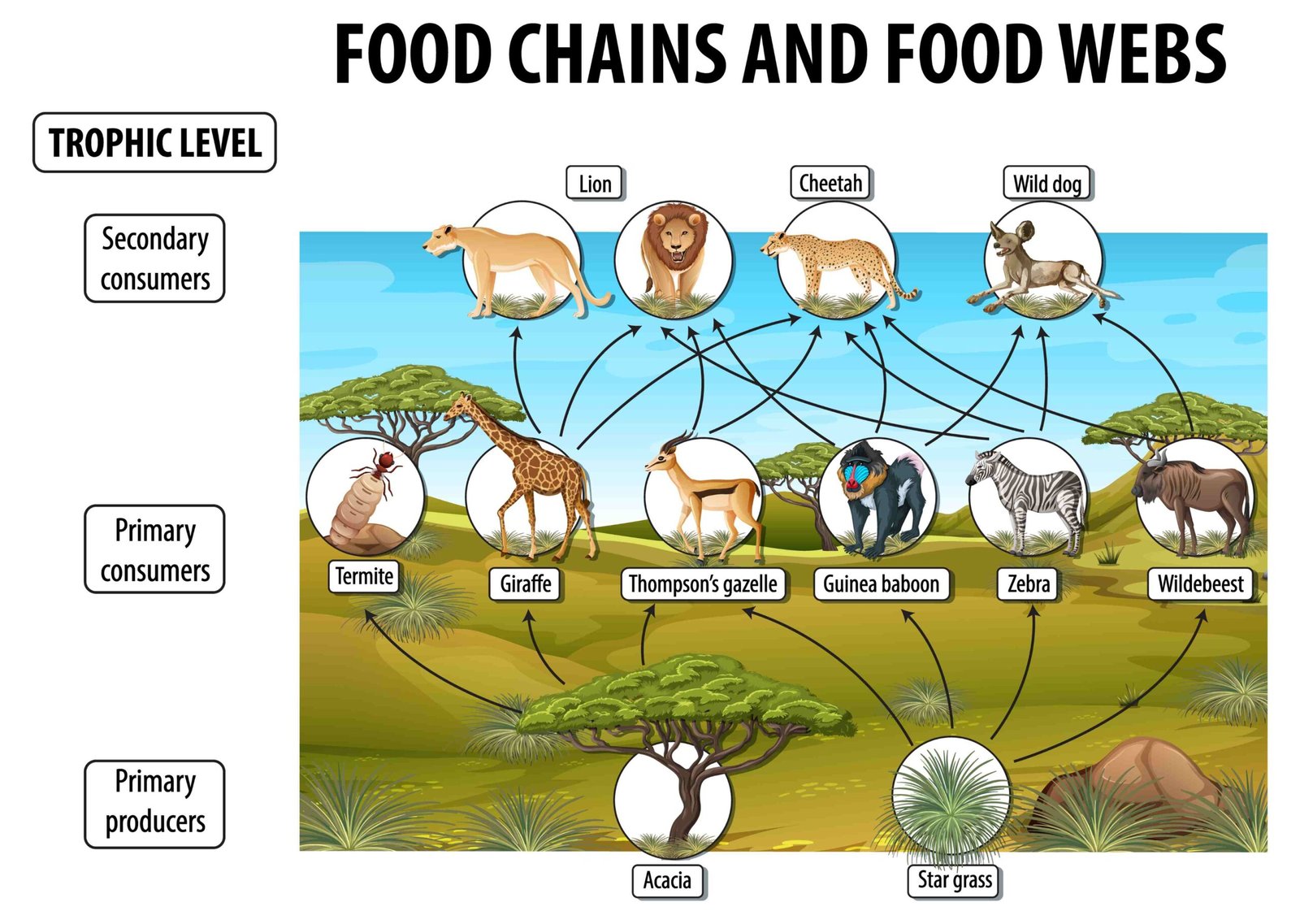
🌍 Food chains show energy flow in nature.
Sun ☀️ → plants 🌿 → animals 🐾
📌 Each level depends on the previous one.
🧭 Ecosystems are communities of living beings and their surroundings.
Ponds 🌊, forests 🌳, deserts 🏜️, and grasslands 🌾 are ecosystems.
📌 Every ecosystem has its own balance.
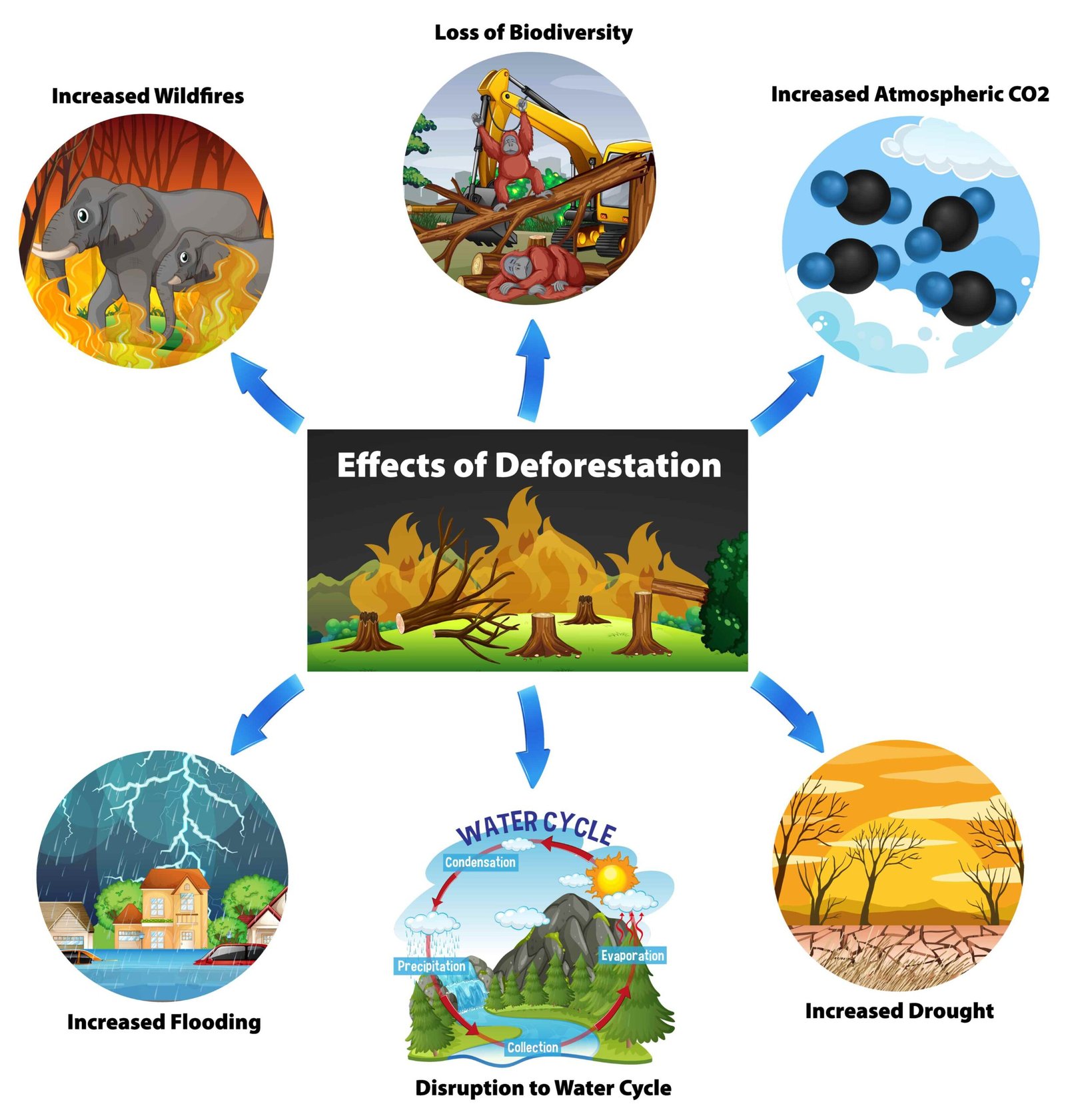
⚠️ Human activities can disturb natural harmony.
Deforestation 🌳❌
Pollution 🌫️
Overuse of resources ⛏️
📌 These actions cause imbalance.
🌱 Conservation helps restore harmony.
Planting trees 🌳
Saving water 💧
Reducing waste ♻️
📌 Responsible actions protect nature.
🌍 Natural disasters remind us of nature’s power.
Floods 🌊
Droughts 🌵
Storms 🌪️
📌 Respecting nature reduces damage.
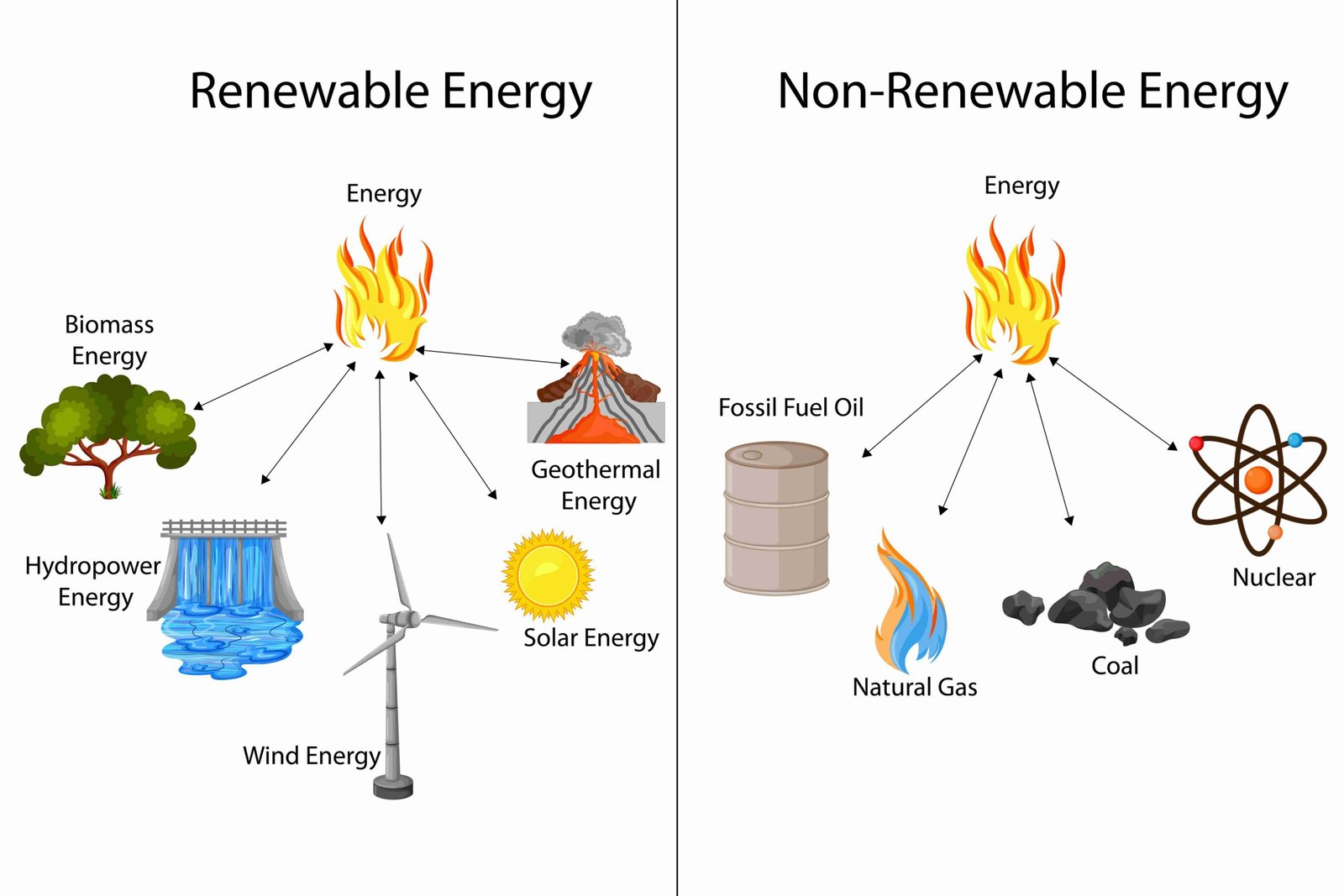
🧭 Sustainable living supports harmony.
Using renewable energy ⚡
Protecting wildlife 🐅
Reducing pollution 🌱
📌 Small actions create big impact.
🌿 Nature teaches cooperation and balance.
Every element has a role.
📜 Harmony in nature ensures survival of all life forms.
🚀 Understanding this harmony encourages respect, care, and responsibility toward Earth.
📝 Summary of the Lesson
Nature works as a balanced system where living and non-living components depend on one another. Plants, animals, microorganisms, air, water, and soil interact continuously to support life. Plants provide food and oxygen, animals regulate populations, and microorganisms recycle nutrients. Natural cycles such as the water cycle and food chains maintain stability. Human activities can disturb this balance, but conservation and sustainable practices help restore harmony. Understanding how nature works together encourages responsible behavior and environmental protection.
⚡ Quick Recap
⭐ Nature works as a connected system
⭐ Plants form the base of life
⭐ Animals regulate populations
⭐ Microorganisms recycle nutrients
⭐ Natural cycles maintain balance
⭐ Human actions affect harmony
⭐ Conservation protects nature
——————————————————————————————————————————————————————————————————————————–
TEXTBOOK QUESTIONS
🔒 ❓ Question 1
Refer to the given diagram (Fig. 12.19) and select the wrong statement.
📌 Answer:
🔴 Statement (iii) is wrong – “An ecosystem is part of a community.”
🔵 A population is a group of the same species.
🟣 A community includes many populations living together.
🟢 An ecosystem includes the community plus non-living components like air, water, and soil.
📌 Therefore, a community is part of an ecosystem, not the other way around.
🔒 ❓ Question 2
A population is part of a community. If all decomposers suddenly disappear from a forest ecosystem, what changes would occur? Explain why decomposers are essential.
📌 Answer:
🔵 Dead plants and animals would start accumulating.
🔴 Nutrients would not return to the soil.
🟣 Soil fertility would decrease over time.
🟢 Plants would grow poorly due to lack of minerals.
📌 Decomposers are essential because:
🟡 They break down dead matter into simpler substances.
🔵 They recycle nutrients back into the ecosystem.
🔴 They maintain balance and cleanliness in nature.
🔒 ❓ Question 3
Selvam shared that mangrove forests protected his village during the 2004 tsunami. Can mangroves protect villages? Explain.
📌 Answer:
🔵 Yes, mangrove forests protect coastal villages.
🟣 Their dense roots slow down strong sea waves.
🔴 They reduce the force of water and prevent erosion.
🟢 Mangroves act as a natural barrier against storms and tsunamis.
📌 Hence, villages near mangroves suffer less damage.
🔒 ❓ Question 4
Look at this food chain:
Grass → Grasshopper → Frog → Snake
If frogs disappear, what will happen to grasshoppers and snakes? Why?
📌 Answer:
🔵 Grasshopper population will increase rapidly.
🔴 Snakes will decrease due to lack of food.
🟣 Overpopulation of grasshoppers will damage grass.
🟢 This imbalance will disturb the entire ecosystem.
🔒 ❓ Question 5
Students noticed fewer butterflies in a school garden. What could be the reasons? What steps can be taken to increase butterflies?
📌 Answer:
🔵 Excessive use of pesticides kills butterflies and caterpillars.
🔴 Lack of flowering plants reduces nectar sources.
🟣 Pollution and habitat loss affect survival.
📌 Steps to increase butterflies:
🟢 Grow native flowering plants.
🟡 Avoid chemical pesticides.
🔵 Provide a clean, green environment.
🔒 ❓ Question 6
Why is it not possible to have an ecosystem with only producers and no consumers or decomposers?
📌 Answer:
🔵 Producers make food, but consumers control population balance.
🔴 Decomposers recycle nutrients back into soil.
🟣 Without decomposers, dead matter would pile up.
🟢 Without consumers, producers would overcrowd and die.
📌 All three are necessary for a stable ecosystem.
🔒 ❓ Question 7
Observe two places near your home or school. List living and non-living components. How do the ecosystems differ?
📌 Answer:
🔵 Park:
🟢 Living – trees, birds, insects
🟣 Non-living – soil, air, sunlight
🔴 Roadside:
🟡 Living – few plants, insects
🔵 Non-living – vehicles, dust, heat
📌 The park ecosystem is richer and more balanced than the roadside.
🔒 ❓ Question 8
“Human-made ecosystems like agricultural fields are necessary, but they must be sustainable.” Comment.
📌 Answer:
🔵 Agricultural fields provide food for humans.
🔴 Overuse of chemicals damages soil and water.
🟣 Sustainable farming conserves resources.
🟢 Crop rotation and organic methods protect ecosystems.
🔒 ❓ Question 9
If the Indian hare population drops due to disease, how will it affect other organisms?
📌 Answer:
🔵 Predators like foxes and eagles will decrease.
🔴 Grass and plants may increase initially.
🟣 Food web balance will be disturbed.
🟢 This shows all organisms are interconnected.
——————————————————————————————————————————————————————————————————————————–
OTHER IMPORTANT QUESTIONS
SECTION 1 — MCQs (5 Questions)
🔒 ❓ Q1. Which term describes interaction between living organisms and their environment?
🟢 1️⃣ Habitat
🔵 2️⃣ Ecosystem
🟡 3️⃣ Species
🟣 4️⃣ Population
✔️ Answer: 🔵 2️⃣ Ecosystem
💡 Explanation: An ecosystem includes living organisms and their physical surroundings interacting together.
🔒 ❓ Q2. Which organism prepares food in an ecosystem?
🟢 1️⃣ Consumer
🔵 2️⃣ Producer
🟡 3️⃣ Decomposer
🟣 4️⃣ Parasite
✔️ Answer: 🔵 2️⃣ Producer
💡 Explanation: Producers like green plants make food using sunlight.
🔒 ❓ Q3. Which organisms break down dead plants and animals?
🟢 1️⃣ Producers
🔵 2️⃣ Consumers
🟡 3️⃣ Decomposers
🟣 4️⃣ Herbivores
✔️ Answer: 🟡 3️⃣ Decomposers
💡 Explanation: Decomposers recycle nutrients back into the soil.
🔒 ❓ Q4. Which is the correct order of a food chain?
🟢 1️⃣ Carnivore → Producer → Herbivore
🔵 2️⃣ Producer → Herbivore → Carnivore
🟡 3️⃣ Herbivore → Producer → Carnivore
🟣 4️⃣ Producer → Carnivore → Herbivore
✔️ Answer: 🔵 2️⃣ Producer → Herbivore → Carnivore
💡 Explanation: Energy flows from producers to consumers.
🔒 ❓ Q5. What happens if decomposers disappear?
🟢 1️⃣ Food increases
🔵 2️⃣ Waste accumulates
🟡 3️⃣ Plants stop growing
🟣 4️⃣ Animals multiply
✔️ Answer: 🔵 2️⃣ Waste accumulates
💡 Explanation: Without decomposers, dead matter will not break down.
SECTION 2 — Very Short Answer (5 Questions)
(One or two words only)
🔒 ❓ Q6. Name the source of energy in an ecosystem.
📌 ✅ Answer: Sun
🔒 ❓ Q7. What do we call animals that eat plants?
📌 ✅ Answer: Herbivores
🔒 ❓ Q8. Name organisms that recycle nutrients.
📌 ✅ Answer: Decomposers
🔒 ❓ Q9. What is a chain showing transfer of energy called?
📌 ✅ Answer: Food chain
🔒 ❓ Q10. Name one decomposer.
📌 ✅ Answer: Bacteria
SECTION 3 — Short Answer (3 Questions)
(About 40–50 words)
🔒 ❓ Q11. Why are producers important in an ecosystem?
📌 ✅ Answer:
🔹 Producers prepare food using sunlight.
🔸 They form the base of all food chains.
🔹 All living organisms depend directly or indirectly on producers for energy.
🔒 ❓ Q12. How do decomposers maintain balance in nature?
📌 ✅ Answer:
🔹 Decomposers break down dead plants and animals.
🔸 They return nutrients to the soil.
🔹 This helps plants grow and keeps the ecosystem balanced.
🔒 ❓ Q13. What is the role of consumers in an ecosystem?
📌 ✅ Answer:
🔹 Consumers depend on other organisms for food.
🔸 They transfer energy from one level to another.
🔹 Consumers help control population size in nature.
SECTION 4 — Long Answer (1 Question)
(About 70–80 words)
🔒 ❓ Q14. Explain how living organisms depend on each other in nature.
📌 ✅ Answer:
🔹 Living organisms are connected through food chains and food webs.
🔸 Plants prepare food and provide energy to animals.
🔹 Herbivores and carnivores depend on plants and other animals.
🔸 Decomposers recycle nutrients by breaking down dead matter.
🔹 This interdependence maintains balance and harmony in nature.
——————————————————————————————————————————————————————————————————————————–
ADVANCE KNOWLEDGE
🌍 Nature Is Not Random — It Is Perfectly Coordinated
Nature looks wild and unpredictable, yet beneath this appearance lies an extraordinary order. Forests, rivers, oceans, atmosphere, plants, animals, and microorganisms are not separate systems. They are interconnected parts of one living network, where every action creates a reaction.
🧠 Big idea:
Nature does not work in isolation — it works through balance, cooperation, and feedback.
🔄 The Idea of Harmony in Nature
Harmony means:
Different components working together
No single part dominating permanently
Constant adjustment and self-correction
⭐ Nature survives because it balances extremes, not because it avoids change.
🌱 Producers, Consumers, and Decomposers
Life on Earth is organized into roles.
🌿 Producers
Plants and algae
Convert sunlight into food
🐾 Consumers
Animals that eat plants or other animals
🦠 Decomposers
Bacteria and fungi
Break down dead matter
🧠 Without decomposers, nutrients would remain locked forever.
⚠️ Misconception vs Reality
⚠️ Misconception: Only plants and animals matter
✅ Reality: Microorganisms are essential for balance
⚠️ Misconception: Humans are outside nature
✅ Reality: Humans are part of nature, not rulers over it
🔗 Food Chains and Food Webs
Energy moves through nature in patterns.
🧠 Food chain
Single pathway of energy flow
🧠 Food web
Multiple interconnected chains
⭐ Food webs make ecosystems stable and resilient.
🧠 If one species disappears, others adjust.
🌞 Energy Flow: One-Way Journey
Energy enters ecosystems through sunlight.
🌞 Sun → Plants → Animals → Environment
⭐ Energy flows in one direction and cannot be recycled.
🧠 Matter recycles; energy does not.
🔄 Cycles That Keep Earth Alive
Nature runs on cycles.
🌍 Water cycle
Evaporation, condensation, rainfall
🌍 Carbon cycle
Photosynthesis, respiration
🌍 Nitrogen cycle
Soil bacteria convert nitrogen
⭐ Cycles prevent waste accumulation.
🌊 Atmosphere, Hydrosphere, Lithosphere
Earth’s systems work together.
🌬️ Atmosphere → air and climate
🌊 Hydrosphere → water bodies
🪨 Lithosphere → land and soil
🧠 A change in one system affects all others.
🧬 Role of Microorganisms
Microbes are nature’s hidden managers.
🧠 They:
Decompose waste
Recycle nutrients
Maintain soil fertility
⭐ Nature depends more on microbes than on large animals.
🐝 Interdependence Among Living Beings
No organism survives alone.
🧠 Examples:
Bees pollinate plants
Plants feed animals
Animals spread seeds
⭐ Cooperation is more powerful than competition.
⚠️ When Harmony Breaks
Human activity can disturb balance.
⚠️ Causes:
Deforestation
Pollution
Overexploitation
🧠 Disturbance leads to:
Climate change
Species extinction
Ecosystem collapse
🌍 Climate: A Delicate Balance
Climate depends on natural harmony.
🧠 Balance between:
Solar energy
Greenhouse gases
Ocean currents
⭐ Small imbalances can cause large climate shifts.
🚀 Modern Science: Studying Ecosystem Balance
🚀 Scientists use:
Satellites
Climate models
Biodiversity surveys
🧠 This helps:
Predict changes
Protect ecosystems
Restore balance
🌱 Humans: Problem and Solution
Humans have the power to harm—and to heal.
🧠 Positive actions:
Conservation
Sustainable development
Renewable energy
⭐ Intelligence brings responsibility.
🌌 Harmony Beyond Earth
Scientists search for harmony on other planets.
🌌 Signs include:
Water presence
Energy sources
Stable conditions
🧠 Life needs balance everywhere in the universe.
⭐ Amazing Harmony Facts
⭐ Forests regulate rainfall
⭐ Oceans absorb excess heat
⭐ One species can affect entire ecosystems
⭐ Nature recovers if given time
🧠 Why Curious Minds Must Study Harmony
This topic teaches:
Systems thinking
Responsibility
Long-term vision
🧠 It shows that survival depends on understanding connections, not control.
🌟 Final Thought
Nature does not shout.
Nature adjusts.
Nature balances.
🧠 To understand harmony in nature is to understand how life survives on a fragile planet.
——————————————————————————————————————————————————————————————————————————–