
Class 8 : Science – ( English ) : Lesson 11. Keeping Time with the Skies

EXPLANATION AND ANALYSIS
🧭 Since ancient times, humans have looked up at the sky to understand time.
The regular movements of the Sun ☀️, Moon 🌙, and stars ✨ helped people measure days, months, and years long before clocks were invented.
🔍 Nature itself acted as the first clock, guiding farming 🌾, travel 🧭, festivals 🎉, and daily activities.
☀️ The Sun is the most important natural timekeeper.
The rising and setting of the Sun divide the day into day 🌅 and night 🌃.
📌 One complete rotation of the Earth causes one day.
🌞 The changing position of the Sun in the sky helps estimate time.
Long shadows in the morning 🌄
Shortest shadow at noon 🕛
Long shadows again in the evening 🌇
🕰️ This observation led to the invention of the sundial.
🪵 A sundial works using the shadow of an object.
As the Sun moves, the shadow shifts ⏳.
📌 Sundials work only during daylight and clear weather.
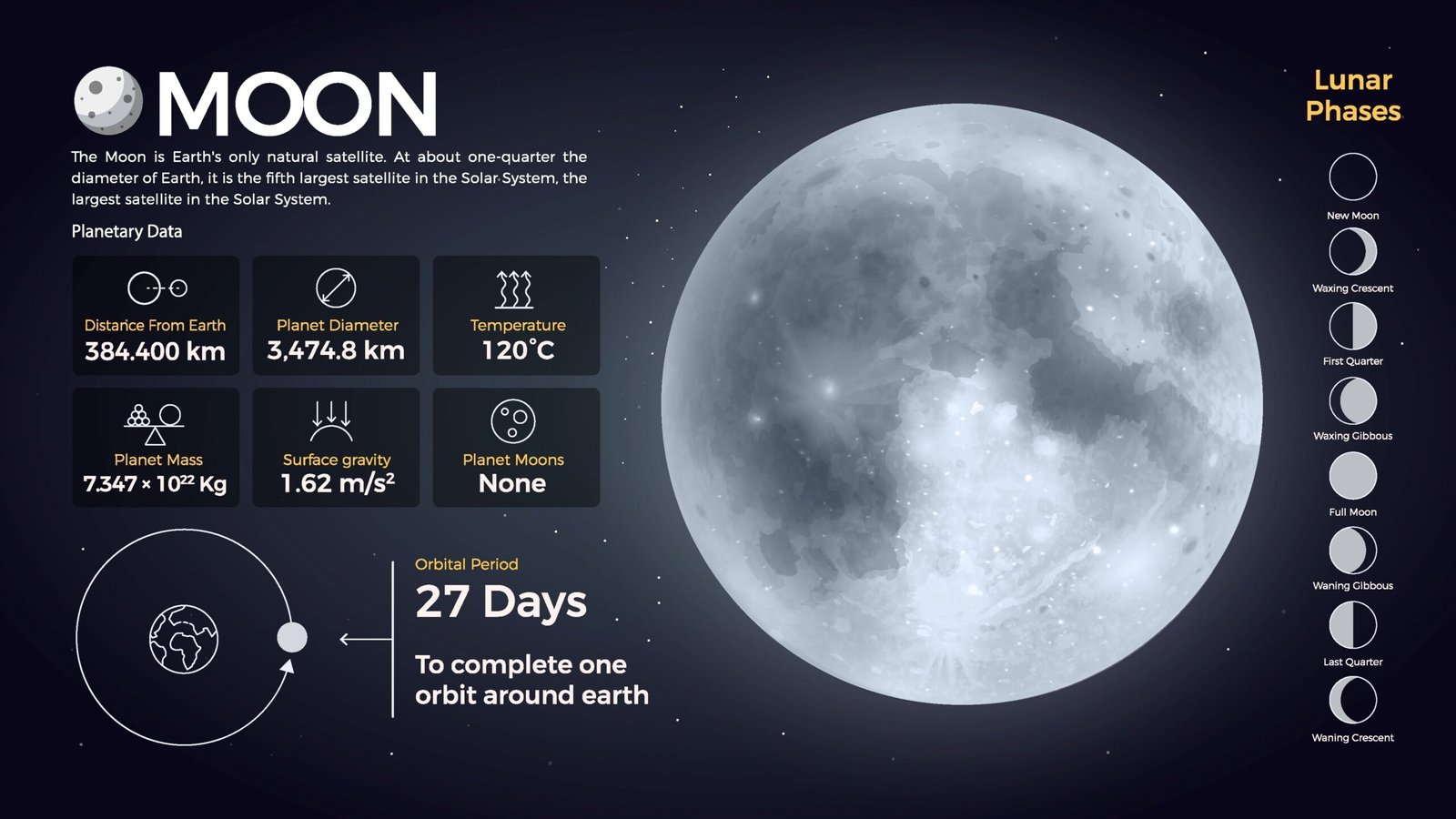
🌙 The Moon also helps in measuring time.
The Moon does not produce its own light.
It reflects sunlight ✨.
🔄 As the Moon revolves around the Earth, its visible shape changes.
🌑➡️🌕 These changing shapes are called phases of the Moon.
New Moon
Crescent
Half Moon
Full Moon
📌 One complete cycle of phases forms a month.
🌌 Stars appear fixed in the night sky.
Their apparent movement is due to Earth’s rotation.
🧭 Ancient travelers used stars for navigation and time estimation.
✨ Certain star patterns, called constellations, were used as sky markers.
They helped identify seasons 🍂🌸 and direction.
📜 Early calendars were based on sky observations.
Solar calendars used the Sun ☀️.
Lunar calendars used the Moon 🌙.
📅 Modern calendars combine both movements.
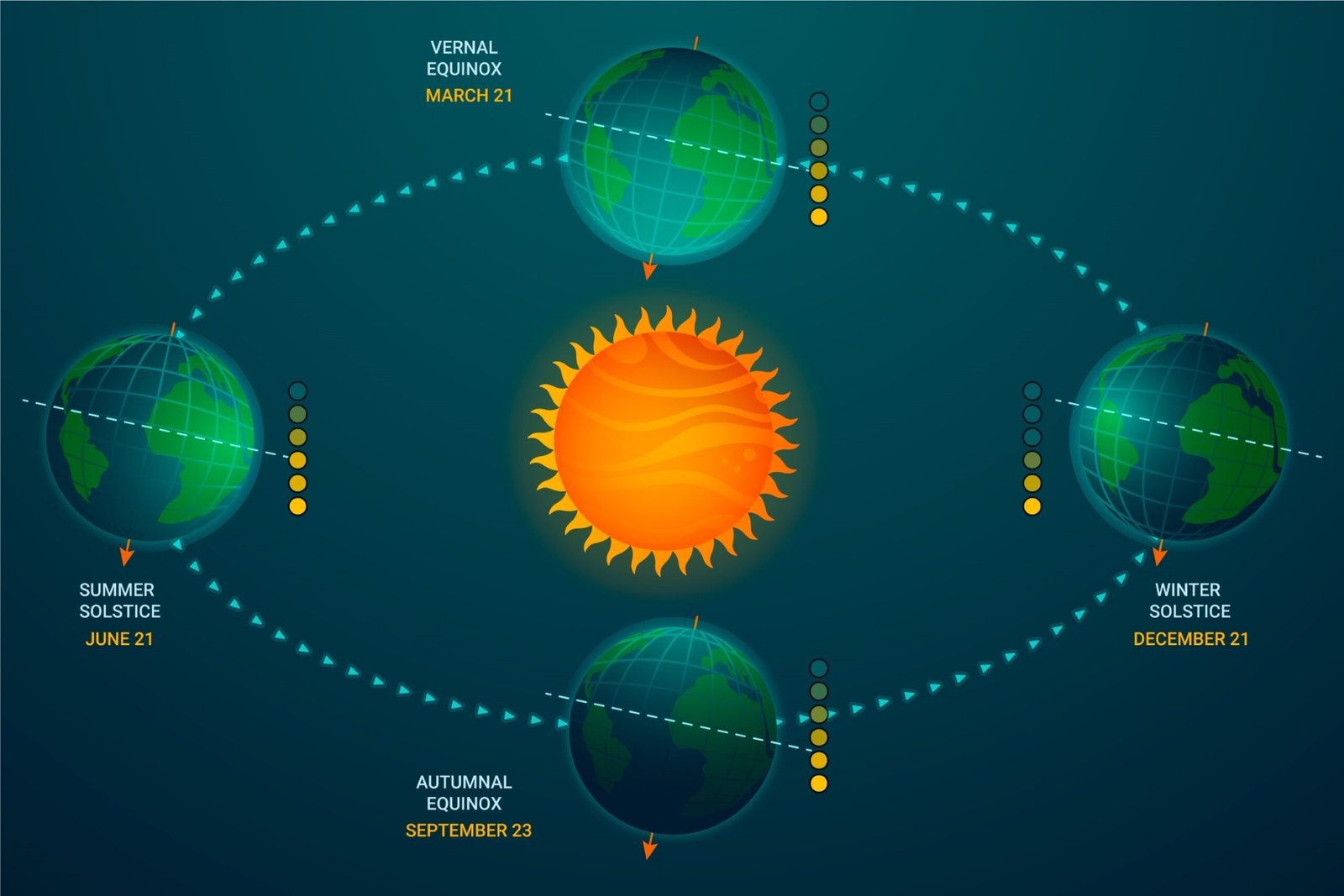
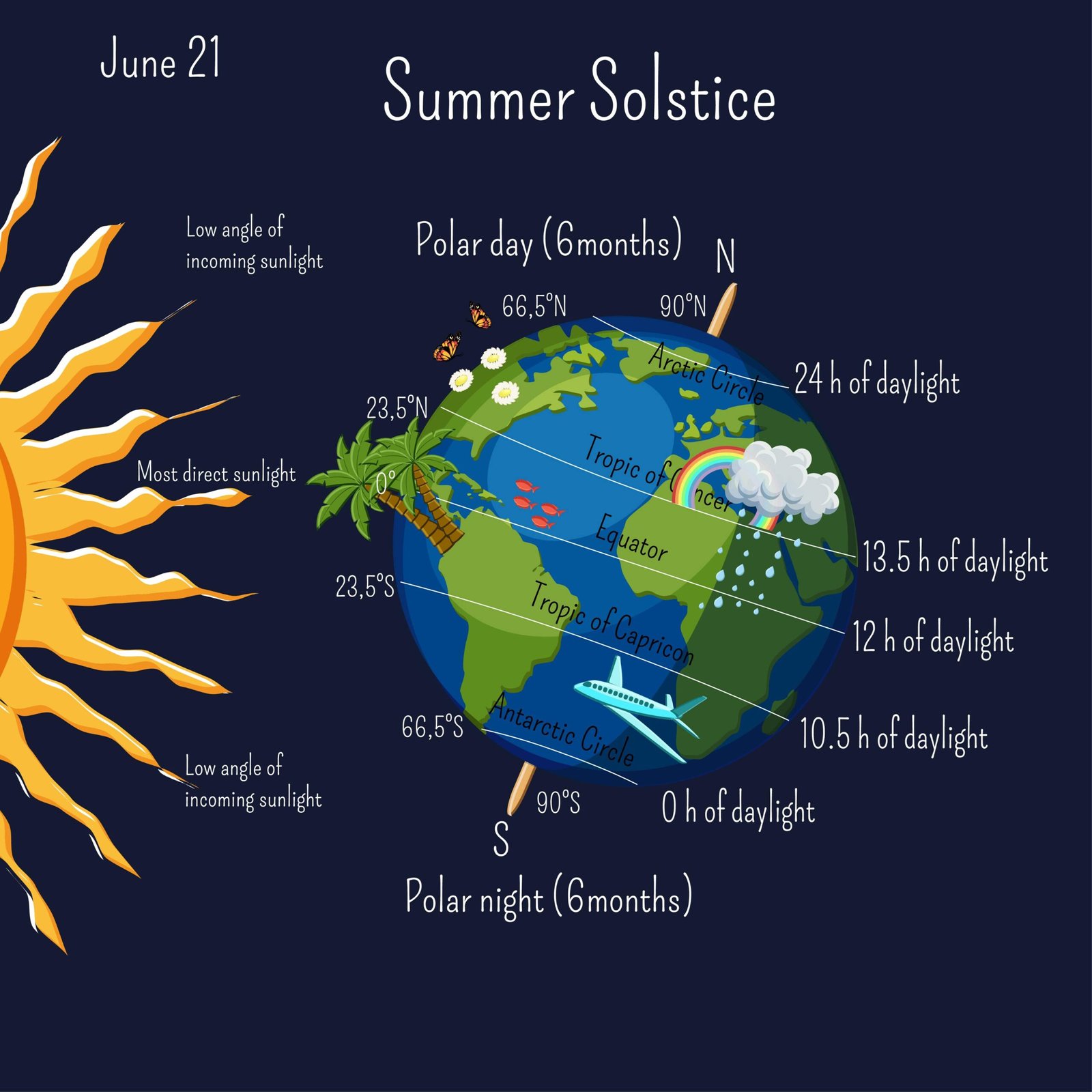
🌍 Seasons are also connected to the sky.
They occur due to Earth’s tilted axis and its revolution around the Sun.
☀️ More sunlight → summer
❄️ Less sunlight → winter
🧭 Measuring time using the sky helped early civilizations grow.
Farming cycles 🌾
Religious events 🛕
Social planning 👥
🔍 Sky-based timekeeping brought order to human life.
⏱️ With scientific progress, natural observations were replaced by accurate clocks.
Mechanical clocks 🕰️
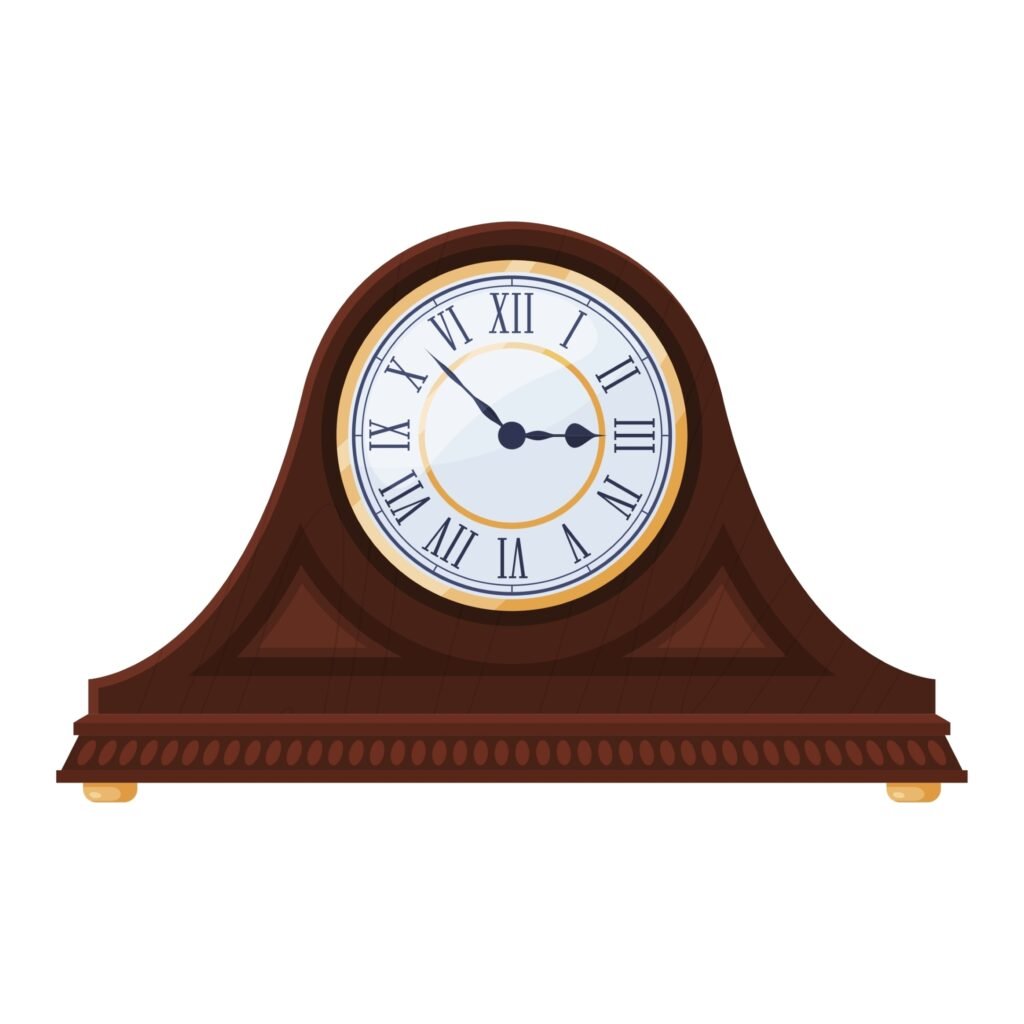
Quartz clocks ⌚
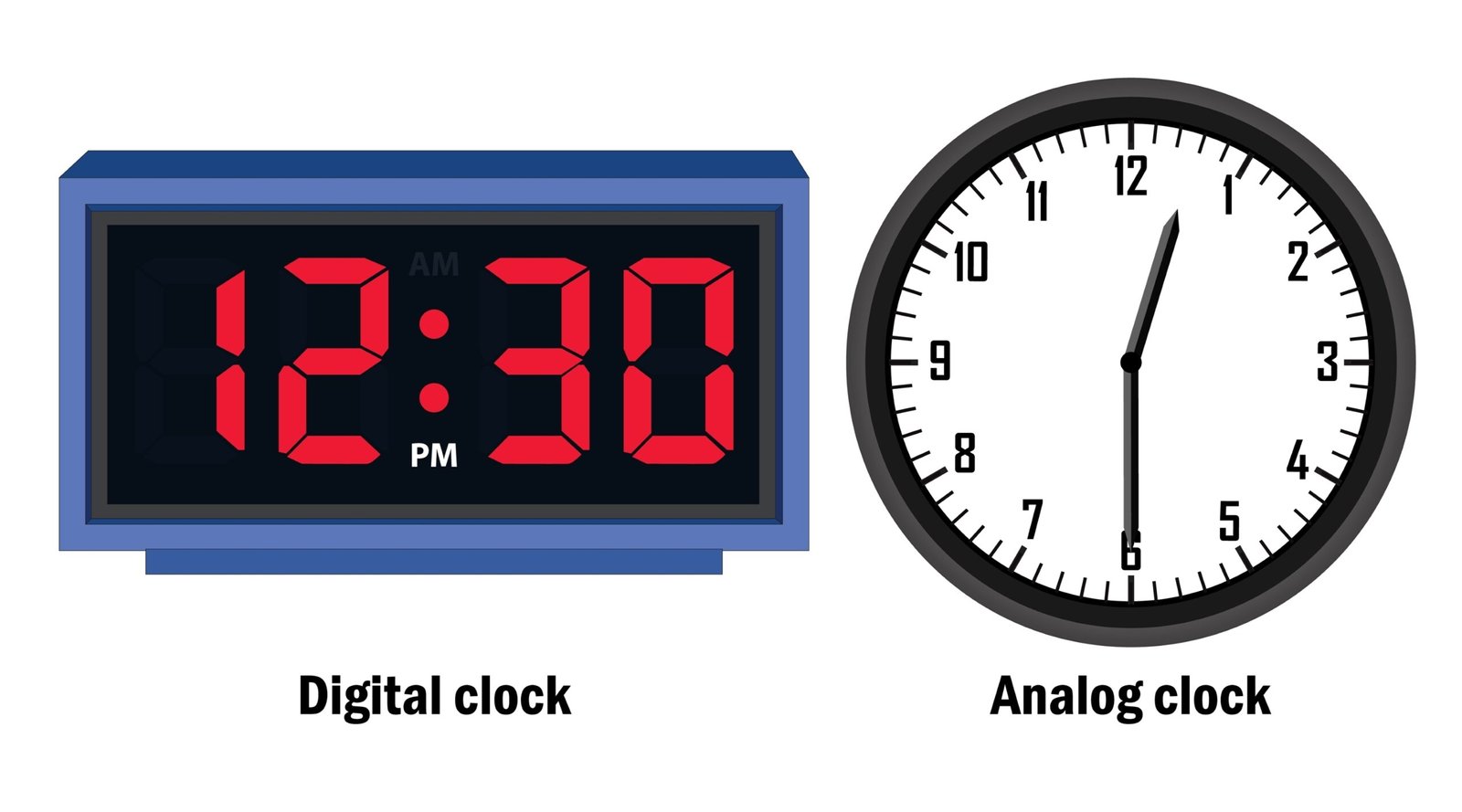
Atomic clocks ⚛️
📌 Yet, these devices are still based on Earth’s motion.
🌍 Even today, the sky remains our ultimate reference.
Days, months, and years are all linked to celestial movements.
✨ Nature continues to guide time.
📜 Keeping time with the skies shows the deep connection between humans and the universe.
From shadows to stars, the sky has always been our guide.
🚀 Understanding this connection builds respect for nature and science.
📝 Summary of the Lesson
Humans have measured time by observing the sky since ancient times. The Sun helps determine day and night and inspired the sundial. The Moon’s changing phases form the basis of months, while stars and constellations helped early people track time and direction. Calendars were developed using solar and lunar movements. Seasons occur due to Earth’s tilted axis and revolution around the Sun. Although modern clocks are highly accurate, they are still based on Earth’s natural movements. The sky remains the foundation of timekeeping.
⚡ Quick Recap
⭐ Sky was the first clock
⭐ Sun shows day and night
⭐ Shadows helped measure time
⭐ Moon phases form months
⭐ Stars guided navigation
⭐ Seasons depend on Sun and Earth
⭐ Modern time comes from sky motion
——————————————————————————————————————————————————————————————————————————–
TEXTBOOK QUESTIONS
🔒 ❓ Question 1
State whether the following statements are True or False.
📌 Answer:
🔵 (i) We can only see that part of the Moon which reflects sunlight towards us.
📌 True
🟣 The Moon does not produce its own light; we see only the illuminated portion.
🔴 (ii) The shadow of Earth blocks sunlight from reaching the Moon causing phases.
📌 False
🟢 Moon phases are caused by its position relative to the Sun and Earth, not Earth’s shadow.
🟡 (iii) Calendars are based on various astronomical cycles which repeat predictably.
📌 True
🔵 Motions of Earth and Moon follow fixed, repeating cycles.
🟣 (iv) The Moon can only be seen at night.
📌 False
🔴 The Moon is often visible during the daytime as well.
🔒 ❓ Question 2
Amol was born on 6th May on a full Moon day. Does his birthday fall on the full Moon day every year? Explain.
📌 Answer:
🔵 No, his birthday does not fall on a full Moon day every year.
🟢 A full Moon occurs about every 29.5 days, not exactly after one year.
🟣 The calendar year has 365 days, which does not match the Moon’s cycle.
🔴 Therefore, Moon phases shift each year with respect to calendar dates.
🔒 ❓ Question 3
Name two things that are incorrect in Fig. 11.10.
📌 Answer:
🔵 The Moon is shown shining by itself, which is incorrect.
🔴 The Moon’s shape is wrongly shown as fully dark on one side.
🟣 The Moon shines only due to reflected sunlight.
🟢 Half of the Moon is always illuminated by the Sun.
🔒 ❓ Question 4
Look at the pictures of the Moon in Fig. 11.11 and answer the following.
🔒 ❓ (i) Write the correct panel number corresponding to the phases of the Moon.
📌 Answer:
🔵 Three days after New Moon → Panel C
🔴 Full Moon → Panel E
🟣 Three days after Full Moon → Panel F
🟢 A week after Full Moon → Panel D
🟡 Day of New Moon → Panel B
🔒 ❓ (ii) List the picture labels of the phases of the Moon that are never seen from Earth.
📌 Answer:
🔵 None of the shown phases are hidden from Earth.
🟣 We always see the same face of the Moon due to synchronous rotation.
🔴 Only the far side of the Moon is never visible, not a phase.
🔒 ❓ Question 5
Malini saw the Moon overhead in the sky at sunset.
🔒 ❓ (i) Draw the phase of the Moon that Malini saw.
🔒 ❓ (ii) Is the Moon in the waxing or waning phase?
📌 Answer:
🔵 The Moon seen overhead at sunset is a First Quarter Moon.
🟣 Half of the Moon appears illuminated.
📌 (ii) The Moon is in the waxing phase.
🔴 Waxing means the illuminated portion is increasing day by day.
🔒 ❓ Question 6
Ravi saw a crescent Moon rising in the East at sunset. Kaushalya saw a gibbous Moon during the afternoon in the East. Who is correct?
📌 Answer:
🔵 Ravi is correct.
🟣 A crescent Moon rises close to sunset in the East.
🔴 A gibbous Moon cannot be seen rising in the East during afternoon.
🔒 ❓ Question 7
Scientific studies show that the Moon is getting farther from Earth and slower in revolution. Will luni-solar calendars need an intercalary month more often or less often?
📌 Answer:
🔵 Intercalary months will be needed less often.
🟣 A slower Moon means longer lunar months.
🔴 The gap between lunar and solar calendars reduces gradually.
🔒 ❓ Question 8
A total of 37 full Moons happen during 3 years in a solar calendar. Show that at least two full Moons occur in the same month.
📌 Answer:
🔵 3 solar years ≈ 36.5 lunar months
🟣 But 37 full Moons occur
🔴 Hence, at least one month must contain two full Moons
🔒 ❓ Question 9
On a particular night, Vaishali saw the Moon in the sky from sunset to sunrise. What phase was it?
📌 Answer:
🔵 The Moon was in the Full Moon phase.
🟣 Full Moon rises at sunset and sets at sunrise.
🔒 ❓ Question 10
If leap years stopped, in approximately how many years would Independence Day occur in winter?
📌 Answer:
🔵 Every year would shift by about 6 hours.
🟣 Seasons would shift by 1 day every 4 years.
🔴 In about 700 years, Independence Day would fall in winter.
🔒 ❓ Question 11
What is the purpose of launching artificial satellites?
📌 Answer:
🔵 Communication and television transmission
🔴 Weather forecasting
🟣 Navigation and GPS services
🟢 Scientific research and Earth observation
🔒 ❓ Question 12
On which periodic phenomenon are the following measures of time based?
(i) day (ii) month (iii) year
📌 Answer:
🔵 Day → Rotation of Earth on its axis
🔴 Month → Revolution of Moon around Earth
🟣 Year → Revolution of Earth around the Sun
——————————————————————————————————————————————————————————————————————————–
OTHER IMPORTANT QUESTIONS
SECTION 1 — MCQs (5 Questions)
🔒 ❓ Q1. Which celestial motion helped early humans measure time?
🟢 1️⃣ Earth’s earthquakes
🔵 2️⃣ Sun’s apparent movement
🟡 3️⃣ Ocean tides only
🟣 4️⃣ Wind direction
✔️ Answer: 🔵 2️⃣ Sun’s apparent movement
💡 Explanation: The Sun’s daily path helped track day length and time of day.
🔒 ❓ Q2. Which device uses the Sun’s shadow to tell time?
🟢 1️⃣ Hourglass
🔵 2️⃣ Sundial
🟡 3️⃣ Stopwatch
🟣 4️⃣ Pendulum clock
✔️ Answer: 🔵 2️⃣ Sundial
💡 Explanation: A sundial reads time by the position of a shadow cast by sunlight.
🔒 ❓ Q3. Which motion of Earth causes day and night?
🟢 1️⃣ Revolution
🔵 2️⃣ Rotation
🟡 3️⃣ Oscillation
🟣 4️⃣ Translation
✔️ Answer: 🔵 2️⃣ Rotation
💡 Explanation: Rotation on Earth’s axis creates alternating day and night.
🔒 ❓ Q4. Which time unit is based on Earth’s revolution around the Sun?
🟢 1️⃣ Day
🔵 2️⃣ Hour
🟡 3️⃣ Year
🟣 4️⃣ Second
✔️ Answer: 🟡 3️⃣ Year
💡 Explanation: One revolution of Earth around the Sun defines a year.
🔒 ❓ Q5. Which natural event helped mark months traditionally?
🟢 1️⃣ Seasons
🔵 2️⃣ Moon phases
🟡 3️⃣ Eclipses
🟣 4️⃣ Meteors
✔️ Answer: 🔵 2️⃣ Moon phases
💡 Explanation: Repeating lunar phases were used to define months.
SECTION 2 — Very Short Answer (5 Questions)
(One or two words only)
🔒 ❓ Q6. Name the instrument that tells time using shadows.
📌 ✅ Answer: Sundial
🔒 ❓ Q7. Which motion causes seasons?
📌 ✅ Answer: Revolution
🔒 ❓ Q8. Name the natural satellite used to track months.
📌 ✅ Answer: Moon
🔒 ❓ Q9. What causes day and night?
📌 ✅ Answer: Rotation
🔒 ❓ Q10. Name the unit based on Earth’s rotation.
📌 ✅ Answer: Day
SECTION 3 — Short Answer (3 Questions)
(About 40–50 words)
🔒 ❓ Q11. How did early humans measure time using the sky?
📌 ✅ Answer:
🔹 They observed the Sun’s position to judge daytime.
🔸 Shadows helped estimate hours using sundials.
🔹 Moon phases were used to count months and seasons.
🔒 ❓ Q12. Why is a sundial not useful at night or on cloudy days?
📌 ✅ Answer:
🔹 A sundial works only with sunlight.
🔸 At night there is no Sun.
🔹 Clouds block sunlight, so no clear shadow is formed.
🔒 ❓ Q13. How are day, month, and year related to Earth–Moon–Sun motions?
📌 ✅ Answer:
🔹 Day depends on Earth’s rotation.
🔸 Month is linked to Moon’s phases.
🔹 Year is based on Earth’s revolution around the Sun.
SECTION 4 — Long Answer (1 Question)
(About 70–80 words)
🔒 ❓ Q14. Explain how celestial movements help in keeping time.
📌 ✅ Answer:
🔹 Timekeeping began with observing the sky.
🔸 Earth’s rotation causes day and night, forming the basis of a day.
🔹 The Moon’s repeating phases help define months.
🔸 Earth’s revolution around the Sun determines a year and seasons.
🔹 Devices like sundials used shadows to divide daytime.
🔹 Thus, celestial motions provide natural time units.
——————————————————————————————————————————————————————————————————————————–
ADVANCE KNOWLEDGE
🌌 The Sky: Humanity’s First Clock
Long before watches, calendars, or smartphones, humans looked upward. The sky was the first laboratory, and celestial motions were the first timekeepers. The regular movement of the Sun, Moon, and stars taught humans how to measure time, seasons, and life itself.
🧠 Big idea:
Timekeeping began not on Earth, but in the sky.
🌞 The Sun: The Original Time Marker
The Sun’s daily motion gave humans the idea of a day.
🧠 Observations:
Sunrise → beginning of day
Sunset → end of day
Shadow movement → passage of time
⭐ Sundials were humanity’s first scientific clocks.
🧠 Shadows shorten and lengthen because Earth rotates—not because the Sun moves around us.
⚠️ Misconception vs Reality
⚠️ Misconception: The Sun moves across the sky
✅ Reality: Earth rotates, creating apparent motion of the Sun
⚠️ Misconception: Days are always equal
✅ Reality: Day length changes with seasons and latitude
🌙 The Moon: Nature’s Monthly Clock
The Moon gave humans the concept of a month.
🧠 Moon phases repeat in a regular cycle:
New Moon
Full Moon
Back to New Moon
⭐ This cycle helped ancient civilizations:
Plan agriculture
Fix festivals
Track seasons
🧠 Lunar calendars still guide many cultures today.
⭐ Stars: The Night-Time Clock
Stars appear fixed relative to each other.
🧠 Key insight:
Star positions change with time of night
Seasonal star patterns repeat yearly
⭐ Ancient sailors navigated oceans using stars.
🧠 Constellations acted as celestial signboards.
🌍 Earth’s Motions: The Hidden Mechanism
All sky-based timekeeping depends on Earth’s motion.
🌍 Earth rotates → day and night
🌍 Earth revolves → year and seasons
🧠 Time is measured by motion, not by clocks.
⏳ Seasons: The Long Clock
Seasons are Earth’s annual time signal.
🧠 Cause:
Tilt of Earth’s axis
Changing sunlight angle
⭐ Seasons helped humans:
Decide farming cycles
Predict climate patterns
🧠 Calendars were born from seasonal observation.
🌌 Ancient Calendars: Sky-Based Mathematics
Early calendars were astronomical.
⏳ Examples:
Solar calendars (Sun-based)
Lunar calendars (Moon-based)
Lunisolar calendars (Sun + Moon)
⭐ Every calendar is a compromise between sky cycles.
⚠️ The Calendar Problem
Sky cycles do not fit neatly.
🧠 Problems:
Moon month ≠ exact fraction of year
Extra days accumulate
⭐ Leap years were invented to correct sky–Earth mismatch.
🧠 Calendar-making is applied astronomy.
🕰️ From Sky to Clock
As societies advanced, timekeeping moved indoors.
🧠 Transition:
Sky observation → mechanical clocks
Mechanical → electronic → atomic clocks
⭐ Yet all modern clocks are calibrated using astronomical time.
🌍 Sky Time and Geography
Time depends on location.
🧠 Earth rotates 360° in 24 hours
⭐ Different longitudes experience time differently
🧠 This led to:
Time zones
Standard time
⭐ Without sky-based time zones, global communication would fail.
🚀 Modern Astronomy and Time
🚀 Today scientists use:
Atomic clocks
Satellite timing
Pulsars (rotating neutron stars)
⭐ Pulsars are among the most accurate natural clocks in the universe.
🧠 Space missions rely on sky-based time accuracy.
🌌 Time Beyond Earth
Other planets keep time differently.
🌌 Examples:
Mars day ≈ 24.6 hours
Jupiter day ≈ 10 hours
🧠 Timekeeping depends on planetary rotation.
⭐ Future space colonies will need new calendars.
⚠️ Losing the Sky Clock
Modern life hides the sky.
⚠️ Effects:
Loss of seasonal awareness
Disconnection from natural rhythms
🧠 Science reminds us that time is natural before it is digital.
⭐ Amazing Sky-Time Facts
⭐ A year is not exactly 365 days
⭐ Some stars act as cosmic clocks
⭐ Atomic clocks reset Earth’s official time
⭐ The sky never repeats exactly—but comes very close
🧠 Why Curious Minds Must Study Sky Time
This topic teaches:
Observation skills
Pattern recognition
Astronomy basics
History of science
🧠 It connects science with culture, history, and daily life.
🌟 Final Thought
Clocks tick.
Calendars change.
But the sky moves with perfect patience.
🧠 To understand time, we must remember where timekeeping truly began — above our heads.
——————————————————————————————————————————————————————————————————————————–