
Class 8 : Science – ( English ) : Lesson 4. Electricity: Magnetic and Heating Effects

EXPLANATION AND ANALYSIS
🧭 Electricity is a powerful form of energy that plays an important role in our daily life.
Lights 💡, fans 🌀, mobile phones 📱, heaters 🔥, and machines ⚙️ all work using electricity. Understanding how electric current behaves helps us use electricity safely and efficiently.
🧠 When electric current flows through a device, it can produce heat or magnetic effects.
These effects are useful in many appliances we use every day.
🔍 Studying these effects explains how electrical devices function.
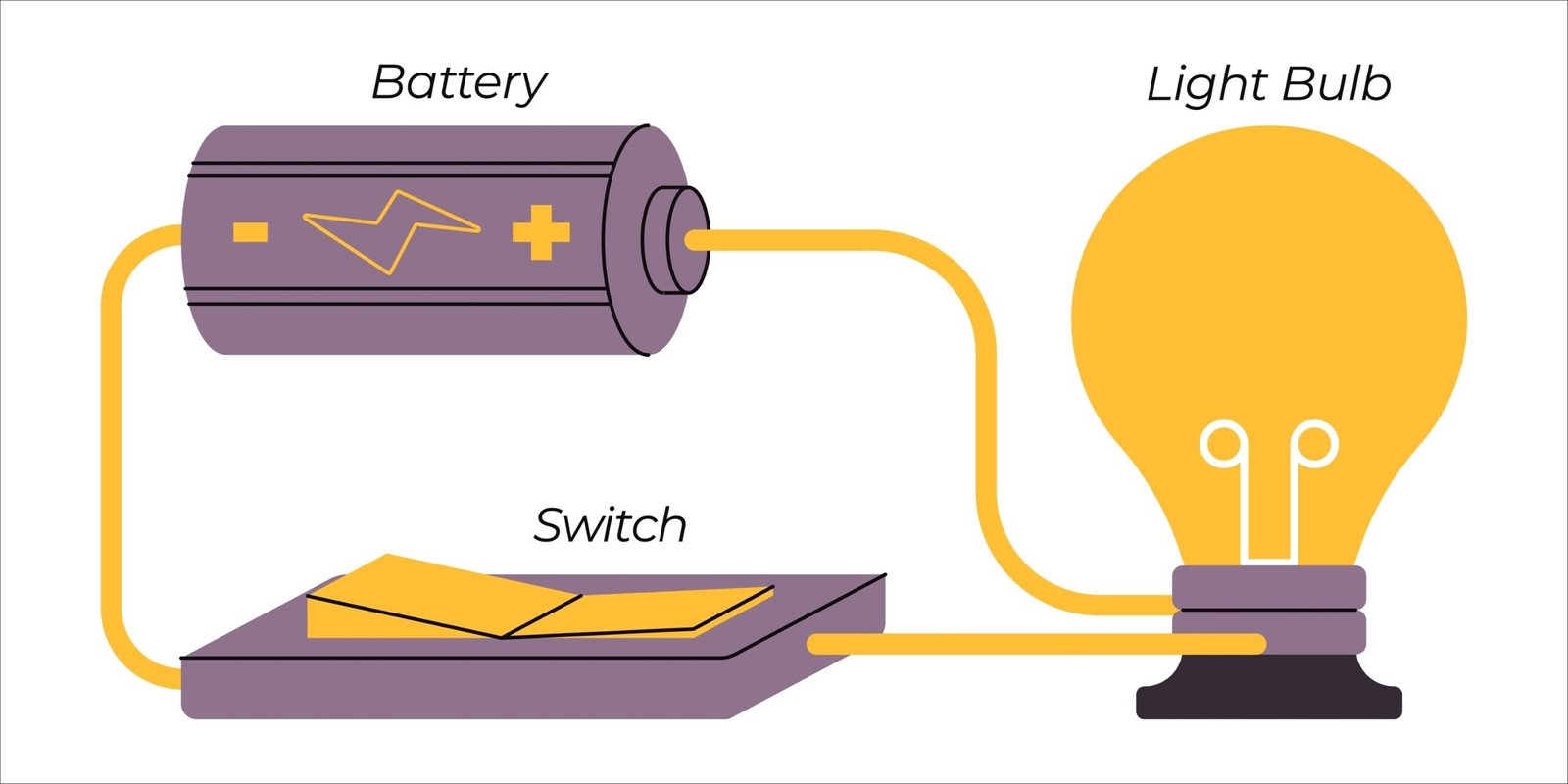
⚡ Electric current is the flow of electric charge through a conductor.
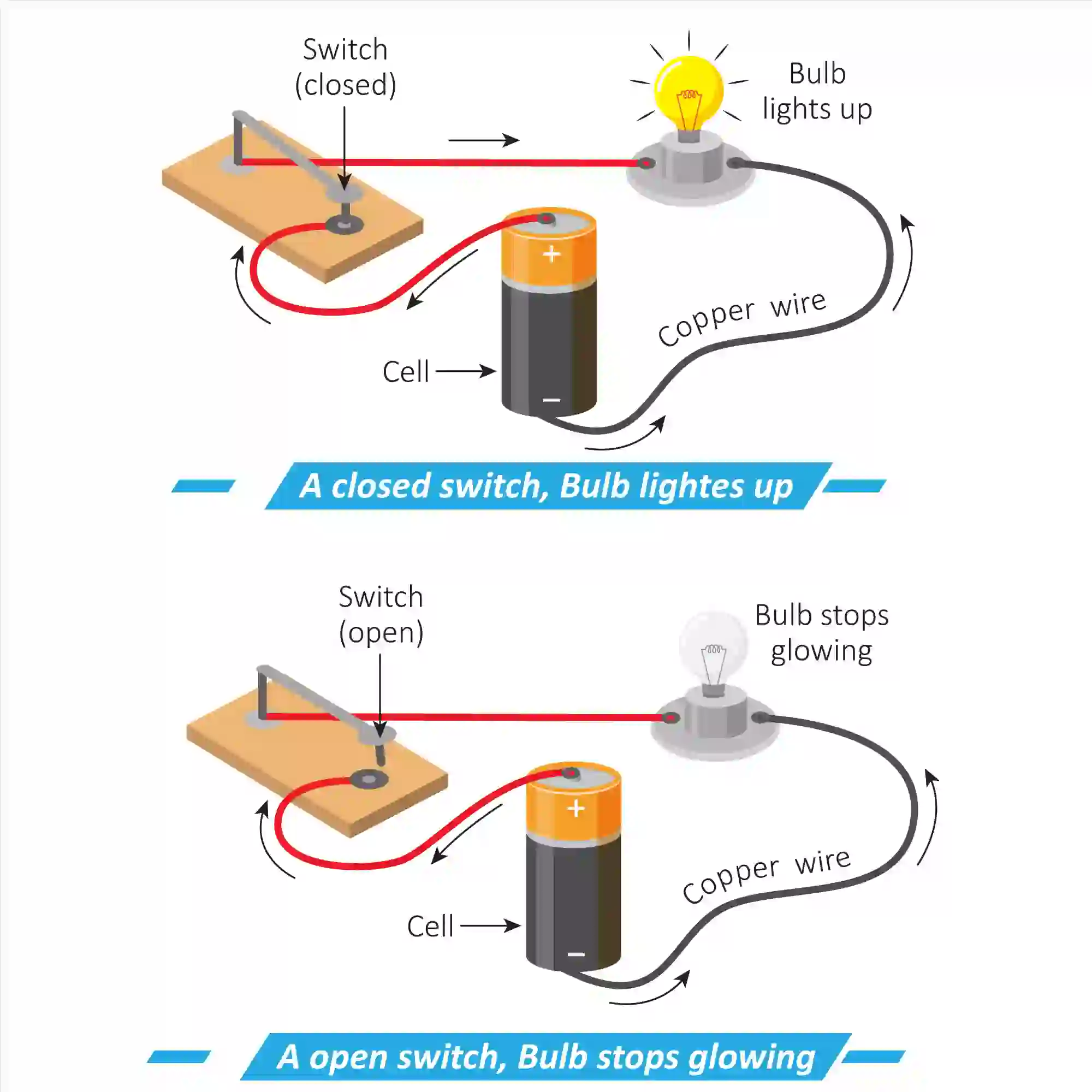
It flows only when a circuit is complete 🔄.
🧠 A circuit has:
Power source 🔋
Connecting wires 🧵
Switch 🔘
Device or load 💡
🧠 If the circuit is broken, current cannot flow.
🧭 When electric current passes through a wire, it produces heat.
This is called the heating effect of electric current 🔥.
🧠 Heat is produced because the wire resists the flow of current.
🔥 The heating effect is useful in many appliances.
Electric iron 👔
Electric heater 🔥
Toaster 🍞
Electric kettle ☕
🧠 These devices convert electrical energy into heat energy.
🧭 The amount of heat produced depends on:
Material of the wire 🧲
Thickness of the wire 📏
Amount of current ⚡
Time of flow ⏱️
🧠 Thin wires produce more heat than thick wires.
🧯 Electric fuse is a safety device that works on the heating effect.
It is made of a thin wire with low melting point.
🧠 When excessive current flows, the fuse wire melts 🔥➡️❌ and breaks the circuit.
🧠 This protects appliances from damage.
🧭 Electric current also produces a magnetic effect.
A current-carrying wire behaves like a magnet 🧲.
🧠 This effect was discovered by scientists through experiments.
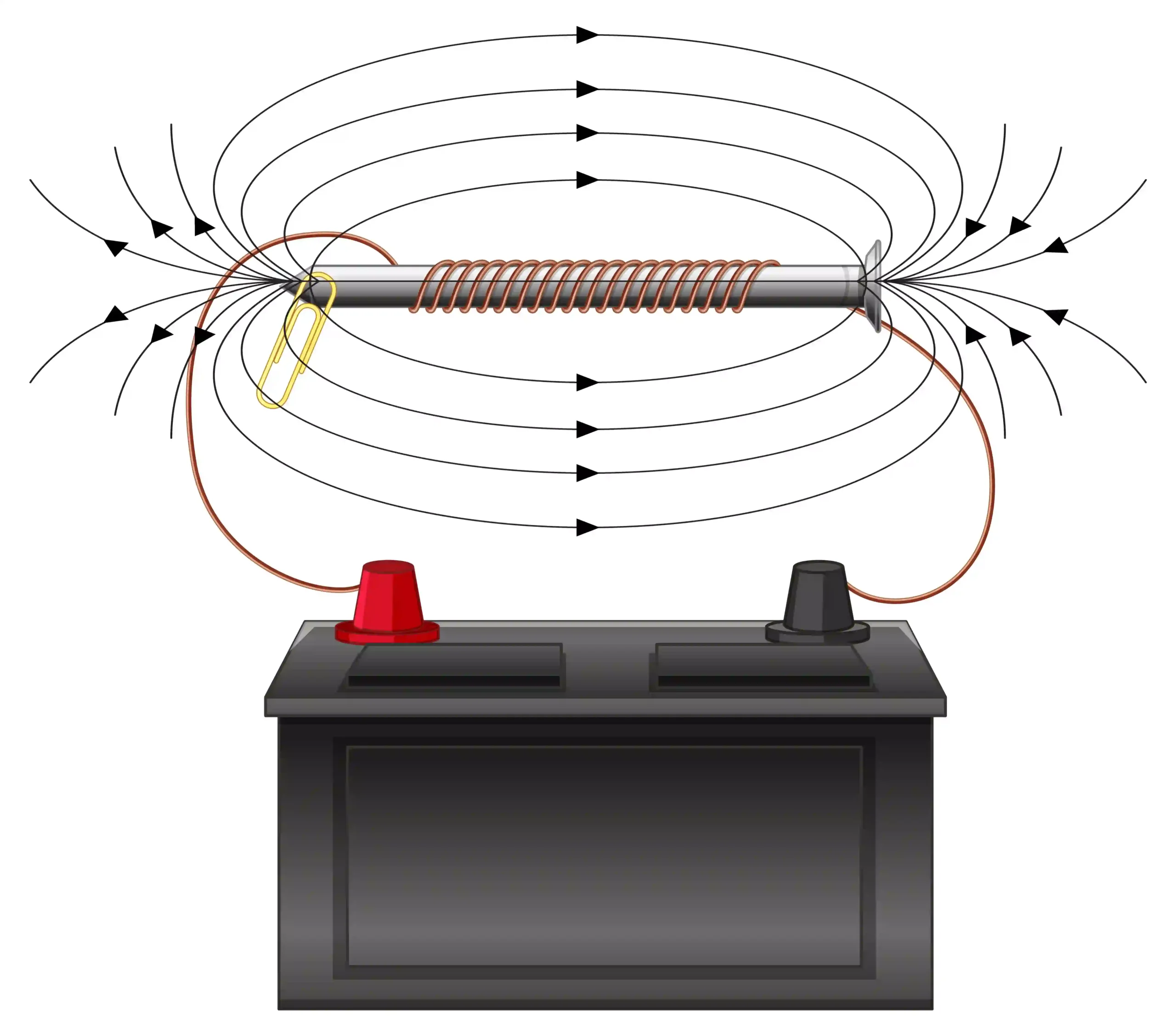
🧲 When current flows through a straight wire, a magnetic field forms around it.
The field becomes stronger with more current ⚡.
🧠 This magnetic field can attract iron objects.
🧭 A coil of wire carrying current shows a stronger magnetic effect.
If the coil is wrapped around an iron core, it forms an electromagnet 🧲⚙️.
🧠 Electromagnets are temporary magnets.
They work only when current flows.
🧲 Electromagnets are very useful.
Electric bells 🔔
Cranes lifting scrap iron 🏗️
Electric motors ⚙️
Loudspeakers 🔊
🧠 Their strength can be controlled by current.
🧭 An electric bell works using magnetic effect.
When current flows, the electromagnet pulls the hammer 🔔.
🧠 The circuit breaks and reconnects repeatedly, producing sound.
⚠️ Electricity can be dangerous if not handled properly.
Loose wires ⚠️
Wet hands 💧
Overloaded sockets 🔌
🧠 These can cause electric shocks.
🧤 Safety rules must be followed.
Use dry hands ✔️
Avoid damaged wires ❌
Switch off power before repairs 🔘
🧠 Safety prevents accidents.
🌍 Electricity has improved human life greatly.
Comfort 🏠
Communication 📡
Industry 🏭
Healthcare 🏥
🧠 Responsible use saves energy and resources.
🧠 Understanding heating and magnetic effects builds scientific thinking.
It connects theory with daily life.
🚀 This knowledge prepares students for advanced studies in physics and technology.
📝 Summary of the Lesson
Electricity produces heating and magnetic effects when electric current flows through a conductor. The heating effect is used in appliances like heaters, irons, and toasters. It is also the principle behind electric fuses, which protect devices from excessive current. The magnetic effect of electric current causes a current-carrying wire to behave like a magnet. This effect is used to make electromagnets, which are used in electric bells, cranes, motors, and loudspeakers. Understanding these effects helps us use electricity safely and effectively in daily life.
⚡ Quick Recap
⭐ Electric current flows in a closed circuit
⭐ Heating effect produces heat
⭐ Fuse works on heating effect
⭐ Current creates magnetic field
⭐ Electromagnets are temporary magnets
⭐ Electric bell uses magnetic effect
⭐ Safety rules are important
——————————————————————————————————————————————————————————————————————————–
TEXTBOOK QUESTIONS
🔒 ❓ Question 1
Fill in the blanks:
(i) The solution used in a Voltaic cell is called .
(ii) A current carrying coil behaves like a .
📌 Answer:
🔵 The solution used in a Voltaic cell is called an electrolyte, which allows ions to move and helps produce electricity.
🟢 A current carrying coil behaves like a magnet, because electric current produces a magnetic field around it.
🔒 ❓ Question 2
Choose the correct option (True/False):
(i) Dry cells are less portable compared to Voltaic cells.
(ii) A coil becomes an electromagnet only when electric current flows through it.
(iii) An electromagnet using a single cell attracts more iron clips than with two cells.
📌 Answer:
🔵 (i) False — Dry cells are small, sealed, and easy to carry.
🟢 (ii) True — Magnetic effect appears only when current flows.
🟣 (iii) False — More cells produce stronger current and stronger magnetism.
🔒 ❓ Question 3
An electric current flows through a nichrome wire for a short time:
(i) The wire becomes warm.
(ii) A compass placed below the wire deflects.
Choose the correct option.
📌 Answer:
🔴 (c) Both (i) and (ii) are correct
🔵 Nichrome wire becomes warm due to the heating effect of electric current.
🟢 The compass deflects because current produces a magnetic field around the wire.
🔒 ❓ Question 4
Match the items in Column A with Column B.
📌 Answer:
🔵 (i) Voltaic cell → (d) Generates electricity by chemical reactions
🟢 (ii) Electric iron → (c) Works on heating effect of electric current
🟣 (iii) Nichrome wire → (a) Best suited for electric heater
🔴 (iv) Electromagnet → (b) Works on magnetic effect of electric current
🔒 ❓ Question 5
Nichrome wire is commonly used in electrical heating devices because it:
📌 Answer:
🔵 Statement (ii) is correct — it generates more heat for a given current.
🟢 Nichrome has high resistance and can tolerate high temperatures without melting.
🔒 ❓ Question 6
Electric heating devices are considered more convenient than traditional methods. Give reasons considering social impact.
📌 Answer:
🔵 Electric devices are clean and pollution-free, unlike firewood or charcoal.
🟢 They are easy to use and control, saving time and effort.
🟣 They reduce deforestation and protect the environment.
🔒 ❓ Question 7
In Fig. 4.4a, a compass placed near a coil deflects:
(i) Show the path of current.
(ii) Explain the compass deflection.
(iii) Predict the effect of reversing battery terminals.
📌 Answer:
🔵 (i) Electric current flows from the positive terminal to the negative terminal through the coil.
🟢 (ii) The compass needle moves because current produces a magnetic field around the coil.
🟣 (iii) Reversing battery terminals reverses the direction of current, so the compass deflects in the opposite direction.
🔒 ❓ Question 8
Sumana forgets to switch OFF the electromagnet. Later, the nail stops lifting clips but remains warm. Why?
📌 Answer:
🔵 Continuous current causes heating of the wire, making it warm.
🟢 Prolonged heating reduces the magnetic strength of the iron nail.
🟣 As a result, the electromagnet loses its ability to lift paper clips.
🔒 ❓ Question 9
In Fig. 4.11, in which case will the LED glow when the switch is closed?
📌 Answer:
🔵 The LED will glow in case (a), where lemon juice acts as an electrolyte.
🟢 Lemon juice allows current to flow between iron nail and copper strip.
🔴 In pure water (case b), current does not flow properly.
🔒 ❓ Question 10
Neha removes the iron nail from the coil. Will the compass still deflect? Compare with before.
📌 Answer:
🔵 Yes, the compass will still deflect because current flows in the coil.
🟢 However, the deflection will be less than before, as iron increases magnetic strength.
🔒 ❓ Question 11
Four coils of iron, copper, aluminium, and nichrome are used. In which circuits will compass deflect?
📌 Answer:
🔵 (iv) In all four circuits
🟢 Magnetic effect depends on electric current, not the material of the wire.
——————————————————————————————————————————————————————————————————————————–
OTHER IMPORTANT QUESTIONS
SECTION 1 — MCQs (5 Questions)
🔒 ❓ Q1. Which effect of electric current causes a wire to become hot?
🟢 1️⃣ Magnetic effect
🔵 2️⃣ Chemical effect
🟡 3️⃣ Heating effect
🟣 4️⃣ Optical effect
✔️ Answer: 🟡 3️⃣ Heating effect
🔒 ❓ Q2. Which device uses the heating effect of electric current?
🟢 1️⃣ Electric bell
🔵 2️⃣ Electric iron
🟡 3️⃣ Compass
🟣 4️⃣ Generator
✔️ Answer: 🔵 2️⃣ Electric iron
🔒 ❓ Q3. What is produced around a current-carrying conductor?
🟢 1️⃣ Heat only
🔵 2️⃣ Magnetic field
🟡 3️⃣ Light
🟣 4️⃣ Sound
✔️ Answer: 🔵 2️⃣ Magnetic field
🔒 ❓ Q4. Which material is used as a filament in electric bulbs?
🟢 1️⃣ Copper
🔵 2️⃣ Aluminium
🟡 3️⃣ Tungsten
🟣 4️⃣ Iron
✔️ Answer: 🟡 3️⃣ Tungsten
🔒 ❓ Q5. Which device works on the magnetic effect of electric current?
🟢 1️⃣ Electric heater
🔵 2️⃣ Electric bulb
🟡 3️⃣ Electric bell
🟣 4️⃣ Toaster
✔️ Answer: 🟡 3️⃣ Electric bell
SECTION 2 — Very Short Answer (5 Questions)
🔒 ❓ Q6. Name the effect used in electric heaters.
📌 ✅ Answer: Heating effect
🔒 ❓ Q7. Which metal is used as bulb filament?
📌 ✅ Answer: Tungsten
🔒 ❓ Q8. Name the effect used in electric bells.
📌 ✅ Answer: Magnetic effect
🔒 ❓ Q9. What happens to a wire when current flows through it?
📌 ✅ Answer: It heats up
🔒 ❓ Q10. Name one device using magnetic effect of current.
📌 ✅ Answer: Electric bell
SECTION 3 — Short Answer (3 Questions)
🔒 ❓ Q11. What is the heating effect of electric current?
📌 ✅ Answer:
🔹 When electric current flows through a wire, it becomes hot.
🔸 Electrical energy is converted into heat energy.
🔹 This effect is called the heating effect of electric current.
🔒 ❓ Q12. Why is tungsten used as a filament in bulbs?
📌 ✅ Answer:
🔹 Tungsten has a very high melting point.
🔸 It can glow at high temperature without melting.
🔹 Therefore, it is suitable for bulb filaments.
🔒 ❓ Q13. How does an electric bell work?
📌 ✅ Answer:
🔹 Current flows through a coil to produce a magnetic field.
🔸 The electromagnet attracts an iron armature.
🔹 This action produces sound repeatedly.
SECTION 4 — Long Answer (1 Question)
🔒 ❓ Q14. Explain the heating and magnetic effects of electric current with examples.
📌 ✅ Answer:
🔹 Electric current produces heat when it flows through a conductor.
🔸 This heating effect is used in devices like electric iron and heater.
🔹 A current-carrying wire also produces a magnetic field.
🔸 This magnetic effect is used in electric bells and motors.
🔹 Thus, electric current has both heating and magnetic effects.
——————————————————————————————————————————————————————————————————————————–
ADVANCE KNOWLEDGE
🌍 Electricity: More Than Just Flowing Charges
Electricity is often imagined as something that simply flows through wires and lights bulbs. But electricity has hidden powers. When electric current flows, it does not remain silent—it creates heat and produces magnetism. These two effects have reshaped human civilization, from cooking food to running trains and lifting tons of iron with invisible force.
🧠 Big idea:
Electricity is not only energy in motion — it is energy that transforms itself.
🔌 Electric Current: The Starting Point
Electric current is the movement of electric charges through a conductor.
🧠 When current flows:
Energy is transferred
Particles interact
New effects appear
⭐ Current itself cannot be seen, but its effects can be felt, measured, and controlled.
🔥 Heating Effect of Electric Current
When electric current passes through a conductor, the conductor gets heated.
🧠 Why heating happens:
Electrons collide with atoms
Energy is lost as heat
⭐ This is called the heating effect of electricity.
🧠 More resistance → more collisions → more heat.
⚠️ Misconception vs Reality
⚠️ Misconception: Heat is produced only by fire
✅ Reality: Heat can be produced by electricity, friction, and chemical reactions
⚠️ Misconception: Thicker wires always heat more
✅ Reality: Thin wires heat faster due to higher resistance
🔥 Uses of the Heating Effect
The heating effect is extremely useful.
🧠 Applications include:
Electric heaters
Irons
Toasters
Electric kettles
⭐ These devices convert electrical energy directly into useful heat energy.
💡 Bulbs and Heating
Traditional filament bulbs work on heating effect.
🧠 Inside the bulb:
Thin tungsten filament heats up
It glows and produces light
⭐ Most energy is wasted as heat—this is why LED bulbs are preferred today.
⚠️ Overheating and Safety
Too much heating can be dangerous.
⚠️ Risks include:
Wire melting
Short circuits
Electrical fires
🧠 Safety devices like fuses and circuit breakers exist to control heating.
🧠 Fuse: A Silent Protector
A fuse is a thin wire with low melting point.
🧠 When current exceeds safe limit:
Fuse wire melts
Circuit breaks
⭐ A fuse sacrifices itself to save the system.
🧲 Magnetic Effect of Electric Current
Electricity creates magnetism.
🧠 When current flows through a wire:
A magnetic field forms around it
⭐ This was discovered accidentally but changed the world forever.
⏳ A Historic Discovery
⏳ In 1820, Hans Christian Ørsted observed:
A compass needle moved near a current-carrying wire
🧠 This proved: Electricity and magnetism are connected.
⭐ This discovery gave birth to electromagnetism.
🧲 Electromagnets: Magnetism on Demand
An electromagnet is a magnet created by electricity.
🧠 It consists of:
A coil of wire
A soft iron core
Electric current
⭐ Switch ON → magnet appears
⭐ Switch OFF → magnet disappears
🧠 This controllability makes electromagnets extremely powerful.
⚠️ Misconception vs Reality
⚠️ Misconception: Electromagnets are weak
✅ Reality: Powerful cranes lift tons using electromagnets
⚠️ Misconception: Magnetism always exists
✅ Reality: Electromagnetic magnetism can be switched off
🏗️ Uses of Electromagnets
Electromagnets are everywhere.
🧠 Used in:
Electric bells
Relays
Motors
Loudspeakers
MRI machines
⭐ Modern technology depends on controlled magnetism.
🔔 Electric Bell: A Classic Application
The electric bell converts electricity into sound.
🧠 Working principle:
Current creates magnetism
Magnet pulls hammer
Circuit breaks and reforms
⭐ Rapid repetition creates continuous sound.
🧠 This shows how electricity, magnetism, and motion interact.
⚙️ Electric Motors: Motion from Electricity
Electric motors convert electrical energy into mechanical energy.
🧠 Principle:
Magnetic forces cause rotation
⭐ Fans, mixers, pumps, and trains run because of motors.
🧠 Without magnetic effect of current, modern life would stop.
🌍 Electricity, Heat, and Magnetism in Nature
Nature uses similar principles.
🌍 Examples:
Earth’s magnetic field
Lightning heating air
Nerve signals producing tiny magnetic fields
🧠 Physics laws apply universally—from wires to planets.
🚀 Modern Science: Advanced Applications
🚀 Scientists use heating and magnetic effects for:
Induction cooking
Wireless charging
Maglev trains
Medical imaging
⭐ Magnetic levitation trains float using electromagnetic forces.
🌡️ Energy Efficiency and the Future
Heating effects cause energy loss.
🧠 Modern science aims to:
Reduce unwanted heating
Improve efficiency
Use superconductors
⭐ Superconductors carry current with zero resistance—no heat loss.
⚠️ Environmental Impact
Electricity generation affects the environment.
⚠️ Problems include:
Heat pollution
Energy waste
Resource consumption
🧠 Efficient electrical use reduces environmental damage.
🧠 From Classroom to Civilization
The magnetic and heating effects of electricity:
Power industries
Enable communication
Drive transport
⭐ These ideas are simple in principle but limitless in application.
⭐ Amazing Facts
⭐ A lightning bolt heats air hotter than the Sun’s surface
⭐ MRI machines use extremely strong electromagnets
⭐ Induction stoves heat pots without heating air
⭐ Earth’s core produces magnetism through electric currents
🧠 Why Curious Minds Must Go Deeper
This topic teaches:
Energy transformation
Cause-and-effect thinking
System design
🧠 It builds the foundation for physics, engineering, and innovation.
🌟 Final Thought
Electricity is not just something that flows.
It heats, it pulls, it moves, and it protects.
🧠 Understanding the magnetic and heating effects of electricity means understanding how invisible forces build the modern world.
——————————————————————————————————————————————————————————————————————————–