
Class 8 : Science – ( English ) : Lesson 2. The Invisible Living World: Beyond Our Naked Eye

EXPLANATION AND ANALYSIS
🧭 The world around us contains living organisms that are too small to be seen with our naked eyes.
These tiny organisms exist everywhere— in air 🌬️, water 💧, soil 🌱, food 🍞, and even inside our bodies 🫀.
🧠 Although invisible, these organisms play a very important role in nature and daily life.
They can be helpful 🤝 or harmful ⚠️, depending on their type and activity.
🔍 Studying this invisible living world helps us understand health, disease, environment, and life processes better.
🧪 Organisms that are too small to be seen without magnification are called microorganisms 🦠.
They can be seen only with the help of microscopes 🔬.
🧠 Microorganisms are found in almost every environment on Earth.
Hot springs 🔥
Icy regions ❄️
Deserts 🏜️
Oceans 🌊
🧠 Their wide presence shows their ability to survive in extreme conditions.
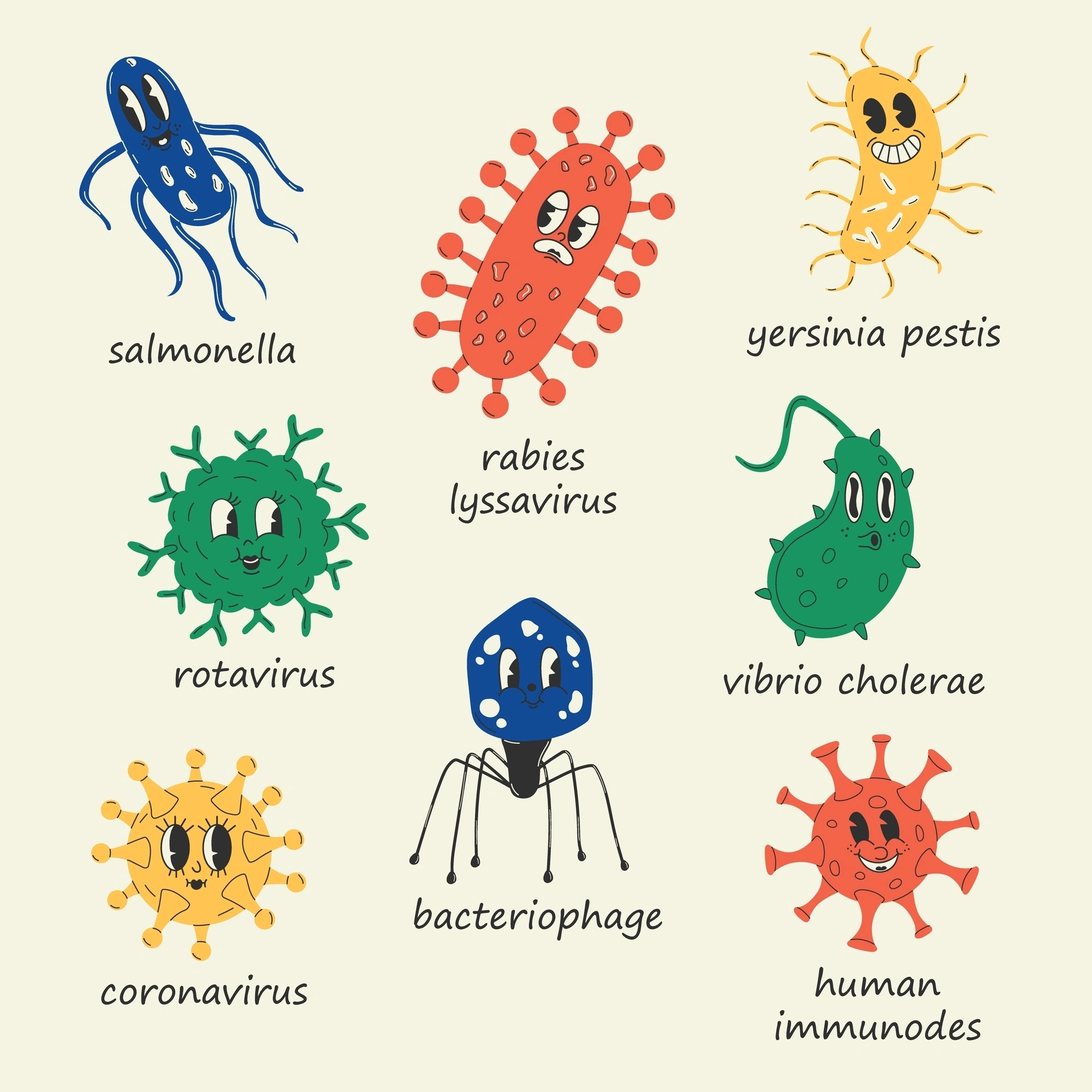
🧭 Microorganisms are classified into different groups based on their structure and nature.
Bacteria 🦠
Fungi 🍄
Protozoa 🧫
Algae 🌿
Viruses 🧬
🧠 Each group has unique characteristics.
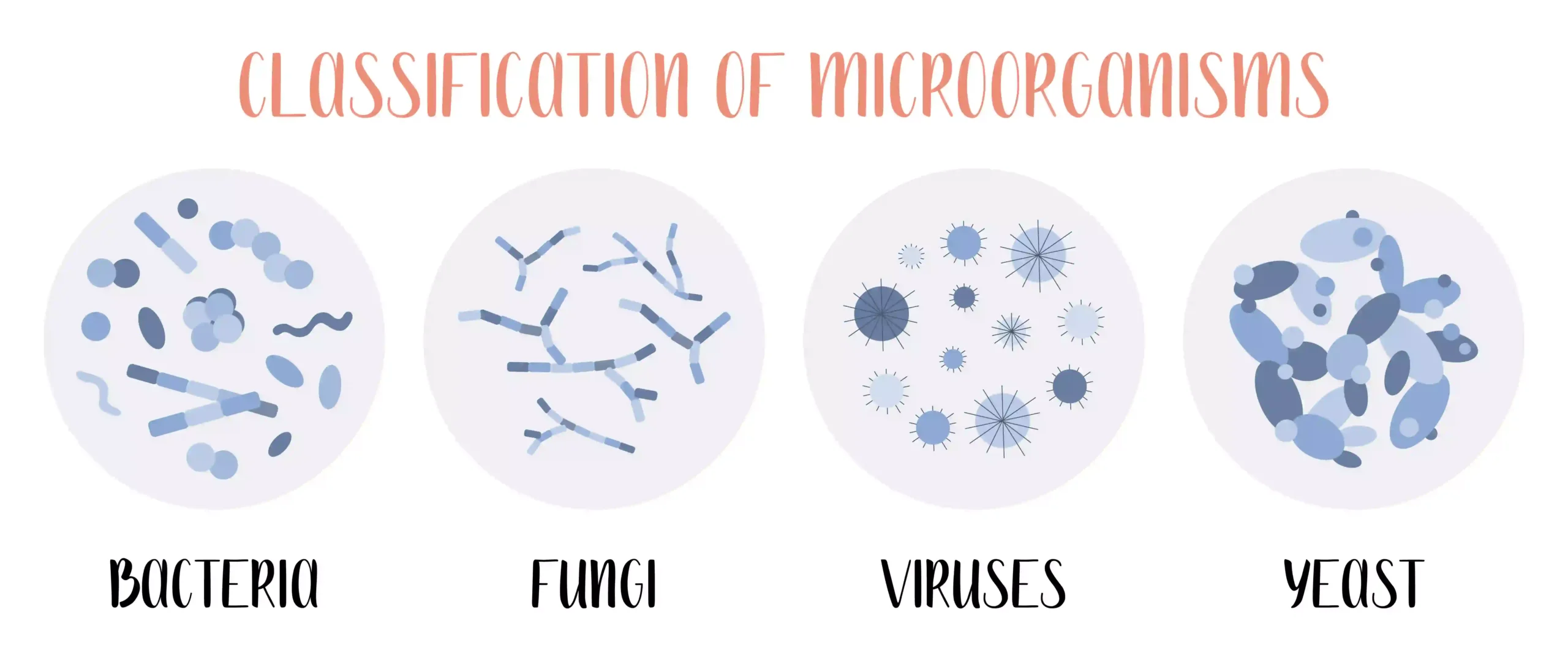
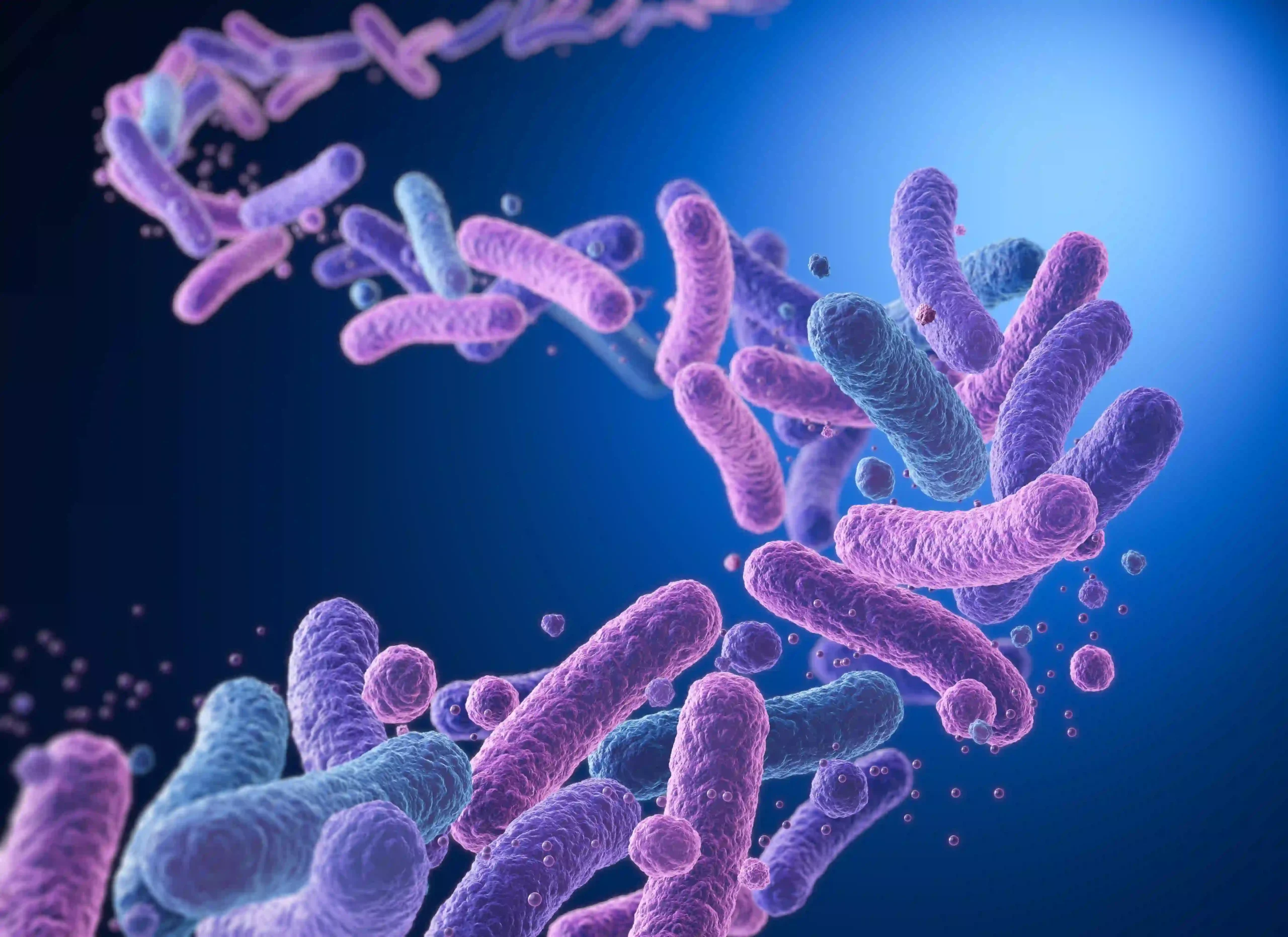
🦠 Bacteria are single-celled organisms.
They are found in soil, water, air, and inside living beings.
🧠 Some bacteria are useful.
They help in digestion 🫀.
They improve soil fertility 🌱.
They help make curd 🥣.
⚠️ Some bacteria cause diseases like cholera and tuberculosis.
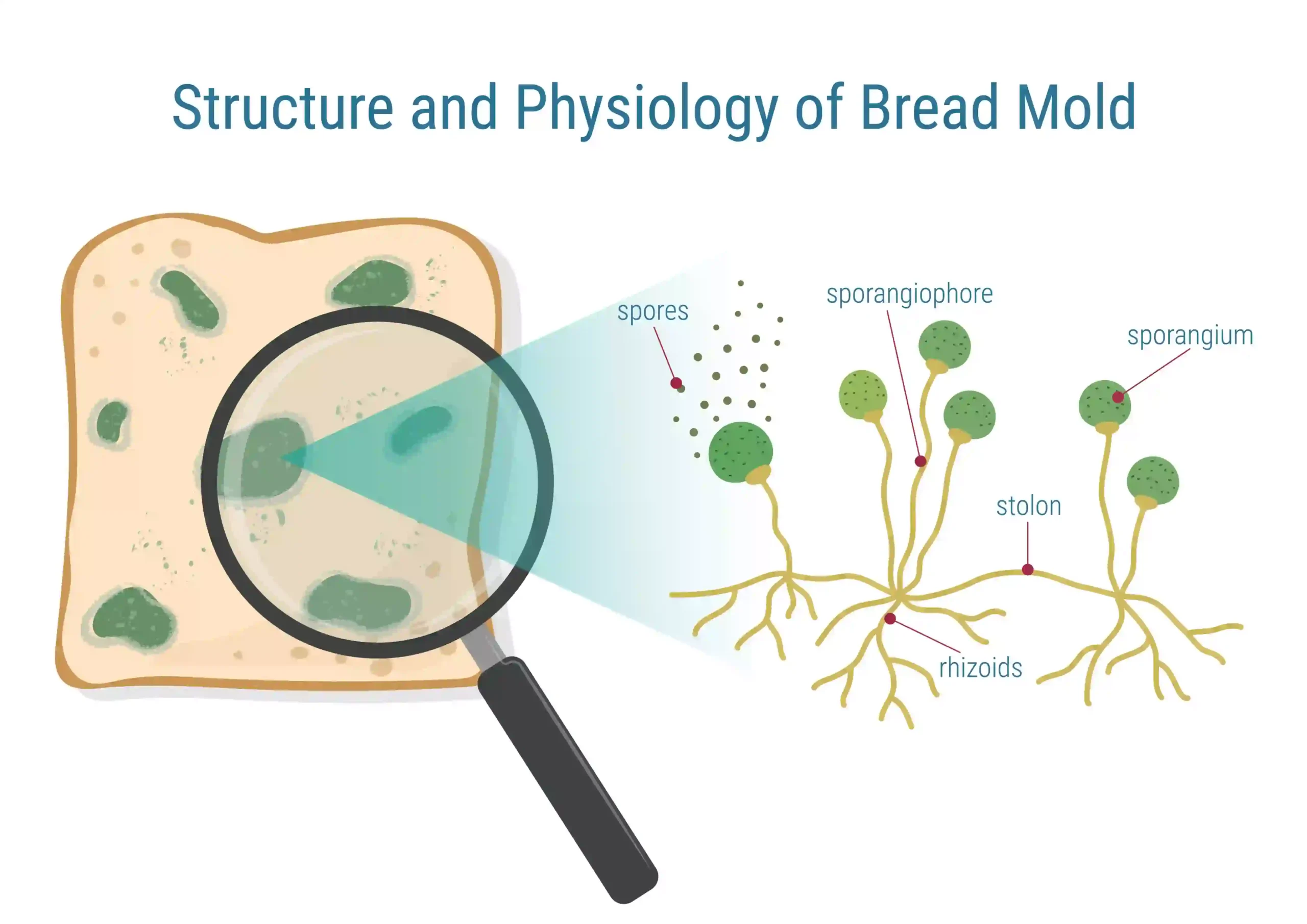
🍄 Fungi include yeast and moulds.
They grow on bread 🍞, fruits 🍎, and damp places.
🧠 Yeast is useful in making bread and cakes 🍰.
It helps in fermentation ⚗️.
⚠️ Some fungi cause skin infections.
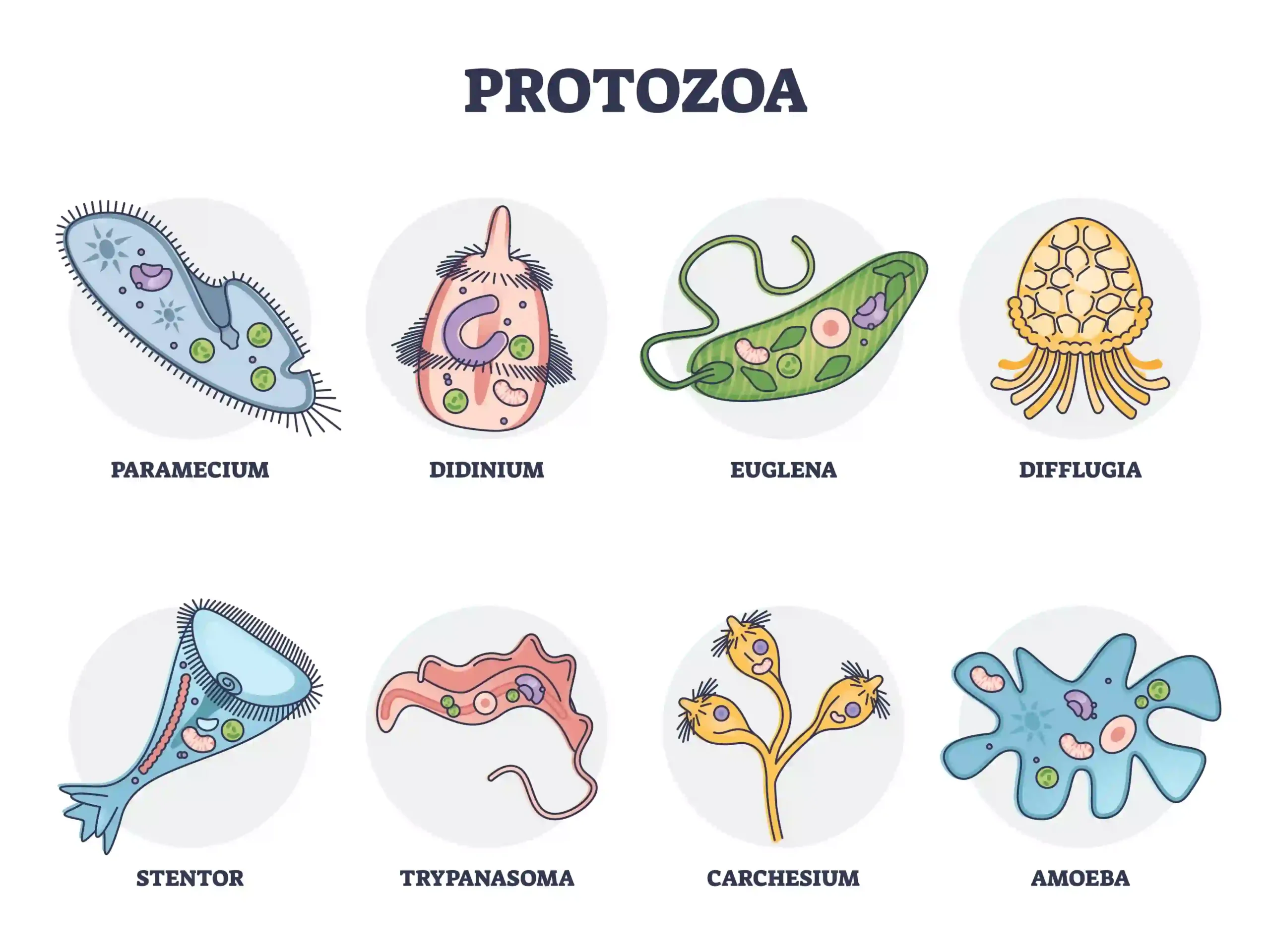
🧫 Protozoa are single-celled organisms found mostly in water 💧.
They move using tiny structures.
🧠 Some protozoa are harmless.
Some cause diseases like malaria 🦟.
🌿 Algae are plant-like microorganisms.
They are mostly found in water.
🧠 Algae prepare their own food using sunlight ☀️.
They produce oxygen 🌬️ and support aquatic life 🐟.
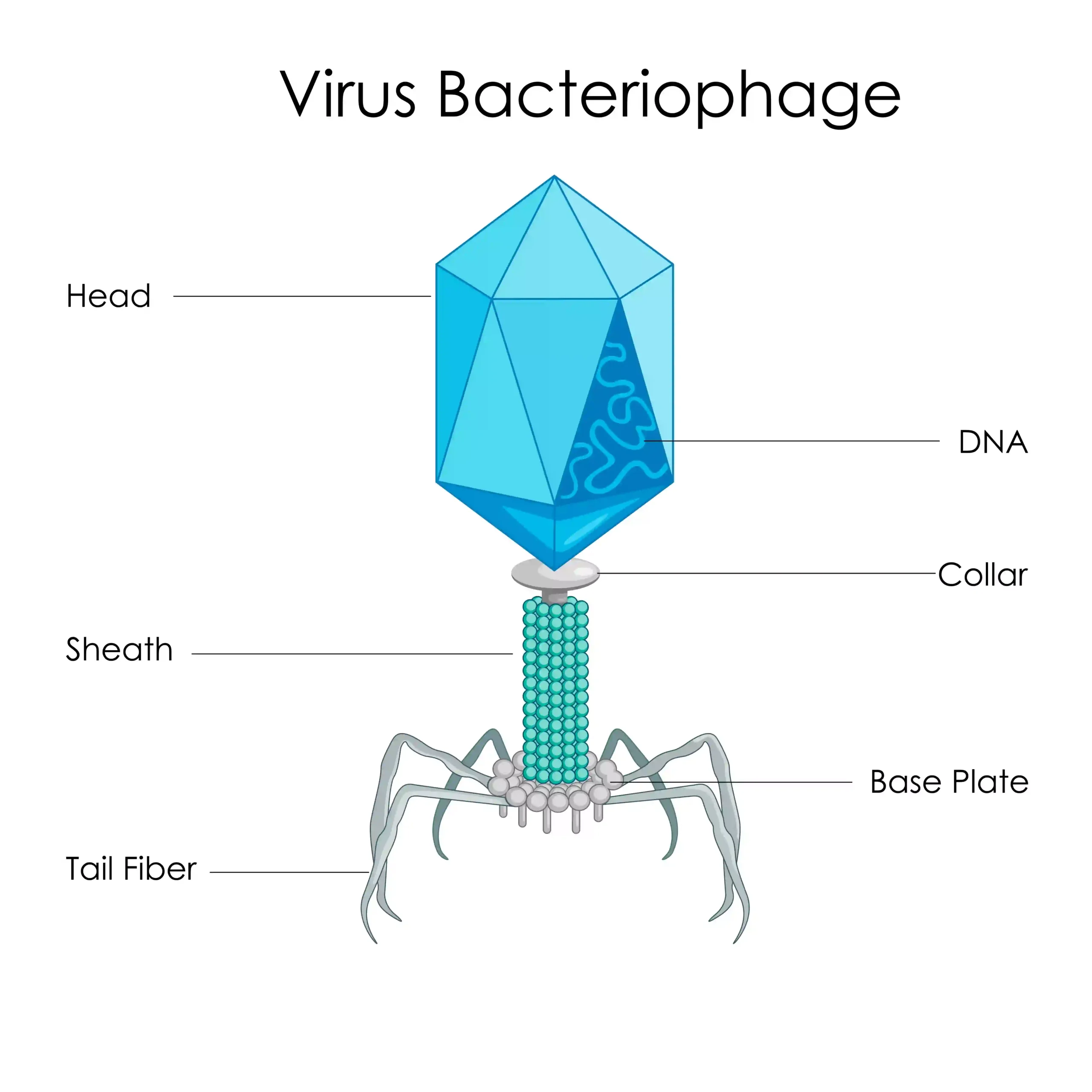
🧬 Viruses are the smallest microorganisms.
They cannot survive without a host 🧍.
🧠 Viruses cause diseases like flu 🤧 and measles.
They reproduce only inside living cells.
🧭 Microorganisms are extremely useful to humans.
They help in making food 🥣.
They are used in medicines 💊.
They clean the environment ♻️.
🧠 Without microorganisms, many natural cycles would stop.
🧪 Microorganisms in food production are very important.
Bacteria convert milk into curd 🥛➡️🥣.
Yeast helps dough rise 🍞.
🧠 Fermentation improves taste and texture.
🧭 Microorganisms are also used to make medicines.
Antibiotics 💊 are produced using bacteria and fungi.
🧠 Vaccines help protect us from diseases 🛡️.
🌱 Microorganisms improve soil fertility.
Certain bacteria fix nitrogen 🌾.
This helps plants grow healthy.
🧠 Farmers depend on these natural helpers.
⚠️ Some microorganisms cause diseases in humans, animals, and plants.
Food poisoning 🍽️
Common cold 🤧
Crop diseases 🌾⚠️
🧠 Cleanliness and hygiene help prevent infections.
🧼 Preservation of food prevents harmful microorganisms from growing.
Drying ☀️
Refrigeration ❄️
Salting 🧂
Heating 🔥
🧠 These methods slow down microbial growth.
🧭 Microorganisms can spoil food if not stored properly.
They change smell 👃.
They change taste 😖.
They change appearance 👀.
🧠 Spoiled food should not be consumed.
🧠 Studying microorganisms builds scientific understanding.
It explains diseases 🦠.
It supports healthcare 🏥.
It protects environment 🌍.
📜 The invisible living world is small in size but huge in importance.
It supports life, balance, and survival on Earth.
🚀 Learning about microorganisms prepares students for advanced biology and health science.
📝 Summary of the Lesson
The invisible living world consists of microorganisms that cannot be seen with the naked eye. These include bacteria, fungi, protozoa, algae, and viruses. Microorganisms are found everywhere and can survive in extreme conditions. Many microorganisms are useful, helping in food production, medicine, soil fertility, and environmental cleaning. Some microorganisms cause diseases in humans, animals, and plants. Food preservation methods help control harmful microorganisms. Understanding microorganisms helps us protect health, improve agriculture, and maintain ecological balance.
⚡ Quick Recap
⭐ Microorganisms are invisible to naked eye
⭐ They exist everywhere
⭐ Some are useful, some harmful
⭐ They help make food and medicines
⭐ They improve soil fertility
⭐ Some cause diseases
⭐ Hygiene prevents infections
——————————————————————————————————————————————————————————————————————————–
TEXTBOOK QUESTIONS
🔒 ❓ Question 1
Various parts of a cell are given below. Write them in the appropriate places in the diagram.
Nucleus, Cytoplasm, Chloroplast, Cell membrane, Cell wall, Nucleoid
📌 ✅ Answer:
🔹 Common to all three cells (plant, animal, bacterial):
Cytoplasm
Cell membrane
🔹 Only in plant cell:
Cell wall
Chloroplast
Nucleus
🔹 Only in animal cell:
Nucleus
🔹 Only in bacterial cell:
Nucleoid
🔒 ❓ Question 2 (i)
What do you predict will happen after 3–4 days in test tube B? Why was the balloon inflated?
📌 ✅ Answer:
🔹 The balloon attached to test tube B gets inflated.
🔹 Yeast breaks down sugar and releases carbon dioxide gas.
🔹 The gas gets trapped in the balloon and makes it expand.
🔹 Correct option: (c) Yeast produced a gas inside test tube B which inflated the balloon.
🔒 ❓ Question 2 (ii)
What does Anandi want to find out by passing the gas into lime water?
📌 ✅ Answer:
🔹 She wants to check whether the gas is carbon dioxide.
🔹 Carbon dioxide turns lime water milky.
🔹 This confirms that yeast produces carbon dioxide during respiration.
🔒 ❓ Question 3
Why did the farmer growing bean crops not add nitrogen fertiliser?
📌 ✅ Answer:
🔹 Bean plants are leguminous plants.
🔹 Their roots contain Rhizobium bacteria.
🔹 These bacteria fix nitrogen from air into the soil.
🔹 Therefore, extra nitrogen fertiliser is not required.
🔒 ❓ Question 4
What is Snehal trying to test by digging two pits A and B?
📌 ✅ Answer:
🔹 She is testing the process of composting.
🔹 Mixing waste with dried leaves allows air circulation.
🔹 Microorganisms decompose waste faster in pit A than pit B.
🔒 ❓ Question 5
Identify the following microorganisms:
(i) I live in every kind of environment and inside your gut.
(ii) I make bread and cakes soft and fluffy.
(iii) I live in the roots of pulse crops and help in their growth.
📌 ✅ Answer:
🔹 (i) Bacteria
🔹 (ii) Yeast
🔹 (iii) Rhizobium
🔒 ❓ Question 6
Devise an experiment to show microorganisms need suitable conditions to grow.
📌 ✅ Answer:
🔹 Take three slices of bread.
🔹 Keep one in a warm and moist place, one in a cold place, and one in a dry place.
🔹 Mould grows fastest on the warm and moist bread.
🔹 This shows microorganisms need proper temperature, air, and moisture.
🔒 ❓ Question 7
What difference do you observe between bread kept near the sink and in the refrigerator?
📌 ✅ Answer:
🔹 Bread near the sink develops mould quickly.
🔹 Bread in the refrigerator shows little or no mould.
🔹 Cold temperature slows down microbial growth.
🔒 ❓ Question 8
Why does curd become more sour when left out for a day?
📌 ✅ Answer:
🔹 Bacteria in curd multiply faster at warm temperature.
🔹 They convert lactose into lactic acid.
🔹 Increased lactic acid makes curd more sour.
🔒 ❓ Question 9
Observe the experimental set-up with yeast and lime water. Answer the questions.
📌 ✅ Answer:
🔹 (i) Sugar solution in flask A undergoes fermentation.
🔹 (ii) Lime water in test tube B turns milky due to carbon dioxide.
🔹 (iii) Without yeast, no gas would be produced and lime water would remain clear.
——————————————————————————————————————————————————————————————————————————–
OTHER IMPORTANT QUESTIONS
SECTION 1 — MCQs (5 Questions)
🔒 ❓ Q1. Which instrument is used to observe microorganisms?
🟢 1️⃣ Telescope
🔵 2️⃣ Microscope
🟡 3️⃣ Periscope
🟣 4️⃣ Binoculars
✔️ Answer: 🔵 2️⃣ Microscope
🔒 ❓ Q2. Which of the following is a unicellular organism?
🟢 1️⃣ Amoeba
🔵 2️⃣ Earthworm
🟡 3️⃣ Frog
🟣 4️⃣ Ant
✔️ Answer: 🟢 1️⃣ Amoeba
🔒 ❓ Q3. Which group of microorganisms helps in making curd?
🟢 1️⃣ Viruses
🔵 2️⃣ Bacteria
🟡 3️⃣ Protozoa
🟣 4️⃣ Algae
✔️ Answer: 🔵 2️⃣ Bacteria
🔒 ❓ Q4. Which microorganism causes diseases like malaria?
🟢 1️⃣ Bacteria
🔵 2️⃣ Virus
🟡 3️⃣ Protozoa
🟣 4️⃣ Algae
✔️ Answer: 🟡 3️⃣ Protozoa
🔒 ❓ Q5. Which microorganism is known for causing influenza?
🟢 1️⃣ Bacteria
🔵 2️⃣ Virus
🟡 3️⃣ Fungus
🟣 4️⃣ Algae
✔️ Answer: 🔵 2️⃣ Virus
SECTION 2 — Very Short Answer (5 Questions)
🔒 ❓ Q6. Name one unicellular organism.
📌 ✅ Answer: Amoeba
🔒 ❓ Q7. Which microorganism is used in baking bread?
📌 ✅ Answer: Yeast
🔒 ❓ Q8. Name the smallest microorganisms.
📌 ✅ Answer: Virus
🔒 ❓ Q9. Which microorganisms fix nitrogen in soil?
📌 ✅ Answer: Bacteria
🔒 ❓ Q10. Name one disease caused by microorganisms.
📌 ✅ Answer: Malaria
SECTION 3 — Short Answer (3 Questions)
🔒 ❓ Q11. Why are microorganisms called invisible living world?
📌 ✅ Answer:
🔹 Microorganisms are too small to be seen with naked eyes.
🔸 They can be observed only using microscopes.
🔹 Despite their size, they perform important life activities.
🔒 ❓ Q12. How are microorganisms useful to humans?
📌 ✅ Answer:
🔹 Microorganisms help in making curd, bread and medicines.
🔸 Some improve soil fertility by fixing nitrogen.
🔹 They also help in decomposition of waste materials.
🔒 ❓ Q13. How can microorganisms be harmful?
📌 ✅ Answer:
🔹 Some microorganisms cause diseases in humans and animals.
🔸 They spoil food and cause food poisoning.
🔹 Harmful microbes can damage crops and reduce yield.
SECTION 4 — Long Answer (1 Question)
🔒 ❓ Q14. Explain different types of microorganisms with examples.
📌 ✅ Answer:
🔹 Microorganisms include bacteria, fungi, protozoa, algae and viruses.
🔸 Bacteria help in curd formation and nitrogen fixation.
🔹 Fungi like yeast are used in baking.
🔸 Protozoa cause diseases such as malaria.
🔹 Viruses cause diseases like influenza and measles.
——————————————————————————————————————————————————————————————————————————–
ADVANCE KNOWLEDGE
🌍 A Living World Hidden from Human Eyes
When we think of life, we imagine plants, animals, birds, or humans. But the largest and oldest living world on Earth is invisible. Around us, inside us, and even within extreme environments exists a vast community of microscopic life forms that run the planet silently.
🧠 Big idea:
Most life on Earth is too small to be seen, yet too powerful to be ignored.
🔬 What Does “Invisible Living World” Mean?
The invisible living world includes organisms that cannot be seen with the naked eye.
🧪 These include:
Bacteria
Protozoa
Microscopic algae
Fungi
Viruses (borderline living)
⭐ Though tiny, they are biologically complex and extremely influential.
👁️ How Humans Discovered the Invisible World
⏳ For most of history, humans believed:
Only visible organisms existed
🔬 The breakthrough came with microscopes.
⏳ Key moment:
Antonie van Leeuwenhoek observed “animalcules” in water
⭐ This discovery completely changed biology and medicine.
🧠 The microscope did for biology what the telescope did for astronomy.
🧪 Microscopes: Eyes Beyond Eyes
Microscopes allow us to explore tiny life.
🧪 Types of microscopes:
Simple microscope
Compound microscope
Electron microscope
⭐ Electron microscopes can show objects thousands of times smaller than a human hair.
🧠 Technology decides how much of life we can see.
🦠 Bacteria: The Planet’s Oldest Citizens
Bacteria are among the earliest life forms on Earth.
🧠 Key features:
Single-celled
Extremely adaptable
Found everywhere
🌋 They survive:
In hot springs
In ice
Inside living bodies
⭐ Life on Earth may not have survived without bacteria.
⚠️ Misconception vs Reality
⚠️ Misconception: All bacteria are harmful
✅ Reality: Most bacteria are helpful or harmless
⚠️ Misconception: Clean means bacteria-free
✅ Reality: Many bacteria are essential for life
🌱 Helpful Microorganisms: Silent Workers
Invisible organisms help life continue.
🧠 Examples:
Gut bacteria help digestion
Soil bacteria fix nitrogen
Yeast helps in baking and fermentation
⭐ Without microorganisms:
No bread
No curd
No clean soil
🧠 Human survival depends on microbial cooperation.
🦠 Harmful Microorganisms: When Balance Breaks
Some microorganisms cause diseases.
⚠️ Examples:
Cholera
Tuberculosis
Malaria
🧠 Disease occurs when:
Harmful microbes multiply uncontrollably
Body defenses fail
⭐ Science fights microbes using hygiene, medicines, and vaccines.
🧬 Viruses: Alive or Not?
Viruses challenge our idea of life.
🧠 Viruses:
Are not fully living
Need host cells to multiply
⭐ They exist at the edge between chemistry and biology.
🧠 Studying viruses helps understand genetics and immunity.
🧠 Microorganisms Inside the Human Body
Humans are not alone inside their bodies.
🧠 The human body hosts:
Trillions of microorganisms
⭐ This community is called the microbiome.
🧠 Microbiome functions:
Digestion
Immunity
Brain signalling
⭐ Humans are living ecosystems, not single organisms.
🌍 Invisible Life and Earth’s Balance
Microorganisms control Earth’s cycles.
🌍 They regulate:
Carbon cycle
Nitrogen cycle
Oxygen balance
⭐ Plants, animals, and climate depend on microbial activity.
🔥 Invisible Life in Extreme Environments
Some microbes live where life seems impossible.
🌋 Extreme habitats:
Deep oceans
Volcanic vents
Frozen polar regions
🧠 These organisms prove that life is stronger and more adaptable than expected.
🚀 Modern Science and Invisible Life
🚀 Scientists now study:
DNA of microorganisms
Antibiotic resistance
Artificial microbes
🧠 Applications include:
Medicine
Environmental cleanup
Biotechnology
⭐ Microbes may help solve future energy and pollution problems.
⚠️ Antibiotics and Resistance: A Modern Challenge
Overuse of antibiotics causes resistance.
⚠️ Resistant bacteria:
Do not respond to medicines
Spread rapidly
🧠 Responsible science requires careful use of antibiotics.
🌱 Invisible Life and Food
Microorganisms are essential in food production.
🧪 Used in:
Fermentation
Cheese making
Pickles
⭐ Food culture is deeply connected to microbiology.
🧠 Microscopic Life and the Origin of Life
Scientists believe:
Life began with simple microorganisms
🧠 Studying them helps us:
Understand evolution
Search for life beyond Earth
⭐ If microbes exist on other planets, life may be common in the universe.
🌌 Invisible Life Beyond Earth?
🚀 Scientists search for microbes on:
Mars
Icy moons
🧠 Even a single microbe would change our understanding of life forever.
⭐ Amazing Facts About the Invisible World
⭐ More microbes live in soil than people on Earth
⭐ Some bacteria glow in the dark
⭐ Microbes helped create Earth’s oxygen-rich atmosphere
⭐ Humans cannot survive without gut microbes
🧠 Why Curious Minds Must Explore the Invisible
Studying invisible life teaches:
Humility
Interdependence
Scientific thinking
🧠 It shows that size does not equal importance.
🌟 Final Thought
The most powerful life on Earth is unseen.
It feeds us.
It protects us.
It sometimes challenges us.
🧠 To understand life fully, we must learn to see beyond our naked eye.
——————————————————————————————————————————————————————————————————————————–